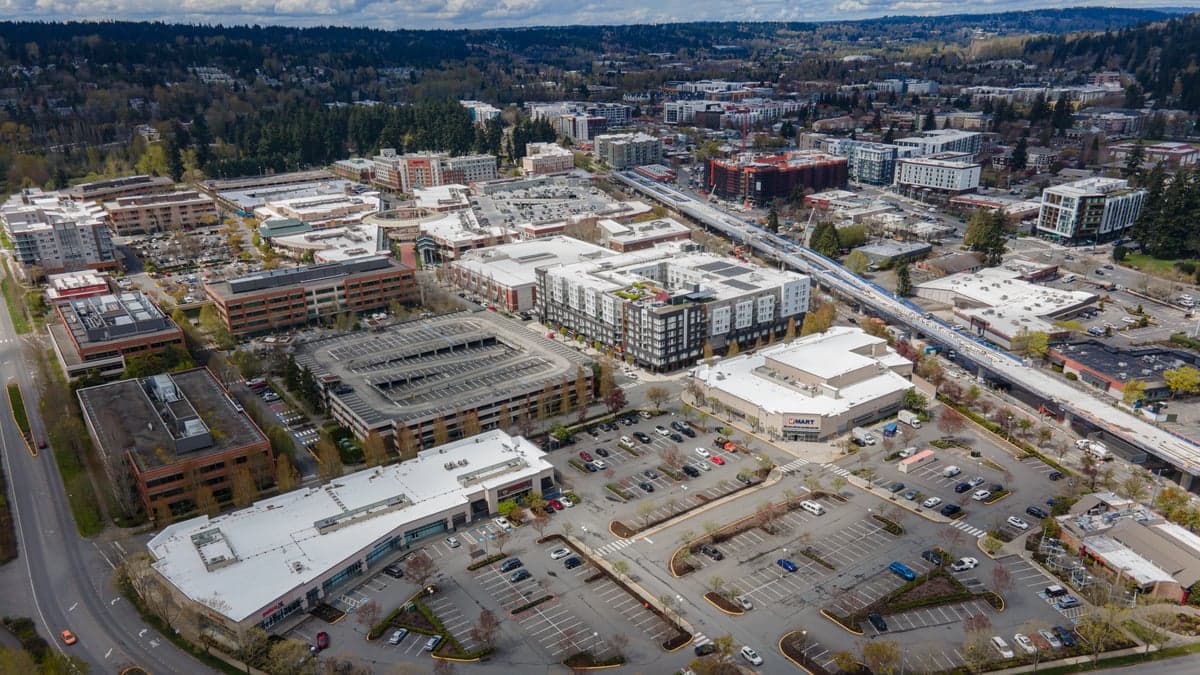
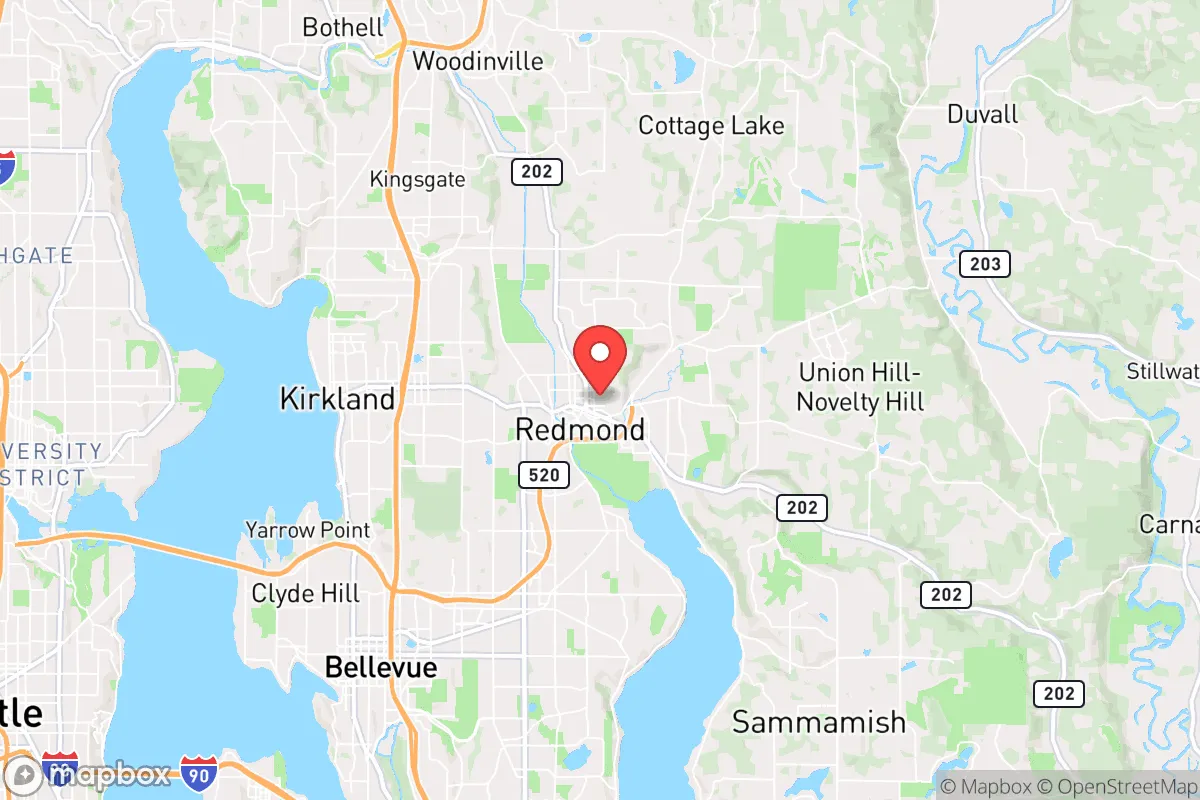
Photo: Wikipedia
Political ClimatePolitical Climate in Redmond, WA
District shown is the primary district for this city’s centroid. Cities may span multiple districts.
Local Political AnalysisPolitical Analysis of Redmond, WA
Redmond, Washington, has shifted hard to the left over the past decade, and it’s not slowing down. The Cook PVI of D+15 tells you everything you need to know: this is one of the most reliably Democratic suburbs in the entire state, and it’s getting bluer every election cycle. If you’re looking for a place where your vote might actually balance things out, Redmond isn’t it — but if you’re curious about how a tech-driven monoculture shapes local politics, this is ground zero.
How it compares
Drive 15 minutes east to Sammamish, and you’ll find a slightly more moderate vibe — still blue, but with a few more independent voters who push back on the most aggressive tax and zoning proposals. Head north to Woodinville, and you’ll see a similar story: wine country conservatives and small-business owners who keep things from going full progressive. But Redmond? It’s surrounded by Bellevue and Kirkland, both of which are just as deep blue. The real contrast is if you go 30 minutes east to Duvall or Carnation, where you’ll find actual red precincts — people who still believe property rights matter and that the county council shouldn’t dictate how you heat your home. In Redmond, those voices are drowned out by a political machine that treats every election as a mandate for more regulation.
What this means for residents
If you value personal freedom — especially the kind that doesn’t require a government permit — Redmond will test your patience. The city council has been aggressive on land-use restrictions, mandatory electric vehicle infrastructure in new construction, and strict tree-removal ordinances that make it harder to do anything on your own property without a review. The school board has also tilted hard toward equity-focused curriculum changes, which has pushed some families to private schools or to neighboring districts. Property taxes keep climbing to fund programs you may not agree with, and there’s little organized pushback because the dominant political class — largely made up of tech transplants from California and the Northeast — sees these policies as normal. For a long-time resident like me, it feels like the city government has decided it knows better than you do about how to live your life, from what kind of car you drive to how many trees you can have in your backyard.
Cultural and policy distinctions
One thing that stands out is how Redmond’s politics are tied directly to Microsoft. The company’s corporate culture — heavily progressive on social issues, environmental mandates, and diversity quotas — bleeds directly into city policy. You’ll see it in the city’s climate action plan, which includes bans on natural gas in new buildings, and in the housing density push that’s turning quiet neighborhoods into mini high-rises. The long-term trajectory is clear: more regulations, higher taxes, and a government that sees itself as a tool for social engineering rather than a protector of individual rights. If you’re considering a move here, just know that your vote won’t change much, and your voice on local issues will be one of many — but if you’re okay with trading some personal freedom for a clean, well-funded city with great parks and low crime, Redmond delivers on that promise. Just don’t expect the political climate to shift anytime soon.

State Political ClimatePolitical Climate in Washington
State Political AnalysisPolitical Environment in the State
Washington State has shifted from a purple battleground to a solidly blue state over the past two decades, with Democrats controlling every statewide office and both legislative chambers since 2017. The state’s overall partisan lean is roughly D+8 to D+10 in presidential elections, driven overwhelmingly by the Seattle metro area, which casts about 40% of the state’s vote. However, this blue dominance masks a deep internal divide: large swaths of eastern and central Washington vote as red as any state in the South, and the gap between the two Washingtons has only widened since 2020.
Urban vs. rural divide
The political map of Washington is a tale of two states. King County (Seattle) alone delivers a Democratic margin of roughly 500,000 votes, enough to cancel out the entire rest of the state. Neighboring Snohomish and Pierce counties have also trended blue, though Pierce (Tacoma) still has conservative pockets. The real red strongholds are east of the Cascades: Spokane County, once a swing area, now votes reliably Republican, and rural counties like Yakima, Grant, and Douglas are deeply red. The most dramatic flip in recent years has been in Clark County (Vancouver), just north of Portland. Once a Republican-leaning suburb, it voted for Biden by 7 points in 2020 and has continued shifting left as Portland expats flood in. Meanwhile, the Tri-Cities (Kennewick, Pasco, Richland) remain conservative but are growing fast with tech and ag workers. The bottom line: if you live west of the Cascades, you’re in a blue bubble; east of the mountains, you’re in a red island that feels increasingly ignored by Olympia.
Policy environment
Washington’s policy environment is aggressively progressive, with a tax structure that hits residents hard in ways that aren’t always obvious. There is no state income tax, which sounds great, but the state makes up for it with the highest state sales tax in the nation (averaging 9-10% in most cities) and high property taxes. The state also has a capital gains tax on high earners (passed in 2021, upheld by the state Supreme Court in 2023), which many conservatives see as a stepping stone to a full income tax. On regulation, Washington is a leader in environmental mandates: the Climate Commitment Act (2021) imposes a cap-and-trade system that drives up gas prices and energy costs. Education policy is solidly controlled by teachers unions, with school choice limited to a few charter schools that face constant legal challenges. Healthcare is heavily regulated, with a state-run insurance exchange and strict abortion protections codified into law. Election laws are among the most liberal in the country: universal mail-in voting, same-day registration, and no voter ID requirement. For a conservative, the policy environment feels like a one-party state where your voice is drowned out by Seattle’s agenda.
Trajectory & freedom
Washington is becoming less free by nearly any measure of personal liberty that conservatives care about. The state has enacted some of the strictest gun control laws in the nation: a ban on “assault weapons” (HB 1240, 2023), a 10-day waiting period, and a requirement for a permit to purchase a semi-automatic rifle. Magazine capacity is capped at 10 rounds. On parental rights, the state passed a law in 2023 that allows minors as young as 13 to receive gender-affirming care without parental consent, and schools are prohibited from notifying parents if a child changes their name or pronouns. Medical autonomy took a hit with the state’s COVID-19 vaccine mandates, which were among the most aggressive in the country and led to thousands of state workers losing their jobs. Property rights are under pressure from the state’s Growth Management Act, which restricts development in rural areas and drives up housing costs. On the plus side, Washington has no state income tax, and the state’s initiative process (I-976, I-2066) has occasionally allowed voters to push back on taxes and regulations, though the legislature often undermines those initiatives. The trajectory is clear: Olympia is moving left faster than the electorate, and personal freedoms are shrinking.
Civil unrest & political movements
Washington has been a flashpoint for political unrest, particularly in Seattle. The 2020 CHOP/CHAZ occupation in Capitol Hill was a national symbol of lawlessness, with police effectively ceding several blocks to armed protesters for weeks. Since then, organized left-wing activism has remained strong, with groups like Puget Sound Anarchists and the Seattle Democratic Socialists of America pushing for defunding the police and rent control. On the right, the Washington State Republican Party is fractured but active, with grassroots groups like the Washington State Patriot Network organizing around election integrity and parental rights. The state’s sanctuary policies are among the strongest in the nation: the 2019 “Keep Washington Working” act limits local law enforcement cooperation with ICE, and the state has resisted federal immigration enforcement. Election integrity remains a hot-button issue: Washington’s all-mail voting system has been criticized for lax signature verification and the potential for ballot harvesting, though no major fraud has been proven. A new resident will notice the political tension most in the suburbs of Seattle and Portland (Vancouver), where yard signs and bumper stickers are a daily reminder of the cultural war.
Projection
Over the next 5-10 years, Washington will likely become more blue and more expensive. In-migration from California and Oregon is accelerating, and these new arrivals tend to vote Democratic, further entrenching the Seattle-dominated political machine. The state’s population is growing fastest in the red-leaning Tri-Cities and Spokane areas, but those gains are offset by the massive growth in King and Clark counties. The Democratic supermajority in the legislature is likely to hold, meaning more gun control, more environmental mandates, and more taxes. The only wildcard is the state’s initiative process, which could allow conservatives to slow down the agenda on specific issues like carbon taxes or parental rights. But don’t expect a political realignment: Washington is on a path to becoming a one-party state similar to California or Oregon, where rural conservatives are outvoted and outmaneuvered. If you move here now, expect to live under a government that is increasingly hostile to your values on guns, education, and family.
Bottom line for a new resident: If you’re a conservative considering Washington, you’re moving into a state where your vote will be diluted by Seattle’s massive blue machine. The trade-off is a beautiful landscape, no income tax, and a booming economy in tech and aerospace. But be prepared for high taxes, strict regulations, and a cultural environment that can feel hostile to traditional values. Your best bet is to settle east of the Cascades—Spokane, the Tri-Cities, or Yakima—where you’ll find like-minded neighbors and a lower cost of living, but even there, Olympia’s reach is long and growing longer.
* Values derived from national, state, county, city and local statistics and may differ in a specific area. Last updated: 2026-04-21T10:56:45.000Z
Narrative content on this page is AI-generated and may contain mistakes. Verify any details that matter before acting on them.
ReloMaps may earn a commission from affiliate links at no extra cost to you.

