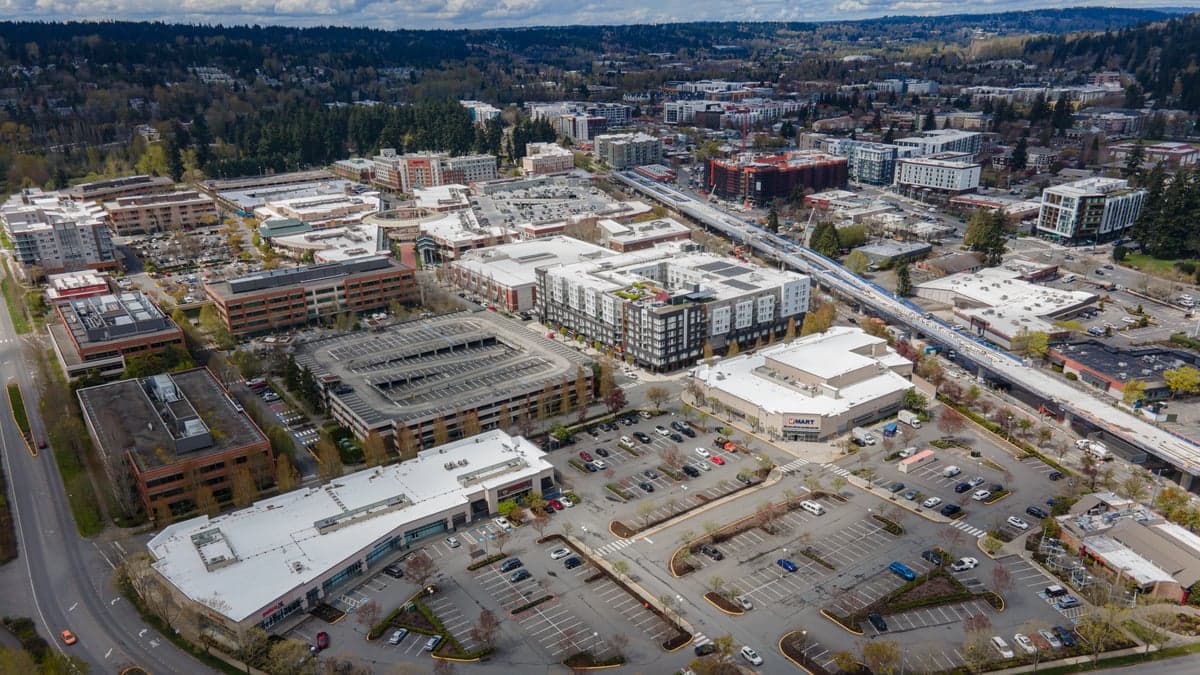
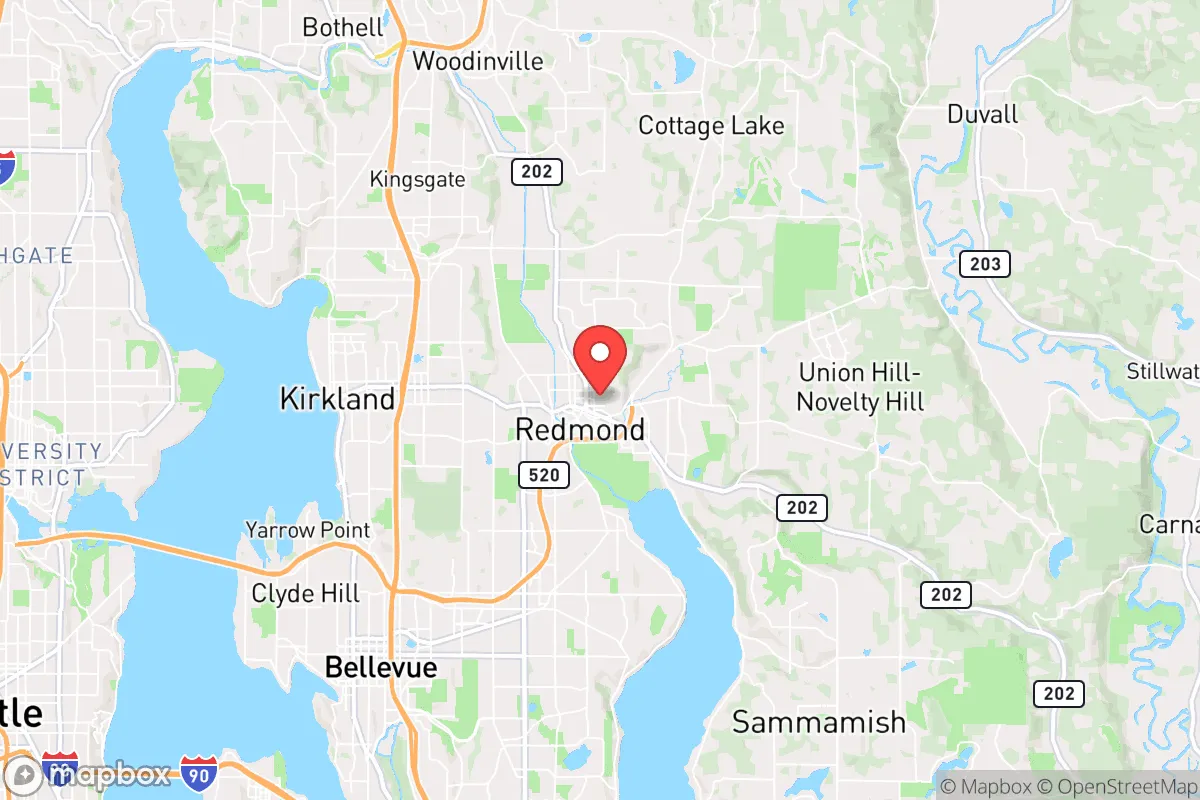
Photo: Wikipedia
Quality of Life in Redmond, WA
A high quality of life with strong walkability, manageable living costs, healthy neighborhood signals, and solid amenity access.
What does Quality of Life tell us?
Quality of Life blends cost of living, nearby amenities, socioeconomic signals, and neighborhood character. City-level scores represent the whole municipality; individual neighborhoods can differ.
What does this tell us?
Quality of Life blends cost of living, nearby amenities, socioeconomic signals, and neighborhood character. City-level scores represent the whole municipality; individual neighborhoods can differ.
Cost of Living
176% above national average
The Real Cost of Living in Redmond, WA for 2026
| Tier | Individual | Family (4) |
|---|---|---|
| Survival | $37k | $70k |
| Comfortable | $187k | $274k |
| Luxury | $274k+ | $424k+ |
| Elite (Top 5%) | $322k+ | $499k+ |
59%
The Area Signal
A metric tracking the socioeconomic signals of the area.
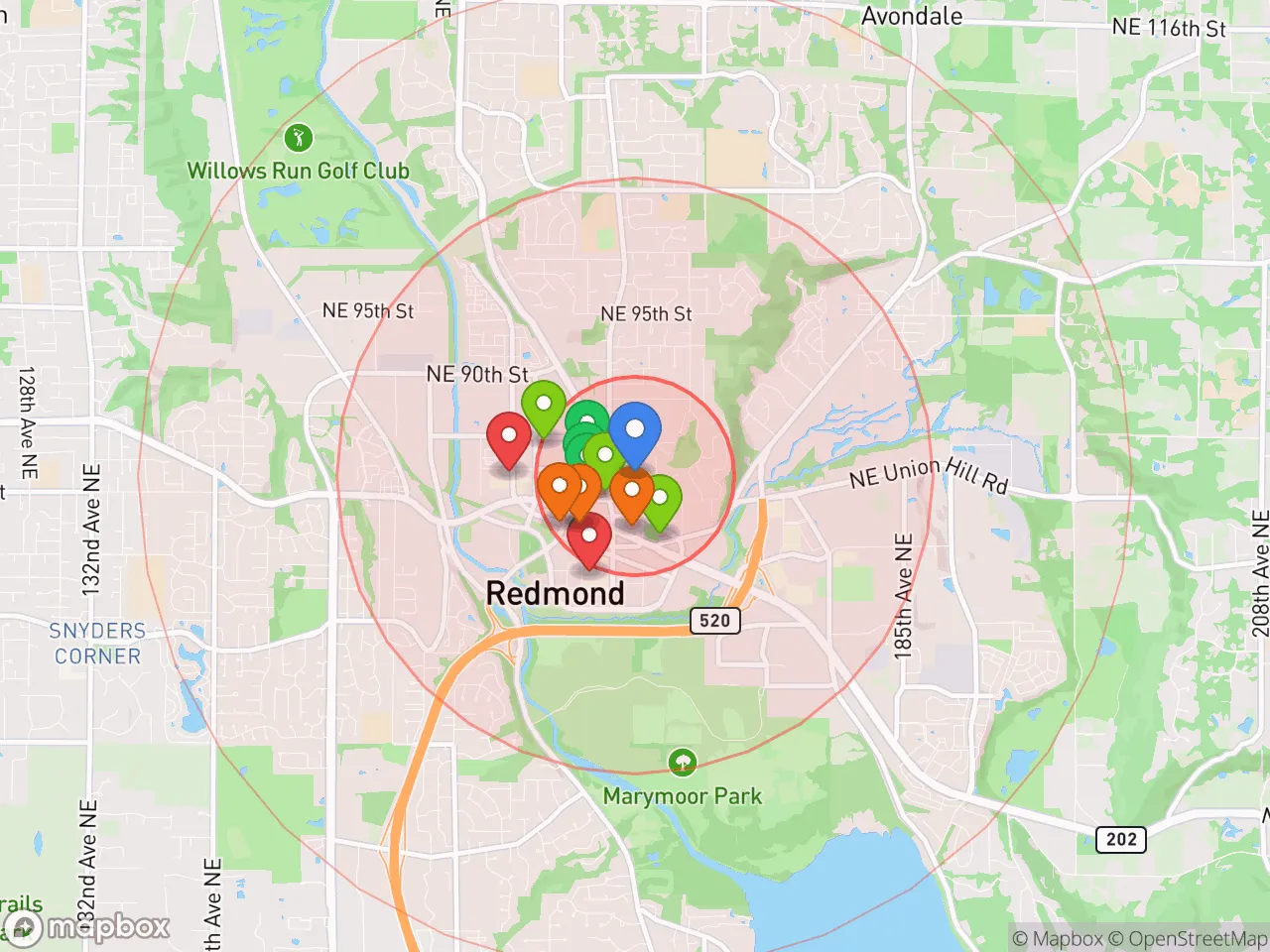
Hobbies
Explore the areaGroceries
8 within 10 miles
Gas
20 within 10 miles
Hospital
20 within 20 miles
Airport
SEA — Seattle–Tacoma International
Post Office
USPS — Redmond, WA
Critical Amenities
Quality-of-Life Analysis
Redmond, Washington, is one of the most affluent and educated cities in the Pacific Northwest, shaped overwhelmingly by its role as the global headquarters of Microsoft and a major hub for Amazon, Google, and hundreds of tech startups. The city’s population of roughly 75,000 skews young, professional, and highly transient, with a median age of 34 and a median household income exceeding $130,000—roughly double the national average. This concentration of high-earning tech workers creates a distinct quality of life defined by premium services, intense housing competition, and a community rhythm that revolves around innovation and outdoor recreation.
Cost of living, housing, and affordability compared to Seattle and Bellevue
Redmond’s cost of living index sits at 276—nearly three times the U.S. average—driven almost entirely by housing. The median home value of $1,091,700 places it slightly below neighboring Bellevue ($1.3M) but well above Seattle’s median ($850,000). For renters, the median monthly rent of $2,343 is comparable to downtown Seattle but offers more square footage and newer construction. The average commute of 23 minutes is notably shorter than Seattle’s 30-minute average, a direct result of the city’s job density: roughly 40% of Redmond residents work within city limits, many at Microsoft’s main campus. However, for households earning below the area median income, affordability is a serious challenge—only 15% of homes are considered affordable to a family earning the regional median of $112,000. Compared to Eastside suburbs like Kirkland or Sammamish, Redmond offers slightly more rental inventory but similarly high purchase prices, making it a market where dual-tech-income households dominate.
Parks, schools, and the daily rhythm of life in a tech hub
Daily life in Redmond balances high-pressure tech careers with exceptional access to nature. The city maintains over 50 parks and 60 miles of trails, including the popular Marymoor Park—a 640-acre regional gem with a climbing wall, off-leash dog area, and concert venue. The Lake Sammamish waterfront provides paddleboarding, kayaking, and swimming within a 10-minute drive of downtown. Public schools in the Lake Washington School District are consistently rated among the top 5% in Washington, with Redmond High School and Tesla STEM High School both earning national blue-ribbon recognition. The city’s walkability is limited outside the downtown core, but a robust bus network and the planned East Link light rail extension (connecting to Seattle by 2025) are shifting commuting patterns. The social scene is heavily work-adjacent: happy hours at the Microsoft Commons, startup networking events at the Old Redmond Schoolhouse, and family-oriented weekend farmers markets define the local rhythm. Crime rates are low—violent crime is roughly one-third the national average—but property crime, particularly bike theft and package theft, is a persistent nuisance in denser neighborhoods.
Redmond is best suited for tech professionals and their families who prioritize short commutes, top-tier schools, and outdoor recreation over urban nightlife or historic character. The city’s high cost of entry and monocultural economy mean it can feel isolating for those outside the tech sector, but for dual-income households earning $200,000 or more, it offers a rare combination of career density, safety, and natural beauty. Renters and first-time buyers should expect fierce competition and should target neighborhoods like Education Hill or Grass Lawn for slightly lower prices, while those seeking walkable urban amenities may find downtown Bellevue or Seattle’s Capitol Hill a better cultural fit.

Crime in Redmond, WA
Lower crime rates than 75% of comparable U.S. locations.
Violent CrimeViolent Crime Analysis
Property CrimeProperty Crime Analysis
Crime Analysis
Redmond, Washington, presents a starkly split safety profile: its violent crime rate of 104.1 incidents per 100,000 residents is remarkably low—roughly one-third the national average—while its property crime rate of 1,914.5 per 100,000 sits well above both the Washington state and national benchmarks. This means a resident is far more likely to deal with a stolen package, a broken car window, or a burglary than to encounter a violent assault. The city’s overall safety picture is heavily influenced by its status as a wealthy tech hub (home to Microsoft’s global headquarters) and its location within King County, where progressive prosecutorial policies have drawn criticism for prioritizing offender rehabilitation over public safety.
Crime in context
Redmond’s violent crime rate is a standout positive, falling below the national rate of roughly 380 per 100,000 and significantly under the Washington state average of about 290 per 100,000. However, the property crime rate tells a different story. At nearly 1,915 per 100,000, it exceeds the national average of approximately 1,954 but is notably higher than the Washington state average of around 2,200—meaning Redmond is actually worse than the state norm for theft and vandalism. This disparity is typical of affluent suburbs near progressive metro areas like Seattle. King County’s elected prosecutor, Leesa Manion, has continued policies that emphasize diversion programs and reduced sentences for non-violent property offenses, a philosophy that critics argue directly contributes to higher recidivism and a permissive environment for property crime rings operating across the Eastside.
What residents experience
Daily life in Redmond is shaped by the tension between its safe streets and its vulnerable property. Residents report that car prowls, mail theft, and catalytic converter thefts are common nuisances, particularly in apartment complexes near the Microsoft campus and along the SR 520 corridor. The Redmond Police Department has responded with targeted patrols and a community camera registry, but the sheer volume of property crime—fueled by a justice system that often releases offenders without bail or with minimal consequences—means many incidents go unsolved. For families, the low violent crime rate is reassuring for evening walks and school commutes, but the constant low-grade property crime erodes trust and forces practical adjustments like locking gates, installing security cameras, and avoiding leaving valuables in cars.
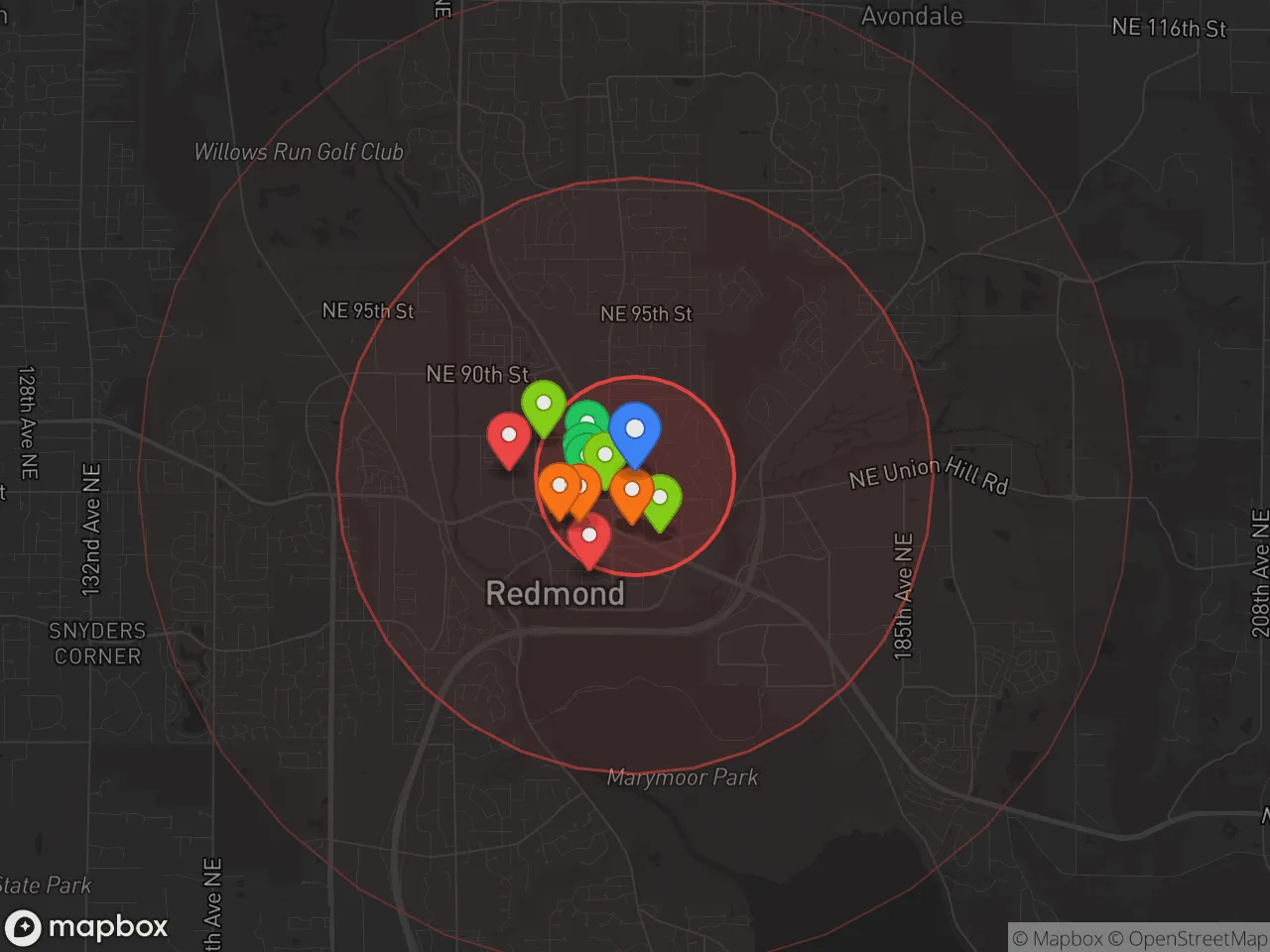
Neighborhood-level variation is significant. The more affluent, single-family-home areas of Education Hill and the Idylwood neighborhood near Lake Sammamish see fewer property crimes than the dense, transit-oriented Overlake district and downtown Redmond, where apartment dwellers and tech workers are frequent targets. The safest pockets are the newer, gated communities in the north end, while the areas closest to the Redmond Transit Center and the Marymoor Park edges experience the highest rates of car break-ins and theft. For anyone considering a move, the data suggests that while violent crime is not a concern, the property crime risk—exacerbated by the county’s progressive criminal justice policies—demands proactive security measures and a clear-eyed acceptance of the trade-offs of living in a wealthy, urban-adjacent suburb.
* Values derived from national, state, county, city and local statistics and may differ in a specific area. Last updated: 2026-04-21T10:56:45.000Z
Narrative content on this page is AI-generated and may contain mistakes. Verify any details that matter before acting on them.
ReloMaps may earn a commission from affiliate links at no extra cost to you.

