 Popular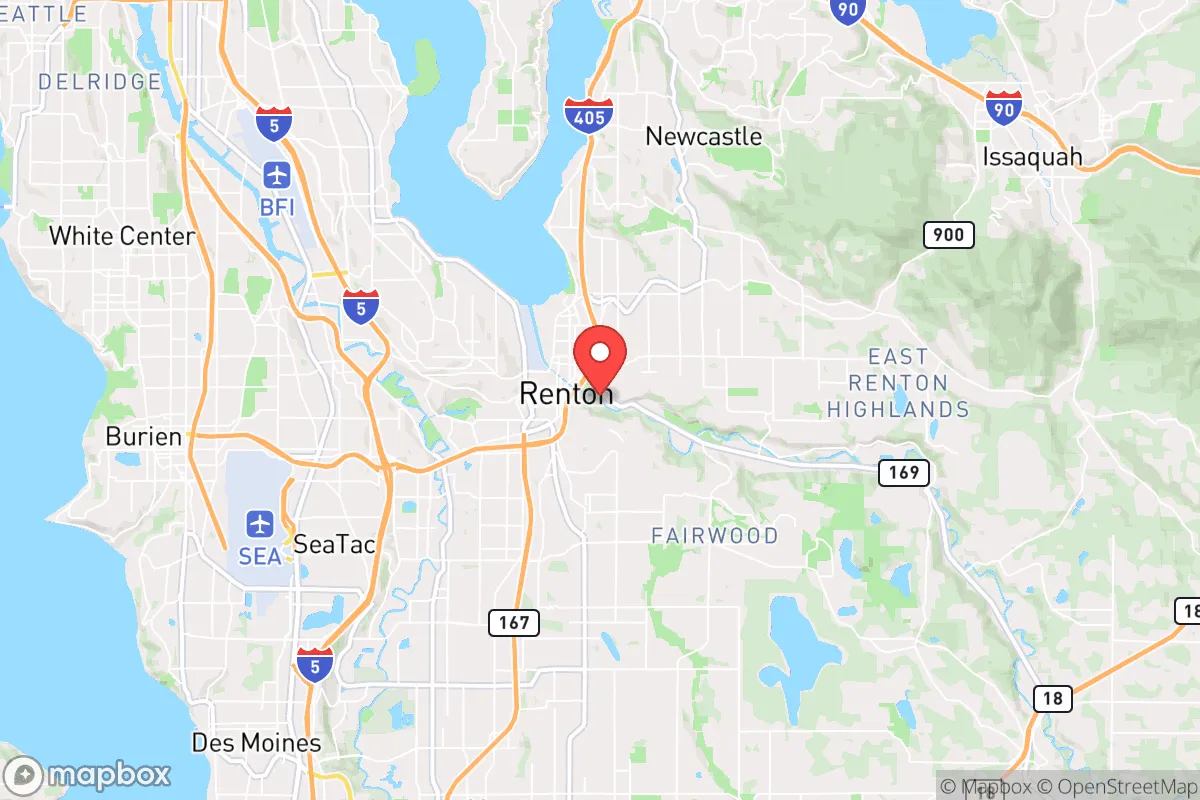
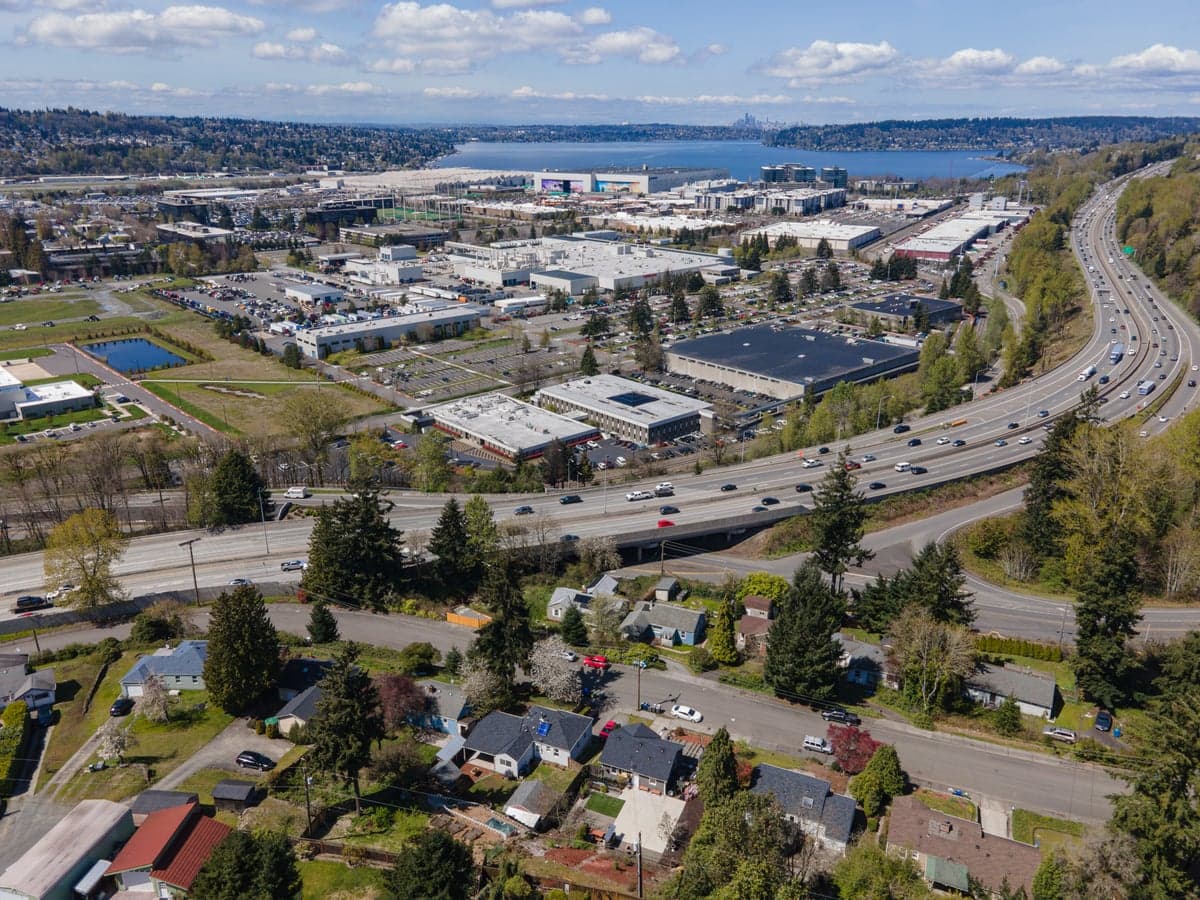
Photo: Wikipedia
Strategic Assessment of Renton, WA
High tactical risk. This location is likely close to major population centers, strategic targets, or sits in a high-disaster corridor. A retreat property and careful exit planning is required.
What does the Strategic Assessment tell us?
Our Strategic Assessment grades tactical survivability of an area. Major population centers, military targets, fallout zones, natural disasters, and border exposure all drive risk — lower exposure means a more defensible position in a crisis.
This is heavily inspired by Joel Skousen's Strategic Relocation book. Highly recommended you checkout the book ($)What does this tell us?
Our Strategic Assessment grades tactical survivability of an area. Major population centers, military targets, fallout zones, natural disasters, and border exposure all drive risk — lower exposure means a more defensible position in a crisis.
This is heavily inspired by Joel Skousen's Strategic Relocation book. Highly recommended you checkout the book ($)Strategic Pillars

Key Distances
Regional Safe Places
Below is our recommended "safe zones" in Washington and the surrounding area based on our strategic heuristics. For most people, it's unrealistic to live in a “safe zone” full-time due to work, family or other personal reasons. They tend to be more rural. However, many of these areas are perfect for second homes and retreat properties that double as a vacation home or even a short-term rental.
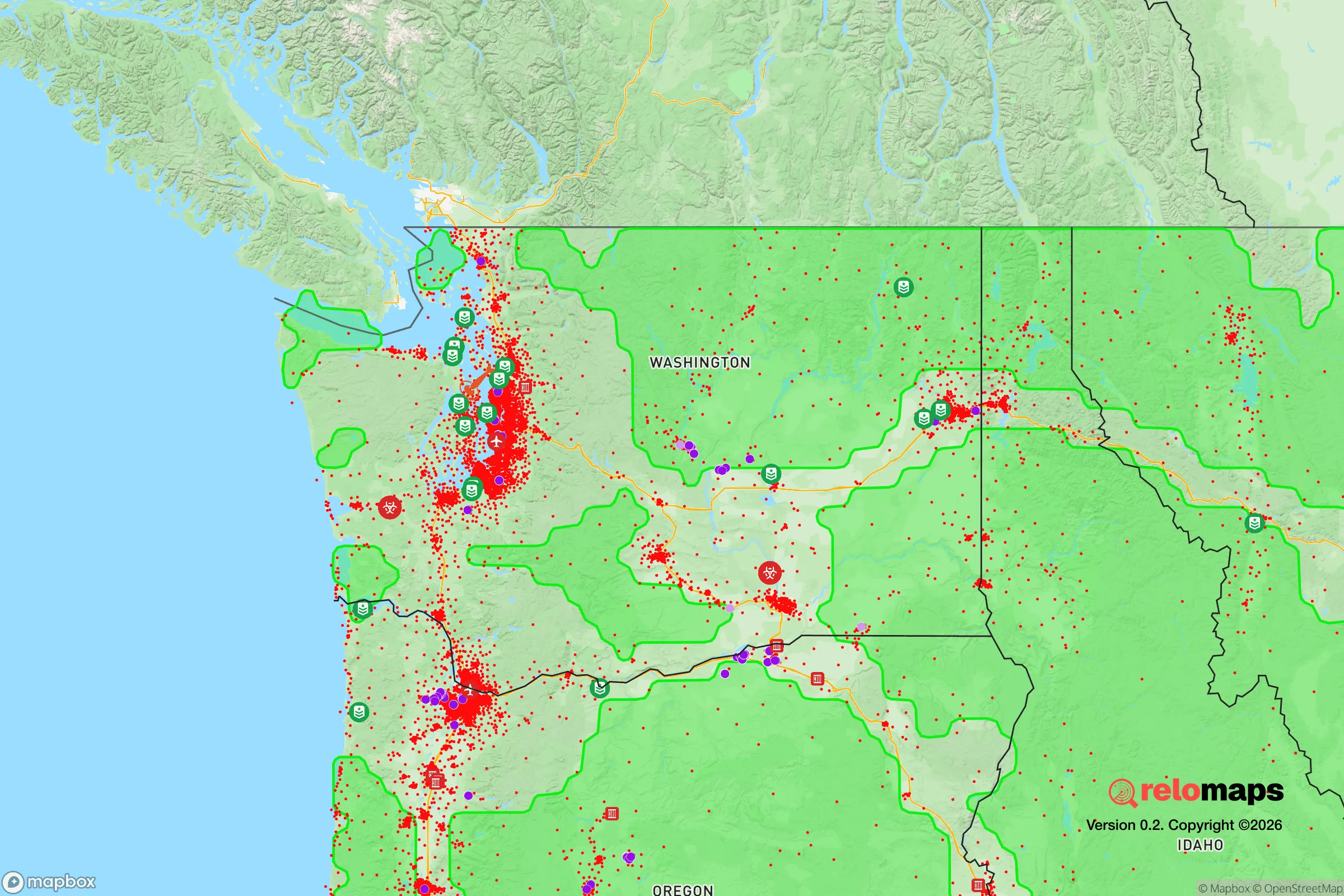
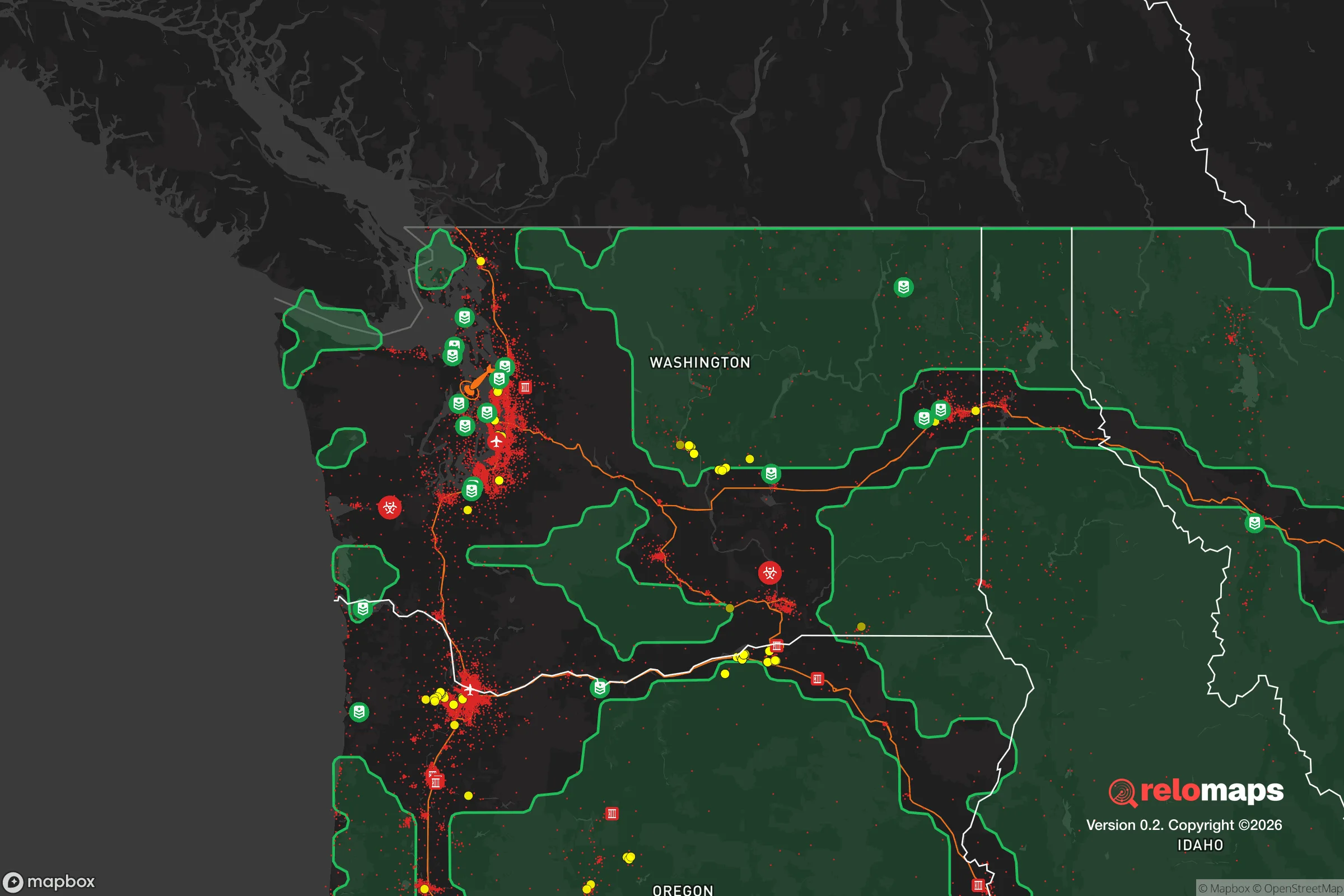


Important Note: For informational purposes only. This does not mean nothing bad ever happens in the green zones. Please use common sense. This is based on public data and modeled with AI. We tried to take a conservative approach but mistakes happen. We update this regularly as new information becomes available.
Solar Generator Recommendations
Backup power matters more here than in safer locations. We've picked three solar generators across budgets and capacity tiers — start with the budget unit if you only need a few essentials, or step up if you want to run a fridge and HVAC for days at a time.

Jackery Portable Power Station Explorer 300
Budget OptionPower on the Go: Weighing only 11 lbs, it's convenient to set up and store with book-sized foldable solar panels

BLUETTI Portable Power Station AC180
Designed for both indoor and outdoor scenarios, AC180 is highly capable as it has a robost capacity and continuous output power.

EF ECOFLOW DELTA Pro Ultra Power Station
Upgraded PickEcoFlow DELTA Pro Ultra is a whole-home energy system designed to grow with your family. Integrated with the Smart Home Panel 2, it scales to meet your evolving energy needs — keeping your home powered, intelligent, and secure through every stage of life.
We earn a commission, at no additional cost to you.
Strategic Assessment Analysis
Renton, Washington, occupies a strategic position in the Pacific Northwest that offers a mix of genuine resilience advantages and notable vulnerabilities for the disaster-conscious relocator. Situated on the southeast shore of Lake Washington, roughly 15 miles south of downtown Seattle, Renton benefits from proximity to major infrastructure while maintaining enough distance from the densest urban core to avoid the worst of a cascading collapse scenario. The city’s location at the intersection of Interstate 405 and State Route 167 provides robust transportation links, but its position within the Seattle-Tacoma-Bellevue metropolitan area means it is not a remote or easily defensible retreat—rather, it is a well-connected suburban hub that could serve as a staging ground or a temporary safe zone, depending on the nature of the disruption.
Geographic position and natural advantages for disaster readiness
Renton’s geography offers several built-in advantages for resilience. The city sits on a relatively stable plateau above the Cedar River and Lake Washington, with elevations ranging from roughly 30 to 500 feet above sea level. This elevation reduces flood risk from the Cedar River, though low-lying areas near the river and lake remain vulnerable to 100-year flood events. The surrounding landscape—the Cascade foothills to the east and the Issaquah Alps to the southeast—provides natural barriers that could slow the spread of wildfire or limit the movement of people in a crisis. The area’s temperate marine climate, with average annual rainfall of about 37 inches and temperatures rarely exceeding 90°F or dropping below 30°F, means that extreme weather events are uncommon, though the region is prone to prolonged winter storms that can knock out power for days. The presence of Lake Washington and the Cedar River offers a substantial freshwater resource, though access would require filtration or treatment in a grid-down scenario. For a relocator, the key natural advantage is the combination of moderate climate, abundant water, and defensible terrain to the east—but the city’s position within a dense suburban corridor means that any large-scale evacuation would face severe congestion on I-405 and I-5.
Risks, exposures, and proximity to fallout-relevant landmarks
The most significant risk for Renton is its proximity to high-value targets in the Seattle metropolitan area. The city lies roughly 12 miles from Seattle-Tacoma International Airport (Sea-Tac), a major international hub and a likely target in a conflict scenario. Renton is also home to Boeing’s largest commercial airplane assembly plant, a sprawling facility that produces the 737 and 777 families—a facility that would be a high-priority target in any conventional or asymmetric attack. The plant sits directly adjacent to Renton Municipal Airport and the Lake Washington shoreline, making the city’s southern and western neighborhoods particularly exposed. Additionally, the Port of Seattle, the naval base at Everett (30 miles north), and the major tech campuses in Redmond and Bellevue (10–15 miles east) all fall within a 30-mile radius. In a nuclear exchange scenario, Renton would likely experience significant fallout from strikes on these targets, with prevailing westerly winds carrying contamination eastward toward the Cascade foothills. The city’s population density—roughly 3,800 people per square mile—means that a conventional attack or industrial accident could produce mass casualties and overwhelm local medical infrastructure. For the disaster-conscious relocator, the key takeaway is that Renton’s industrial and transportation assets make it a secondary target zone, not a safe haven.
Practical resilience for a relocator: food, water, energy, and defensibility
For a relocator focused on self-sufficiency, Renton presents a mixed picture. The city’s water supply comes from the Cedar River watershed, a protected source that serves the broader Seattle region. In a grid-down scenario, residents would need to rely on stored water, rainwater catchment, or manual pumping from the lake or river—both of which require treatment. The city’s energy grid is part of the Puget Sound Energy system, which has a history of outages during windstorms and winter weather; a major disruption could leave neighborhoods without power for a week or more. Natural gas is available in most areas, but a seismic event could rupture lines and create fire hazards. Food resilience is limited: Renton has a handful of community gardens and farmers’ markets, but the city’s zoning is overwhelmingly suburban, with few parcels suitable for significant food production. The nearest agricultural land is in the Snoqualmie Valley (15 miles east) or the Puyallup Valley (20 miles south), both of which would be accessible by vehicle in normal conditions but could become contested resources in a crisis. Defensibility is the weakest point: Renton is a sprawling, low-density suburb with no natural chokepoints, and its street grid is designed for car travel, not perimeter defense. The city’s police force (about 130 sworn officers) would be stretched thin in a widespread emergency, and the proximity to major highways means that displaced populations from Seattle and Tacoma could flow into the area quickly. For a relocator seeking a defensible retreat, Renton would require significant fortification and a well-stocked cache of supplies to be viable for more than a few weeks.
The overall strategic picture for Renton is one of calculated risk. The city offers genuine advantages—stable climate, abundant water, moderate elevation, and proximity to natural barriers—that make it a reasonable choice for a relocator who wants to stay within commuting distance of Seattle’s economy while maintaining some degree of disaster readiness. However, the same factors that make Renton economically attractive—its industrial base, transportation links, and suburban density—also make it a target in a conflict scenario and a potential chokepoint in a regional evacuation. For the conservative-leaning relocator who values self-sufficiency and strategic positioning, Renton is best viewed as a temporary base or a fallback location rather than a long-term retreat. The city’s resilience depends heavily on the nature of the disruption: it could serve as a functional hub during a localized event like a winter storm or earthquake, but it would be a dangerous place to be during a large-scale attack or societal collapse. The prudent relocator would pair a Renton residence with a more remote property in the Cascade foothills or eastern Washington, using the city as a staging area for supplies and information before moving to a defensible position if conditions deteriorate.

* Values derived from national, state, county, city and local statistics and may differ in a specific area. Last updated: 2026-09-03T05:07:46.000Z
Narrative content on this page is AI-generated and may contain mistakes. Verify any details that matter before acting on them.
ReloMaps may earn a commission from affiliate links at no extra cost to you.

