 Popular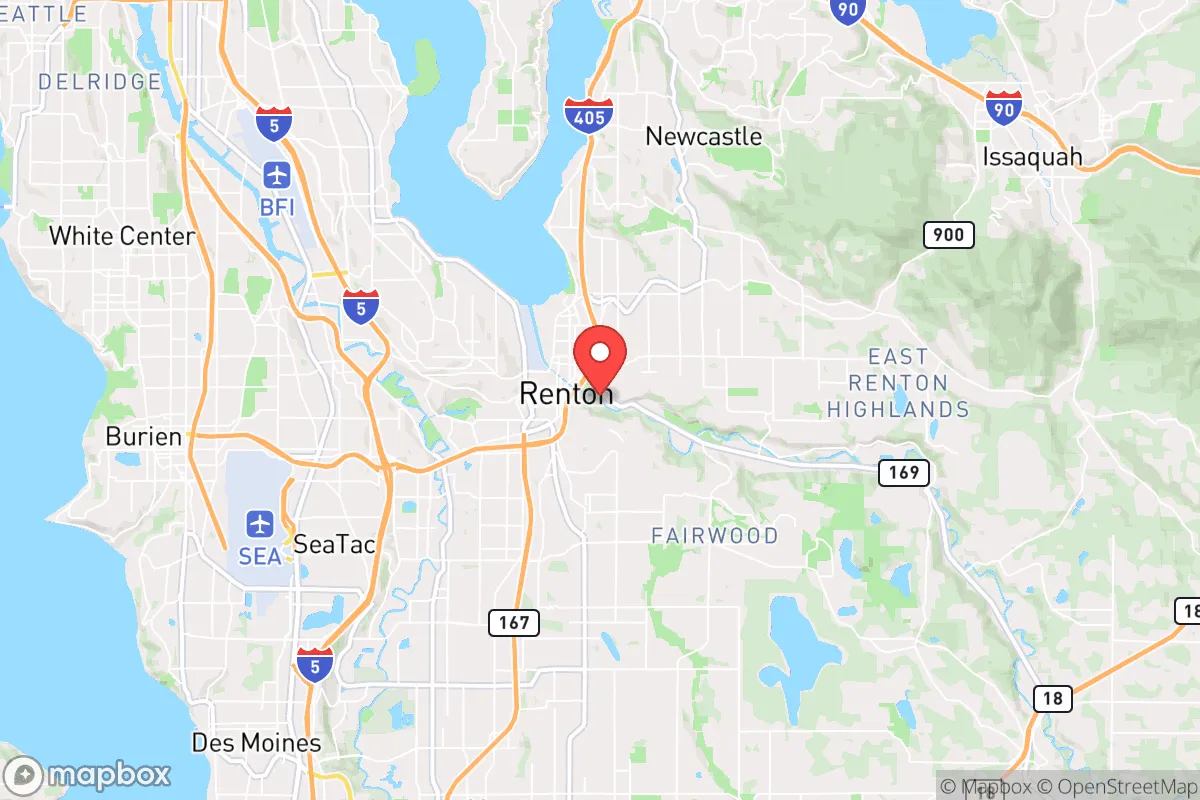
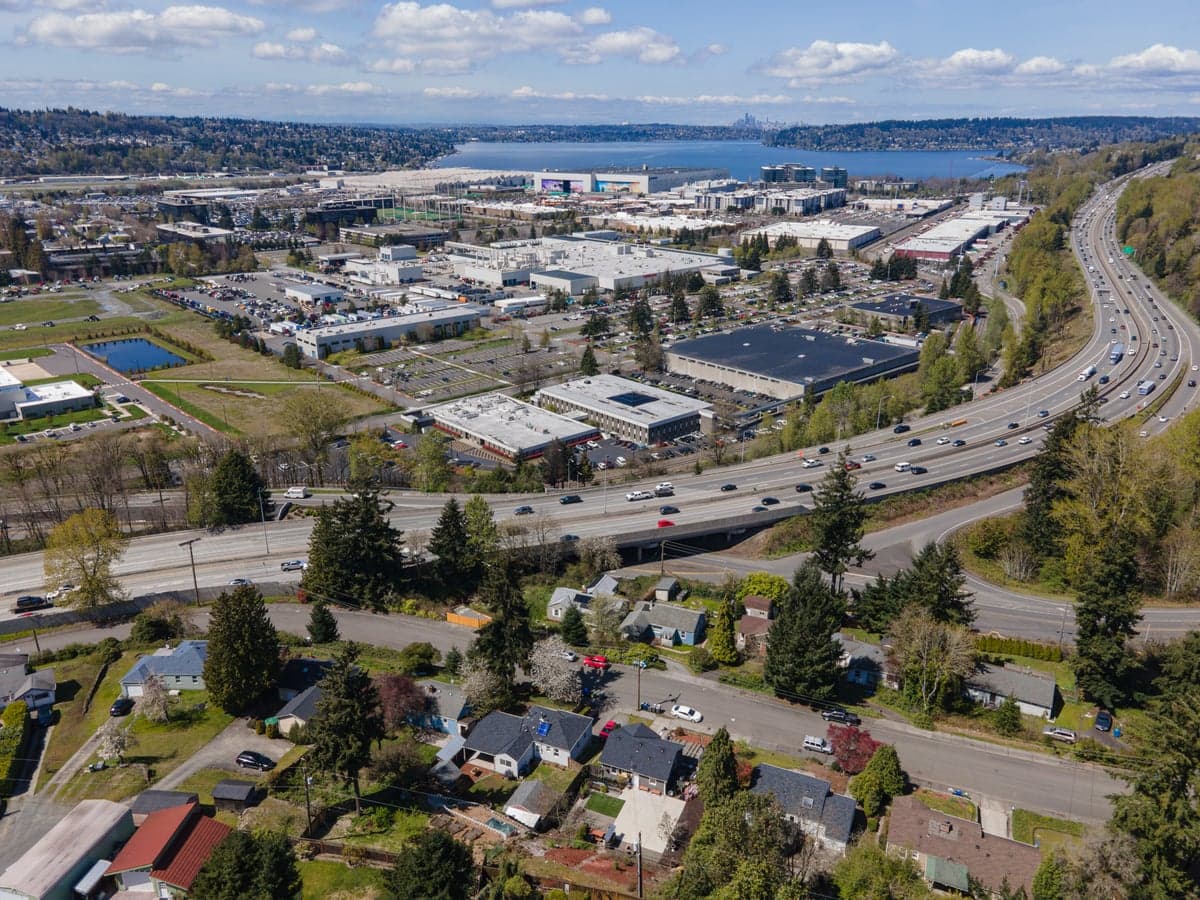
Photo: Wikipedia
Political ClimatePolitical Climate in Renton, WA
District shown is the primary district for this city’s centroid. Cities may span multiple districts.
Local Political AnalysisPolitical Analysis of Renton, WA
Renton leans heavily Democratic, with a Cook Partisan Voting Index of D+22, making it one of the most reliably blue cities in the Seattle metro area. This isn't a recent shift—the city has been trending left for decades, driven by a growing tech workforce, union-heavy aerospace roots, and an increasingly diverse population. In practice, that means local elections are usually decided in the primary, and Republican candidates rarely crack 35% in citywide races. The surrounding King County is also solidly blue, but you don't have to drive far to find redder territory: head east to Issaquah or Sammamish, and you'll see more purple-leaning suburbs, while rural areas like Enumclaw or Black Diamond tilt conservative.
How it compares
Compared to Washington state as a whole, Renton is significantly more liberal. The state's Cook PVI is unknown, but statewide elections often swing closer to the middle—Washington has a competitive governor's race and split legislative districts in places like the 8th Congressional District. Renton, by contrast, is a Democratic stronghold where progressive policies on housing, transit, and environmental regulation tend to get broad support. The city's voting patterns align more with Seattle proper than with the rest of King County: in the 2024 presidential election, Renton's precincts gave the Democratic candidate over 70% of the vote, while nearby Bellevue and Redmond hovered around 60-65%. That gap matters because Renton's politics feel more urban than suburban, even though the city has a mix of single-family homes and industrial zones.
What this means for residents
For liberal residents, Renton's political climate means local government is generally responsive on issues like affordable housing funding, public transit expansion (Sound Transit's 1 Line runs through the city), and climate action plans. Conservative residents aren't shut out, but they often find themselves in the minority on city council votes—Renton's council is nonpartisan in name, but all seven members are effectively Democrats. That said, the city's tax burden is moderate compared to Seattle: property tax rates are lower, and there's no city income tax. Politically active conservatives tend to focus on school board races or county-level positions, where margins can be tighter. The practical effect is that Renton feels less polarized than many blue cities—people generally get along, and local debates are more about implementation than ideology.
Culturally, Renton stands apart from Seattle in a few key ways. The city has a strong working-class history tied to Boeing's 737 plant, which still employs thousands, and that legacy tempers some of the progressive activism you'd see in Capitol Hill. You'll find more union flags than pride flags in certain neighborhoods, and the city's large immigrant communities—particularly Vietnamese, Somali, and Filipino—shape local politics in ways that don't always align with coastal liberal orthodoxy. For example, Renton's city council has been cautious on zoning reforms that would upzone single-family neighborhoods, reflecting a pragmatic, homeowner-focused streak. Over the next decade, expect Renton to stay blue but get more diverse in its political priorities, as new residents from Seattle and tech workers from Amazon and Microsoft continue to move in, pushing the needle on transit and density while the old Boeing workforce ages out.

State Political ClimatePolitical Climate in Washington
State Political AnalysisPolitical Environment in the State
Washington state has been a reliably blue stronghold for over a decade, with Democrats controlling the governorship, both U.S. Senate seats, and both chambers of the state legislature since 2012. The state’s overall partisan lean is driven overwhelmingly by King County (Seattle) and its surrounding suburbs, which cast roughly a third of all votes and deliver margins of 70% or more for Democratic candidates. However, this blue veneer masks a deeply divided state: the 2024 presidential race saw King County vote +48 for Kamala Harris, while rural counties like Yakima, Spokane, and Stevens voted +20 to +40 for Donald Trump. The trajectory over the past 20 years has been a steady leftward shift in the populous I-5 corridor, paired with an equally steady rightward shift in the eastern and southwestern parts of the state, creating a political landscape that feels like two different countries sharing a border.
Urban vs. rural divide
The political map of Washington is a story of three distinct regions. The Puget Sound metroplex—Seattle, Bellevue, Redmond, Tacoma, and Olympia—is the engine of Democratic power. King County alone accounts for 30% of the state’s population and votes about 75% Democratic in statewide races. Snohomish and Pierce counties are more competitive but still lean blue, especially in their urban cores. In contrast, Eastern Washington—Spokane, the Tri-Cities (Kennewick, Pasco, Richland), and Yakima—is solidly Republican, with Spokane County flipping from purple to red over the past decade. The Olympic Peninsula and Southwest Washington (Vancouver, Longview) are more mixed: Clark County, just across the Columbia from Portland, has trended blue as Portland exurbs spill over, but rural parts of Lewis and Grays Harbor counties remain deeply red. The net effect is a state where a Democrat can win by 15 points statewide while losing 30 of 39 counties.
Policy environment
Washington’s policy environment is defined by a few key levers that directly affect relocators. Taxes: There is no state income tax, which is a major draw for high earners, but the state relies heavily on a regressive sales tax (6.5% state rate, plus local add-ons that can push it to 10%+ in Seattle) and high property taxes. Regulatory posture: The state is a national leader in environmental regulation, with a carbon cap-and-trade program (Climate Commitment Act) that adds costs to gasoline and heating. Education: Washington spends above the national average per pupil, but the state’s charter school law is weak, and school choice options are limited. Healthcare: The state expanded Medicaid under the ACA and has a robust public health system, but rural hospital closures are a growing concern. Election laws: Washington has universal vote-by-mail, automatic voter registration, and same-day registration, making it one of the easiest states to vote in—but also a target for election integrity concerns among conservatives.
Recent policy direction
Over the past five years, Washington’s legislature has moved aggressively on several fronts that relocators should weigh carefully. Gun and self-defense law: In 2023, the state passed a ban on the sale of assault weapons (HB 1240) and a ban on high-capacity magazines (HB 1143), plus a 10-day waiting period for all firearm purchases. A permit-to-purchase law took effect in 2024. These laws are being challenged in court, but they represent a clear direction. Parental and education rights: The state has strong anti-discrimination protections for LGBTQ+ students, and a 2023 law (SB 5599) allows minors to access shelter and certain medical services without parental consent, which has become a flashpoint. Speech and privacy: Washington has a strong state-level privacy law (Washington Privacy Act) and a ban on facial recognition by government agencies without a warrant. Medical and bodily autonomy: Abortion remains legal up to viability, and the state has a shield law protecting providers who serve out-of-state patients. Property rights: The state’s Growth Management Act heavily restricts development in rural areas, and a 2023 law (HB 1110) mandates upzoning near transit, which has angered suburban homeowners. Taxation: A capital gains tax on high earners (7% on gains over $250,000) was upheld by the state supreme court in 2023, and a wealth tax is being discussed. Voting and ballot access: The state has no voter ID requirement, and felons regain voting rights upon release from prison, not after completion of parole.
Civil unrest & political movements
Washington has a history of visible political activism on both sides. The 2020 protests in Seattle, including the Capitol Hill Autonomous Zone (CHAZ), drew national attention and remain a touchstone for conservative critics of the state’s governance. Since then, organized left-wing activism has focused on climate (the Youth Climate Strike, Extinction Rebellion) and housing (the Seattle DSA’s push for rent control). On the right, the Washington State Republican Party has been fractured between establishment and Trump-aligned factions, but grassroots groups like the Washington Gun Rights Coalition and Moms for Liberty chapters in suburban counties like Clark and Snohomish are active. Immigration politics: Washington is a sanctuary state, with a 2019 law (Keep Washington Working Act) that limits local law enforcement cooperation with ICE. This has led to tensions in border counties like Yakima, where agricultural employers rely on immigrant labor but some residents oppose sanctuary policies. Election integrity: The 2020 and 2022 elections saw no major fraud cases, but conservative groups have raised concerns about the state’s vote-by-mail system, leading to a 2024 law (SB 5230) that added signature verification requirements. Secession rhetoric: The “Greater Idaho” movement, which proposes moving parts of Eastern Washington into Idaho, has gained some traction in rural counties like Stevens and Ferry, but it remains a fringe idea.
Projection
Over the next 5-10 years, Washington’s political trajectory is likely to continue its current path: the Puget Sound region will become even more Democratic as tech-driven in-migration from California and other blue states accelerates, while rural areas will become more Republican as they lose population and feel increasingly alienated. The key swing areas will be the suburban ring counties—Pierce, Snohomish, and Clark—where moderate voters are being pulled left by national trends but right by local issues like crime and housing costs. Expect continued legislative battles over gun laws, parental rights, and taxes, with Democrats likely to maintain their trifecta due to the population weight of King County. A relocator moving in now should expect to live in a state where the political climate is increasingly polarized, but where the practical impact on daily life depends heavily on where they settle: a conservative family in Spokane will have a very different experience than a liberal family in Seattle.
Bottom line for a new resident: If you’re a conservative considering Washington, you’ll find a strong community in Eastern Washington or the more rural parts of the Olympic Peninsula, but you’ll be living under state laws that are increasingly at odds with your values—especially on guns, taxes, and parental rights. If you’re a liberal, you’ll find a state that largely aligns with your views, but you’ll pay for it with high housing costs and a regressive tax system. The practical takeaway is that Washington is not a monolith: choose your city carefully, because the political reality in Vancouver is not the same as in Yakima, and neither is the same as in Seattle.
* Values derived from national, state, county, city and local statistics and may differ in a specific area. Last updated: 2026-09-03T05:07:46.000Z
Narrative content on this page is AI-generated and may contain mistakes. Verify any details that matter before acting on them.
ReloMaps may earn a commission from affiliate links at no extra cost to you.

