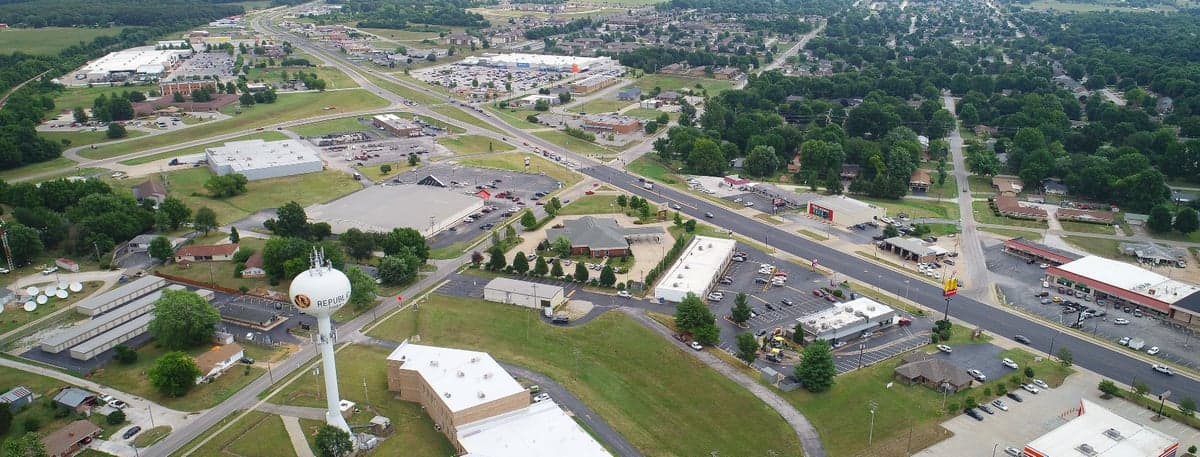
Photo: Wikipedia
Political ClimatePolitical Climate in Republic, MO
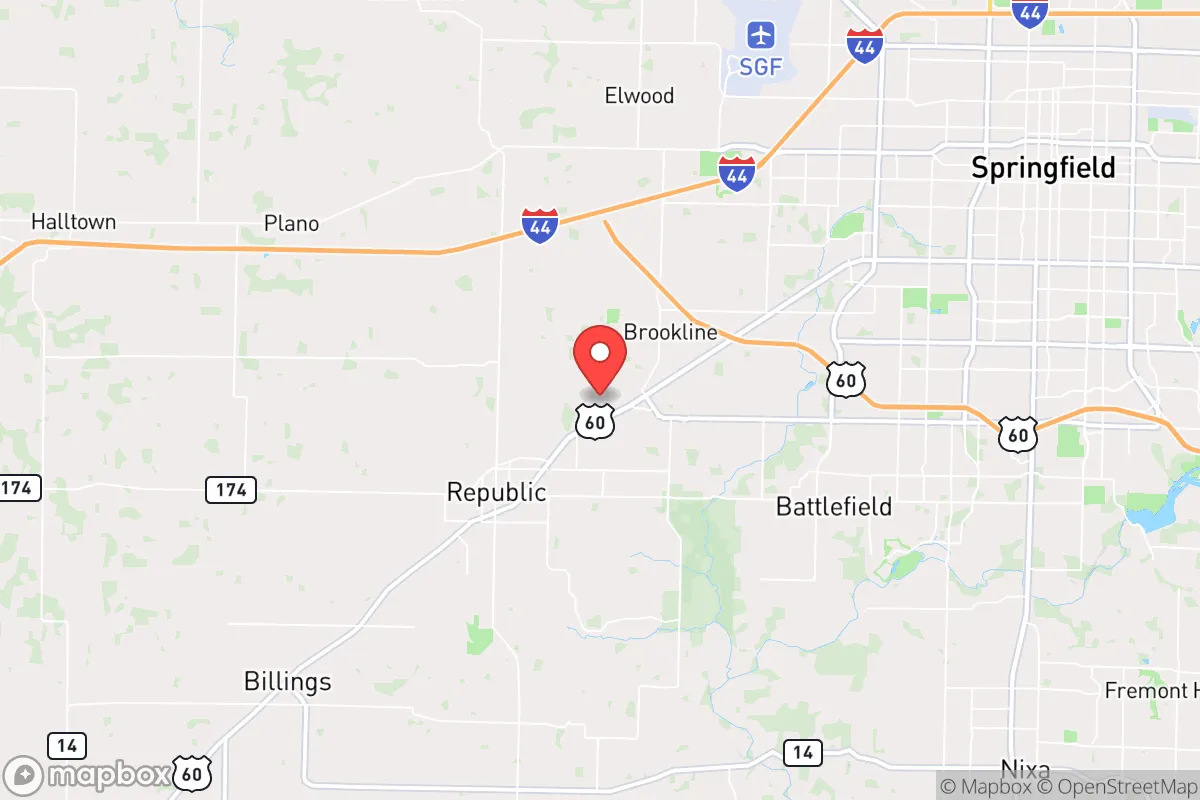
District shown is the primary district for this city’s centroid. Cities may span multiple districts.
Local Political AnalysisPolitical Analysis of Republic, MO
Republic, Missouri, sits solidly in the red, with a Cook Partisan Voting Index of R+21, meaning it votes about 21 points more Republican than the national average. That’s not just a number; it reflects a community where conservative values aren’t just a preference but a way of life. For as long as I can remember, this area has leaned hard toward limited government, personal responsibility, and a general distrust of federal overreach. The trajectory here hasn’t shifted much, though you can feel a subtle tension as Springfield’s growth creeps closer, bringing with it a more mixed political crowd.
How it compares
Compared to Springfield, which is a bit more of a mixed bag politically, Republic is a fortress of conservative thinking. Springfield has its pockets of progressive lean, especially near the university, but drive ten minutes south to Republic and the vibe changes completely. You’ll see more Trump signs in yards, more folks openly carrying, and a general attitude that government should stay out of your business. Neighboring towns like Nixa and Ozark are similar, but Republic has a grittier, more working-class feel that makes its conservatism feel less polished and more lived-in. The contrast with bigger cities like Kansas City or St. Louis is night and day—those places are practically a different country politically.
What this means for residents
For residents, the political climate here means you can generally expect local government to keep its hands off your personal freedoms. Taxes stay low, gun rights are respected without a lot of hoops, and there’s a strong sense that your vote actually counts toward keeping things that way. The school board and city council tend to lean conservative, so you don’t see a lot of progressive curriculum or woke policies creeping in. That said, there’s a growing concern among long-time residents about outside influence—people moving in from blue states who bring different ideas about zoning, policing, and public spending. If that trend continues, we could see some erosion of the local culture that makes Republic feel like a safe, free place to raise a family.
One thing that stands out culturally is the strong presence of local churches and civic groups that reinforce conservative values without being preachy. You won’t find a lot of protests or political drama here; it’s more about quietly living your life and expecting the same from your neighbors. The biggest policy distinction is probably the area’s resistance to mask mandates and vaccine passports—during the pandemic, Republic was a place where people largely made their own choices without heavy-handed government interference. Looking ahead, the concern is that as the region grows, we might see more pressure to adopt policies that prioritize collective conformity over individual liberty. For now, though, Republic remains a place where you can still breathe free, and that’s worth holding onto.

State Political ClimatePolitical Climate in Missouri
State Political AnalysisPolitical Environment in the State
Missouri has long been a bellwether state, but over the past 20 years it has shifted from a classic swing state to a solidly Republican-leaning one, with a deep red hue outside its urban cores. The state voted for Donald Trump by roughly 15 points in 2020 and again in 2024, a stark contrast from 2008 when it was decided by just 3,000 votes. Today, the dominant coalition is a mix of rural conservatives, suburban ex-urbanites, and a growing number of transplants from blue states, all pushing the state legislature and governor’s office firmly to the right. However, the path is not uniform—St. Louis and Kansas City remain progressive strongholds, creating a sharp urban-rural divide that defines nearly every policy debate.
Urban vs. rural divide
The political map of Missouri is a tale of two worlds. The state’s two major metros—St. Louis and Kansas City—vote overwhelmingly Democratic, often by margins of 60-70% in presidential elections. St. Louis County, with its inner-ring suburbs like University City and Clayton, is a Democratic fortress, while the city itself is a progressive enclave. Kansas City’s Jackson County, including Independence and Lee’s Summit, leans blue, though the northern suburbs like Liberty and Platte City are more purple. In contrast, the rest of the state is deeply red. Rural counties like Texas County and Howell County in the Ozarks routinely vote 80% Republican. The I-44 corridor from St. Louis to Joplin is a Republican stronghold, while the Bootheel region in the southeast, once a Democratic bastion, has flipped hard red over the last decade. The suburban ring around St. Louis—particularly St. Charles County—has become a critical battleground, but it has trended right since 2016, with St. Peters and O’Fallon now reliably Republican.
Policy environment
Missouri’s policy environment is broadly conservative, with a low-tax, low-regulation posture that appeals to many relocating families. The state has a flat income tax rate of 4.8% (down from 5.4% in 2023, with further cuts triggered by revenue triggers), and no estate tax. Property taxes are among the lowest in the nation, averaging around 0.9% of home value. The state is a “right-to-work” state (though the law was repealed by ballot measure in 2018, the legislature has since passed other union-restricting measures), and it has a strong preemption law that prevents local governments from enacting stricter gun laws than the state. On education, Missouri has a robust school choice program, including charter schools in St. Louis and Kansas City, and a growing voucher-like program for special needs students. Healthcare policy is mixed: the state expanded Medicaid in 2021 via ballot initiative, but the legislature has resisted further expansion and has passed laws restricting abortion to the first eight weeks (with no exceptions for rape or incest, though a 2024 ballot measure enshrined abortion rights up to fetal viability, creating a legal clash). Election laws have tightened: voter ID is required, and the state purged inactive voters in 2023. Overall, the policy environment is friendly to gun owners, low-tax advocates, and parents seeking school choice, but it remains a battleground over abortion and Medicaid.
Trajectory & freedom
Missouri’s trajectory on personal freedom is a mixed bag, but the trend is toward more liberty in most areas. The state has expanded gun rights significantly: in 2021, it passed a “Second Amendment Preservation Act” (SAPA) that nullifies federal gun laws, though parts of it were struck down by a federal court in 2023. The legislature has also passed a “Stand Your Ground” law and constitutional carry (permitless concealed carry) in 2016. On parental rights, Missouri passed a “Parents’ Bill of Rights” in 2022, giving parents more control over school curricula and medical decisions. Medical freedom saw a win with the passage of a law banning vaccine passports in 2021. However, there are concerning trends: the state’s Medicaid expansion, while popular, has increased government healthcare spending, and the 2024 abortion rights amendment (which passed with 52% of the vote) overrode the legislature’s near-total ban, creating a new layer of government regulation. Property rights remain strong, with no statewide rent control and limited eminent domain abuse. Taxation is trending downward, with income tax cuts scheduled to hit 4.5% by 2027. Overall, a new resident will find a state that is actively expanding personal liberty in most areas, but the abortion and healthcare battles are far from settled.
Civil unrest & political movements
Missouri has seen its share of civil unrest, particularly in the St. Louis area. The 2014 Ferguson protests, sparked by the shooting of Michael Brown, were a national flashpoint and led to the “Ferguson Effect” on policing. Since then, the state has seen periodic protests over police brutality and racial justice, mostly concentrated in St. Louis and Kansas City. On the right, the “Patriot” movement is active, with groups like the Missouri State Militia and the Oath Keepers having a presence, particularly in rural areas. Immigration politics are relatively quiet, as Missouri has a small foreign-born population (about 4%), but the state has passed laws banning sanctuary cities and requiring E-Verify for employers. Election integrity has been a hot topic: the 2020 election saw no major fraud, but the legislature passed a voter ID law and banned ballot drop boxes in 2022. There have been no serious secession or nullification movements, though the SAPA law was a form of nullification. A new resident will notice the political divide most in the suburbs: in St. Charles County, you’ll see Trump flags and “Don’t Tread on Me” plates, while in University City, you’ll see Black Lives Matter signs. The flashpoints are real but localized.
Projection
Over the next 5-10 years, Missouri is likely to become more Republican and more conservative, driven by in-migration from blue states like Illinois and California. The Lake of the Ozarks region and Springfield are growing fast, attracting retirees and remote workers who value low taxes and gun rights. The urban cores of St. Louis and Kansas City will continue to shrink in population and political influence, while the suburbs and exurbs expand. The abortion rights amendment will create ongoing legal battles, but the legislature is likely to pass further restrictions (like a 15-week ban) that will be challenged in court. The state’s tax cuts will continue, making it even more attractive for business. However, the biggest wildcard is the St. Louis region: if the city’s population decline accelerates, it could lose a congressional seat, further diluting Democratic power. A new resident moving in now should expect a state that is increasingly red, with a government that is friendly to gun owners, parents, and low-tax advocates, but with ongoing cultural battles over abortion and education that will be fought in the courts and at the ballot box.
Bottom line for a new resident: If you’re a conservative-leaning individual or parent, Missouri offers a welcoming environment with low taxes, strong gun rights, and school choice. You’ll find your values reflected in most of the state outside of St. Louis and Kansas City. But be prepared for the urban-rural divide to be in your face—especially if you live near the metros. The state is trending in your direction, but the fight over abortion and education is far from over. If you’re looking for a place where your personal freedoms are respected and your tax dollars go further, Missouri is a solid bet—just know that the blue islands are still there, and they’re not going quietly.
* Values derived from national, state, county, city and local statistics and may differ in a specific area. Last updated: 2026-04-30T04:10:49.000Z
Narrative content on this page is AI-generated and may contain mistakes. Verify any details that matter before acting on them.
ReloMaps may earn a commission from affiliate links at no extra cost to you.

