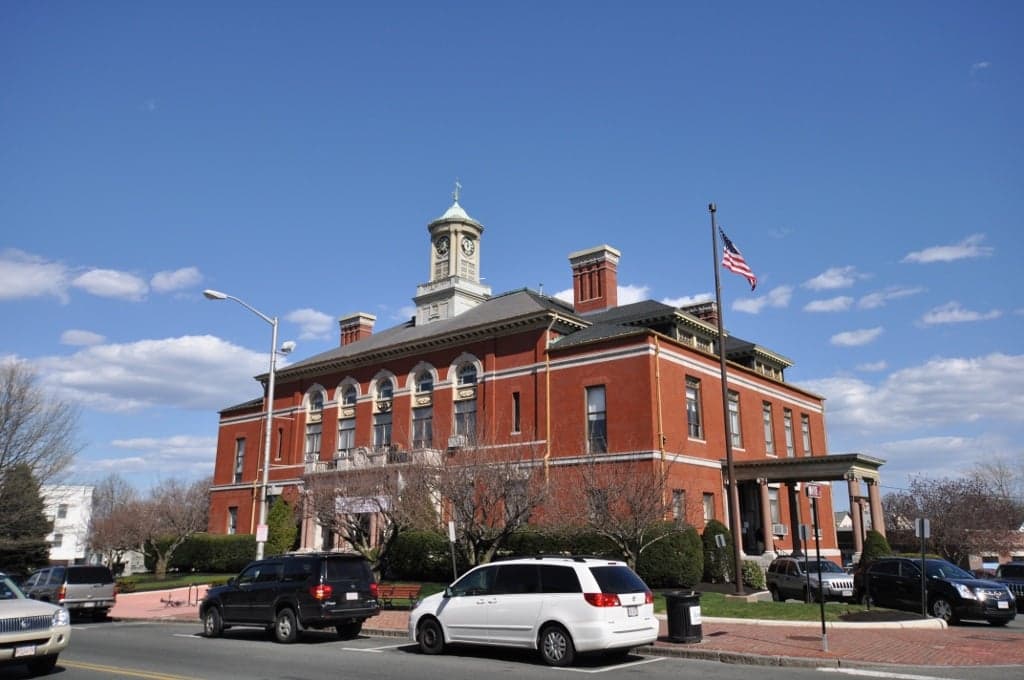
Photo: Wikipedia
Demographics of Revere, MA
Affluence Level in Revere, MA
A middle-class area roughly in line with national averages across income, home values, education, and employment.
People of Revere, MA
The people of Revere, Massachusetts, today form a dense, majority-minority city of 59,933 residents, characterized by a strong immigrant presence and a rapidly growing Hispanic population that now approaches 40% of the city. With 26.1% foreign-born and only 24.7% college-educated, Revere is a working-class, transit-connected suburb just north of Boston, distinct from its wealthier neighbors like Winthrop and Lynnfield. Its identity is shaped by a layered history of European ethnic enclaves giving way to newer waves from Latin America, Southeast Asia, and the Indian subcontinent, creating a city that is both deeply rooted and in demographic flux.
How the city was settled and grew
Revere’s original European settlement began in the 1630s as part of the Massachusetts Bay Colony, but it remained a sparsely populated farming and fishing area called Rumney Marsh for nearly two centuries. The city’s modern population history starts in the mid-19th century, when the Boston & Revere Beach Railroad (1875) and the construction of the Revere Beach amusement park turned the area into a seaside destination for Boston’s working class. The first major wave of immigrants were Irish, who arrived during the Great Famine (1845–1852) and settled in the Oak Island and Point of Pines neighborhoods, working as laborers on the railroad and in local factories. By 1900, Italian immigrants followed, drawn by jobs in the city’s growing shoe and leather industries, and they concentrated in Shirley Avenue and the Beachmont area, building the dense three-decker homes that still define those streets. A smaller wave of Jewish families from Eastern Europe arrived in the 1910s–1920s, settling near the Revere Street commercial corridor and establishing synagogues and delis that lasted into the 1970s. By 1950, Revere was overwhelmingly white (over 98%), with a population of roughly 36,000, dominated by Irish and Italian Catholics whose descendants still form a significant portion of the city’s white population today.
Modern era (post-1965)
The 1965 Hart-Cellar Act fundamentally reshaped Revere’s demographics. The first post-1965 arrivals were Portuguese immigrants from the Azores, who settled in the West Revere and Northgate sections, working in construction and service jobs. By the 1980s, a growing Hispanic population—primarily from El Salvador, Guatemala, and Colombia—began moving into the Shirley Avenue and Downtown Revere areas, drawn by affordable rental housing and proximity to Boston’s hospitality industry. This wave accelerated sharply after 2000: Revere’s Hispanic share rose from 11.5% in 2000 to 38.6% by 2024, while the white share fell from 82% to 48%. The city also saw a smaller but notable influx of East/Southeast Asian families (2.4%), mostly Vietnamese and Cambodian, who settled in Beachmont and Oak Island, often opening nail salons and restaurants. Indian-subcontinent residents (1.7%) arrived later, primarily after 2010, and are concentrated in the newer apartment complexes near the Suffolk Downs redevelopment area. The black population (4.3%) includes both African American families from Boston and recent immigrants from Haiti and Cape Verde, scattered across the city but with a slight cluster in West Revere. Revere’s foreign-born share (26.1%) is nearly double the Massachusetts average, and the city remains one of the most linguistically diverse in the state, with Spanish, Portuguese, and Vietnamese widely spoken in public spaces.
The future
Revere’s population is trending toward a Hispanic-majority future, likely within the next 10–15 years, as the white population continues to age and decline (median age for whites is 45, versus 29 for Hispanics). The city is not homogenizing, however—it is tribalizing into distinct enclaves. Shirley Avenue is now overwhelmingly Salvadoran and Guatemalan, while Beachmont retains a strong Italian-American core alongside a growing Vietnamese presence. The Suffolk Downs redevelopment, a 161-acre mixed-use project on the former racetrack, is attracting younger, college-educated professionals (many from Boston) and a small number of Indian-subcontinent families, but this group remains a thin slice of the population. The immigrant communities are not plateauing: Hispanic growth is still accelerating, driven by both new arrivals and high birth rates, while East/Southeast Asian and Indian populations are growing slowly but steadily. The city’s low college attainment rate (24.7%) and heavy reliance on service-sector jobs mean that upward mobility for newer arrivals is limited, and the school system faces challenges with English-learner enrollment (over 30% of students).
For someone moving in now, Revere is a city in transition—still affordable by Boston standards, but increasingly defined by its Hispanic majority and the cultural friction between older white ethnic residents and newer immigrant groups. It is not a homogenizing suburb but a layered, working-class gateway city where each neighborhood retains a distinct identity. New arrivals should expect a dense, transit-rich environment with strong community ties but also the challenges of a school system under strain and a tax base that has not kept pace with demographic change.

* Values derived from national, state, county, city and local statistics and may differ in a specific area. Last updated: 2026-05-01T07:34:24.000Z
Narrative content on this page is AI-generated and may contain mistakes. Verify any details that matter before acting on them.
ReloMaps may earn a commission from affiliate links at no extra cost to you.

