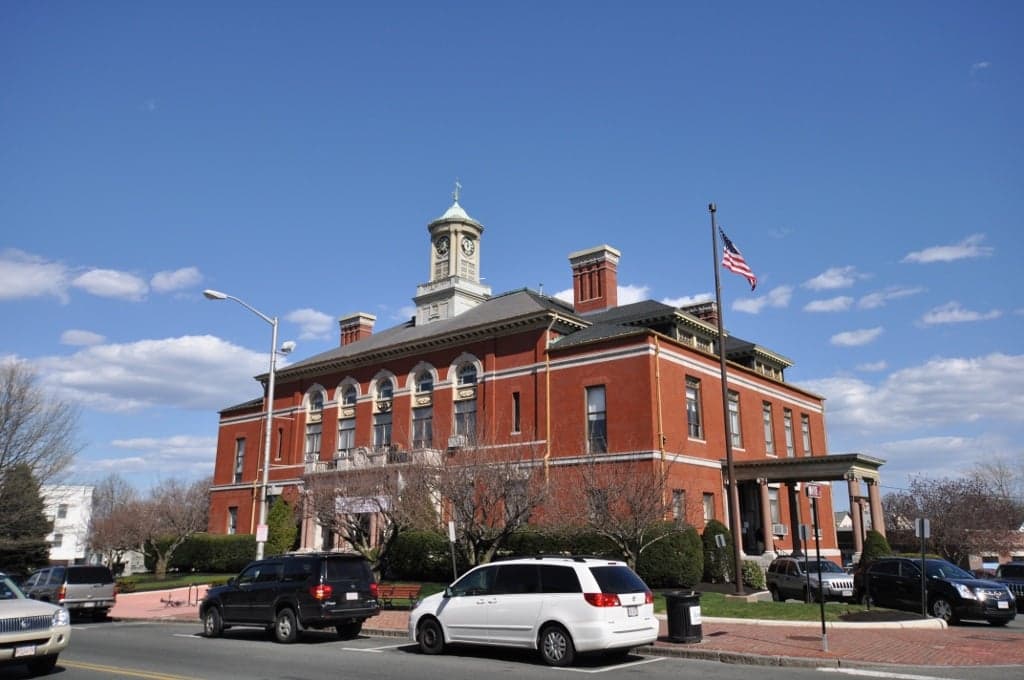
Photo: Wikipedia
Personal Sovereignty in Revere, MA
Viable for self-reliance. Generally workable, though some barriers may limit total independence.
What does Personal Sovereignty tell us?
Personal Sovereignty measures your capacity for self-reliance and independence with minimal government friction. Higher scores mean fewer barriers between you and the way you want to live... but it assumes you have the space you need and good neighbors.
What does this tell us?
Personal Sovereignty measures your capacity for self-reliance and independence with minimal government friction. Higher scores mean fewer barriers between you and the way you want to live... but it assumes you have the space you need and good neighbors.
State Policy
Energy independence: Importer (5% of energy produced in-state)
Personal Liberty
Homesteading

Personal Liberty Analysis
For a conservative-leaning individual or family prioritizing personal sovereignty, Revere, Massachusetts presents a challenging environment where state-level overreach significantly constrains local autonomy. As a densely settled, inner-ring suburb of Boston, Revere is subject to the full weight of Massachusetts’ progressive governance, which heavily regulates firearms, taxes income and property at high rates, and imposes strict zoning that limits self-reliance. While the city itself has a working-class, independent character, the legal and regulatory framework from Beacon Hill makes Revere a low-sovereignty location for those seeking to minimize government intrusion into daily life, self-defense, and property rights.
Tax burden and regulatory posture for property owners and earners
Massachusetts imposes one of the heaviest tax burdens in the nation, and Revere residents feel it directly. The state’s flat income tax rate of 5.0% (with a surtax on incomes over $1 million) is coupled with a sales tax of 6.25%. Property taxes in Revere are moderate for the metro area—around $4,500 annually on a median home value of roughly $500,000—but the state’s overall tax climate ranks poorly for business and individual freedom. More concerning for the sovereignty-minded is the regulatory posture: Massachusetts has a statewide building code, strict environmental regulations (Chapter 91 wetlands protection), and a powerful Department of Public Health that can override local decisions. Zoning in Revere is predominantly dense residential and commercial, with little room for agricultural or light industrial use on residential lots. The city’s Planning Board and Zoning Board of Appeals have final say on variances, and the process is notoriously slow and expensive. For someone wanting to run a home-based business, install solar panels, or build a detached workshop, the permitting gauntlet is a significant barrier. The state’s high energy costs (among the highest in the continental U.S.) and aggressive climate mandates further erode economic self-determination.
Self-defense and gun law specifics in Massachusetts
Massachusetts has some of the most restrictive gun laws in the country, and Revere offers no local relief. The state requires a License to Carry (LTC) for any handgun, which is issued by the local police department—in Revere, the Chief of Police has discretion over “suitability” determinations. While the Supreme Court’s Bruen decision (2022) has weakened some of these restrictions, Massachusetts still mandates a firearms safety course, a background check, and a 10-day waiting period for all purchases. The state’s “assault weapons” ban remains in effect, and magazine capacity is limited to 10 rounds. Open carry is effectively prohibited, and transporting firearms requires them to be unloaded and locked in a case. For the prepper or survivalist, this means no AR-15s, no standard-capacity magazines, and no concealed carry without a government-issued permit that can be denied or revoked. The state also has a “red flag” law (ERPO) allowing for temporary seizure of firearms based on a complaint, without a criminal conviction. Self-defense in the home is legally recognized under the “castle doctrine,” but there is no “stand your ground” law—a duty to retreat applies in public spaces. For anyone prioritizing the right to keep and bear arms as a fundamental liberty, Revere and Massachusetts as a whole are among the least favorable jurisdictions in the United States.
Self-reliance and homesteading viability in a dense suburb
Revere’s urban density and small lot sizes make traditional homesteading nearly impossible. The typical single-family lot is 5,000 to 7,000 square feet, with many homes on 3,000-4,000 square foot parcels. Zoning prohibits livestock, and keeping chickens requires a special permit from the Board of Health—rarely granted in residential areas. Gardening is allowed, but the small yards and heavy shade from neighboring buildings limit food production. Off-grid living is not feasible: the city requires connection to municipal water and sewer, and building codes mandate grid-tied electrical systems. Rainwater collection is restricted by state water rights laws. For someone seeking to reduce dependence on supply chains, grow their own food, or generate their own power, Revere offers almost no practical options. The nearest land suitable for a hobby farm or rural homestead is 30-45 minutes west (e.g., Littleton, Harvard) or north (e.g., New Hampshire border towns), but those areas come with their own regulatory hurdles. Within Revere, the best a prepper can do is maximize a small backyard garden, install solar panels (with permitting), and stockpile supplies—but true self-reliance is structurally blocked by zoning and density.
Personal liberties: parental rights, medical autonomy, speech, and property
Massachusetts has a strong record of state intervention in areas where conservatives value parental and individual autonomy. Parental rights are limited: the state mandates comprehensive sex education in public schools (with an opt-out provision), and parents cannot exempt children from LGBTQ-inclusive curriculum. Medical autonomy is heavily restricted—Massachusetts has some of the strictest vaccine mandates in the country (including COVID-19 and school-required immunizations), and the state’s Public Health Council can impose emergency orders without legislative approval. During the pandemic, Revere enforced mask mandates and business closures that were among the longest-lasting in the region. Free speech is constitutionally protected, but the state’s “hate speech” laws and social media regulations create a chilling effect for those expressing dissenting views on gender, race, or public health. Property rights are constrained by the state’s strong eminent domain powers and environmental regulations—the Massachusetts Wetlands Protection Act gives the state authority over any development within 100 feet of a wetland, and Revere has significant coastal and marsh areas. For the conservative individual, these policies represent a systematic erosion of the autonomy that should belong to families and property owners.
In summary, Revere, MA offers a low-sovereignty environment for those prioritizing personal freedom, self-defense, and self-reliance. The combination of restrictive gun laws, high taxes, dense zoning, and aggressive state intervention in education and healthcare makes it a poor fit for a survivalist or prepper mindset. Compared to states like New Hampshire (which has no income tax, constitutional carry, and strong property rights) or even rural parts of Maine, Revere represents the opposite pole of personal sovereignty. For a conservative individual or family willing to trade proximity to Boston for greater autonomy, the suburbs and exurbs of New Hampshire or western Massachusetts offer far more room to live by your own rules. Revere is a place to work and earn, but not a place to build a self-determined life free from government overreach.

* Values derived from national, state, county, city and local statistics and may differ in a specific area. Last updated: 2026-05-01T07:34:24.000Z
Narrative content on this page is AI-generated and may contain mistakes. Verify any details that matter before acting on them.
ReloMaps may earn a commission from affiliate links at no extra cost to you.

