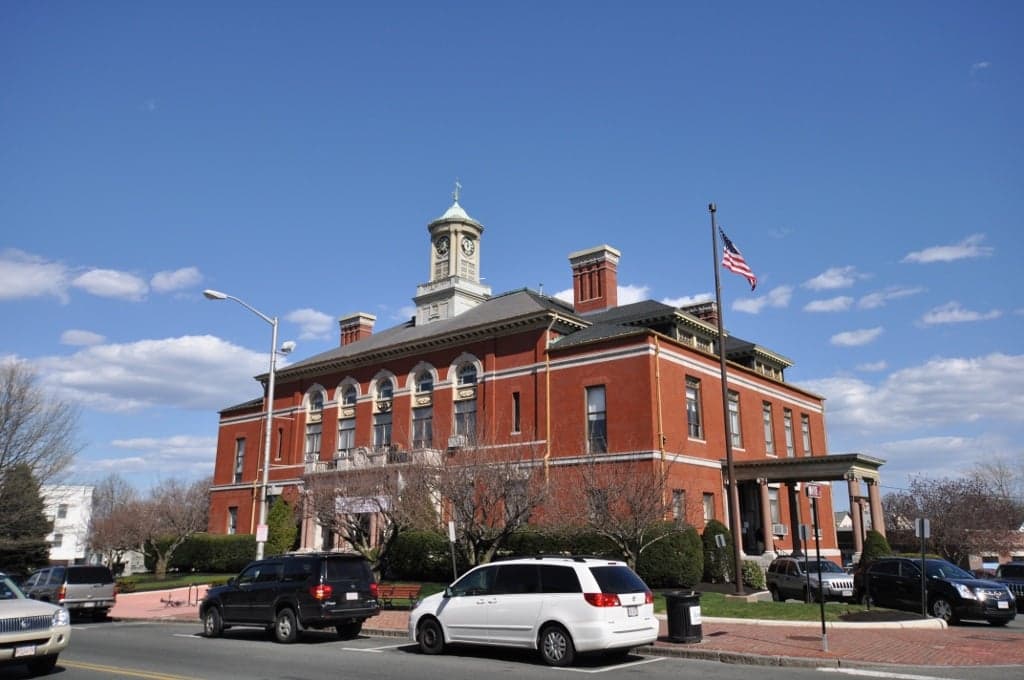
Photo: Wikipedia
Political ClimatePolitical Climate in Revere, MA
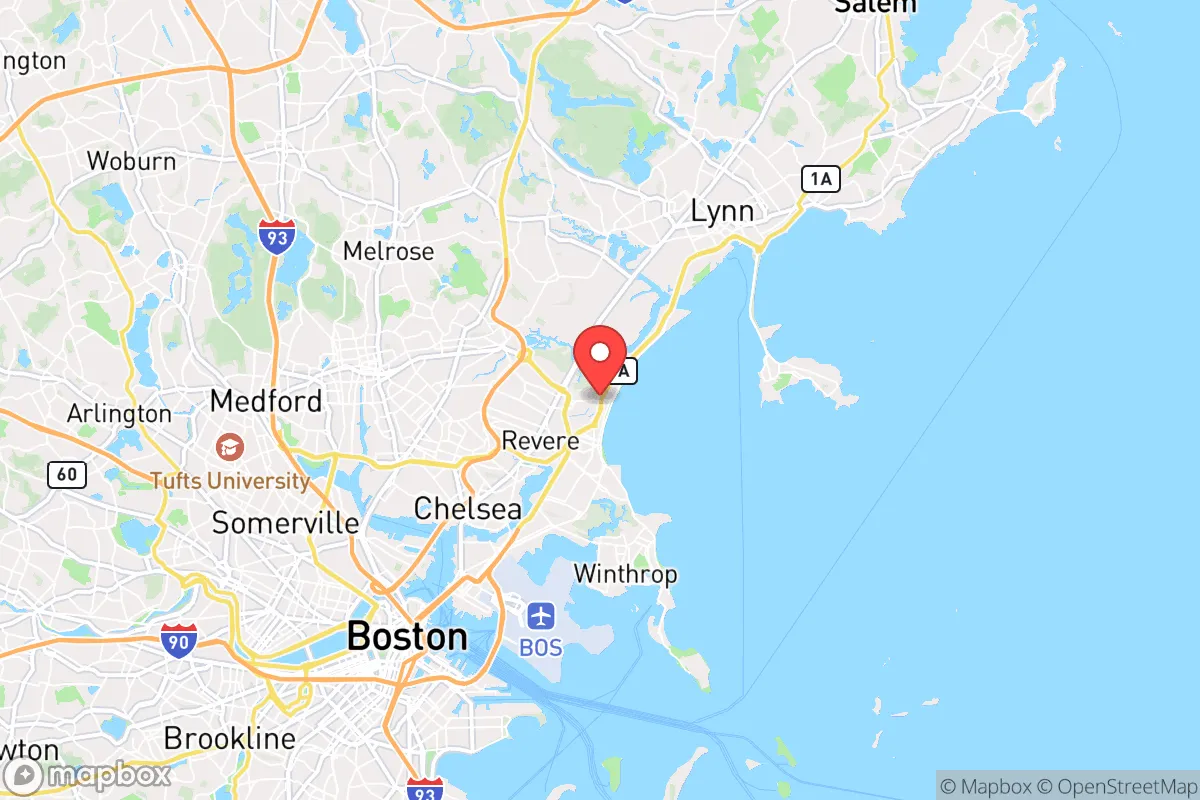
District shown is the primary district for this city’s centroid. Cities may span multiple districts.
Local Political AnalysisPolitical Analysis of Revere, MA
Revere, Massachusetts, has long been a reliably blue city, and the numbers back that up with a Cook PVI of D+24, meaning it votes about 24 points more Democratic than the national average. But if you’ve lived here as long as I have, you know the political story isn’t just about party registration—it’s about a slow, steady shift away from the old-school, working-class values that used to define this place. Back in the day, Revere was a mix of union Democrats and independent-minded folks who didn’t want the government poking into their business. Now, you’re seeing more progressive energy, especially among younger transplants from Boston, and that’s changing the feel of local politics in ways that raise some eyebrows.
How it compares
To really get Revere’s political climate, you’ve got to look at the neighbors. Just a few miles west, you’ve got Malden and Medford, which are also solidly blue but with a more moderate, suburban Democratic streak—less of the hard-left activism you see in Cambridge or Somerville. Head north to Saugus or Lynnfield, and you’re in Republican-leaning territory, where taxes and property rights are the big talking points. Revere sits right in the middle, but it’s drifting. The city council and school board have seen more candidates pushing progressive policies—like housing mandates and police oversight boards—that would’ve been laughed out of town 20 years ago. Meanwhile, Boston’s influence is creeping in, with developers and city planners pushing density and transit-oriented projects that feel more like an experiment than a community plan. It’s a stark contrast to the “live and let live” attitude that used to be the norm here.
What this means for residents
For the average Revere resident, this political shift has real consequences. Property taxes have been climbing as the city takes on more debt for schools and infrastructure, and there’s a growing sense that local government is getting more involved in daily life—from zoning restrictions to mask mandates that lingered longer than many folks thought necessary. If you value personal freedom, like deciding what’s best for your own family or business without a bureaucrat’s sign-off, you’ve probably noticed the leash getting shorter. The city’s push for more affordable housing mandates sounds good on paper, but it’s led to higher density and less green space, which rubs longtime homeowners the wrong way. And with the school system adopting more progressive curriculum elements, some parents are quietly worried about their kids being taught ideology instead of basics. It’s not a crisis yet, but the trajectory is clear: more government, less individual choice.
Culturally, Revere still holds onto some of its old-school charm—the beach, the Italian bakeries, the sense that everyone knows everyone. But the policy distinctions are becoming harder to ignore. The city has embraced sanctuary status, which means local police don’t cooperate with federal immigration enforcement, and that’s a point of pride for some but a red flag for others who worry about rule of law. There’s also a growing push for ranked-choice voting and other electoral reforms that tend to favor progressive candidates. If you’re a conservative or even a moderate who just wants less government overreach, you’re not going to find many allies in city hall. The long-term outlook? Unless there’s a major backlash, Revere will keep drifting left, and the old independent spirit that made it unique will fade a little more each year. Keep an eye on the local elections—that’s where the real fight is happening.

State Political ClimatePolitical Climate in Massachusetts
State Political AnalysisPolitical Environment in the State
Massachusetts has been a one-party Democratic stronghold for decades, but the picture is more nuanced than the state’s deep-blue presidential results suggest. Since 2000, the state has voted for the Democratic candidate by margins of 20 to 30 points, with Joe Biden winning by 33 points in 2020. However, the state’s political landscape is defined by a stark urban-rural split, a powerful progressive policy machine in Boston, and a growing conservative undercurrent in the central and western parts of the state. For a conservative considering a move here, the key takeaway is that while statewide politics are firmly left, local pockets of freedom and resistance exist—and they’re fighting to hold the line.
Urban vs. rural divide
The political map of Massachusetts is a tale of two worlds. The Boston metro area—including Cambridge, Somerville, and Brookline—is the engine of the state’s progressive dominance. These communities vote 80-90% Democratic and drive the policy agenda on taxes, housing, and education. The rest of the state is a different story. Western Massachusetts, particularly Berkshire County and the hill towns of Franklin and Hampshire counties, leans left but with a libertarian streak—think small-government, pro-gun Democrats. The real conservative strongholds are in the central and southeastern parts: towns like Wrentham, Foxborough, and Plymouth regularly vote Republican at the local level, and the Cape Cod towns of Sandwich and Bourne have shown they can flip red in state elections. The 2022 gubernatorial race saw Republican Geoff Diehl win 60% of the vote in Plymouth County’s rural precincts, while losing the state by 30 points. The divide is geographic and cultural: the I-495 beltway is the rough boundary between the Boston-dominated liberal core and the rest of the state.
Policy environment
Massachusetts’ policy environment is a mixed bag for conservatives. The state has a flat income tax rate of 5% (recently reduced from 5.15% via a 2022 ballot question), but a 2024 “millionaire’s tax” surcharge of 4% on income over $1 million is now law, raising billions for education and transportation. Property taxes are high, averaging 1.2% of home value, and the state’s regulatory posture is among the most aggressive in the nation—especially on environmental and housing policy. The Massachusetts Parentage Act (2023) expanded legal recognition of non-biological parents, which some conservatives see as eroding traditional family structures. On education, the state has a strong school choice system via charter schools and inter-district choice, but the Student Opportunity Act (2019) poured billions into underperforming districts, often with little accountability. Election laws are liberal: no-excuse mail-in voting and same-day registration are permanent, and the state has automatic voter registration. For a conservative, the policy environment feels like a slow, steady march toward centralized control, with occasional wins like the income tax cut.
Trajectory & freedom
On the freedom front, Massachusetts is moving in the wrong direction for conservatives. The 2024 gun control package (H.4885) banned the sale of many semi-automatic rifles, required licensing for ammunition purchases, and expanded “red flag” laws—a direct hit on Second Amendment rights. Parental rights took a blow with the 2023 Parentage Act, which allowed courts to recognize multiple legal parents without biological ties, undermining traditional family autonomy. Medical freedom is under pressure: the state has some of the strictest vaccine mandates in the country, including for schoolchildren, and a 2022 law forced healthcare workers to get the COVID-19 vaccine with no religious exemption. Property rights are constrained by the state’s Chapter 40B law, which allows developers to override local zoning for affordable housing—a tool that’s been used to build high-density projects in conservative towns against residents’ wishes. On the plus side, the 2022 income tax cut was a rare win for fiscal freedom, and the state’s Right to Farm law protects agricultural property from nuisance lawsuits. But the overall trajectory is toward more regulation, less individual choice, and a government that sees itself as the arbiter of your life.
Civil unrest & political movements
Massachusetts has a long history of protest, but recent years have seen a shift. The 2020 Black Lives Matter protests in Boston were large and occasionally violent, with property damage in the Downtown Crossing area. More recently, the 2023-2024 pro-Palestinian encampments at Harvard and MIT drew national attention and led to police crackdowns, exposing a deep divide between the progressive base and the state’s Jewish community. On the right, the Massachusetts Fiscal Alliance and MassResistance have been active, organizing against the gun control bill and parental rights erosion. The state’s sanctuary policy—codified in 2017’s Trust Act—limits local police cooperation with ICE, and a 2024 bill (H.3233) went further, banning the use of state funds for immigration enforcement. This has created flashpoints in towns like Framingham and Lawrence, where immigration enforcement debates have split city councils. Election integrity is a growing concern: the 2020 election saw widespread use of mail-in ballots, and while no major fraud was proven, the lack of voter ID laws (the state has no photo ID requirement) worries many conservatives. The overall feeling is that the state’s political establishment is insulated from grassroots pushback, but the right is organizing in the suburbs.
Projection
Over the next 5-10 years, Massachusetts will likely become more progressive, not less. In-migration is heavily skewed toward young, college-educated professionals from other blue states, who reinforce the Boston metro’s liberal tilt. The state’s population is aging, but the rural conservative base is shrinking as young people leave for lower-cost states. The 2024 election saw a slight rightward shift in some working-class towns—Fall River and New Bedford moved toward Trump—but this was offset by massive turnout in Cambridge and Somerville. The state’s Democratic supermajority in the legislature is unlikely to be broken, meaning more gun control, more tax increases, and more social engineering. However, the state’s strong economy and world-class education system will continue to attract people who can afford the high cost of living. For a conservative moving in now, expect to be a permanent minority in statewide elections, but with real influence at the local level in towns like Wrentham and Plymouth.
For a new resident, the bottom line is this: Massachusetts offers excellent schools, high-paying jobs, and beautiful natural scenery, but you will pay for it in taxes, regulation, and a political culture that often feels hostile to traditional values. If you’re a conservative, you can find community in the suburbs and rural towns, but you’ll need to be engaged and vocal to protect your freedoms. The state is not going to flip red anytime soon, but it’s not a monolith—and the fight for liberty is alive in the places where people still remember what that word means.
* Values derived from national, state, county, city and local statistics and may differ in a specific area. Last updated: 2026-05-01T07:34:24.000Z
Narrative content on this page is AI-generated and may contain mistakes. Verify any details that matter before acting on them.
ReloMaps may earn a commission from affiliate links at no extra cost to you.

