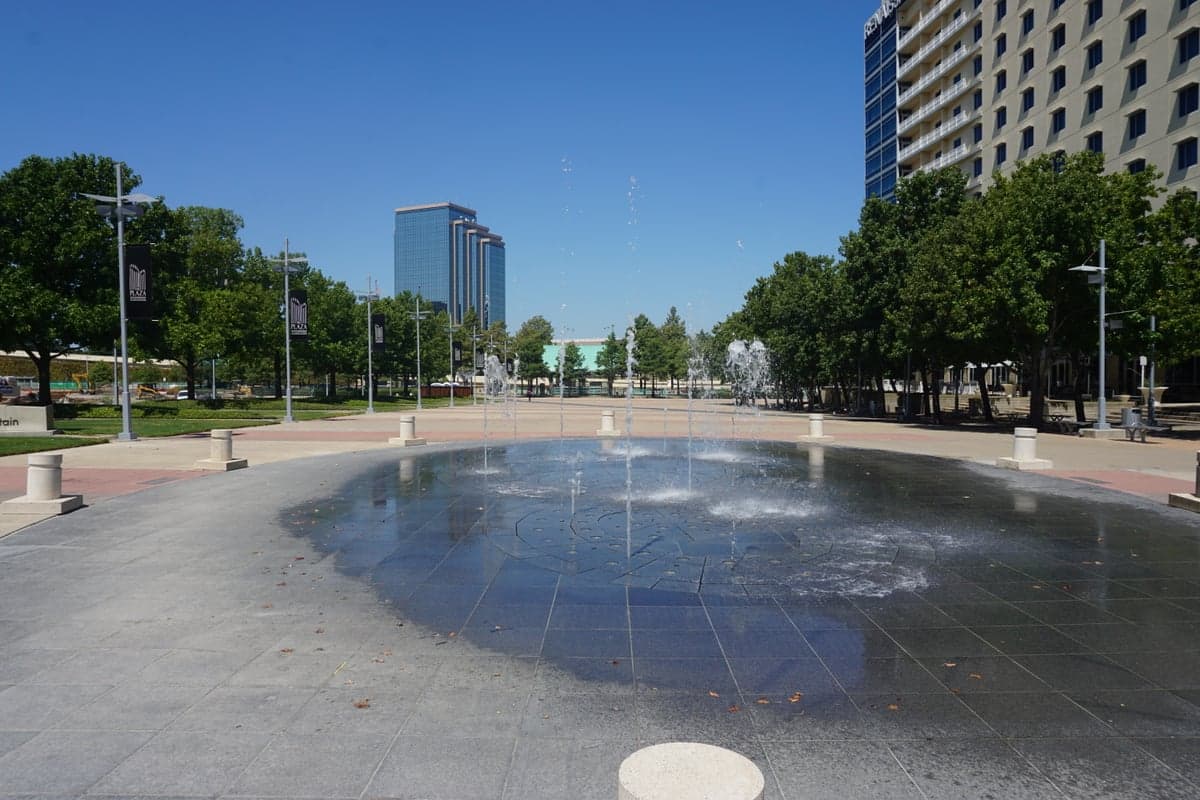
Photo: Wikipedia
Personal Sovereignty in Richardson, TX
Strong independent fundamentals that actively favor personal liberty and low regulation.
What does Personal Sovereignty tell us?
Personal Sovereignty measures your capacity for self-reliance and independence with minimal government friction. Higher scores mean fewer barriers between you and the way you want to live... but it assumes you have the space you need and good neighbors.
What does this tell us?
Personal Sovereignty measures your capacity for self-reliance and independence with minimal government friction. Higher scores mean fewer barriers between you and the way you want to live... but it assumes you have the space you need and good neighbors.
State Policy
Energy independence: Net exporter (220% of energy produced in-state)
Personal Liberty
Homesteading

Personal Liberty Analysis
Richardson, Texas, offers a notably high degree of personal sovereignty compared to many suburban enclaves, but it is not a libertarian free-for-all. The city sits within a state that aggressively defends individual rights—from gun ownership to medical freedom—yet local municipal codes and a dense suburban layout impose real constraints on self-reliant living. For the strategic prepper or conservative individualist, Richardson provides a solid legal foundation for autonomy, but requires careful navigation of HOA restrictions, zoning laws, and city ordinances that can limit off-grid experimentation and property modifications. The key is understanding where Texas state law preempts local overreach and where Richardson’s city council still asserts control.
Tax burden and regulatory posture: how much the state and city take
Texas has no state income tax, which is the single biggest win for personal sovereignty here. Richardson residents keep 100% of their earned wages, unlike in California or New York where state income tax can exceed 10%. However, property taxes in Richardson are substantial. The combined city, county, school district, and special district tax rate typically falls between 2.3% and 2.6% of assessed home value, which is high by national standards but average for the Dallas-Fort Worth metroplex. For a $400,000 home, that’s roughly $9,200 to $10,400 annually. The city’s regulatory posture is moderate: business licensing is straightforward, and there are no local rent control or price gouging ordinances. But Richardson enforces a strict no-burning policy (no outdoor fire pits or burn barrels) and has aggressive noise ordinances that limit generator use after 10 PM. The city also requires permits for any structural modification over $2,500, which can frustrate those wanting to build underground shelters or reinforced safe rooms without bureaucratic delays. Overall, the tax burden is manageable for a high-income earner, but the regulatory creep is real—especially for anyone wanting to operate a home-based firearms business or small-scale manufacturing.
Self-defense and gun law specifics: what you can carry and where
Texas is a constitutional carry state, and Richardson fully respects that. As of 2026, any law-abiding adult 21 or older can carry a handgun openly or concealed without a permit. Richardson has not enacted any local gun control ordinances—no magazine capacity limits, no assault weapon bans, and no waiting periods beyond state law. The city does, however, have no-gun zones in city-owned buildings (city hall, libraries, recreation centers) with metal detectors at entrances, which is a point of friction for those who believe government buildings should not disarm citizens. Private businesses in Richardson are free to post 30.06 or 30.07 signs to prohibit concealed or open carry, and many restaurants and retail stores do so. Stand-your-ground and castle doctrine laws apply fully within city limits, meaning you have no duty to retreat before using deadly force in your home, vehicle, or workplace. Richardson Police Department is generally pro-2A in practice, though some officers have been known to question individuals openly carrying in public spaces—a legal but sometimes harassed activity. For preppers, the key limitation is that Richardson prohibits discharging a firearm within city limits except at licensed ranges, so zero backyard target practice or pest control with a firearm is allowed. Air guns and pellet guns are also restricted in many residential zones. If you want to train on your own property, you need to live outside city limits or join a private range like the Dallas Gun Club or Elm Fork.
Self-reliance and homesteading viability: lot sizes, zoning, and off-grid feasibility
Richardson is a dense, fully developed suburb with typical lot sizes of 6,000 to 10,000 square feet in older neighborhoods, and even smaller in newer townhome developments. This makes traditional homesteading—raising chickens, goats, or large gardens—difficult. The city allows up to four hens (no roosters) on lots under one acre, but no other livestock. Beekeeping is permitted with a registration, but many HOAs ban it outright. Zoning is strictly residential in most areas, with no allowance for home-based agriculture or small-scale manufacturing beyond cottage food operations. Off-grid feasibility is near zero: Richardson requires connection to city water and sewer, and solar panels are allowed but must be approved by the HOA in many neighborhoods. Battery storage is legal, but net metering with Oncor (the local utility) is limited, and you cannot legally disconnect from the grid. Rainwater collection is permitted for non-potable uses (irrigation), but you cannot use it as your primary water source. For a serious prepper, Richardson is a bug-in location only if you have a well-stocked suburban home with deep pantry, backup generator, and defensive plan. The city’s density means you are reliant on supply chains and municipal services during a crisis. If you want true self-reliance—acreage, well water, septic, livestock, and no HOA—you need to look at rural areas like Kaufman County or Van Zandt County, 45 minutes east.
Personal liberties: parental rights, medical autonomy, speech, and property
Texas state law provides strong protections for parental rights, and Richardson schools generally respect them. The city’s school district, Richardson ISD, has not implemented controversial curriculum mandates, and parents can opt their children out of sex education or any material they find objectionable. Medical autonomy is robust: Texas has banned vaccine passports and mask mandates at the state level, and Richardson has not attempted to override those. You can refuse any medical treatment for yourself or your child without government interference, though CPS investigations can occur if refusal is deemed life-threatening. Free speech is protected, and Richardson has not enacted any local hate speech or disinformation ordinances. You can fly any flag on your property, post political signs (within size limits), and protest on public sidewalks without a permit. Property rights are strong in theory, but HOAs in Richardson are notoriously powerful. Many neighborhoods have covenants that restrict paint colors, fence heights, landscaping, and even the number of vehicles you can park. If you buy in an HOA, you are surrendering significant control over your own property. The city itself has a strict code enforcement department that will fine you for overgrown grass, inoperable vehicles, or unapproved modifications. For the sovereignty-minded, the best strategy is to buy in a non-HOA neighborhood—there are pockets of older homes in the 75080 and 75081 zip codes without HOA restrictions—or accept that you will be trading some autonomy for a well-maintained, high-property-value environment.
Overall, Richardson offers a moderate-to-high level of personal sovereignty relative to other DFW suburbs like Plano or Frisco, which have more restrictive HOAs and higher property taxes. The city’s biggest strengths are the Texas state-level protections on guns, taxes, and medical freedom. Its biggest weaknesses are the dense suburban layout that prevents self-reliance, the powerful HOAs that limit property control, and the city’s own code enforcement that can feel overbearing. For a single individual or family who wants a safe, well-run community with strong legal rights but is willing to trade some autonomy for convenience and amenities, Richardson works. For the hardcore prepper or libertarian who wants to live entirely on their own terms, this is not the place—look to the exurbs or rural counties for that. Richardson is a compromise: you keep your guns and your money, but you follow the rules on your property and stay connected to the grid.

* Values derived from national, state, county, city and local statistics and may differ in a specific area. Last updated: 2026-04-21T09:15:47.000Z
Narrative content on this page is AI-generated and may contain mistakes. Verify any details that matter before acting on them.
ReloMaps may earn a commission from affiliate links at no extra cost to you.

