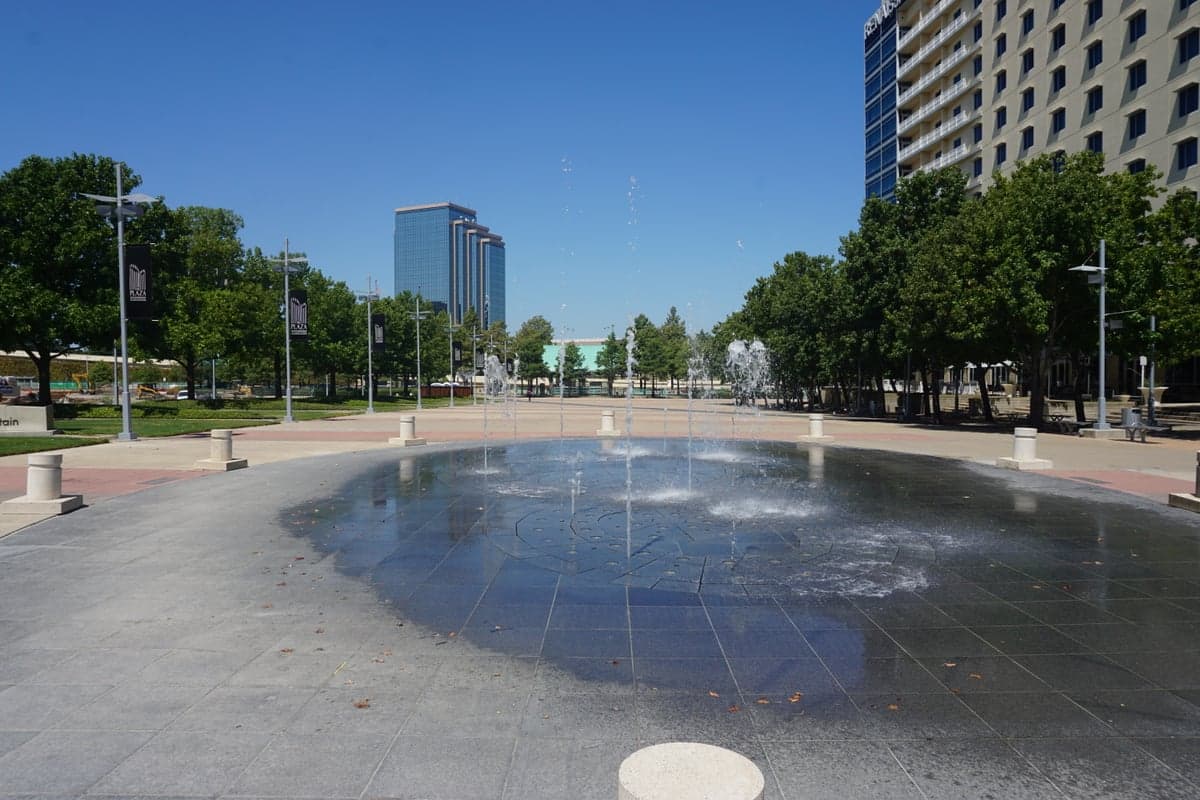
Photo: Wikipedia
Strategic Assessment of Richardson, TX
Multiple tactical vulnerabilities. Population density, target proximity, or disaster risk are likely compounding. A retreat property and exit planning is required.
What does the Strategic Assessment tell us?
Our Strategic Assessment grades tactical survivability of an area. Major population centers, military targets, fallout zones, natural disasters, and border exposure all drive risk — lower exposure means a more defensible position in a crisis.
This is heavily inspired by Joel Skousen's Strategic Relocation book. Highly recommended you checkout the book ($)What does this tell us?
Our Strategic Assessment grades tactical survivability of an area. Major population centers, military targets, fallout zones, natural disasters, and border exposure all drive risk — lower exposure means a more defensible position in a crisis.
This is heavily inspired by Joel Skousen's Strategic Relocation book. Highly recommended you checkout the book ($)Strategic Pillars

Key Distances
Regional Safe Places
Below is our recommended "safe zones" in Texas and the surrounding area based on our strategic heuristics. For most people, it's unrealistic to live in a “safe zone” full-time due to work, family or other personal reasons. They tend to be more rural. However, many of these areas are perfect for second homes and retreat properties that double as a vacation home or even a short-term rental.

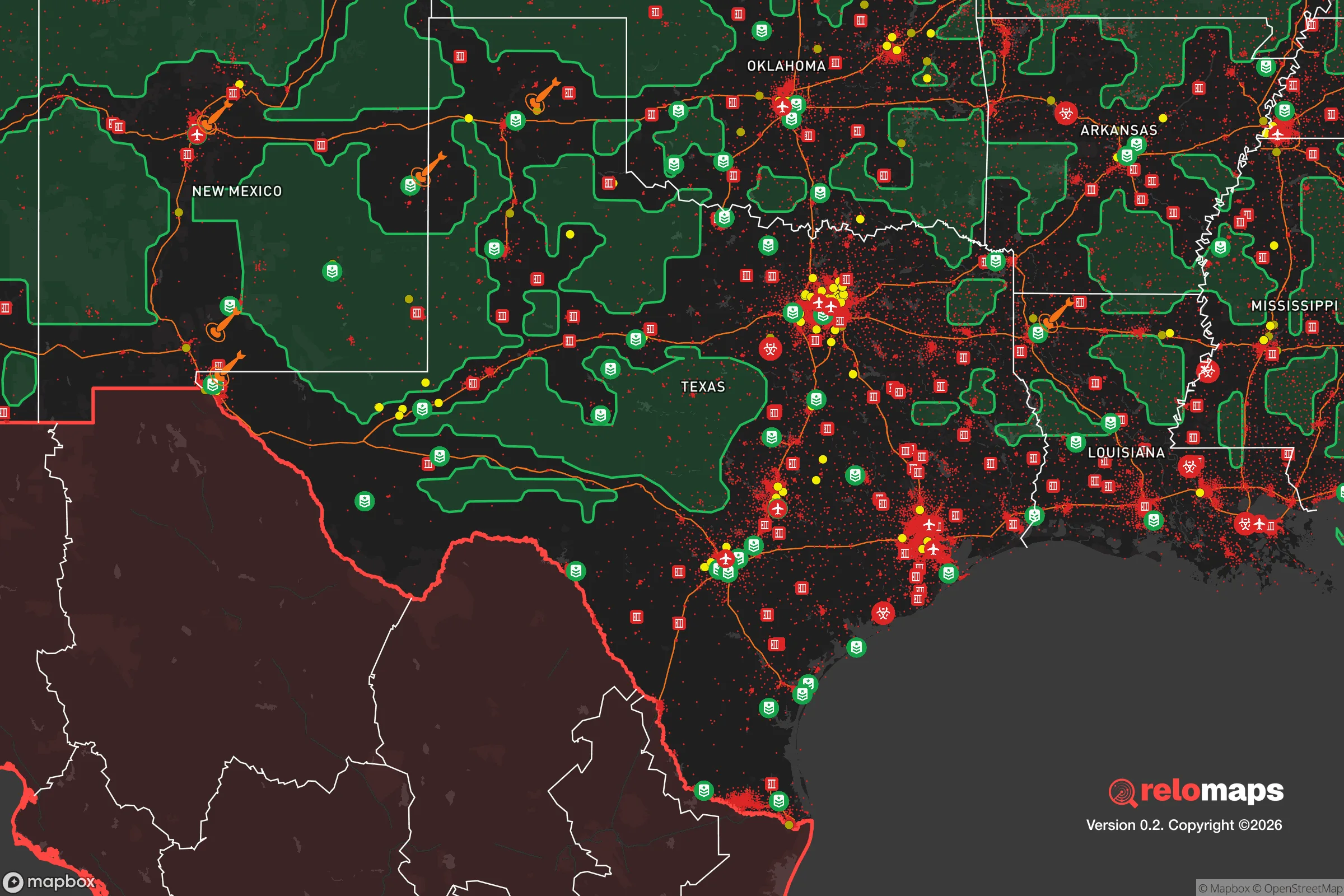


Important Note: For informational purposes only. This does not mean nothing bad ever happens in the green zones. Please use common sense. This is based on public data and modeled with AI. We tried to take a conservative approach but mistakes happen. We update this regularly as new information becomes available.
Solar Generator Recommendations
Backup power matters more here than in safer locations. We've picked three solar generators across budgets and capacity tiers — start with the budget unit if you only need a few essentials, or step up if you want to run a fridge and HVAC for days at a time.

Jackery Portable Power Station Explorer 300
Budget OptionPower on the Go: Weighing only 11 lbs, it's convenient to set up and store with book-sized foldable solar panels

BLUETTI Portable Power Station AC180
Designed for both indoor and outdoor scenarios, AC180 is highly capable as it has a robost capacity and continuous output power.

EF ECOFLOW DELTA Pro Ultra Power Station
Upgraded PickEcoFlow DELTA Pro Ultra is a whole-home energy system designed to grow with your family. Integrated with the Smart Home Panel 2, it scales to meet your evolving energy needs — keeping your home powered, intelligent, and secure through every stage of life.
We earn a commission, at no additional cost to you.
Strategic Assessment Analysis
Richardson, Texas, sits in a precarious but potentially workable position for those serious about strategic relocation. Its location within the Dallas-Fort Worth metroplex offers immediate economic resilience, but that proximity to a major urban center is also its most significant vulnerability in a collapse scenario. For the conservative-minded prepper, Richardson represents a trade-off: strong day-to-day stability and infrastructure, but a high-risk exposure to the cascading failures that would follow a major disaster, civil unrest, or a mass casualty event in the DFW corridor. The key is understanding that while the city itself is not a primary target, its fate is inextricably tied to the region's.
Geographic position and natural advantages in a crisis scenario
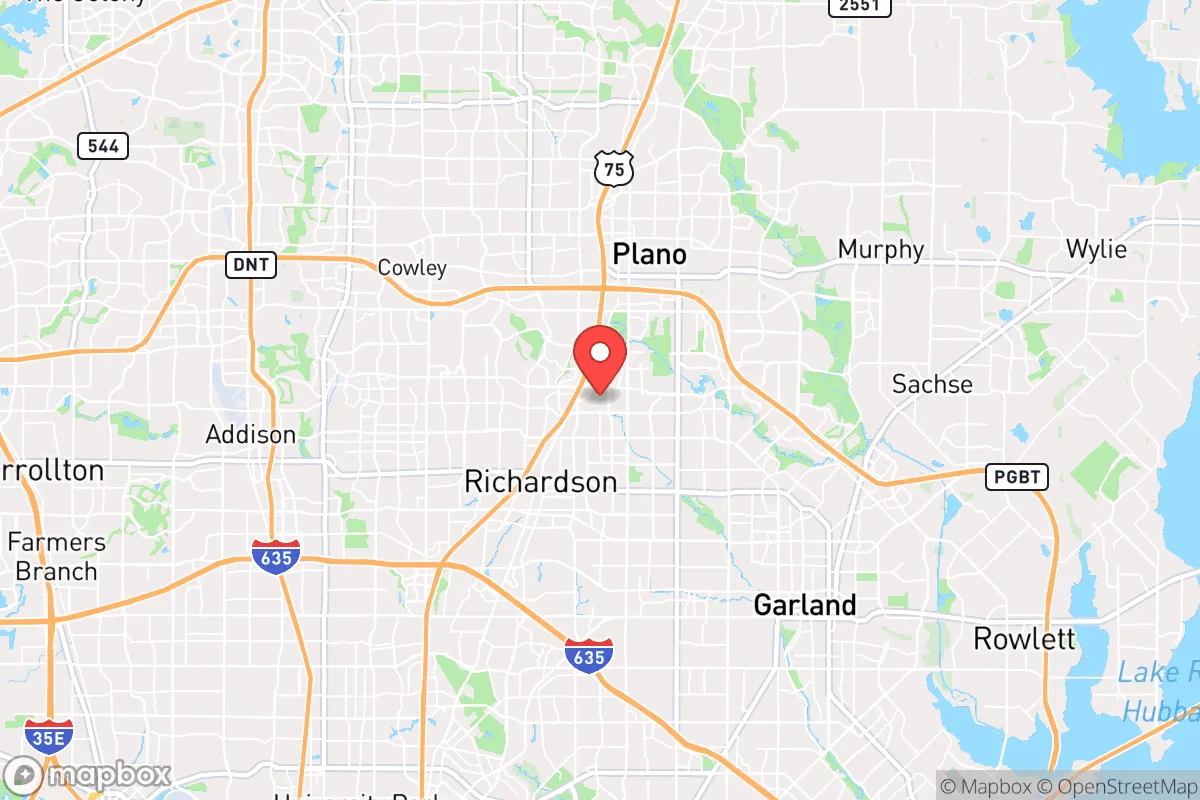
Richardson's geographic position is defined by its location along the central spine of the Texas Blackland Prairie, roughly 15 miles north of downtown Dallas. This places it within the "Golden Triangle" of Texas commerce, but from a survivalist perspective, the terrain offers little natural defensibility. The land is flat to gently rolling, with no significant hills, ridges, or natural barriers to slow movement or provide cover. The primary natural advantage is the region's relatively stable geology—no earthquakes, no hurricanes (though tornadoes are a real seasonal threat), and a climate that, while hot, allows for year-round outdoor activity. The area sits atop the Trinity Aquifer, but municipal water supply is heavily dependent on surface reservoirs like Lake Ray Hubbard and Lake Lavon, both of which are vulnerable to contamination or disruption. For a relocator, the lack of natural choke points means that any large-scale evacuation or security perimeter would be difficult to establish. The city's grid-like street pattern, while efficient for commuting, creates multiple avenues of approach for any potential threat.
Risks, exposures, and proximity to fallout-relevant landmarks
The most significant risk for Richardson is its proximity to high-value, high-risk targets within the DFW metroplex. Dallas is home to the Federal Reserve Bank of Dallas, major defense contractors (Lockheed Martin in Fort Worth, Raytheon in McKinney), and critical transportation hubs like DFW International Airport and Love Field. In a mass casualty event or a scenario involving state collapse, these locations would become focal points for chaos, looting, or military lockdown. Richardson itself is not a primary target, but it lies directly in the path of any evacuation or secondary effects from Dallas. The city is also bisected by US-75 (Central Expressway), a major north-south artery that would become a choke point in any crisis. Additionally, the presence of the University of Texas at Dallas (UTD) and the Telecom Corridor—home to over 600 tech companies including Texas Instruments and Verizon—means a dense concentration of infrastructure that could attract attention from looters or become a target for cyber or physical attacks. The city's power grid is part of the ERCOT system, which has proven vulnerable to winter storms (as in 2021) and summer demand spikes. A prolonged grid failure would leave Richardson without water (pumps require electricity), refrigeration, or communications, and the dense suburban layout means most homes lack the space for significant off-grid energy or water storage.
Practical resilience for a relocator: food, water, energy, and defensibility
For a single individual or family looking to relocate with a prepper mindset, Richardson presents a mixed picture. Water is the most critical concern. The city's water comes from the North Texas Municipal Water District, which relies on surface reservoirs. In a prolonged grid-down scenario, municipal water would stop flowing within hours. A relocator would need to secure a property with a private well—rare in Richardson's suburban core—or be prepared to store at least 2-3 gallons per person per day for a minimum of 30 days. Rainwater collection is possible but limited by HOA restrictions in many neighborhoods. Food security is similarly constrained. The city is almost entirely residential and commercial, with very little agricultural land. The nearest significant farming areas are in Collin County to the north (McKinney, Anna) or east toward Rockwall. A relocator would need to rely on stored food, barter networks, or a community garden—none of which are guaranteed in a crisis. Energy resilience is achievable but expensive. Solar panels with battery backup (e.g., Tesla Powerwall) are legal and increasingly common, but most homes are not wired for off-grid living. Natural gas is available for heating and cooking, but the grid is vulnerable. Defensibility is the weakest point. Richardson's suburban layout—with cul-de-sacs, shared driveways, and close lot lines—makes it difficult to secure a single property. The best option is a home on a corner lot with a fenced backyard, ideally with a basement (rare in Texas) or a reinforced safe room. The city's police force is well-funded and professional, but in a widespread collapse, they would be overwhelmed. The nearest rural retreat areas are in Grayson County (north) or Hunt County (east), both about an hour's drive in normal conditions—but that drive could become impossible in a crisis.
The overall strategic picture for Richardson is one of calculated risk. It offers strong economic stability, good schools, and a relatively low crime rate in normal times. For a relocator who is not yet ready to go fully off-grid, it provides a base from which to build skills, store supplies, and network with like-minded individuals. But the city's location within the DFW blast radius—both literally and figuratively—means that any major disaster, whether natural, economic, or social, would hit Richardson hard and fast. The prudent approach is to treat Richardson as a temporary staging area, not a final destination. Use the time there to secure a rural property within a two-hour drive, build a community of trusted neighbors, and develop the skills (gardening, water purification, basic medical, and self-defense) that will be essential when the system falters. Richardson can work as a home base for the present, but the serious prepper should always have a bug-out plan and a retreat location ready. The city's greatest strength—its integration into the DFW economy—is also its greatest weakness in a world that may not stay stable. Plan accordingly.

* Values derived from national, state, county, city and local statistics and may differ in a specific area. Last updated: 2026-04-21T09:15:47.000Z
Narrative content on this page is AI-generated and may contain mistakes. Verify any details that matter before acting on them.
ReloMaps may earn a commission from affiliate links at no extra cost to you.

