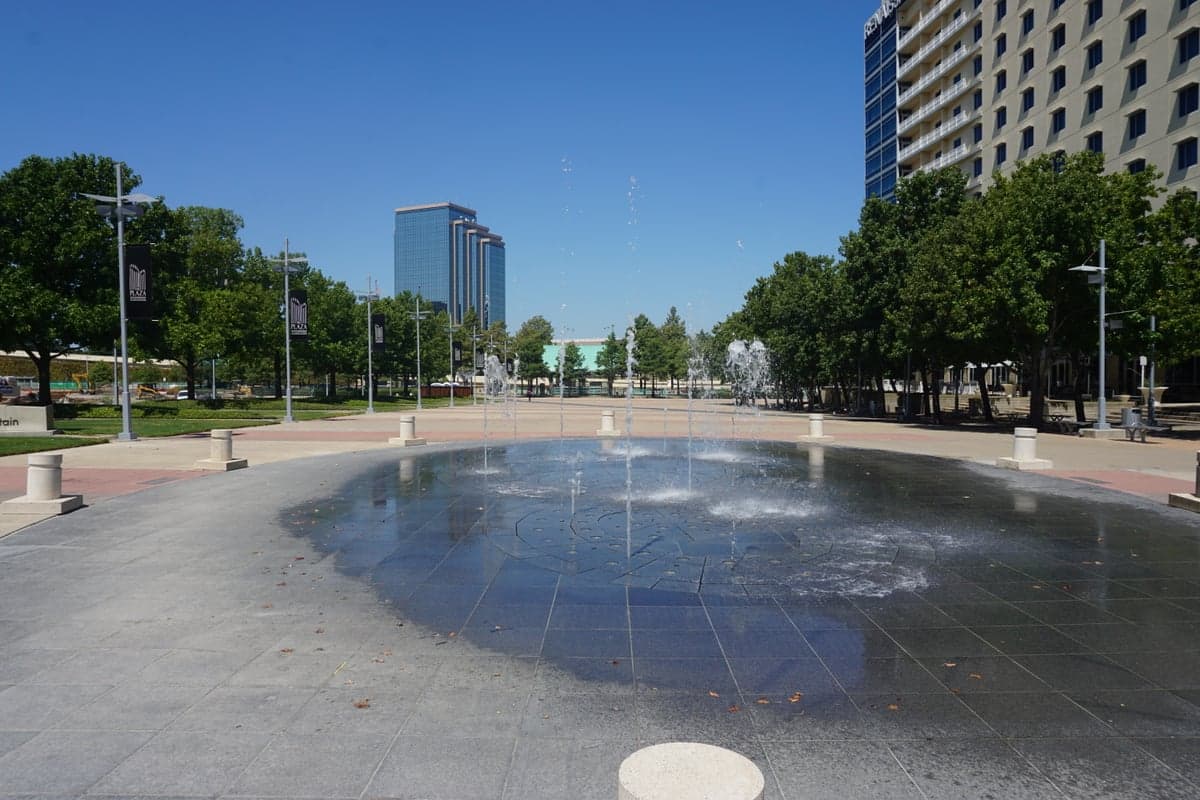
Photo: Wikipedia
Quality of Life in Richardson, TX
A high quality of life with strong walkability, manageable living costs, healthy neighborhood signals, and solid amenity access.
What does Quality of Life tell us?
Quality of Life blends cost of living, nearby amenities, socioeconomic signals, and neighborhood character. City-level scores represent the whole municipality; individual neighborhoods can differ.
What does this tell us?
Quality of Life blends cost of living, nearby amenities, socioeconomic signals, and neighborhood character. City-level scores represent the whole municipality; individual neighborhoods can differ.
Cost of Living
52% above national average
The Real Cost of Living in Richardson, TX for 2026
| Tier | Individual | Family (4) |
|---|---|---|
| Survival | $29k | $55k |
| Comfortable | $79k | $116k |
| Luxury | $173k+ | $268k+ |
| Elite (Top 5%) | $204k+ | $315k+ |
83%
The Area Signal
A metric tracking the socioeconomic signals of the area.
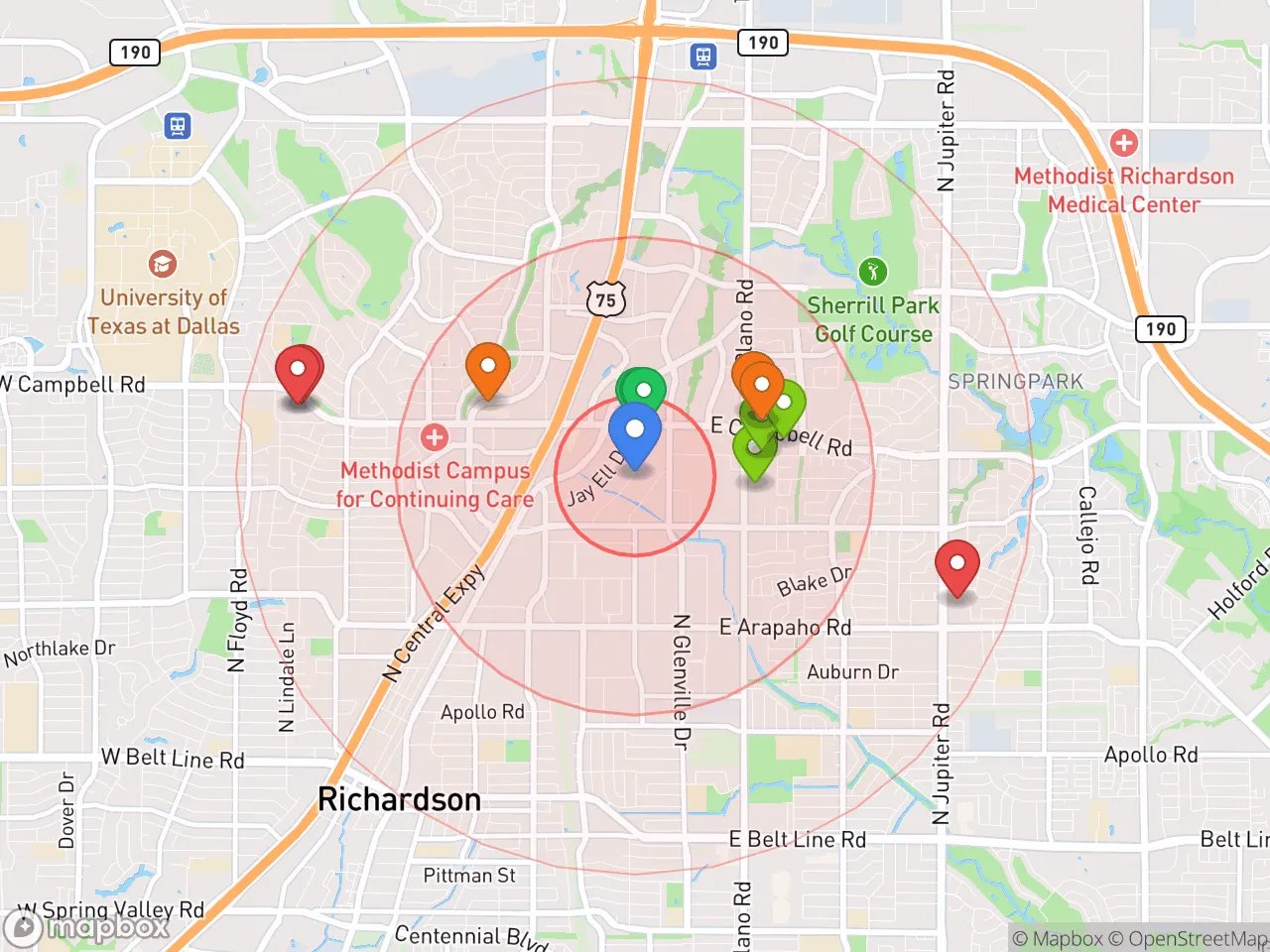
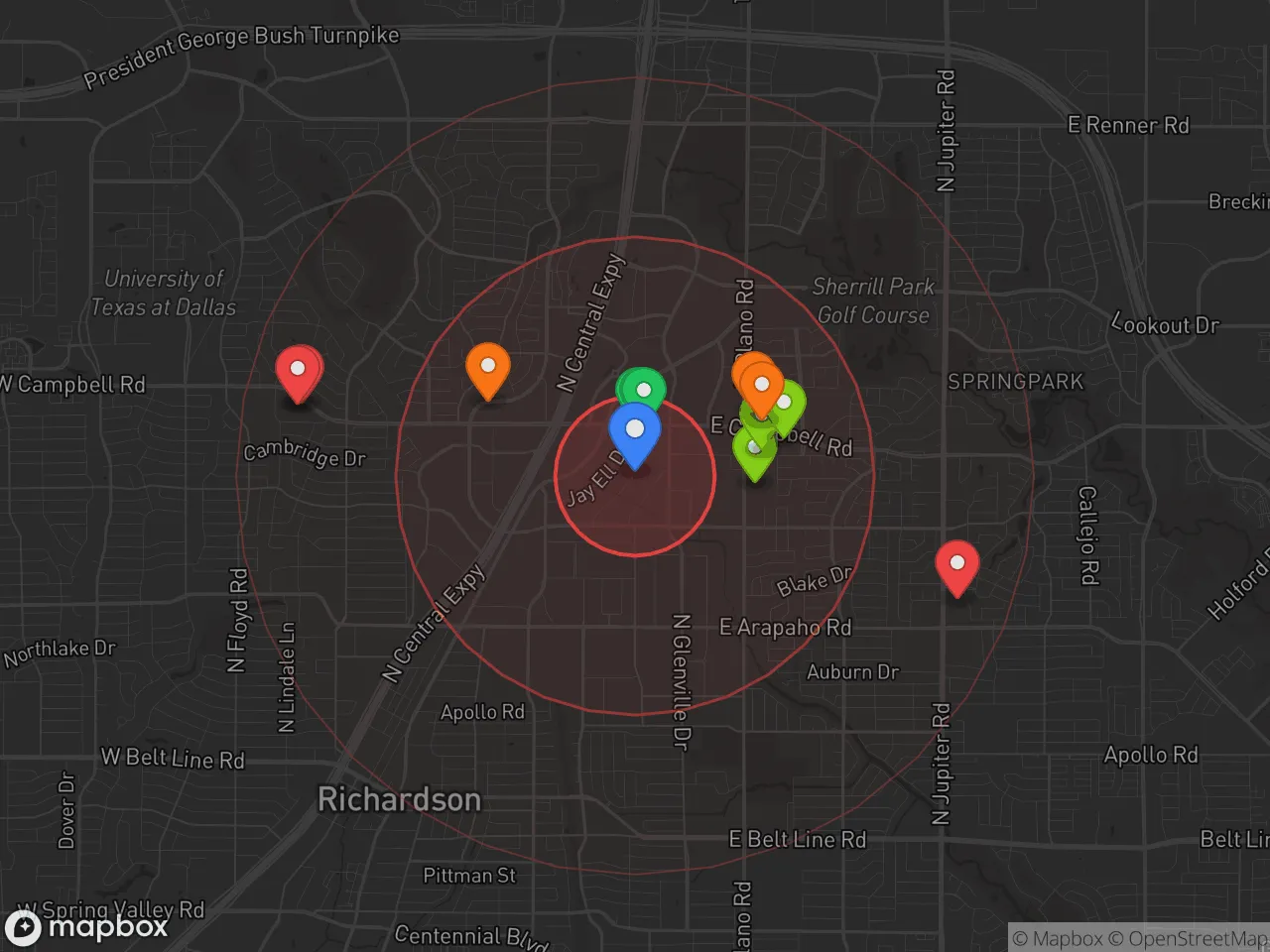
Hobbies
Explore the areaGroceries
6 within 10 miles
Gas
20 within 10 miles
Hospital
20 within 20 miles
Airport
DFW — Dallas/Fort Worth International
Post Office
USPS — 1206 Apollo Road, Richardson
Critical Amenities
Quality-of-Life Analysis
Richardson, Texas, is an affluent, family-oriented suburb in the Dallas-Fort Worth metroplex, anchored by the Telecom Corridor and a highly educated workforce. With a cost of living index of 152 (well above the U.S. average of 100), the city attracts professionals in technology, engineering, and healthcare who prioritize excellent schools and short commutes over low housing costs. The population skews toward married couples with children, alongside a significant Asian American community drawn by the area's top-ranked schools and professional opportunities.
How housing costs and affordability compare to nearby suburbs
Richardson's housing market is expensive relative to the national average but competitive within the northern Dallas suburbs. The median home value sits at $405,600, while median rent is $1,825 per month. For context, these figures are roughly 15-20% higher than in Garland or Plano's older neighborhoods, but notably lower than in the most exclusive enclaves of University Park or Highland Park. The cost of living index of 152 reflects this premium, driven primarily by housing. However, residents offset this with a remarkably short average commute of 23.9 minutes, significantly below the DFW regional average of 28-30 minutes. This time savings is a direct result of the city's dense employment base—over 100,000 jobs are located within Richardson's borders, many in the Telecom Corridor along U.S. 75. For buyers, property taxes in Dallas County average around 2.3% of assessed value, which is typical for the region but adds to monthly carrying costs.
What daily life is like for families: schools, parks, and amenities
Daily life in Richardson centers on its highly rated public schools, particularly those in the Richardson Independent School District (RISD), which consistently earns A ratings from the Texas Education Agency. Schools like Richardson High School and Pearce High School offer strong Advanced Placement programs and competitive athletics. The city maintains over 40 parks, including the 100-acre Breckinridge Park with its disc golf course and hike-and-bike trails, and the Cottonwood Park Festival site. For shopping and dining, the Richardson Square area and the historic downtown district along Main Street provide a mix of chain retailers and local restaurants, with a notable concentration of Korean and Vietnamese cuisine reflecting the city's diverse population. Cultural amenities include the Eisemann Center for Performing Arts and the Charles W. Eisemann Center, which hosts Broadway touring shows and concerts. The city's walkability is limited outside of downtown, but the DART light rail system connects Richardson to downtown Dallas and DFW Airport, reducing car dependency for commuters.
Richardson is best suited for professionals and families who value short commutes, strong public schools, and a stable, well-maintained suburban environment. The high cost of living and property taxes will deter budget-conscious renters or first-time buyers, but for those who can afford it, the trade-off is a safe, amenity-rich community with direct access to high-paying tech jobs. Empty nesters and retirees may also find appeal in the city's active adult programs and proximity to medical facilities like Methodist Richardson Medical Center. Ultimately, Richardson rewards residents with convenience and quality of life that justify its premium price tag.

Crime in Richardson, TX
Generally safer than 69% of comparable U.S. locations.
Violent CrimeViolent Crime Analysis
Property CrimeProperty Crime Analysis
Crime Analysis
Richardson, Texas, presents a mixed safety profile that demands careful consideration from prospective residents. While the city's violent crime rate of 137.4 incidents per 100,000 residents is notably lower than both the Texas state average and the national median, its property crime rate of 1,495.1 per 100,000 is a significant concern, exceeding national benchmarks. This disparity means that while violent encounters are relatively rare, the risk of theft, burglary, and vehicle break-ins is elevated, a pattern common in economically active suburbs within large, progressive-leaning metro areas.
Crime in context
To understand Richardson's safety, it is essential to compare its numbers against broader trends. The city's violent crime rate is roughly 60% lower than the national average, placing it among safer suburbs for personal safety. However, the property crime rate is approximately 20% higher than the national average, driven largely by theft from vehicles and package theft, which are persistent issues in dense, transit-connected suburbs. This pattern is exacerbated by the broader criminal justice environment in the Dallas-Fort Worth metroplex, where progressive district attorneys in Dallas County have implemented policies like reduced cash bail and diversion programs for property offenders. While intended to reduce incarceration, these policies have been linked to higher recidivism for non-violent property crimes, directly impacting Richardson residents who face a greater likelihood of encountering repeat offenders in their neighborhoods.
What residents experience
Daily life in Richardson involves a tangible awareness of property crime. Residents commonly report incidents of "smash-and-grab" thefts from parked cars at apartment complexes and shopping centers, particularly along the busy US-75 corridor and near the CityLine business district. The Richardson Police Department maintains a visible presence and operates a real-time crime center, but the sheer volume of property crime—nearly 1,500 incidents per 100,000 people annually—means that many residents know someone who has been a victim. Violent crime, by contrast, is highly situational and often concentrated in specific areas, such as late-night incidents near bars or domestic disputes. The progressive judicial philosophy in Dallas County, which prioritizes treatment and low-level diversion over detention, means that even repeat property offenders often cycle through the system quickly, a fact that frustrates many homeowners and business owners who feel the justice system prioritizes offender rehabilitation over public safety.
Neighborhood-level variation is significant. The Canyon Creek and Cottonwood areas, with their higher home values and active neighborhood watch programs, report property crime rates well below the city average. In contrast, areas with higher-density apartment complexes near the Galatyn Park and Spring Valley DART stations experience more frequent thefts, as these locations offer easy access for offenders using public transit. For families and professionals weighing a move, the data suggests that Richardson offers a safe environment for violent crime but requires proactive security measures—such as garage parking, security cameras, and package lockers—to mitigate the elevated property crime risk that is a direct consequence of the metro area's lenient criminal justice policies.
* Values derived from national, state, county, city and local statistics and may differ in a specific area. Last updated: 2026-04-21T09:15:47.000Z
Narrative content on this page is AI-generated and may contain mistakes. Verify any details that matter before acting on them.
ReloMaps may earn a commission from affiliate links at no extra cost to you.

