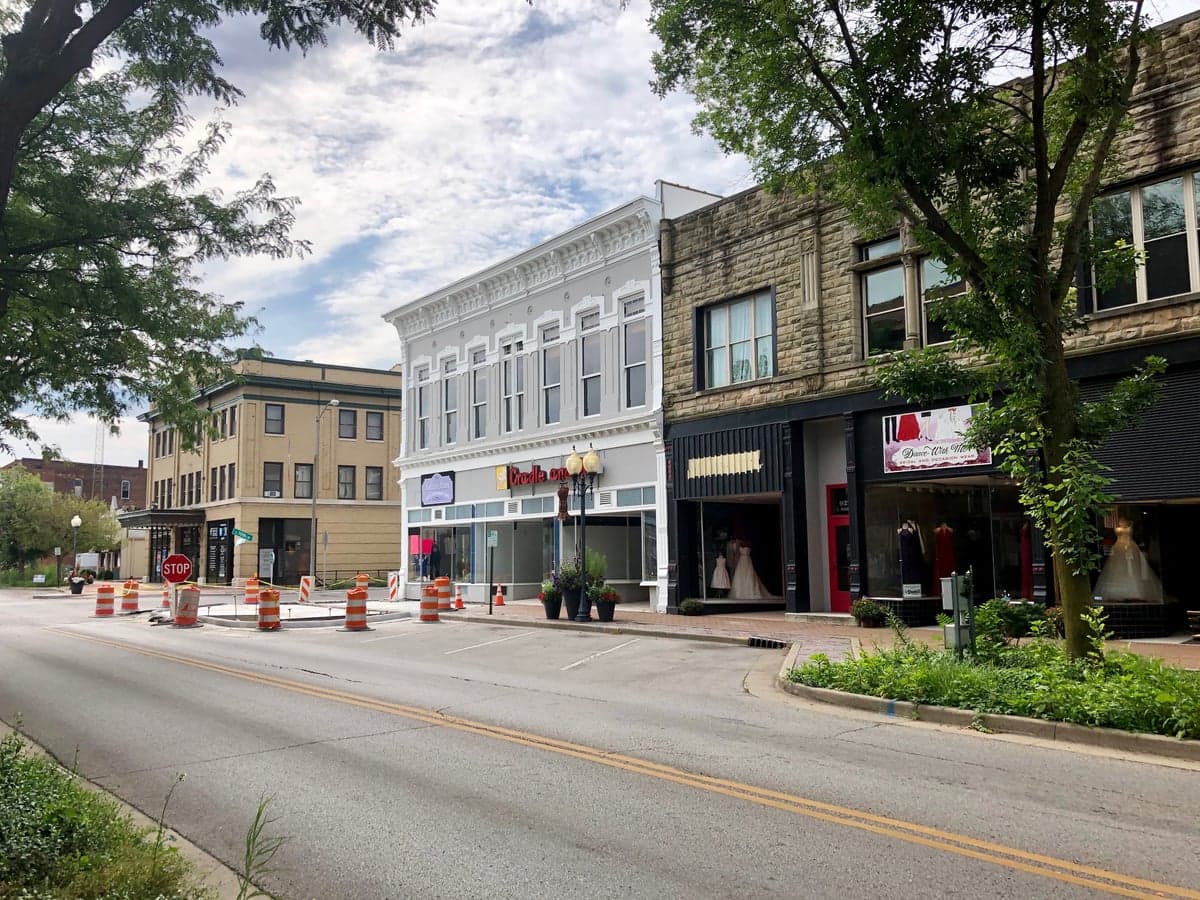
Photo: Wikipedia
Personal Sovereignty in Richmond, IN
Viable for self-reliance. Generally workable, though some barriers may limit total independence.
What does Personal Sovereignty tell us?
Personal Sovereignty measures your capacity for self-reliance and independence with minimal government friction. Higher scores mean fewer barriers between you and the way you want to live... but it assumes you have the space you need and good neighbors.
What does this tell us?
Personal Sovereignty measures your capacity for self-reliance and independence with minimal government friction. Higher scores mean fewer barriers between you and the way you want to live... but it assumes you have the space you need and good neighbors.
State Policy
Energy independence: Importer (35% of energy produced in-state)
Personal Liberty
Homesteading

Personal Liberty Analysis
Richmond, Indiana, offers a notably higher degree of personal sovereignty than many Midwestern locales, largely due to Indiana’s status as a Dillon’s Rule state with a strong legislative push to preempt local ordinances that infringe on state-guaranteed freedoms. For the individual or family operating from a survivalist or prepper mindset, this means the legal framework in Richmond is tilted toward personal autonomy rather than municipal overreach. The city sits in a region where the tension between local governance and state-level liberty is actively being resolved in favor of the individual, making it a viable option for those seeking to minimize government intrusion into daily life, property rights, and self-defense choices.
Tax burden and regulatory posture: How Indiana’s state preemption protects your wallet and choices
Indiana’s tax structure is relatively friendly to those prioritizing financial sovereignty. The state imposes a flat income tax rate of 3.05% as of 2026, with no local income tax in Wayne County, meaning Richmond residents keep more of their earnings than in many neighboring states. Property taxes are capped at 1% of assessed value for homesteads, a constitutional limit that prevents runaway assessments from local governments. More critically for the prepper mindset, Indiana’s regulatory posture is defined by aggressive state preemption: cities like Richmond cannot enact their own rental inspection regimes, plastic bag bans, or energy-efficiency mandates that exceed state law. This means no surprise local fees on generators, no municipal bans on gas stoves, and no local ordinances requiring you to report your water storage or food supplies. The state’s right-to-work status and lack of a state-level minimum wage above the federal floor further reduce the regulatory burden on small-scale homesteading or side businesses. For someone concerned about creeping government overreach, Richmond’s regulatory environment is a deliberate low-interference zone, with state law acting as a shield against local activist agendas.
Self-defense and gun law specifics: Constitutional carry and the legal framework for preparedness
Indiana is a constitutional carry state, meaning no permit is required to carry a handgun openly or concealed for anyone legally allowed to possess a firearm. Richmond residents benefit from this directly: there is no local waiting period, no firearm registration, and no municipal-level magazine capacity restrictions. The state preempts all local gun ordinances, so Richmond’s city council cannot impose its own bans on certain firearms or ammunition types, a critical protection for those building a defensive arsenal. Stand-your-ground laws are fully in effect, with no duty to retreat in any place where you are legally present. For the prepper, this legal clarity is essential—you can defend your home, vehicle, or person without fear of prosecution for exercising a fundamental right. Additionally, Indiana does not require a license to purchase a firearm from a private seller, and there are no state-level red flag laws as of 2026, though federal background checks still apply at licensed dealers. The state’s firearm preemption law is among the strongest in the Midwest, ensuring that Richmond’s local government cannot erode these rights through zoning or nuisance ordinances targeting gun shops or ranges. For those prioritizing self-reliance in personal security, the legal environment here is unambiguous and protective.
Self-reliance and homesteading viability: Lot sizes, zoning, and off-grid feasibility in Richmond
Richmond’s zoning code allows for genuine self-reliance without the bureaucratic hurdles found in more urbanized areas. Standard residential lots in the city range from 6,000 to 10,000 square feet, but many neighborhoods and unincorporated areas within the city’s sphere offer parcels of a quarter-acre or larger, suitable for substantial gardens, chicken coops, or small livestock. The city’s zoning ordinance explicitly permits backyard chickens, beekeeping, and rain barrel collection without a permit, provided they meet basic setback and nuisance standards. For those looking at off-grid feasibility, Indiana’s net metering policy allows solar panel owners to sell excess power back to the grid at retail rates, and Richmond’s building code does not prohibit composting toilets or greywater systems, though they must meet state health department standards. The real advantage lies in the county’s agricultural zoning: just outside Richmond city limits, parcels of 1 to 5 acres are common and affordable, with minimal restrictions on structures, water wells, or septic systems. The state’s right-to-farm law protects agricultural activities from nuisance lawsuits, a critical shield for anyone running a serious homestead. For the prepper, the combination of permissive zoning, low land costs (average $3,000–$5,000 per acre in Wayne County), and state-level protections against local overreach makes Richmond a practical base for building a self-sufficient lifestyle without constant government interference.
Personal liberties: Parental rights, medical autonomy, speech, and property protections
Indiana has become a battleground for parental rights, and the current legal landscape in Richmond reflects that. The state’s 2023 law requiring schools to notify parents of any changes in a student’s health or well-being, including mental health services, remains in effect, giving parents direct oversight over their children’s education and medical decisions. Medical autonomy is similarly protected: Indiana does not mandate COVID-19 or other vaccines for adults, and while school vaccine requirements exist for standard childhood immunizations, religious and philosophical exemptions are available. For those concerned about medical privacy, the state’s health information laws align with HIPAA but offer no additional state-level surveillance mandates. Free speech protections are robust, with no local hate speech ordinances or social media censorship mandates that exceed First Amendment standards. Property rights are reinforced by Indiana’s strong eminent domain protections, which require a public use finding and full market value compensation, and by the state’s prohibition on local rent control. For the prepper, the absence of local ordinances that could be used to target political speech, religious practice, or property use is a significant advantage. Richmond’s city government has not attempted to pass any “safe storage” gun laws, mask mandates, or business closure orders since the pandemic, reflecting a local culture that respects individual choice over collective compliance.
In the broader context of the Midwest, Richmond, Indiana, stands out as a location where personal sovereignty is not just tolerated but structurally protected by state law. The combination of constitutional carry, tax caps, zoning flexibility, and strong parental rights creates an environment where a survivalist or prepper can operate with minimal friction from local government. While no location is immune from federal overreach or economic volatility, Richmond offers a legal foundation that prioritizes individual autonomy over collective mandates. For those weighing relocation against the backdrop of a deteriorating national landscape, this city provides a rare balance of affordability, legal clarity, and cultural resistance to government expansion into personal life. It is not a libertarian utopia, but it is a place where a determined individual can build a self-reliant life without constantly fighting city hall.

* Values derived from national, state, county, city and local statistics and may differ in a specific area. Last updated: 2026-04-22T10:25:28.000Z
Narrative content on this page is AI-generated and may contain mistakes. Verify any details that matter before acting on them.
ReloMaps may earn a commission from affiliate links at no extra cost to you.

