Photo: Wikipedia
Quality of Life in Richmond, IN
A high quality of life with strong walkability, manageable living costs, healthy neighborhood signals, and solid amenity access.
What does Quality of Life tell us?
Quality of Life blends cost of living, nearby amenities, socioeconomic signals, and neighborhood character. City-level scores represent the whole municipality; individual neighborhoods can differ.
What does this tell us?
Quality of Life blends cost of living, nearby amenities, socioeconomic signals, and neighborhood character. City-level scores represent the whole municipality; individual neighborhoods can differ.
Cost of Living
43% below national average
The Real Cost of Living in Richmond, IN for 2026
| Tier | Individual | Family (4) |
|---|---|---|
| Survival | $13k | $24k |
| Comfortable | $22k | $33k |
| Luxury | $84k+ | $130k+ |
| Elite (Top 5%) | $107k+ | $166k+ |
142%
The Area Signal
A metric tracking the socioeconomic signals of the area.
Hobbies
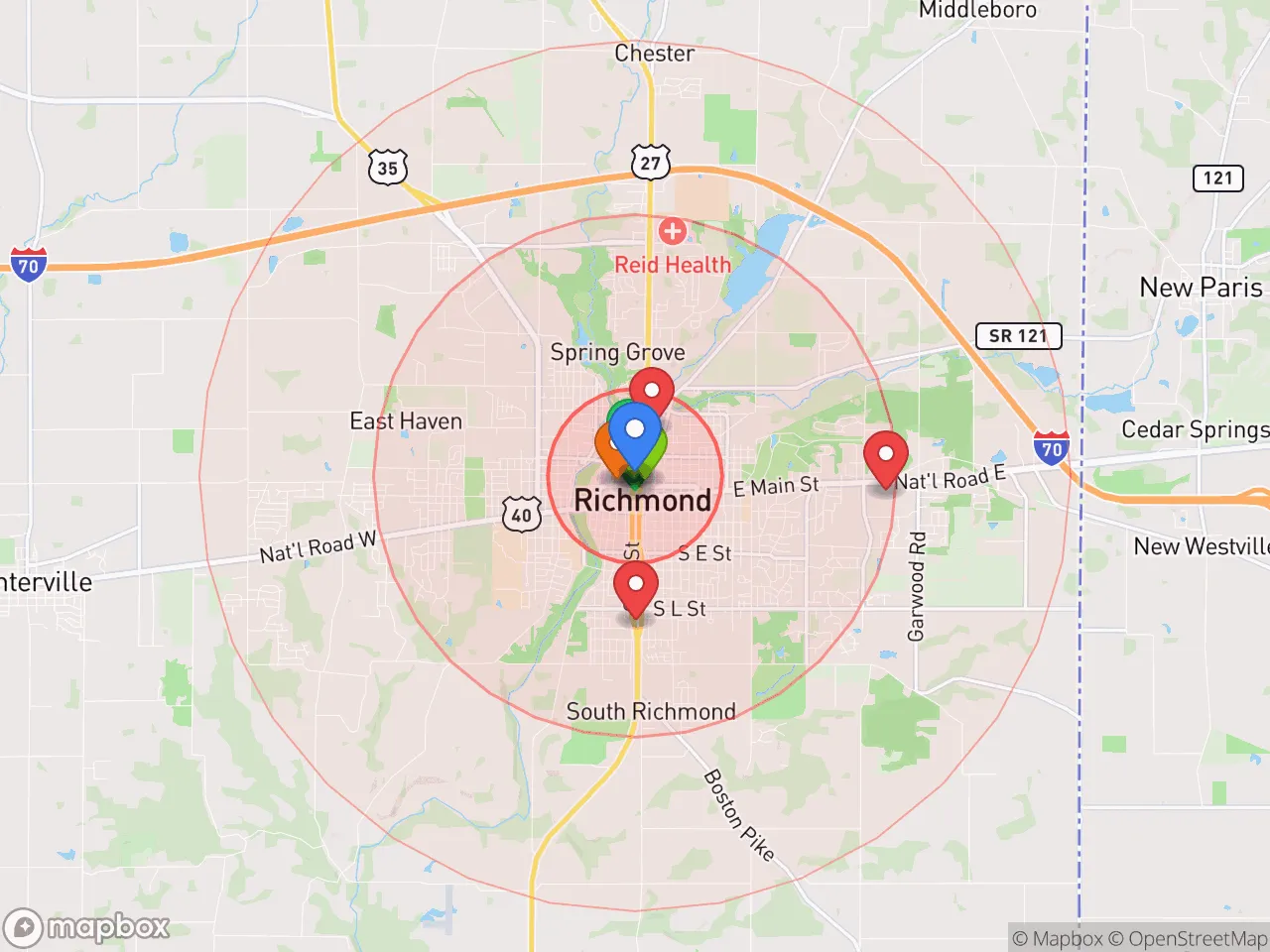
Explore the areaGroceries
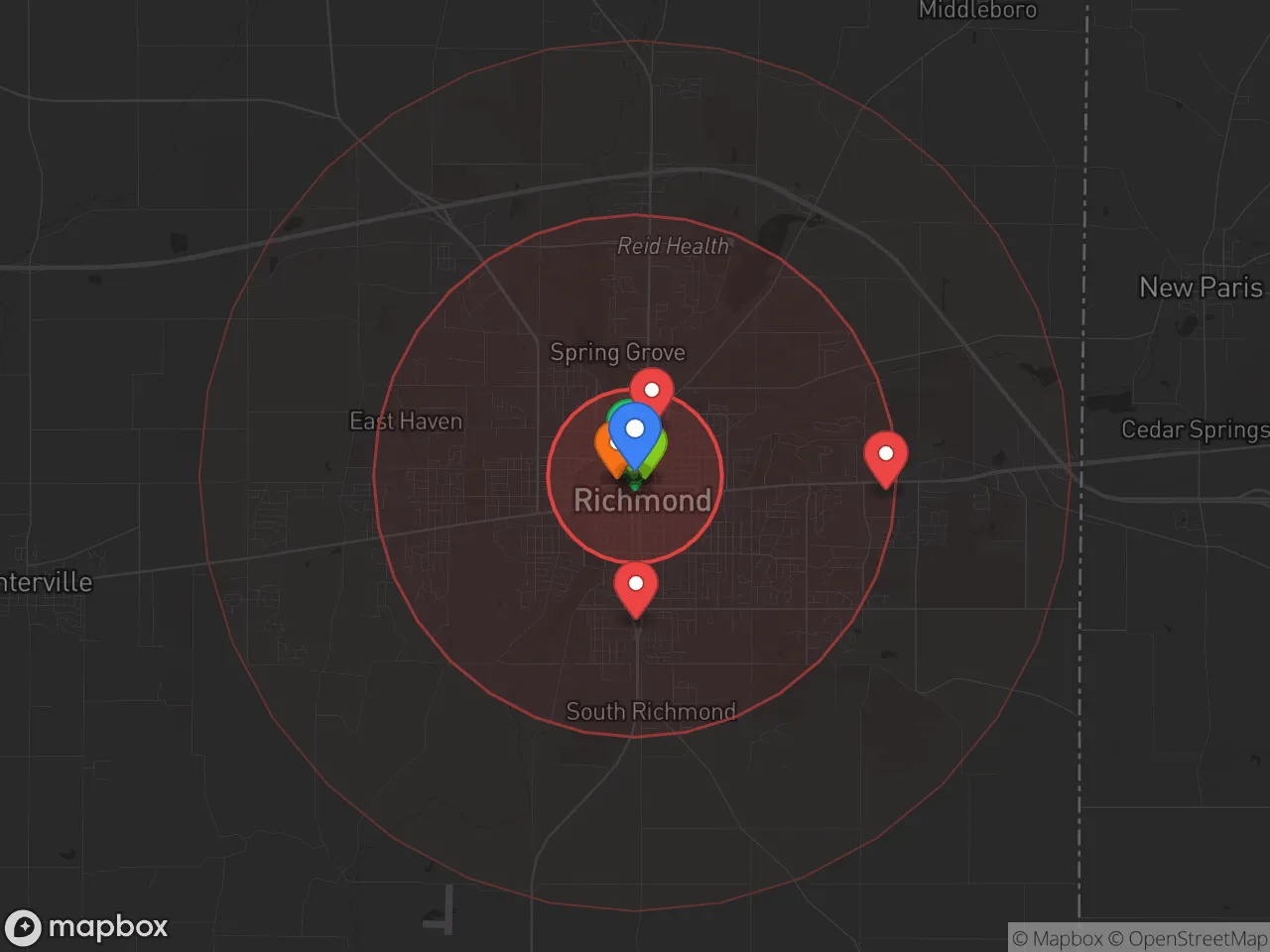
5 within 10 miles
Gas
20 within 10 miles
Hospital
5 within 20 miles
Airport
Indianapolis International Airport
Post Office
USPS — Richmond, IN
Critical Amenities
Quality-of-Life Analysis
Richmond, Indiana, presents a notably affordable quality of life, with a cost of living index of 57—43% below the national average—making it one of the most budget-friendly communities in the Midwest. The area attracts a mix of working-class families, retirees on fixed incomes, and students from nearby Earlham College and Indiana University East, drawn by the low financial barriers to homeownership and a slower, more predictable daily pace than what is found in larger metros.
How housing costs and everyday expenses compare to nearby areas
Richmond’s median home value of $107,600 is roughly half the national median and significantly undercuts nearby cities such as Muncie ($125,000) and Dayton, Ohio ($140,000). Median rent sits at $815, well below the Indiana state average of $950, allowing renters to allocate a smaller share of income to housing. The average commute of 18 minutes is about 10 minutes shorter than the national average, reducing transportation costs and freeing up time for family or leisure. Utility costs are slightly below the U.S. norm, while grocery and healthcare prices track close to state averages. For a household earning the local median income of roughly $48,000, the combined housing and transportation burden is among the lightest in the region, though wage growth has not kept pace with inflation in recent years.
What daily life is like for families: schools, parks, and local amenities
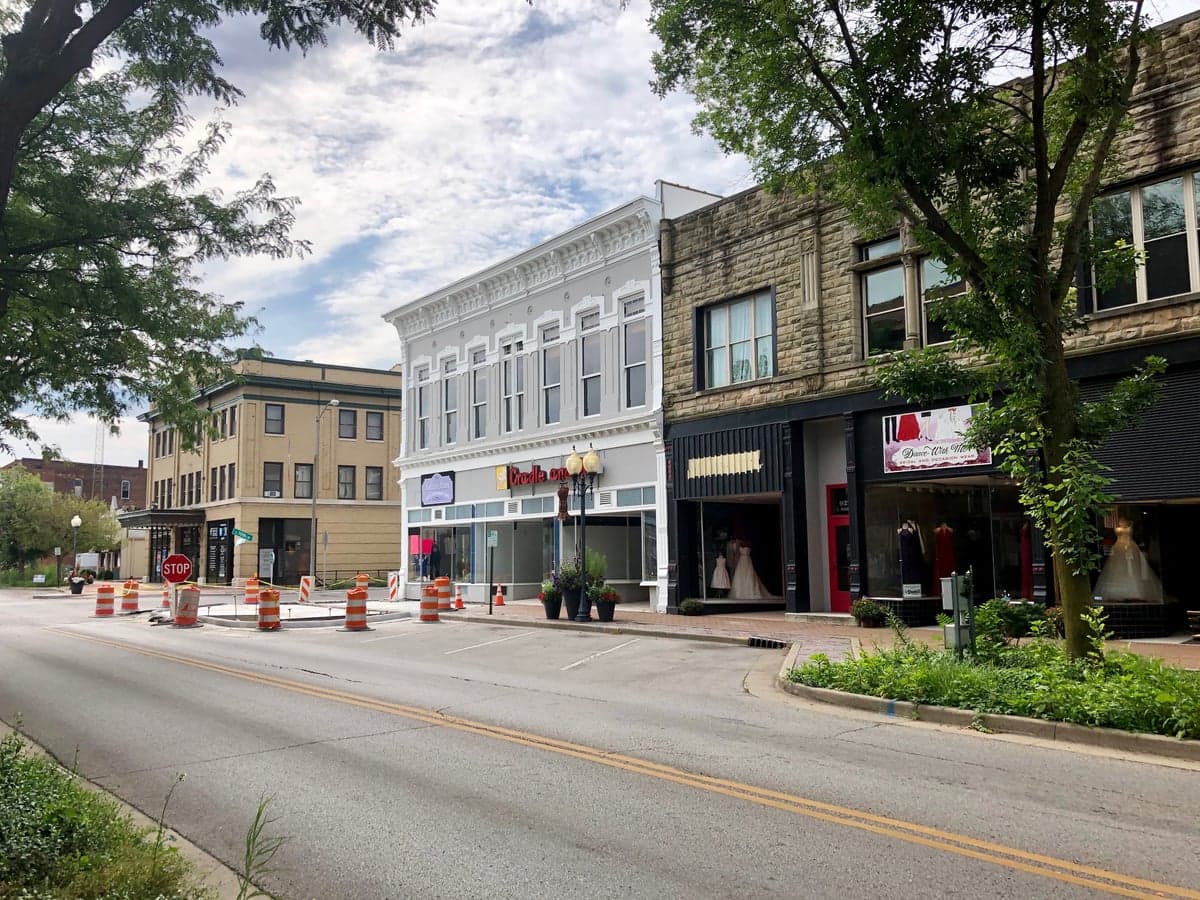
Daily life in Richmond centers on a compact, walkable downtown anchored by the historic Richmond Civic Theatre and the Wayne County Historical Museum. The city’s public school system, Richmond Community Schools, serves about 5,000 students and includes Richmond High School, which offers dual-credit programs with Indiana University East. For outdoor recreation, the 40-acre Glen Miller Park features a golf course, playgrounds, and the popular Richmond Rose Garden, while the nearby Whitewater River Gorge provides hiking and kayaking. Retail and dining options are modest but sufficient, anchored by the Richmond Mall and a growing number of locally owned restaurants along Main Street. Healthcare is accessible via Reid Health, a 227-bed hospital that also serves as the area’s largest employer. The cultural calendar is shaped by events like the Richmond Folk Festival and the Wayne County Fair, which reinforce a close-knit community feel. Internet access is reliable, with fiber-optic service available in most neighborhoods from providers like Spectrum and AT&T.
Richmond is best suited for individuals and families who prioritize low housing costs, short commutes, and a slower, community-oriented lifestyle over the job density and entertainment variety of a major city. Retirees and remote workers will find the affordability especially attractive, while those seeking high-wage professional opportunities or a vibrant nightlife scene may need to look toward Indianapolis, about 70 miles west. For anyone comfortable with a modest, steady pace and a lower cost of living, Richmond offers a stable and practical base.

Crime in Richmond, IN
Crime rates similar to the national median for U.S. locations.
Violent CrimeViolent Crime Analysis
Property CrimeProperty Crime Analysis
Crime Analysis
Richmond, Indiana, reports a violent crime rate of 636.3 per 100,000 residents and a property crime rate of 1,165.5 per 100,000, placing it significantly above both state and national averages. These figures indicate a community where safety is a pressing concern, particularly when compared to the national violent crime rate of roughly 380 per 100,000. The city's proximity to the larger Dayton and Cincinnati metro areas, combined with local judicial policies, creates a challenging environment for residents seeking security.
Crime in context
Richmond's violent crime rate is nearly 70% higher than the national average, while its property crime rate also exceeds the national benchmark. The city's location near the I-70 corridor, connecting it to larger urban centers like Indianapolis and Dayton, contributes to transient criminal activity. However, a significant factor in the elevated crime numbers is the influence of progressive prosecutorial policies in Wayne County. These policies, which often prioritize diversion programs and reduced sentencing for non-violent offenders, have been criticized for failing to deter repeat offenses. The result is a system that, while sympathetic to offenders, can leave victims and the broader public feeling underserved and less safe.
What residents experience
Daily life for Richmond residents involves a heightened awareness of personal and property security. The high property crime rate means that theft, burglary, and vehicle break-ins are common occurrences, particularly in areas with lower foot traffic and less lighting. Violent crime, including aggravated assault and robbery, is concentrated in specific neighborhoods but can spill into commercial districts. Residents often report that the local justice system's focus on rehabilitation over incarceration leads to a perception of low accountability for repeat offenders, which erodes trust in public safety institutions. This dynamic is especially concerning for families and retirees who rely on consistent police presence and judicial deterrence.
Neighborhood-level variation
Safety in Richmond is not uniform across the city. The historic West Side and areas near the Earlham College campus tend to see lower crime rates, benefiting from community watch programs and higher property values. In contrast, neighborhoods east of the Whitewater River and along the main commercial corridors like National Road East experience higher concentrations of both property and violent crime. Residents in these higher-crime areas often cite a lack of proactive policing and lenient court outcomes as key frustrations. For those considering a move to Richmond, consulting local crime maps and speaking with neighborhood associations is essential to identify safer pockets within the city.
* Values derived from national, state, county, city and local statistics and may differ in a specific area. Last updated: 2026-04-22T10:25:28.000Z
Narrative content on this page is AI-generated and may contain mistakes. Verify any details that matter before acting on them.
ReloMaps may earn a commission from affiliate links at no extra cost to you.

