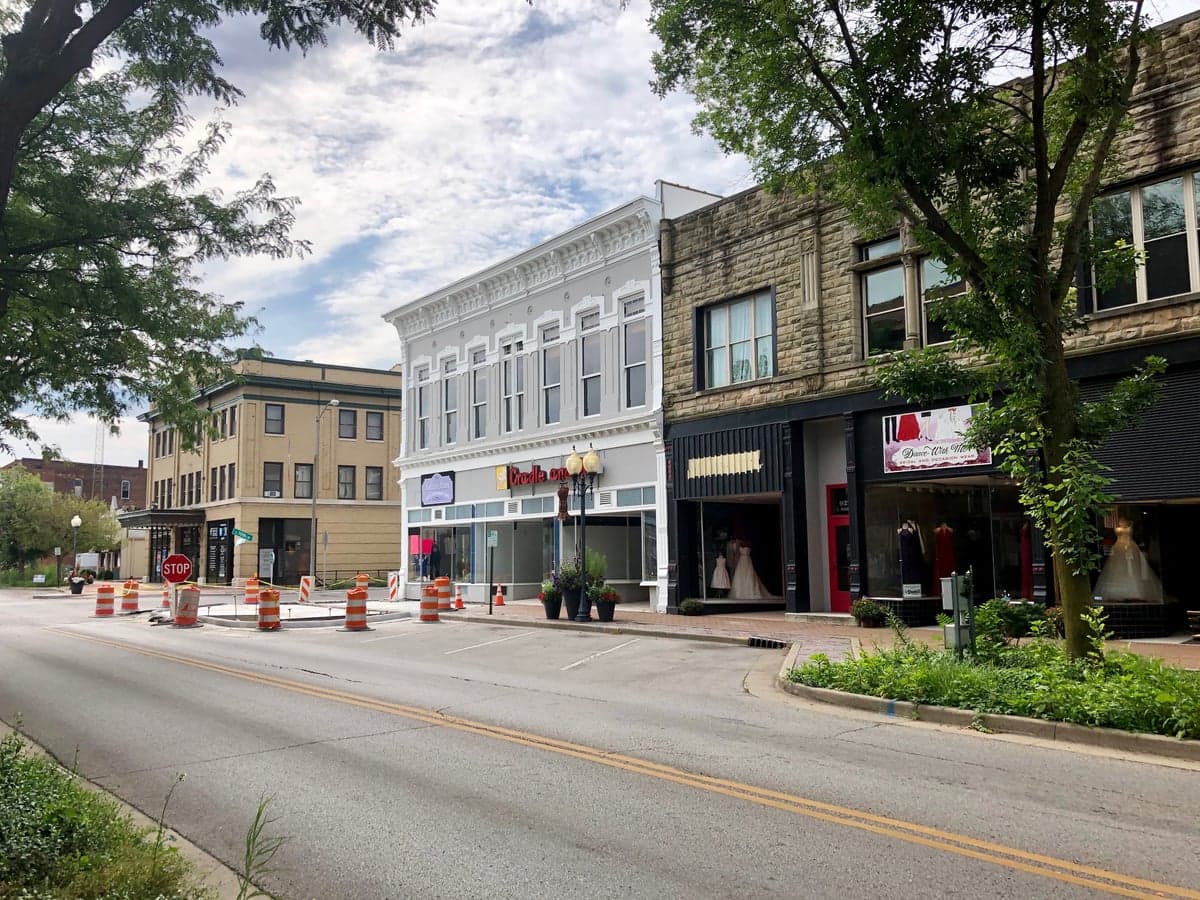
Photo: Wikipedia
Strategic Assessment of Richmond, IN
Meaningful friction. Expect exposure to either population pressure, blast zones, or natural disaster risk. Consider buying a retreat property.
What does the Strategic Assessment tell us?
Our Strategic Assessment grades tactical survivability of an area. Major population centers, military targets, fallout zones, natural disasters, and border exposure all drive risk — lower exposure means a more defensible position in a crisis.
This is heavily inspired by Joel Skousen's Strategic Relocation book. Highly recommended you checkout the book ($)What does this tell us?
Our Strategic Assessment grades tactical survivability of an area. Major population centers, military targets, fallout zones, natural disasters, and border exposure all drive risk — lower exposure means a more defensible position in a crisis.
This is heavily inspired by Joel Skousen's Strategic Relocation book. Highly recommended you checkout the book ($)Strategic Pillars

Key Distances
Regional Safe Places
Below is our recommended "safe zones" in Indiana and the surrounding area based on our strategic heuristics. For most people, it's unrealistic to live in a “safe zone” full-time due to work, family or other personal reasons. They tend to be more rural. However, many of these areas are perfect for second homes and retreat properties that double as a vacation home or even a short-term rental.

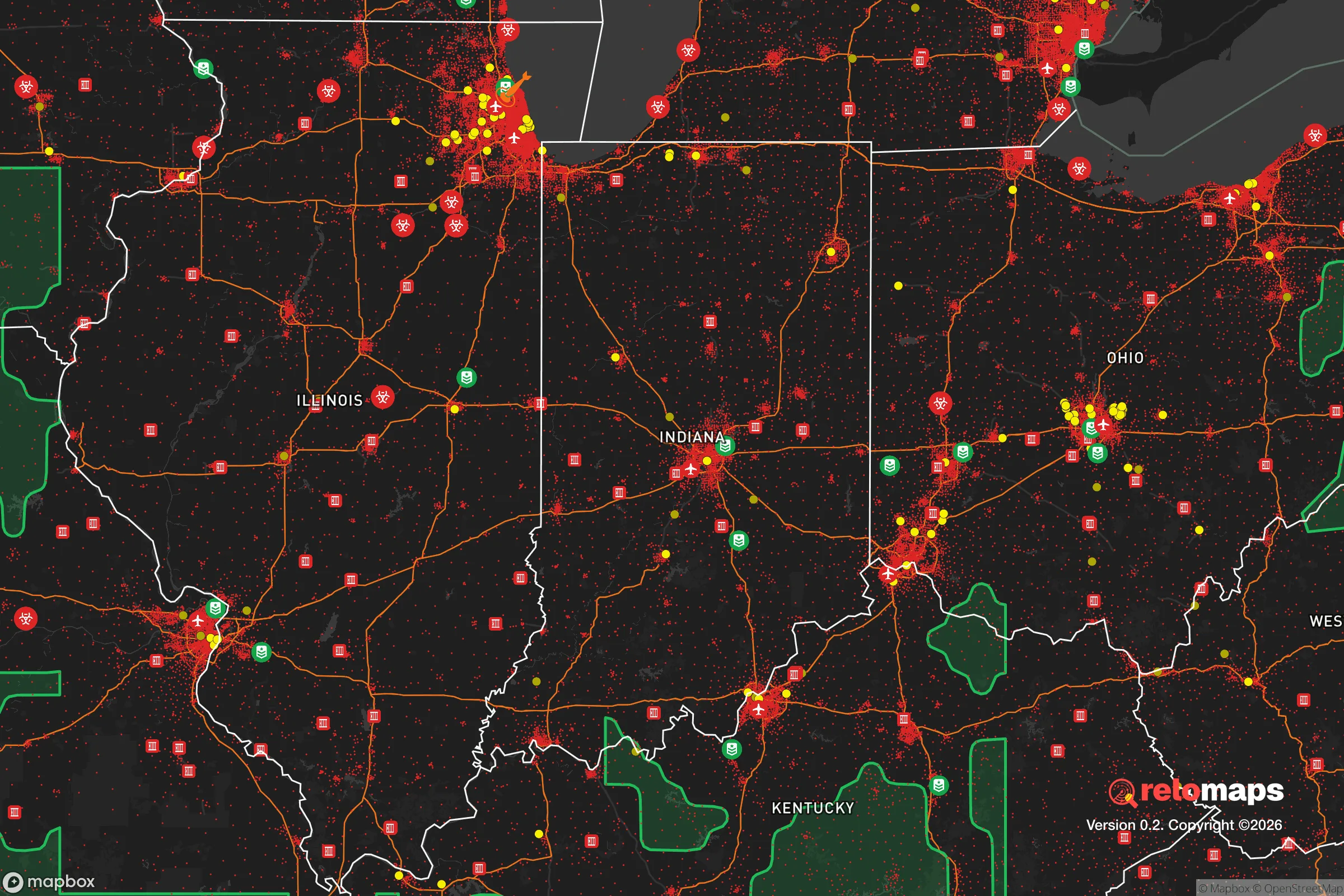


Important Note: For informational purposes only. This does not mean nothing bad ever happens in the green zones. Please use common sense. This is based on public data and modeled with AI. We tried to take a conservative approach but mistakes happen. We update this regularly as new information becomes available.
Solar Generator Recommendations
Backup power matters more here than in safer locations. We've picked three solar generators across budgets and capacity tiers — start with the budget unit if you only need a few essentials, or step up if you want to run a fridge and HVAC for days at a time.

Jackery Portable Power Station Explorer 300
Budget OptionPower on the Go: Weighing only 11 lbs, it's convenient to set up and store with book-sized foldable solar panels

BLUETTI Portable Power Station AC180
Designed for both indoor and outdoor scenarios, AC180 is highly capable as it has a robost capacity and continuous output power.

EF ECOFLOW DELTA Pro Ultra Power Station
Upgraded PickEcoFlow DELTA Pro Ultra is a whole-home energy system designed to grow with your family. Integrated with the Smart Home Panel 2, it scales to meet your evolving energy needs — keeping your home powered, intelligent, and secure through every stage of life.
We earn a commission, at no additional cost to you.
Strategic Assessment Analysis
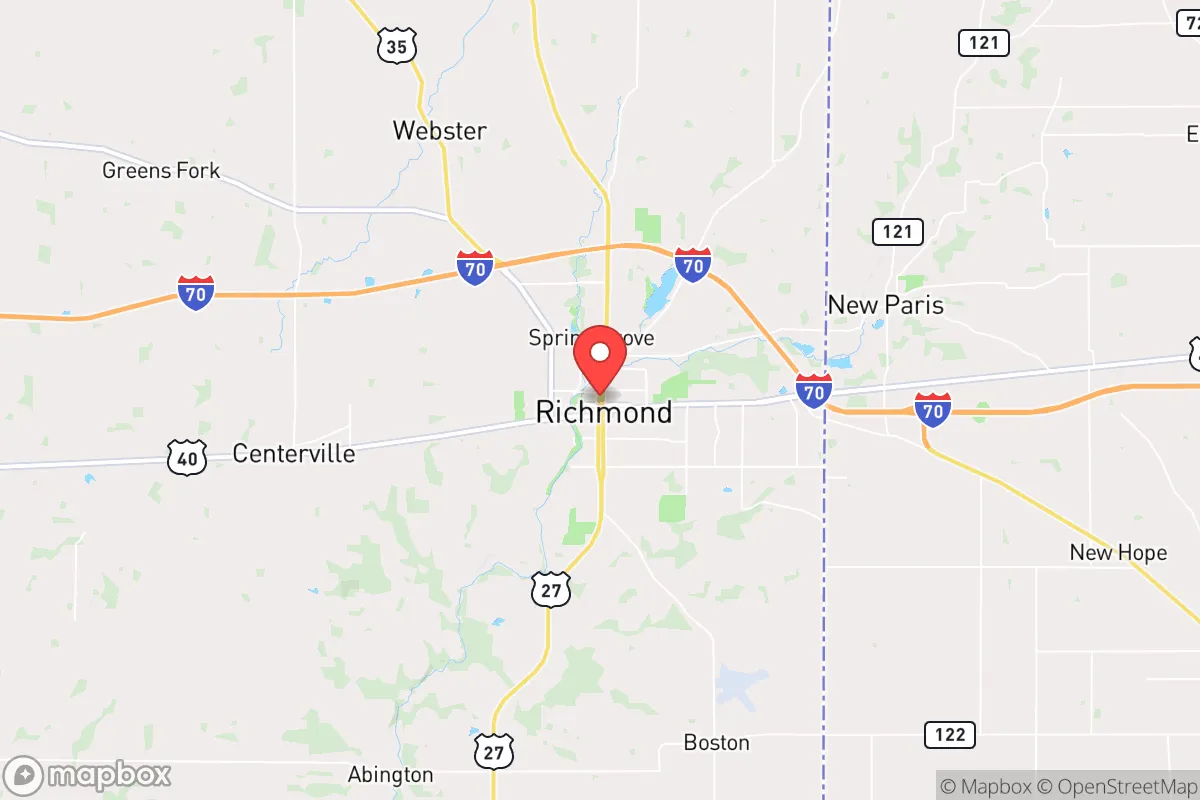
Richmond, Indiana, offers a surprisingly resilient strategic position for those prioritizing self-reliance and distance from major population centers, sitting roughly 70 miles east of Indianapolis and just west of the Ohio border. Its location along the I-70 corridor provides a quick escape route into rural Ohio or the Appalachian foothills, while the city itself remains small enough (population ~35,000) to avoid the worst of urban collapse scenarios. For a relocator with a prepper mindset, Richmond’s key advantage is its buffer—close enough to access regional resources but far enough from the immediate fallout zones of major cities like Cincinnati (50 miles south) or Dayton (40 miles northeast).
Geographic position and natural advantages for long-term security
Richmond sits in the Whitewater River Valley, a region of rolling hills and mixed hardwood forests that offers decent natural cover and water access. The area’s agricultural base is a major plus: Wayne County is part of Indiana’s corn and soybean belt, meaning local food production is viable even if supply chains falter. The city’s elevation (around 1,000 feet) and inland location reduce risks from coastal storm surges or nuclear fallout patterns that tend to drift eastward from the Mississippi River basin. The nearby Brookville Lake (30 miles southeast) provides a reliable freshwater reservoir, and the Whitewater River itself runs through town, though it’s not a major navigable waterway. For a prepper, the terrain offers defensible positions—the hills and wooded ravines east of the city create natural chokepoints for anyone approaching from the Ohio side, while the flat farmland to the west is open enough to spot threats from a distance.
Risks, exposures, and proximity to fallout-relevant landmarks
The biggest strategic liability is Richmond’s proximity to several high-value targets. The I-70 corridor itself is a major east-west logistics artery, meaning it could become a target for infrastructure attacks or a funnel for displaced populations during a crisis. The city lies within 100 miles of Wright-Patterson Air Force Base near Dayton, a primary military installation that would be a top-tier nuclear or EMP target. Similarly, the Indianapolis metropolitan area (including the FedEx hub and state government) is a likely secondary target. Fallout patterns from a strike on either city could drift over Richmond depending on wind direction, though the prevailing westerlies would push contamination eastward toward Ohio. The local industrial base includes a few chemical plants and a major plastic manufacturing facility (the former Alcoa plant), which could become hazardous if damaged during unrest. On the plus side, Richmond has no major military bases, nuclear power plants, or large-scale refineries within its immediate vicinity, reducing the chance of a direct strike. The biggest day-to-day risk is economic: the area has struggled with manufacturing decline, so a sudden collapse of the national economy could hit local employment hard, potentially sparking localized unrest.
Practical resilience for a relocator: food, water, energy, and defensibility
For a relocator looking to set up a sustainable homestead, Richmond’s practical resilience is mixed but workable. Water access is solid: the city’s municipal supply comes from groundwater wells and the Whitewater River, but a prepper should drill a private well or install rainwater catchment—the area gets about 40 inches of rain annually, enough for off-grid use. Food production is viable: Wayne County has numerous small farms, and the local farmers’ market operates year-round. For long-term storage, the surrounding Amish and Mennonite communities (concentrated around nearby Centerville and Cambridge City) are a huge asset—they maintain traditional food preservation skills and barter networks that would survive a currency collapse. Energy is a weak point: the grid is aging and reliant on coal and natural gas plants in the region, so solar panels with battery backup are a must. The area gets decent sun (about 190 sunny days per year), but winter cloud cover can be an issue. Defensibility is moderate: Richmond’s layout is a typical Midwestern grid, with a historic downtown and residential sprawl. The best defensive properties are on the eastern edge, where the terrain becomes hillier and more wooded, offering concealment and natural barriers. The city’s police force is small (around 60 officers), so during a major crisis, law enforcement would be stretched thin—neighborhood watch and mutual aid groups would be essential. The local hospital (Reid Health) is a regional trauma center, but it would be overwhelmed in a mass casualty event, so medical self-sufficiency is critical.
The overall strategic picture for Richmond is that of a decent secondary relocation option—not a fortress, but a workable base for those willing to invest in preparation. Its biggest strengths are its agricultural surroundings, water availability, and distance from primary targets, while its weaknesses are the I-70 corridor vulnerability and economic fragility. For a conservative-leaning relocator, the area’s cultural fit is solid: Wayne County voted +28 points Republican in 2024, and the local gun culture is strong (Indiana is a constitutional carry state). The Amish presence adds a layer of community resilience that’s rare in most of the Midwest. If you’re looking for a place to ride out a national crisis without being in the direct blast zone, Richmond is worth a serious look—just don’t expect it to be a bug-out paradise. It’s a real town with real problems, but for a prepared individual, it offers a fighting chance.

* Values derived from national, state, county, city and local statistics and may differ in a specific area. Last updated: 2026-04-22T10:25:28.000Z
Narrative content on this page is AI-generated and may contain mistakes. Verify any details that matter before acting on them.
ReloMaps may earn a commission from affiliate links at no extra cost to you.

