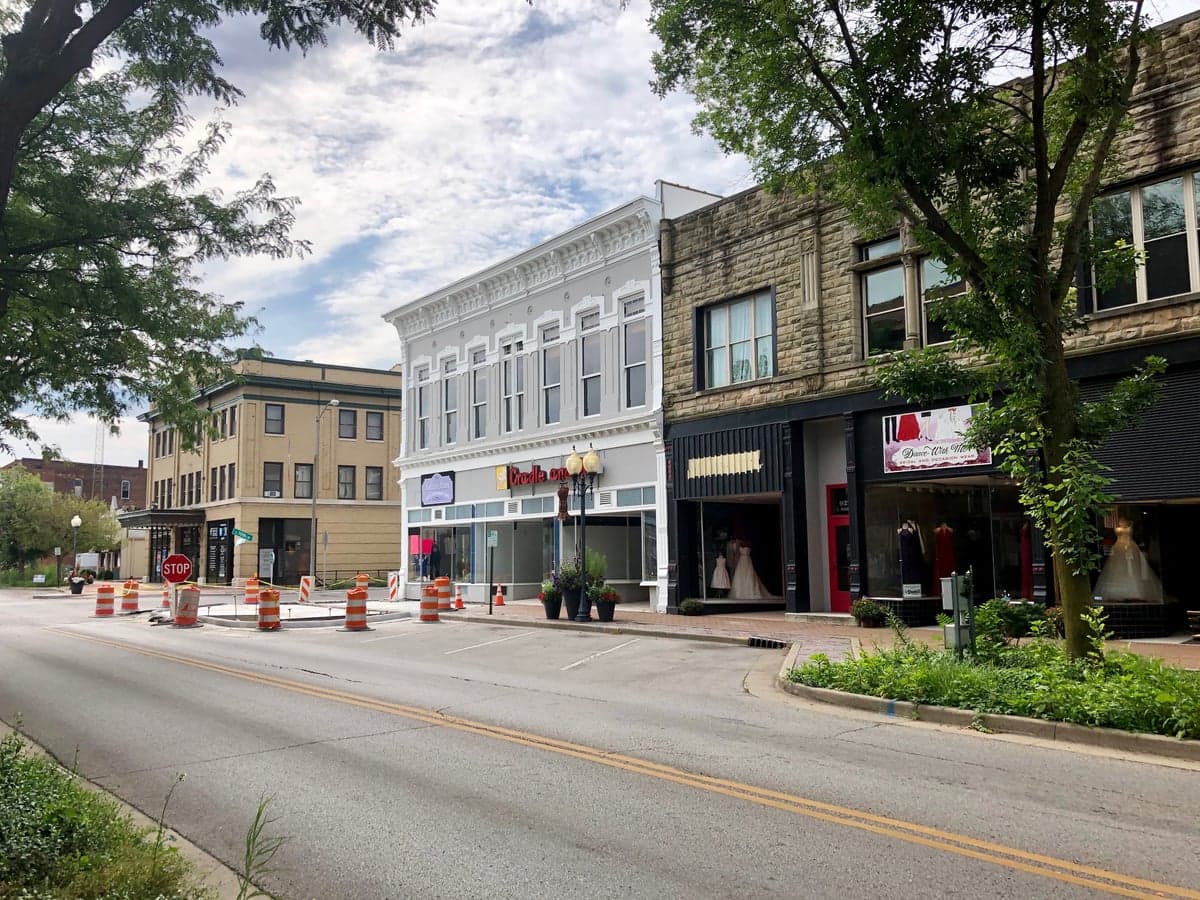
Photo: Wikipedia
Political ClimatePolitical Climate in Richmond, IN
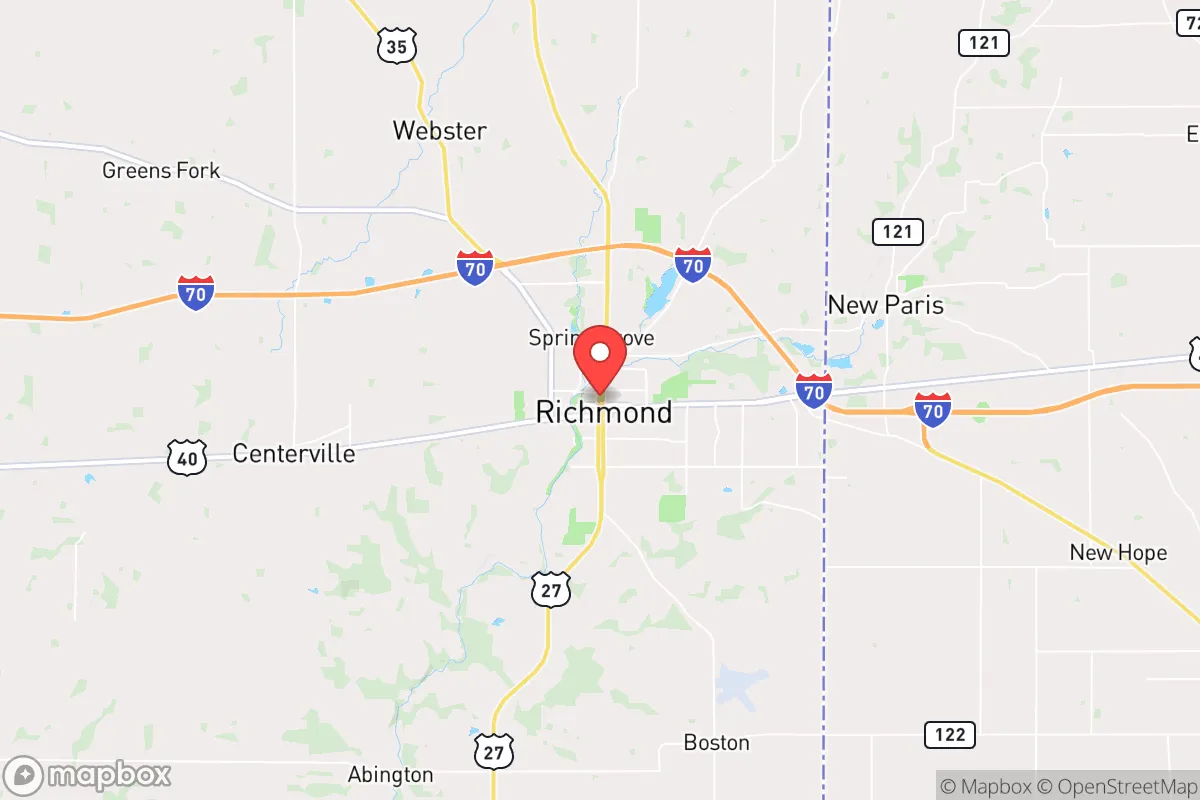
District shown is the primary district for this city’s centroid. Cities may span multiple districts.
Local Political AnalysisPolitical Analysis of Richmond, IN
Richmond, Indiana, sits right in the heart of Wayne County, and for as long as anyone around here can remember, it’s been a solidly conservative place. The Cook PVI clocks it at R+16, which means Republicans hold a 16-point advantage over the national average in presidential elections. That’s not just a number—it’s a reflection of the local mindset. People here value self-reliance, limited government, and the freedom to live life without a bunch of bureaucratic red tape. You don’t see the same kind of political hand-wringing you get in places like Indianapolis or Bloomington. It’s a place where folks still believe in personal responsibility and aren’t shy about saying so.
How it compares
If you drive just 30 miles west to Muncie, you’ll feel the political temperature shift noticeably. Muncie leans more moderate, with a stronger Democratic base thanks to Ball State University and a larger urban core. Head east toward Dayton, Ohio, and you’re in a swing area that’s been trending left in recent years. Richmond, though, has held its ground. The surrounding towns—like Centerville, Cambridge City, and Liberty—are even more conservative, often voting R+20 or higher in local races. Richmond itself is the county seat and the biggest draw for jobs and services, so it gets a little more political diversity, but the overall vibe is still unmistakably red. You won’t find many “defund the police” signs here, and the local government has been pretty consistent about keeping taxes low and regulations light.
What this means for residents
For the people who call Richmond home, the political climate means a few practical things. First, there’s a strong sense that government should stay out of your business. Whether it’s zoning laws, business licenses, or school curriculum, the local approach tends to be “let the people decide.” That’s a big deal for small business owners and families who don’t want to be nickel-and-dimed by endless mandates. Second, the area has been pretty resistant to the kind of progressive social experiments you see in larger cities. There’s no push for defunding the police or imposing strict environmental regulations that would hurt local manufacturing. The trade-off is that Richmond doesn’t have the same level of cultural amenities or diversity of opinion you’d find in a college town, but for most residents, that’s a feature, not a bug. You know what you’re getting, and it’s stable.
That said, there are some shifts worth keeping an eye on. The county has seen a slow but steady influx of folks from more liberal areas, partly because housing is cheap and the pace of life is slower. Some of those newcomers bring different ideas about taxes, land use, and public spending. There’s also been a quiet push from a few local groups to adopt more “progressive” policies around things like diversity initiatives and climate action plans. So far, these haven’t gained much traction, but they’re a reminder that no place stays exactly the same forever. The real test will be whether Richmond can hold onto its core values—personal freedom, fiscal restraint, and local control—while still adapting to the changes that come with a shifting population. For now, it’s still a place where a handshake means something and your neighbor’s business is your neighbor’s business. Longtime residents hope it stays that way.

State Political ClimatePolitical Climate in Indiana
State Political AnalysisPolitical Environment in the State
Indiana has been a reliably Republican state for decades, but its conservatism is of a specific, pragmatic Midwestern variety — not the fire-breathing kind you see out West. The state has voted for the GOP presidential candidate in every election since 2008 (when Obama narrowly won it), and by 2024, Trump carried it by roughly 18 points. But beneath that red veneer, the coalition is shifting: the old-school manufacturing base in places like Gary and South Bend has been bleeding population and influence, while the exurban sprawl around Indianapolis and the reliably red rural counties have solidified GOP dominance. Over the last 20 years, the state has moved from a purple-ish battleground to a solidly red stronghold, though the nature of that red is changing — less union Democrat, more culturally conservative suburbanite.
Urban vs. rural divide
The political map of Indiana is a study in stark contrasts. Indianapolis (Marion County) is the only reliably blue metro, and even there, the suburbs are a mixed bag — Hamilton County (Carmel, Fishers, Noblesville) is one of the most Republican counties in the nation, with Trump winning it by over 20 points in 2024. Fort Wayne (Allen County) leans red but has a sizable moderate Republican base, while Evansville (Vanderburgh County) is a classic swing county that has trended right. The real action is in the rural expanse: counties like Kosciusko (Warsaw), Elkhart, and Steuben routinely deliver 70-80% GOP margins. The only blue dots outside Indy are Monroe County (Bloomington, home to Indiana University) and Tippecanoe County (West Lafayette, Purdue), both driven by academic populations. The urban-rural divide here is as sharp as anywhere in the Midwest — drive 20 minutes outside any city, and you're in deep red territory where Trump flags still fly and local politics are dominated by farm bureaus and gun clubs.
Policy environment
Indiana's policy environment is broadly conservative but with a pragmatic, business-friendly bent. The state has a flat income tax of 3.05% (scheduled to drop to 2.9% by 2027), no estate tax, and a sales tax of 7% on most goods. Property taxes are relatively low, capped at 1% of assessed value for owner-occupied homes. The regulatory posture is light-touch: Indiana is a right-to-work state (passed in 2012), and there are no statewide zoning mandates that would override local control. On education, the state has a robust school choice program — the Choice Scholarship Program (vouchers) is one of the most expansive in the nation, and charter schools are common. However, the state's 2023 "Don't Say Gay" law (HB 1608) restricts classroom discussion of sexual orientation and gender identity, which has drawn some corporate backlash but remains popular with the base. Election laws are moderately restrictive: voter ID is required, early voting is available but not universal mail-in, and the state purged over 400,000 inactive voters in 2023. On healthcare, Indiana expanded Medicaid under the HIP 2.0 waiver (a conservative alternative), but the state has not legalized medical or recreational marijuana, and abortion is banned at conception with narrow exceptions.
Trajectory & freedom
On the freedom front, Indiana is a mixed bag trending in the right direction on some fronts but concerning on others. The state passed constitutional carry (permitless carry) in 2022, a clear expansion of Second Amendment rights. Parental rights were strengthened with HB 1608 (restricting LGBTQ instruction in schools) and SB 1 (2023), which gives parents more control over school curriculum and library materials. Property rights got a boost with the 2023 "Right to Farm" law, which limits nuisance lawsuits against agricultural operations. However, the state's medical freedom record is mixed: Indiana was one of the last states to end COVID-19 emergency orders, and the state health department still maintains broad quarantine powers. On taxation, the flat income tax reduction is a positive, but local option taxes (like the Marion County food and beverage tax) have crept up. The biggest red flag for liberty-minded folks is the state's war on drugs — Indiana still has some of the harshest marijuana laws in the Midwest, with possession of even small amounts carrying jail time. The trajectory is generally pro-freedom on guns and education, but the state remains stuck in a 1990s-era drug war mentality.
Civil unrest & political movements
Indiana has seen its share of political flashpoints, though nothing on the scale of Portland or Seattle. The 2020 George Floyd protests in Indianapolis turned violent, with looting and fires along Mass Ave, leading to a heavy National Guard presence. The Indiana Black Legislative Caucus has been vocal on police reform, but little has passed. On the right, the Indiana Freedom Coalition and local Moms for Liberty chapters have been active in school board races, particularly in Hamilton County and Johnson County (Greenwood). Immigration politics are relatively quiet — Indiana is not a border state, but Elkhart County has seen tensions over a growing Hispanic population in the RV manufacturing sector. There have been no serious secession or nullification movements, though some rural counties have passed "Second Amendment sanctuary" resolutions. Election integrity controversies flared in 2020 and 2022, with the Indiana Election Commission (controlled by Republicans) tightening voter roll maintenance. A new resident would notice that political signs are ubiquitous in rural areas, but actual civil unrest is rare — most conflict plays out in school board meetings and county commission chambers.
Projection
Over the next 5-10 years, Indiana is likely to remain solidly Republican, but the nature of that conservatism will evolve. The Indianapolis metro is growing faster than the rest of the state, driven by tech and logistics jobs, and the suburbs are becoming more culturally moderate — expect more "country club Republicans" and fewer culture warriors. Rural counties will continue to shrink and age, deepening their red hue but losing political weight. The biggest wildcard is in-migration: Indiana is attracting transplants from Illinois and California, many of whom are fleeing high taxes and crime. These newcomers tend to be fiscally conservative but socially moderate, which could push the state toward a more libertarian-leaning GOP. On policy, expect further tax cuts (the flat income tax may go to 2.5%), continued expansion of school choice, and possibly a medical marijuana program by 2030 if neighboring Ohio and Michigan keep sucking away Indiana tax dollars. The state's abortion ban will remain a flashpoint, but the legislature is unlikely to add exceptions. For a conservative moving in, Indiana in 2035 will look much like it does today — reliably red, business-friendly, and culturally traditional, but with a slightly more suburban, less rural flavor.
Bottom line for a new resident: If you're looking for a state where your vote will count in a Republican primary but not in a general election, where taxes are low and schools are choice-friendly, and where the culture wars are fought in school boards rather than on the streets, Indiana is a solid bet. Just don't expect legal weed anytime soon, and be prepared for the occasional winter of political discontent in the statehouse. It's a good place to raise a family, start a business, and keep your guns — just know that the political action is in the suburbs, not the cities, and that the state's conservatism is more about stability than revolution.
* Values derived from national, state, county, city and local statistics and may differ in a specific area. Last updated: 2026-04-22T10:25:28.000Z
Narrative content on this page is AI-generated and may contain mistakes. Verify any details that matter before acting on them.
ReloMaps may earn a commission from affiliate links at no extra cost to you.

