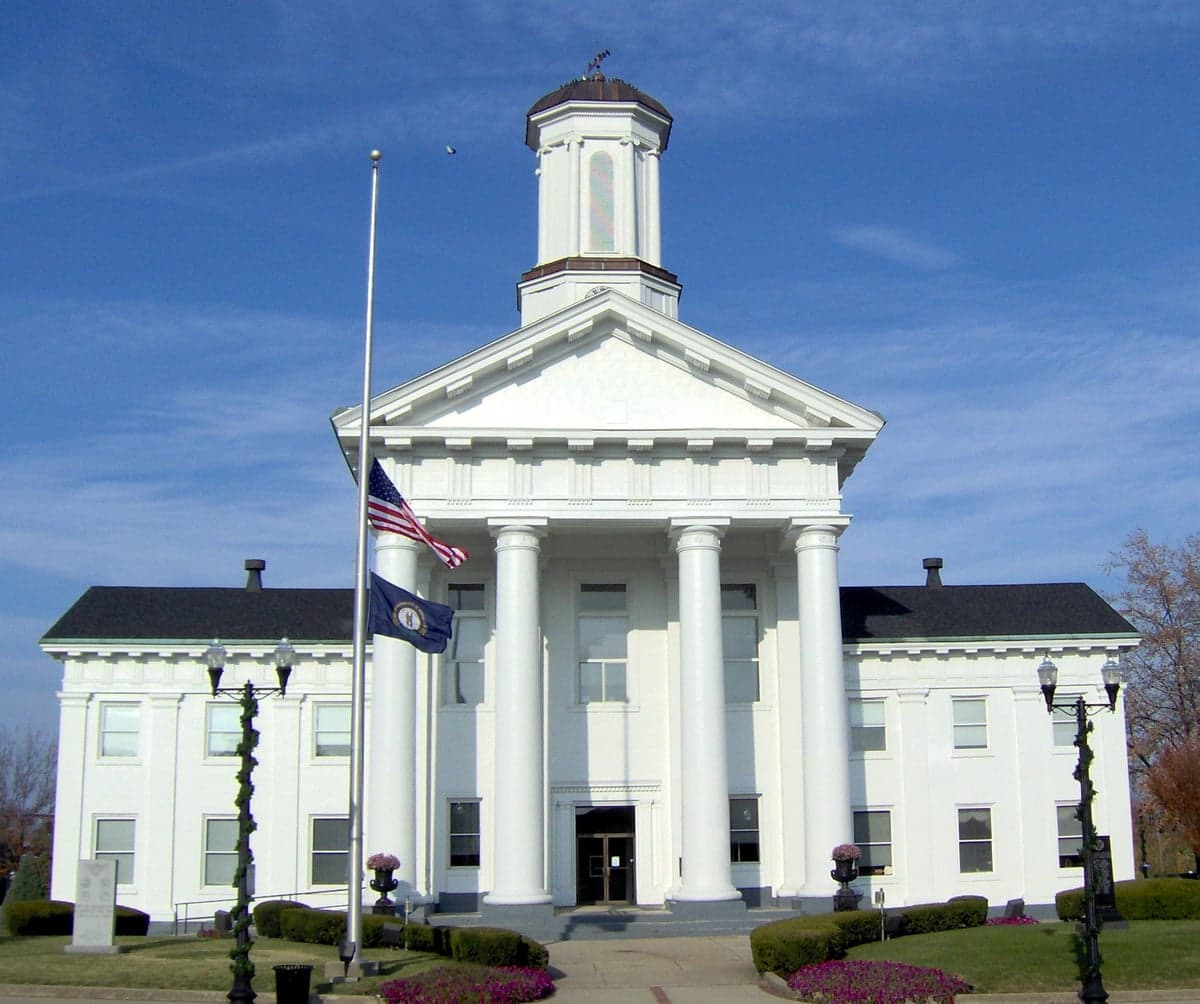
Photo: Wikipedia
Quality of Life in Richmond, KY
A high quality of life with strong walkability, manageable living costs, healthy neighborhood signals, and solid amenity access.
What does Quality of Life tell us?
Quality of Life blends cost of living, nearby amenities, socioeconomic signals, and neighborhood character. City-level scores represent the whole municipality; individual neighborhoods can differ.
What does this tell us?
Quality of Life blends cost of living, nearby amenities, socioeconomic signals, and neighborhood character. City-level scores represent the whole municipality; individual neighborhoods can differ.
Cost of Living
26% below national average
The Real Cost of Living in Richmond, KY for 2026
| Tier | Individual | Family (4) |
|---|---|---|
| Survival | $14k | $26k |
| Comfortable | $40k | $59k |
| Luxury | $87k+ | $135k+ |
| Elite (Top 5%) | $105k+ | $162k+ |
82%
The Area Signal
A metric tracking the socioeconomic signals of the area.
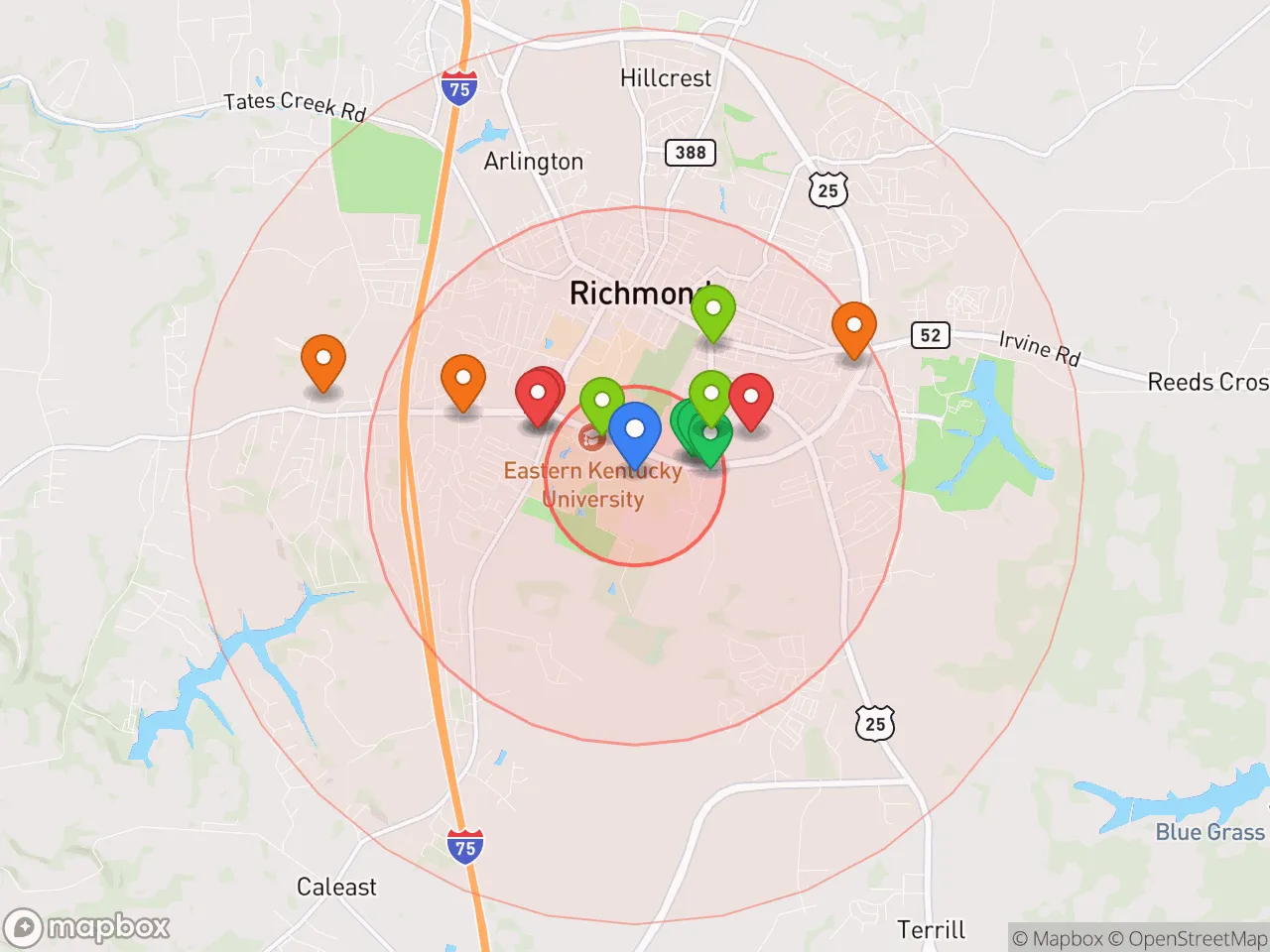
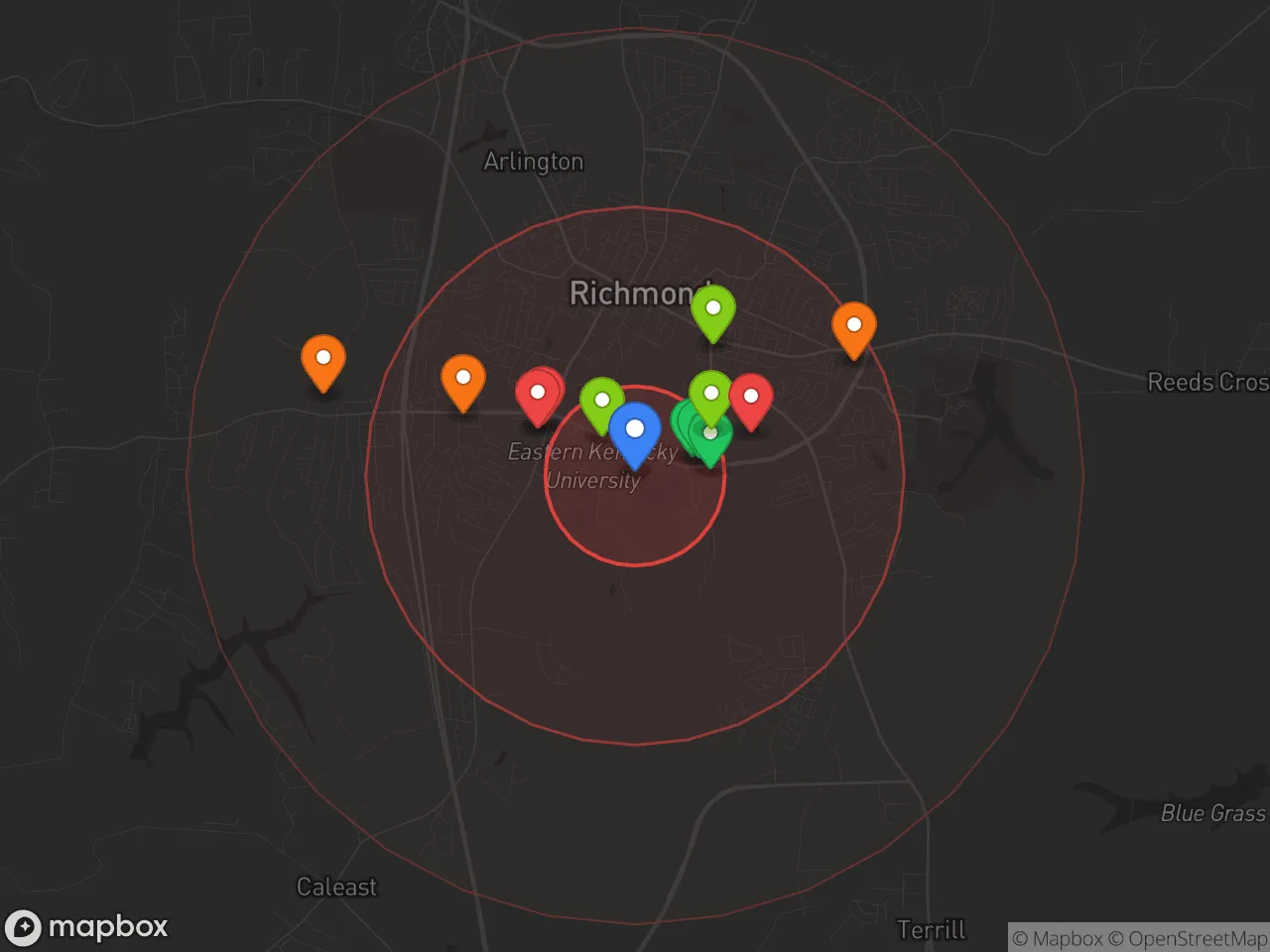
Hobbies
Explore the areaGroceries
4 within 10 miles
Gas
20 within 10 miles
Hospital
6 within 20 miles
Airport
BNA — Nashville International
Post Office
USPS — Richmond, KY
Critical Amenities
Quality-of-Life Analysis
Richmond, Kentucky, offers a notably affordable quality of life that attracts a mix of Eastern Kentucky University students, young professionals, and families seeking a lower cost of living within commuting distance of Lexington. With a cost of living index of 74 (where 100 equals the U.S. average), the area is significantly cheaper than the national norm, drawing residents who prioritize financial breathing room over urban amenities. The population skews younger due to the university presence, but the city also retains a stable core of long-term residents employed in education, healthcare, and manufacturing.
Cost of living, housing costs, and affordability compared to Lexington and Berea
Richmond’s affordability is its strongest draw. The median home value sits at $205,900, roughly $100,000 less than the median in nearby Lexington, making homeownership attainable for first-time buyers and middle-income earners. Median rent is just $860 per month, well below the national median of roughly $1,200, and significantly cheaper than Lexington’s average rent of around $1,100. The average commute of 23.8 minutes is manageable, though slightly longer than the national average of 26 minutes, reflecting that many residents drive to jobs in Lexington (about 20 miles north) or to manufacturing plants in Berea (10 miles south). Utility costs and grocery prices also track below national averages, reinforcing Richmond’s reputation as a budget-friendly alternative to the state’s larger metro areas.
Local amenities, schools, and what daily life is like for families and students
Daily life in Richmond revolves around a compact downtown core, the campus of Eastern Kentucky University (EKU), and easy access to outdoor recreation at Lake Reba and the nearby Daniel Boone National Forest. The Madison County School District is a key draw for families, with Madison Central High School and Model Laboratory School (a K-12 lab school on EKU’s campus) both earning above-average state ratings. For shopping and dining, residents rely on a mix of local eateries along Main Street and national chains along the Eastern Bypass. The EKU Center for the Arts brings concerts and Broadway tours to a population that otherwise would drive to Lexington for such events. Grocery access is solid, with multiple Kroger and Walmart locations, though specialty markets are limited. The city’s walkability is low outside the immediate downtown and campus areas, so a car is essential for most errands.
Who thrives in Richmond: ideal resident profiles and lifestyle fit
Richmond is best suited for people who value affordability and a slower pace over urban excitement. First-time homebuyers priced out of Lexington’s market find a clear path to ownership here. EKU students and faculty benefit from the university’s cultural and employment anchor. Outdoor enthusiasts appreciate the proximity to hiking, fishing, and boating at Lake Reba and the Red River Gorge, about 40 minutes east. Families with school-age children will find the district’s performance reassuring, though those seeking elite private schools or a dense nightlife scene will be disappointed. Retirees on fixed incomes also gravitate here for the low housing costs and mild climate. The trade-off is limited high-end retail, fewer specialized healthcare options (most serious medical needs require a drive to Lexington), and a job market that leans heavily on education, healthcare, and manufacturing rather than tech or finance.

Crime in Richmond, KY
Generally safer than 72% of comparable U.S. locations.
Violent CrimeViolent Crime Analysis
Property CrimeProperty Crime Analysis
Crime Analysis
Richmond, Kentucky, presents a mixed safety profile with property crime rates significantly exceeding national averages, while violent crime remains below the U.S. median. The city's overall crime rate of 1,828.8 incidents per 100,000 residents is driven primarily by theft and burglary, though the violent crime rate of 225.8 per 100,000 offers a more moderate picture. Residents should weigh these figures carefully, particularly as broader regional trends in criminal justice policy may influence future safety outcomes.
Crime in context
Richmond's violent crime rate of 225.8 per 100,000 is roughly 35% lower than the national average of approximately 380 per 100,000, placing it in a safer tier compared to many similarly sized Kentucky cities. However, the property crime rate of 1,603 per 100,000 is notably higher than the U.S. average of around 1,950 per 100,000, though still below the Kentucky state average of roughly 2,100 per 100,000. This means Richmond experiences fewer violent offenses like assault and robbery than the typical American city, but property crimes—particularly larceny-theft and vehicle break-ins—occur at a frequency that demands attention. The city's proximity to Lexington (about 25 miles north) and its status as a college town (home to Eastern Kentucky University) contribute to a transient population that can elevate property crime risks.
What residents experience
Daily life in Richmond involves a tangible awareness of property crime, especially in areas near campus and commercial corridors like the I-75 interchange. Residents commonly report package thefts, unlocked vehicle entries, and occasional burglaries in rental-heavy neighborhoods. Violent crime is less visible but not absent—incidents tend to cluster in specific zones rather than being evenly distributed. A significant concern for long-term safety is the influence of progressive judicial policies in Kentucky's larger metro areas, including nearby Lexington. Liberal-leaning district attorneys and judges in these jurisdictions often prioritize diversion programs and reduced sentencing for property and drug offenses, which can lead to repeat offenders cycling back into communities like Richmond. While Richmond itself maintains a more conservative local judiciary, the regional flow of offenders from metro areas with lenient prosecution creates a spillover effect that residents should monitor.
Neighborhood-level variation is pronounced. Areas east of the EKU campus and along the Barnes Mill Road corridor report higher property crime rates, while western neighborhoods near Lake Reba and the Berea Road corridor tend to be quieter. Gated communities and newer subdivisions on the city's southern edge, such as those off Duncannon Lane, generally see fewer incidents. For the most current block-level data, the Richmond Police Department's annual crime report and the Kentucky State Police's online crime mapping tool are recommended resources.
* Values derived from national, state, county, city and local statistics and may differ in a specific area. Last updated: 2026-04-21T09:14:41.000Z
Narrative content on this page is AI-generated and may contain mistakes. Verify any details that matter before acting on them.
ReloMaps may earn a commission from affiliate links at no extra cost to you.

