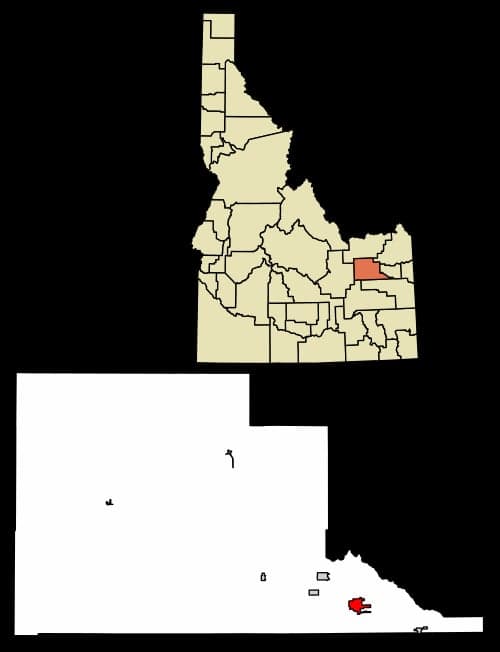
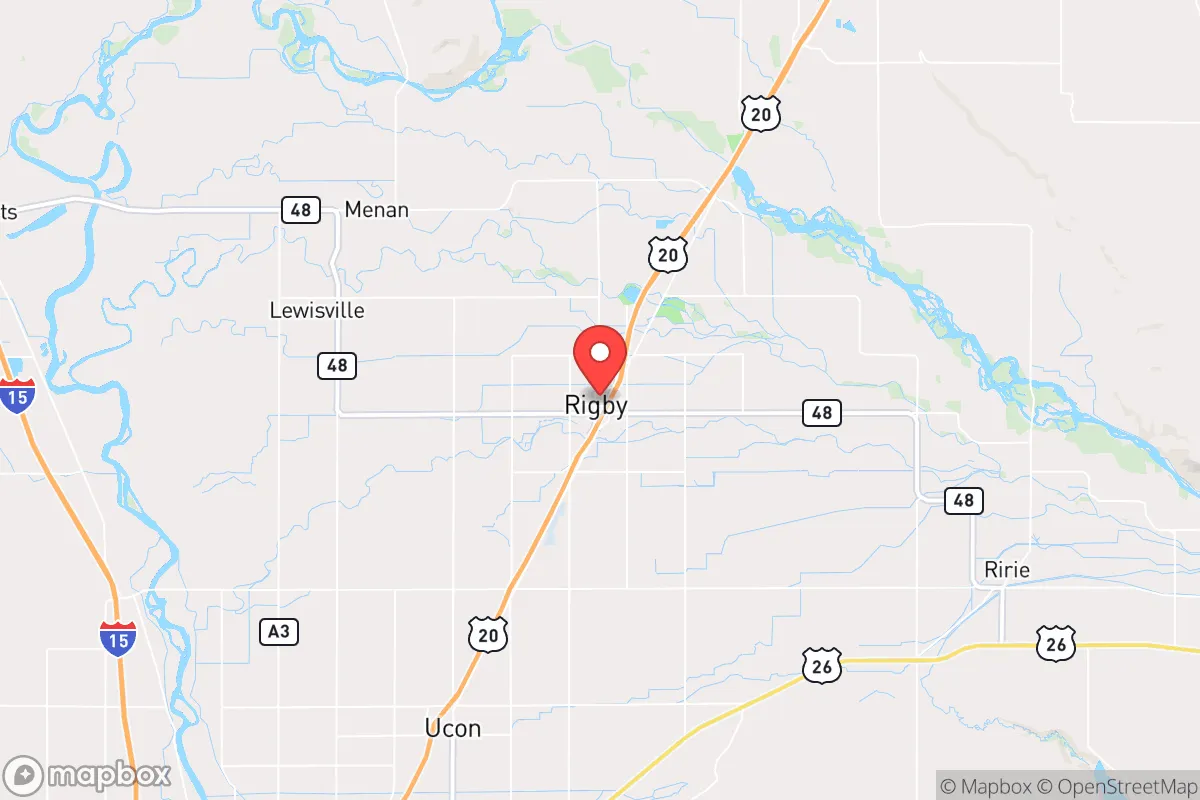
Photo: Wikipedia
Demographics of Rigby, ID
Affluence Level in Rigby, ID
A middle-class area roughly in line with national averages across income, home values, education, and employment.
People of Rigby, ID
Rigby, Idaho, is a predominantly white, family-oriented city of 5,251 residents, where 83.0% of the population identifies as non-Hispanic white and 11.5% as Hispanic. The city’s identity is rooted in its agricultural and Mormon pioneer heritage, with a tight-knit, conservative character reflected in its low crime rates and strong church attendance. Foreign-born residents make up just 4.4% of the population, and the city remains one of the least ethnically diverse in Jefferson County, with East/Southeast Asian (0.3%) and Black (0.1%) communities being very small. Rigby is known as the "Birthplace of Television" (Philo Farnsworth) and retains a small-town, family-centric atmosphere that appeals to those seeking a quiet, rural lifestyle within commuting distance of Idaho Falls.
How the city was settled and grew
Rigby’s settlement began in the 1880s, driven by the expansion of the Utah and Northern Railway and the availability of irrigated farmland. The area was originally inhabited by the Shoshone-Bannock tribes, but white settlers—primarily Mormon pioneers from Utah—arrived after the 1860s to establish farming communities. The city was officially founded in 1885 and named after a railroad official, William Rigby. The first wave of settlers clustered around the Rigby Historic District, centered on Main Street and the original railroad depot, where they built homes, churches, and businesses. A second wave of homesteaders, many of them Scandinavian immigrants (Danish and Swedish), arrived in the 1890s and 1900s, settling in the South Rigby area along the Snake River plain, where they established dairy and potato farms. By 1910, the population had reached about 800, and the town’s economy was anchored by the Rigby Creamery and the Idaho Beet Sugar Company. The North Rigby neighborhood, developed after World War I, became home to second-generation Mormon families who built larger homes and the LDS stake center. The city remained overwhelmingly white and native-born through the mid-20th century, with no significant non-white population recorded in census data until after 1970.
Modern era (post-1965)
After the 1965 Hart-Cellar Act, Rigby saw minimal immigration from non-European countries. The foreign-born share has remained below 5% for decades, and the city’s demographic profile has been shaped almost entirely by domestic migration. The most significant shift has been the growth of the Hispanic population, which rose from 2.3% in 2000 to 11.5% in 2024. This growth is concentrated in the West Rigby neighborhood, near the intersection of U.S. Highway 20 and 3000 West, where newer, more affordable housing developments have attracted Hispanic families working in agriculture and food processing. The Rigby Heights subdivision, built in the 1990s and 2000s, has absorbed most of the white, middle-class in-migration from other parts of Idaho and the Mountain West, drawn by lower home prices and good schools. The East/Southeast Asian community (0.3%) is very small and consists mainly of a few families employed at the Idaho National Laboratory or in healthcare in Idaho Falls. The Black population (0.1%) is negligible, and there is no recorded Indian subcontinent population. The city’s college-educated share (37.6%) is slightly above the state average, reflecting a growing number of remote workers and professionals who commute to Idaho Falls or work in the tech sector.
The future
Rigby’s population is projected to grow modestly, driven by spillover from the Idaho Falls metro area and the expansion of the Idaho National Laboratory. The Hispanic share is likely to continue rising, potentially reaching 15-18% by 2040, as agricultural and service-sector jobs attract more families. However, the city is not tribalizing into distinct ethnic enclaves; instead, Hispanic families are dispersing across West Rigby and the newer Farnsworth Estates subdivision, while white families remain dominant in North Rigby and Rigby Heights. The East/Southeast Asian and Black communities are expected to remain very small, as the city lacks the job diversity and cultural infrastructure to attract significant non-white immigration. The overall trend is toward slow homogenization around a white and Hispanic majority, with little racial or ethnic friction. For a conservative-leaning mover, Rigby offers a stable, family-oriented environment with low crime, strong schools, and a growing but manageable Hispanic population that is largely integrated into the local economy and church communities.
Rigby is becoming a slightly more diverse but still overwhelmingly white and conservative bedroom community for the Idaho Falls area. The city’s future is one of steady, low-key growth, with no major demographic upheavals. For someone moving in now, the key takeaway is that Rigby remains a safe, affordable, and culturally homogeneous place where family values and community ties are paramount, and where the small Hispanic population is a quiet, working-class presence rather than a source of change.

* Values derived from national, state, county, city and local statistics and may differ in a specific area. Last updated: 2026-05-01T00:54:54.000Z
Narrative content on this page is AI-generated and may contain mistakes. Verify any details that matter before acting on them.
ReloMaps may earn a commission from affiliate links at no extra cost to you.

