Photo: Wikipedia
Political ClimatePolitical Climate in Rigby, ID
District shown is the primary district for this city’s centroid. Cities may span multiple districts.
Local Political AnalysisPolitical Analysis of Rigby, ID
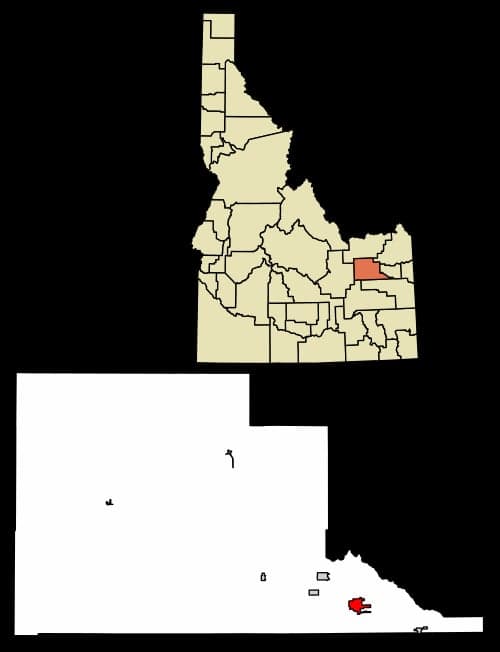
Rigby, Idaho, is about as reliably conservative as it gets, with a Cook PVI of R+13 that puts it deep in red territory. This isn't a purple area that flips back and forth—it's a place where Republican candidates routinely win by double digits, and the local culture reflects that. The political trajectory here has been steady, but there's a growing unease among long-time residents about outside influences creeping in, especially from the Boise area and California transplants who don't always respect the traditional values that built this community.
How it compares
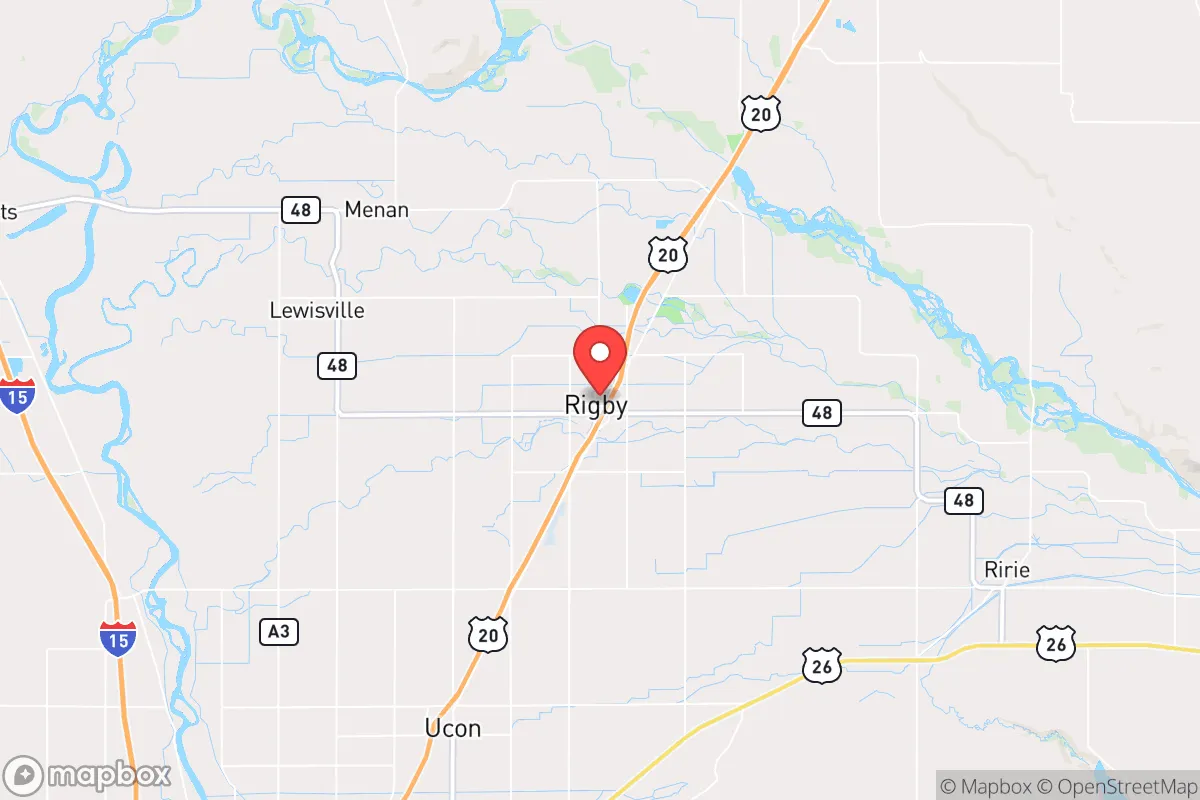
Rigby sits in Jefferson County, which votes even more conservatively than the state average. Drive 20 minutes west to Idaho Falls, and you'll find a slightly more moderate vibe—still red, but with more of a suburban, business-friendly tilt that sometimes tolerates progressive policies on things like zoning or school curriculum. Head south to Pocatello, and you're in a blue island where the university crowd pushes for higher taxes and social experiments. Rigby, by contrast, has held the line. The surrounding towns like Rexburg and Ammon share the same conservative DNA, but Rigby feels more grounded—less influenced by the transient college population that skews things in Rexburg. The contrast is stark: in Rigby, you don't see the same pressure to adopt Portland-style policies on land use or public spending that you might in Boise or even parts of Idaho Falls.
What this means for residents
For folks living here, the political climate means a government that mostly stays out of your business. Property taxes are low, there's no state income tax to speak of, and the local school board isn't pushing critical theory or gender ideology on your kids—at least not yet. The concern among residents I talk to is that the state legislature in Boise has been flirting with more centralized control, like the 2024 property tax relief bill that sounded good but actually shifted more decision-making power to the state level. That's a red flag for anyone who values local control. The real worry is that as Rigby grows—and it is growing, with new subdivisions popping up—the political balance could tip if enough newcomers bring their big-government habits with them. For now, though, you can still count on your Second Amendment rights being respected, your church being a community anchor, and your property not being rezoned without a fight.
Culturally, Rigby stands out for its fierce independence. The annual "Rigby Days" celebration isn't just a parade—it's a statement that this town isn't going to be sanitized into some generic suburb. You'll see more pickup trucks than Teslas, and the local diner conversations are about hunting, farming, and the latest overreach from the EPA or the Department of Education. The policy distinction that matters most here is the absence of a city income tax and the resistance to any form of rent control or "inclusionary zoning" that would let bureaucrats dictate what you can do with your own land. If you're looking for a place where the government is a servant, not a master, Rigby is still that—but keep an eye on the newcomers. The next five years will tell us whether this town stays true to its roots or gets watered down by the same progressive tide that's washing over so much of the West.

State Political ClimatePolitical Climate in Idaho
State Political AnalysisPolitical Environment in the State
Idaho has long been one of the most reliably conservative states in the nation, with a Republican trifecta in state government and a voting record that has not gone for a Democratic presidential candidate since 1964. Over the past 20 years, the state has shifted even further right, driven by a combination of native-born libertarian-leaning ranchers and a massive influx of conservative transplants fleeing the West Coast. The dominant coalition is a mix of traditional fiscal conservatives, social conservatives, and a growing contingent of "constitutional conservatives" who prioritize limited government and individual liberty above all else. The 2024 election saw Donald Trump carry the state by over 30 points, and Republicans hold supermajorities in both chambers of the state legislature.
Urban vs. rural divide
The political map of Idaho is a study in stark contrasts. The Treasure Valley, anchored by Boise, Meridian, and Nampa, is the state’s population center and its most politically moderate region. While still reliably Republican, Ada County (Boise) has trended slightly more purple in recent cycles, with pockets of progressive activism in the city’s North End and around Boise State University. However, the surrounding suburbs like Eagle and Star are deeply conservative, often voting 70%+ Republican. The real engine of Idaho’s rightward shift is the rural expanse. Counties like Boundary, Lemhi, and Clark routinely deliver 80-90% of their votes to GOP candidates. The Idaho Panhandle, including Coeur d’Alene and Post Falls, has seen explosive growth from California and Washington refugees, and these new arrivals are often more conservative than the locals, pushing the region even further right. The only reliably blue counties are the small, university-dominated Latah County (Moscow) and Teton County (Driggs), which are outliers in an otherwise deep red map.
Policy environment
Idaho’s policy environment is a model of small-government conservatism. The state has a flat income tax rate of 5.8% (down from 6.5% in 2023), no corporate income tax on pass-through entities, and a constitutional limit on property tax increases. The regulatory climate is among the most business-friendly in the nation, with no state-level occupational licensing for dozens of trades and a right-to-work law that keeps unions weak. Education policy is a major battleground: the state has a robust school choice program via the "Empowering Parents" grant, which gives families up to $3,000 per child for educational expenses, including private school tuition. However, the state’s public school funding remains low, and teacher pay lags behind the national average. Healthcare is largely free-market, with no state-run exchange and a limited Medicaid expansion that was passed by ballot initiative in 2018 but has been repeatedly underfunded by the legislature. Election laws are strict: voter ID is required, same-day registration is not allowed, and the state has a closed primary system. The legislature recently passed a law banning ranked-choice voting and requiring hand-count audits of all ballots, a direct response to concerns about election integrity.
Trajectory & freedom
Idaho is on a trajectory of expanding personal freedom, particularly in areas of gun rights, parental rights, and medical autonomy. In 2023, the legislature passed a constitutional carry law (HB 124), allowing any adult who can legally possess a firearm to carry it concealed without a permit. The state also passed the Idaho Parental Rights Act (SB 1109), which prohibits schools from withholding information about a child’s mental, emotional, or physical health from parents, and bans instruction on sexual orientation or gender identity in K-5 classrooms. On medical freedom, Idaho was one of the first states to ban COVID-19 vaccine mandates for private employers (HB 140) and to prohibit the use of vaccine passports. Property rights are strongly protected, with a state law requiring compensation for any regulation that reduces property value by more than 20%. However, there are concerning trends: the state’s rapid growth has led to skyrocketing housing costs, and the legislature has been slow to address zoning reform, which some see as a creeping infringement on the free market. The recent passage of a sales tax on services (SB 1200) was a rare step toward tax expansion, though it was narrowly tailored to software and cloud services.
Civil unrest & political movements
Idaho has a history of organized political activism on both sides, but the right-wing movements are far more visible and influential. The Idaho Freedom Foundation is a powerful conservative think tank that has successfully pushed for tax cuts, school choice, and anti-mandate legislation. The Constitutional Sheriffs and Peace Officers Association has a strong presence in rural counties, with sheriffs in Bonner and Kootenai counties publicly refusing to enforce federal gun laws they deem unconstitutional. On the left, the Idaho Democratic Party is weak but vocal, with protests in Boise over abortion rights and LGBTQ+ issues drawing hundreds, not thousands. The most visible flashpoint in recent years has been the immigration debate. Idaho has no sanctuary cities, and the legislature passed a law (HB 135) requiring local law enforcement to cooperate with ICE. However, the state’s agricultural sector relies heavily on migrant labor, creating tension between enforcement and economic reality. Election integrity controversies have been minimal compared to other states, but the 2022 primary saw a high-profile dispute over ballot drop boxes in Ada County, leading to a statewide ban on drop boxes outside of county election offices. A new resident would notice a general sense of civic peace, with the biggest political fights happening in the legislature, not on the streets.
Projection
Over the next 5-10 years, Idaho is likely to become even more conservative, but with a different flavor. The massive in-migration from California, Oregon, and Washington is bringing people who are fleeing progressive policies, not seeking them. These new residents tend to be more libertarian than traditional Republican, favoring low taxes and gun rights but sometimes clashing with the state’s social conservatives on issues like marijuana legalization (which remains illegal) and land use. The demographic shift is already reshaping the political map: Canyon County (Nampa, Caldwell) is growing faster than Ada County and is more conservative, while the Panhandle is becoming a stronghold of the "constitutional conservative" movement. The biggest risk to freedom in Idaho is the state’s own success: rapid growth is straining infrastructure, driving up housing costs, and creating pressure for more government intervention. If the legislature fails to address zoning and property tax reform, the state could see a backlash from native Idahoans who feel priced out of their own communities. Expect continued fights over school funding, water rights, and the role of the federal government in managing public lands, which cover 62% of the state.
For a new resident, the bottom line is this: Idaho offers a high degree of personal freedom compared to most of the country, with low taxes, strong gun rights, and a government that is generally skeptical of overreach. However, the state is not a libertarian paradise—it has a strong social conservative streak, and the rapid growth is creating real challenges. If you value a community where your neighbors are likely to share your values and the government stays out of your business, Idaho is a strong bet. Just be prepared for the growing pains that come with being one of the most popular destinations for freedom-seeking Americans.
* Values derived from national, state, county, city and local statistics and may differ in a specific area. Last updated: 2026-05-01T00:54:54.000Z
Narrative content on this page is AI-generated and may contain mistakes. Verify any details that matter before acting on them.
ReloMaps may earn a commission from affiliate links at no extra cost to you.

