
Photo: Made with AI
Demographics of Rio Grande City, TX
Affluence Level in Rio Grande City, TX
A low-income area with significant economic hardship. Household wealth and educational attainment are well below national averages.
People of Rio Grande City, TX
Today, Rio Grande City is a densely Hispanic community of 15,258 residents, with 96.6% identifying as Hispanic and only 2.6% as White alone, giving it a rare example of a border town where the population has remained overwhelmingly Mexican-American for generations. The foreign-born share stands at 17.7%, reflecting steady cross-border family ties rather than a recent surge, while the low college attainment rate of 18.1% points to an economy still anchored in education, healthcare, and border trade. The city's character is family-oriented, Spanish-dense, and culturally continuous — Spanish is heard Spanish on the streets and strong extended-family networks define daily life.
How the city was settled and grew
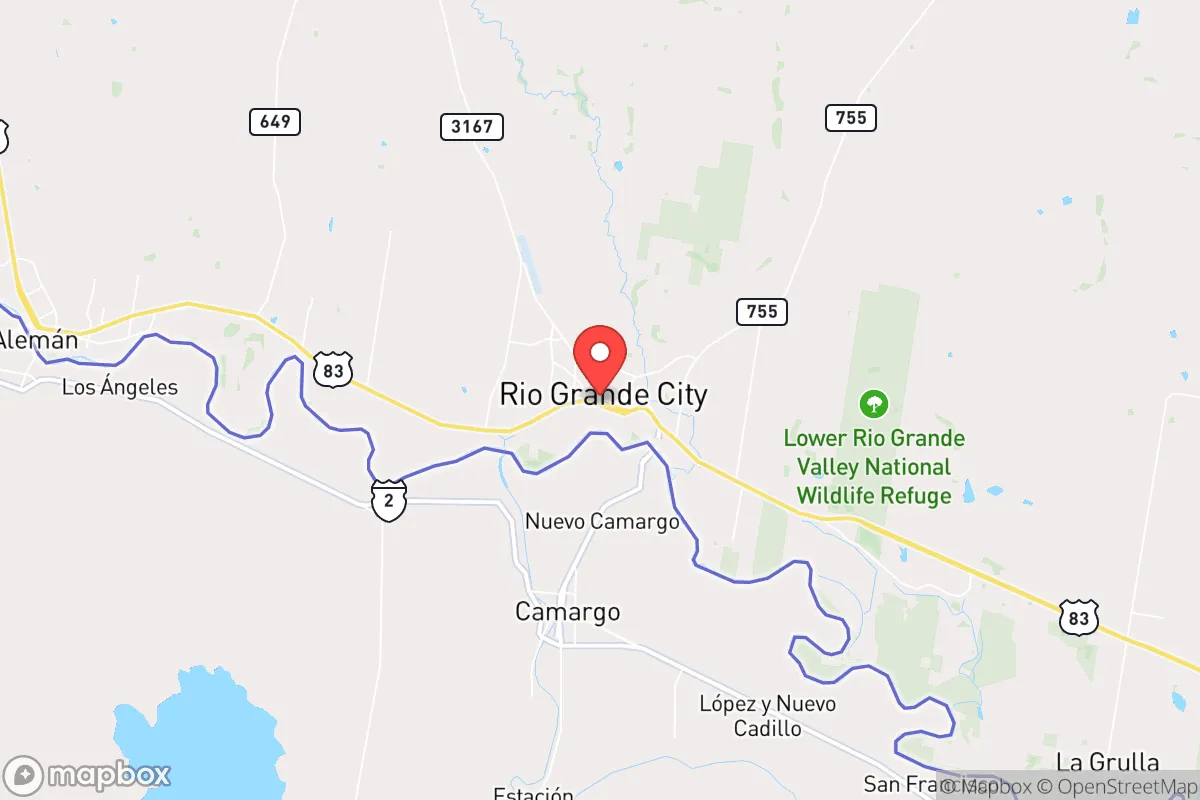
Rio Grande City was founded in 1847 as a steamboat landing on the Rio Grande, supplying US forces during the Mexican-American War. The original settlers were Mexican ranching families who held Spanish-era land grants, Anglo-American merchants and soldiers who stayed after the war, and later waves of Mexican immigrants fleeing the Mexican Revolution (1910–1920). The Historic Downtown district, centered on the Starr County Courthouse, was built by these early groups and remains the civic and commercial core. The Las Lomas neighborhood, just west of downtown, grew as a colonia in the early 1900s, housing Mexican laborers who worked on nearby ranches and farms. By the mid-mid-20th century, the population was overwhelmingly Mexican-American, with a small Anglo elite controlling most business and political power. The Original Townsite area, the city's first platted grid of streets, saw extended families subdividing lots as the population densified through natural increase.
Modern era (post-1965)
The 1965 Hart-Cellar Act ended national-origin quotas, but for Rio Grande City the more significant driver was the steady flow of migration from Mexico fueled by economic push factors and family reunification. The La Puerta neighborhood, east of downtown, expanded rapidly in the 1970s and 1980s as a colonia without paved roads or utilities, absorbing newly arrived immigrants. The Original Townsite area gradually densified as families subdivided homes to accommodate multiple generations. The 1990s brought the first wave of middle-class flight to newer subdivisions along the US-83 corridor, such as the La Victoria neighborhood, where

* Values derived from national, state, county, city and local statistics and may differ in a specific area. Last updated: 2026-05-14T18:45:47.000Z
Narrative content on this page is AI-generated and may contain mistakes. Verify any details that matter before acting on them.
ReloMaps may earn a commission from affiliate links at no extra cost to you.

