
Photo: Made with AI
Strategic Assessment of Rio Grande City, TX
Meaningful friction. Expect exposure to either population pressure, blast zones, or natural disaster risk. Consider buying a retreat property.
What does the Strategic Assessment tell us?
Our Strategic Assessment grades tactical survivability of an area. Major population centers, military targets, fallout zones, natural disasters, and border exposure all drive risk — lower exposure means a more defensible position in a crisis.
This is heavily inspired by Joel Skousen's Strategic Relocation book. Highly recommended you checkout the book ($)What does this tell us?
Our Strategic Assessment grades tactical survivability of an area. Major population centers, military targets, fallout zones, natural disasters, and border exposure all drive risk — lower exposure means a more defensible position in a crisis.
This is heavily inspired by Joel Skousen's Strategic Relocation book. Highly recommended you checkout the book ($)Strategic Pillars

Key Distances
Regional Safe Places
Below is our recommended "safe zones" in Texas and the surrounding area based on our strategic heuristics. For most people, it's unrealistic to live in a “safe zone” full-time due to work, family or other personal reasons. They tend to be more rural. However, many of these areas are perfect for second homes and retreat properties that double as a vacation home or even a short-term rental.

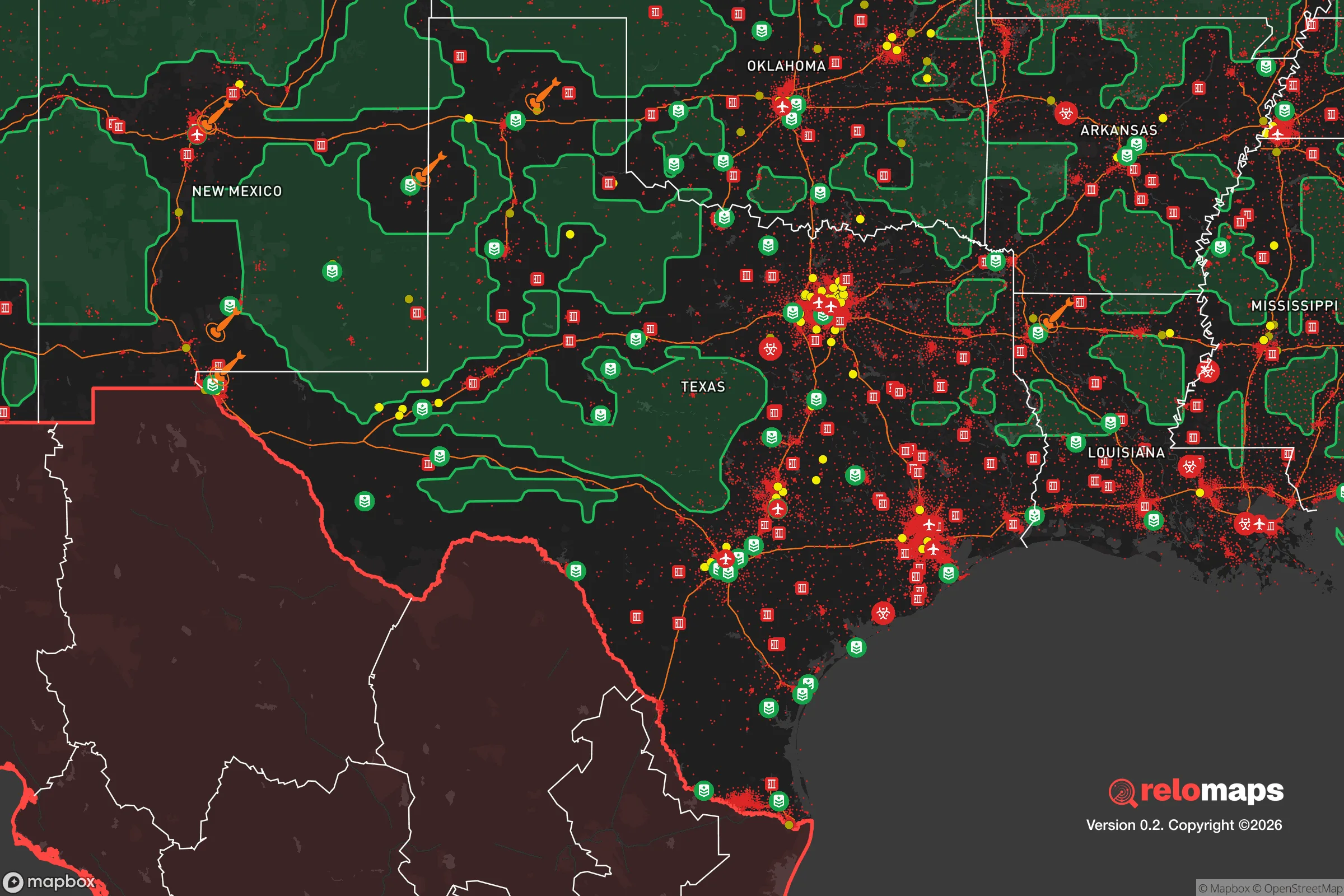


Important Note: For informational purposes only. This does not mean nothing bad ever happens in the green zones. Please use common sense. This is based on public data and modeled with AI. We tried to take a conservative approach but mistakes happen. We update this regularly as new information becomes available.
Solar Generator Recommendations
Backup power matters more here than in safer locations. We've picked three solar generators across budgets and capacity tiers — start with the budget unit if you only need a few essentials, or step up if you want to run a fridge and HVAC for days at a time.

Jackery Portable Power Station Explorer 300
Budget OptionPower on the Go: Weighing only 11 lbs, it's convenient to set up and store with book-sized foldable solar panels

BLUETTI Portable Power Station AC180
Designed for both indoor and outdoor scenarios, AC180 is highly capable as it has a robost capacity and continuous output power.

EF ECOFLOW DELTA Pro Ultra Power Station
Upgraded PickEcoFlow DELTA Pro Ultra is a whole-home energy system designed to grow with your family. Integrated with the Smart Home Panel 2, it scales to meet your evolving energy needs — keeping your home powered, intelligent, and secure through every stage of life.
We earn a commission, at no additional cost to you.
Strategic Assessment Analysis
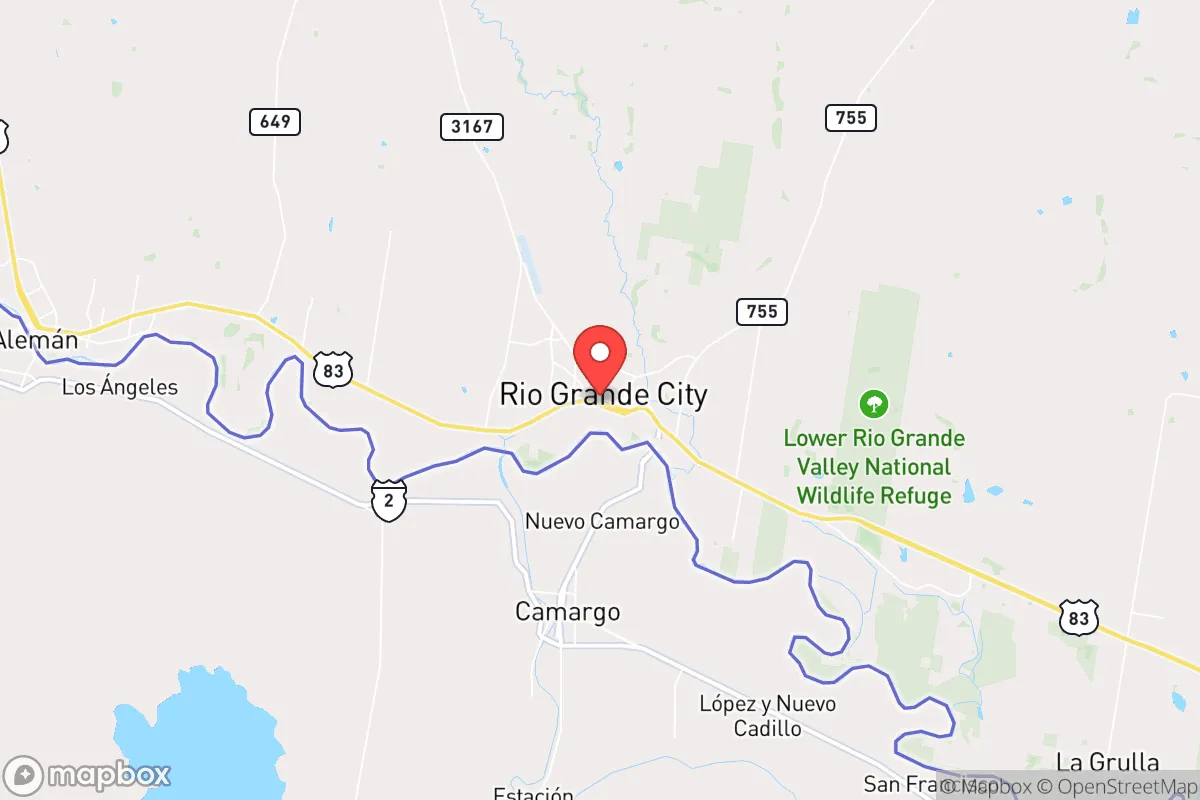
Rio Grande City sits in a strategic pocket of deep South Texas that most of the country overlooks — and that’s exactly the point for anyone thinking about relocation from a preparedness angle. This is a community that has absorbed waves of border turbulence, economic shifts, and natural extremes without breaking, and its geographic isolation from major population centers gives it a resilience profile that’s hard to find closer to the I-35 or I-10 corridors. For a conservative-leaning individual or family who wants to be out of the blast radius of urban collapse, cartel spillover, or grid-down scenarios, this area offers a mix of advantages and trade-offs that deserve a hard look.
Geographic position and natural advantages for long-term stability
Rio Grande City sits on the north bank of the Rio Grande, roughly 50 miles west of McAllen and 100 miles east of Laredo. That distance from the big border metros is a double-edged sword — you’re far enough from the chaos of a city like Reynosa or Nuevo Laredo, but close enough to the river to have a reliable water source if municipal systems fail. The surrounding terrain is flat, semi-arid ranchland with scattered brush and mesquite, which means limited natural cover but also wide lines of sight. The area is not in a floodplain (the river is controlled upstream by Falcon Dam), and the climate, while brutally hot in summer, rarely produces tornadoes or hurricanes that hit with full force this far inland. The Falcon International Reservoir, about 20 miles northwest, provides a massive backup water supply and supports local agriculture. For a prepper, that reservoir is a tangible asset — it’s a freshwater source that isn’t dependent on a single pipeline or treatment plant. The land itself is cheap compared to the rest of Texas, and property taxes in Starr County are among the lowest in the state, which means you can buy acreage without being taxed into submission.
Risks, exposures, and proximity to fallout-relevant landmarks
Let’s be blunt: the border is both a buffer and a vulnerability. Rio Grande City is directly across from the Mexican town of Ciudad Miguel Alemán, and while the cartel violence that plagues Tamaulipas has historically been worse further east near Reynosa, the area is not immune. In 2024, Starr County saw a spike in cartel-related incursions and vehicle thefts, and the local sheriff’s department is chronically understaffed. For a relocator, this means you need to treat the border as a permeable threat — not a wall. On the plus side, there are no nuclear power plants, major military bases, or strategic infrastructure within 100 miles that would make this a target in a conflict scenario. The nearest large city is McAllen (population ~150,000), which is small enough that a collapse there wouldn’t send a refugee wave directly your way — the 50-mile stretch of US 83 is sparsely populated and easily monitored. The biggest risk is actually the lack of redundancy in local services: the hospital is a small critical-access facility, the power grid is part of the ERCOT system that has proven fragile in winter storms, and the water treatment plant relies on electricity. A prolonged grid-down event would hit this town hard unless you have your own well, solar, and stored supplies.
Practical resilience for a relocator: food, water, energy, and defensibility
If you’re serious about self-sufficiency, Rio Grande City has raw ingredients but requires work. The Rio Grande provides surface water, but it’s heavily regulated and often low in summer; a private well is the better bet, and groundwater in Starr County is generally good quality at depths of 200–400 feet. Solar potential is excellent — the area averages over 300 sunny days a year, and off-grid solar with battery storage is a realistic setup. Food production is limited by the hot, dry climate, but the Lower Rio Grande Valley is a major agricultural region, and local farmers markets and ranches mean you can source meat and produce without relying on national supply chains. Hunting is available on public land (Las Palomas Wildlife Management Area) and private leases, with white-tailed deer, javelina, and feral hogs. Defensibility is mixed: the flat terrain offers no natural chokepoints, but the sparse population means you can establish a perimeter on a large lot without neighbors crowding you. The local culture is heavily Hispanic and Catholic, with a strong family-oriented, conservative social fabric — gun ownership is common, and the Starr County Sheriff’s Office has a concealed-carry-friendly stance. That social cohesion is a resilience factor often overlooked: in a crisis, a community that knows its neighbors and shares values is far more stable than a transient suburb.
Overall, Rio Grande City is not a bug-out paradise — it’s a working-class border town with real challenges around infrastructure, heat, and cartel proximity. But for someone who wants to be far from the urban meltdown zones, owns their own land and water, and is willing to invest in off-grid systems, it offers a low-cost, low-profile base with a river and a reservoir as strategic assets. The key is to go in with eyes open: stockpile medical supplies, harden your home against both weather and intrusion, and build relationships with local ranchers and law enforcement. If you can handle the heat and the isolation, this corner of Texas gives you a fighting chance when the rest of the country starts to unravel.

* Values derived from national, state, county, city and local statistics and may differ in a specific area. Last updated: 2026-05-14T18:45:47.000Z
Narrative content on this page is AI-generated and may contain mistakes. Verify any details that matter before acting on them.
ReloMaps may earn a commission from affiliate links at no extra cost to you.

