
Photo: Made with AI
Political ClimatePolitical Climate in Rio Grande City, TX
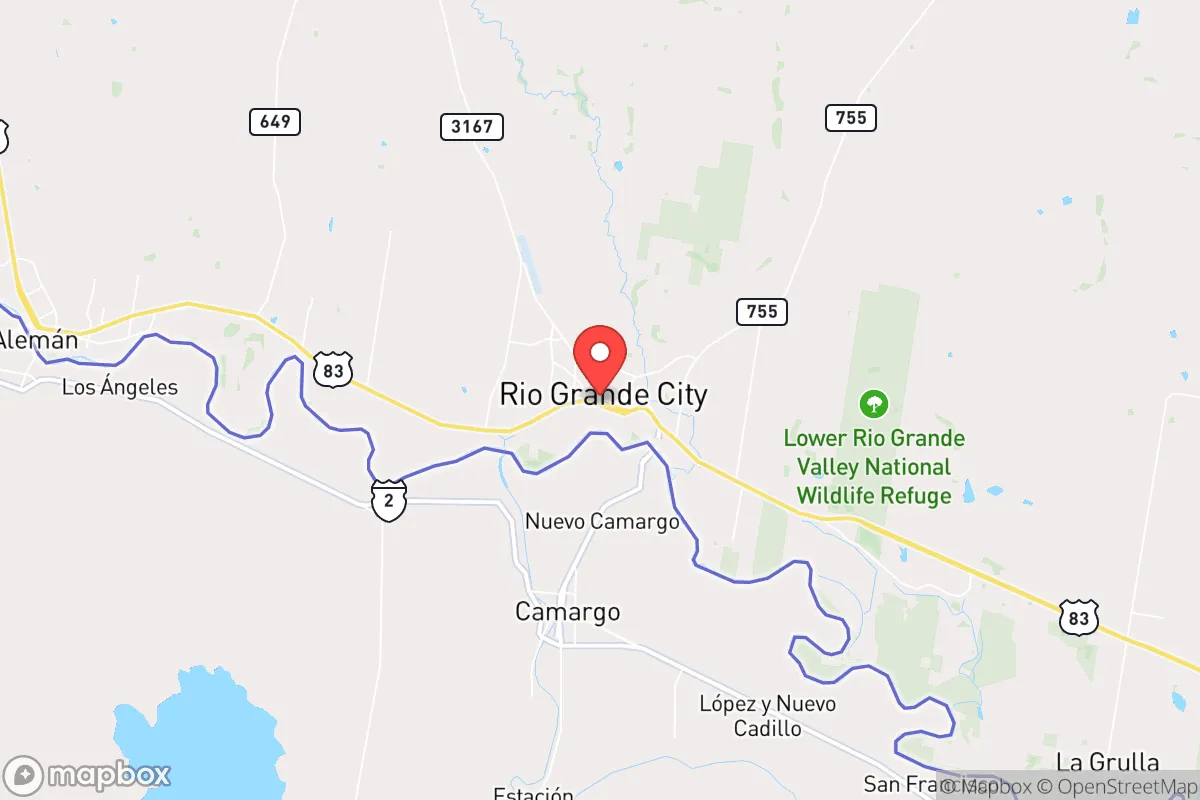
District shown is the primary district for this city’s centroid. Cities may span multiple districts.
Local Political AnalysisPolitical Analysis of Rio Grande City, TX
I've lived in Rio Grande City long enough to remember when you could count on a straight-ticket Republican vote without even thinking about it. The Cook PVI here is R+2, which is solidly conservative but actually a couple ticks less red than the state of Texas as a whole at R+4. That gap might not sound like much, but it reflects a slow drift I've watched over the past decade—more folks moving in from the Valley, younger voters getting swayed by flashy promises, and a sense that the old-school values we grew up with are being tested. The trajectory worries me: if we don't stay vigilant, this place could start looking more like Hidalgo County to the east, where progressive ideas have already taken root.
How it compares
Compared to Texas overall, Rio Grande City is still reliably conservative, but it's not as deep red as the rural Panhandle or even nearby towns like Roma or Zapata. Those places lean harder Republican because they haven't seen the same demographic churn. Meanwhile, McAllen and Laredo—just an hour or two away—have shifted noticeably left, with city councils pushing sanctuary policies and higher taxes. Here in Rio Grande City, we've held the line on most issues: property taxes are lower than in Starr County's more populated pockets, and our school board still respects parental rights. But the state's R+4 average masks a growing divide between the big cities and the border communities. I'd say we're a bellwether—if we flip, the whole region could follow, and that's a scary thought for anyone who values limited government and personal freedom.
What this means for residents
For everyday folks like us, the political climate directly affects how much the government sticks its nose into our lives. Right now, Rio Grande City still respects the Second Amendment without a bunch of red tape, and you won't see mask mandates or vaccine passports being pushed at local businesses. That's the kind of common sense I want to keep. But the creeping influence from Austin—things like statewide energy regulations that raise our electric bills, or curriculum changes that downplay American history—is a real concern. If the progressive wing gains more ground here, we could end up with zoning rules that make it harder to run a small ranch or a home-based business. The bottom line: as long as we stay R+2 or better, we can fend off the worst overreach, but every election cycle feels like a fight to keep it that way.
Culturally, Rio Grande City is still a place where family, faith, and hard work come first. You see it in the packed churches on Sunday, the way neighbors help each other during floods, and the pride in our border heritage. That's a stark contrast to places like Austin or Dallas, where identity politics and government dependency have become the norm. We don't have the same kind of progressive activism you'd find in San Antonio, and I hope we never do. The challenge is keeping that spirit alive while the state and national trends pull in the opposite direction. If you're thinking of moving here, know that you'll find a community that values freedom and self-reliance—but also one that needs people willing to stand up and keep it that way.

State Political ClimatePolitical Climate in Texas
State Political AnalysisPolitical Environment in the State
Texas leans Republican with a Cook PVI of R+4, but that number masks a state in flux. For decades, the GOP held a comfortable grip thanks to rural and suburban voters, but the last 10–20 years have seen a slow erosion: Donald Trump won Texas by 9 points in 2016, then by only 5.6 points in 2020. The dominant coalition remains conservative—Republicans control every statewide office and both legislative chambers—but the margin is tightening as blue-state transplants pour into the urban core and inner suburbs. If you’re moving here expecting a rock-ribbed red state, you’ll find it in places like Lubbock and Midland, but you’ll also find Austin and El Paso feeling more like California every cycle.
Urban vs. rural divide
The political map of Texas is a tale of two landscapes. The major metros—Houston, Dallas, San Antonio, Austin, and El Paso—are Democratic strongholds. Austin, in particular, has become a progressive island in a red sea, with Travis County delivering 71% of its vote to Biden in 2020. El Paso, with its large Hispanic population and proximity to the border, has been reliably blue for years. Meanwhile, the rural and exurban counties—places like Lubbock, Midland, Odessa, and the Panhandle—vote Republican by margins of 70% or more. The real battleground is the suburbs: Collin County (Frisco, McKinney) and Fort Bend County (Sugar Land, Katy) have shifted from deep red to purple, with Collin County going from +28 R in 2012 to +14 R in 2020. That’s where the next decade’s political future will be decided.
Policy environment
Texas’s policy posture is aggressively conservative on most fronts. There is no state income tax, a huge draw for families and businesses, though property taxes are among the highest in the nation—a trade-off that feels like government overreach when your appraisal jumps 20% in a year. The regulatory climate is business-friendly, with minimal red tape and a right-to-work law. On education, the state has banned critical race theory in public schools and passed HB 4545, which mandates intensive reading intervention for struggling students. School choice remains a hot topic; the legislature has debated voucher programs but hasn’t passed one yet. Healthcare: Texas refused Medicaid expansion, and after the fall of Roe, a trigger law banned nearly all abortions, with SB 8 (the heartbeat bill) already in effect. Election integrity saw SB 1 in 2021, tightening voter ID rules and limiting mail-in voting. Gun rights are robust: HB 1927 (permitless carry) went into effect in 2021, allowing most adults to carry a handgun without a license. For a conservative, the policy environment is largely favorable—but the property tax burden and local government overreach (like mask mandates during COVID) are real concerns.
Trajectory & freedom
Is Texas becoming more free or less? It depends on the issue. On gun rights, parental rights, and economic freedom, the state has expanded liberty: permitless carry, the ban on CRT in schools, and the refusal to impose a state income tax all point toward more personal autonomy. But on property rights, the picture is murkier—property taxes have risen faster than inflation, and the state’s appraisal cap (10% annual increase for homesteads) only softens the blow. During the pandemic, Governor Abbott issued executive orders that limited local government mandates but also imposed some state-level restrictions, drawing criticism from both sides. Recent legislation like HB 1927 and SB 8 expanded personal liberty in the traditional sense, but the growing influence of blue-state transplants in Austin and Dallas is pushing local policies leftward—higher density zoning, more bike lanes, and progressive city councils. The trajectory is a tug-of-war: the state legislature remains solidly red, but the urban centers are becoming more progressive, and that tension will only intensify.
Civil unrest & political movements
Texas has seen its share of flashpoints. The 2020 Black Lives Matter protests were large and sometimes violent in Austin, Dallas, and Houston, leading to property damage and a lasting police reform debate. The border crisis has been a constant source of friction: Governor Abbott launched Operation Lone Star, deploying state troopers and National Guard to the border, and began busing migrants to New York, Chicago, and Washington, D.C. This has energized conservative voters but also drawn lawsuits and criticism. The Texas Nationalist Movement (Texit) has a small but vocal following, though it hasn’t gained mainstream traction. Election integrity remains a hot-button issue: after the 2020 election, some Republican activists questioned the results in Harris County (Houston), leading to SB 1 and ongoing audits. School board meetings have become battlegrounds over library books and LGBTQ+ curriculum, with groups like Moms for Liberty gaining influence. A new resident will notice the political polarization in everyday life—yard signs, bumper stickers, and conversations at the grocery store can quickly turn partisan.
Projection
Over the next 5–10 years, Texas is likely to become more competitive at the statewide level. In-migration from California, New York, and Illinois is accelerating—many of these newcomers are moderate or liberal, and they tend to settle in the urban and suburban counties that are already trending blue. The 2024 presidential election will be a key test: if the GOP margin drops below 3 points, Texas could be considered a swing state by 2028. However, the state’s political structure—gerrymandered congressional districts, a Republican-controlled legislature, and a conservative judiciary—will slow the shift. Rural areas will continue to vote heavily Republican, but their population is stagnant or declining. The suburbs will decide the future: places like Collin County and Fort Bend County are becoming more diverse and more Democratic. For a new resident, expect continued culture wars over education, immigration, and personal freedoms. The state will remain a beacon for economic opportunity and low taxes, but the political climate will grow more contentious. If you’re moving here for freedom, you’ll find it—but you’ll also need to pick your county carefully.
Bottom line for a new resident: Texas offers a low-tax, business-friendly environment with strong gun rights and a conservative state government. But property taxes are high, urban areas are becoming progressively more liberal, and the political divide is real. Choose a county that matches your values—rural or exurban areas like Lubbock or Midland will feel solidly red,
* Values derived from national, state, county, city and local statistics and may differ in a specific area. Last updated: 2026-05-14T18:45:47.000Z
Narrative content on this page is AI-generated and may contain mistakes. Verify any details that matter before acting on them.
ReloMaps may earn a commission from affiliate links at no extra cost to you.

