Photo: Wikipedia
Personal Sovereignty in Ripley, WV
Strong independent fundamentals that actively favor personal liberty and low regulation.
What does Personal Sovereignty tell us?
Personal Sovereignty measures your capacity for self-reliance and independence with minimal government friction. Higher scores mean fewer barriers between you and the way you want to live... but it assumes you have the space you need and good neighbors.
What does this tell us?
Personal Sovereignty measures your capacity for self-reliance and independence with minimal government friction. Higher scores mean fewer barriers between you and the way you want to live... but it assumes you have the space you need and good neighbors.
State Policy
Energy independence: Net exporter (200% of energy produced in-state)
Personal Liberty
Homesteading

Personal Liberty Analysis
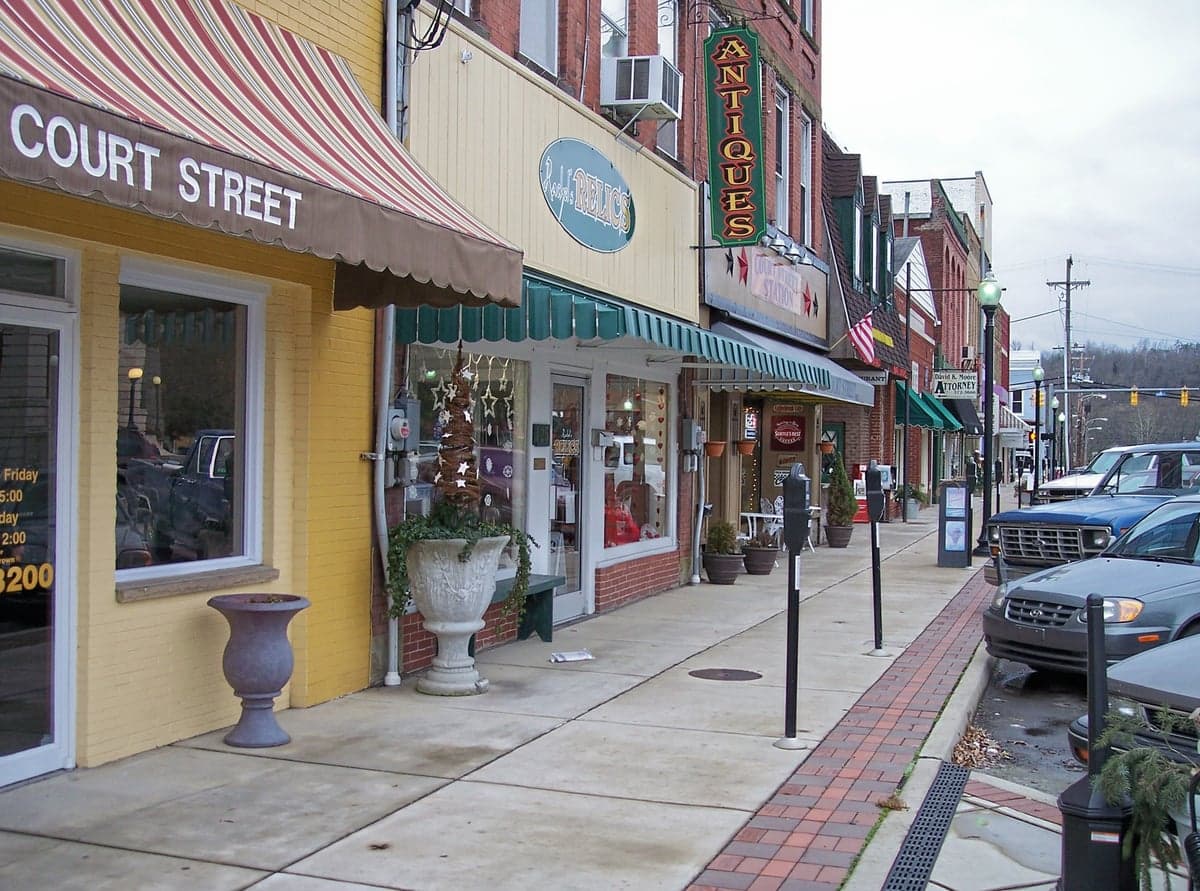
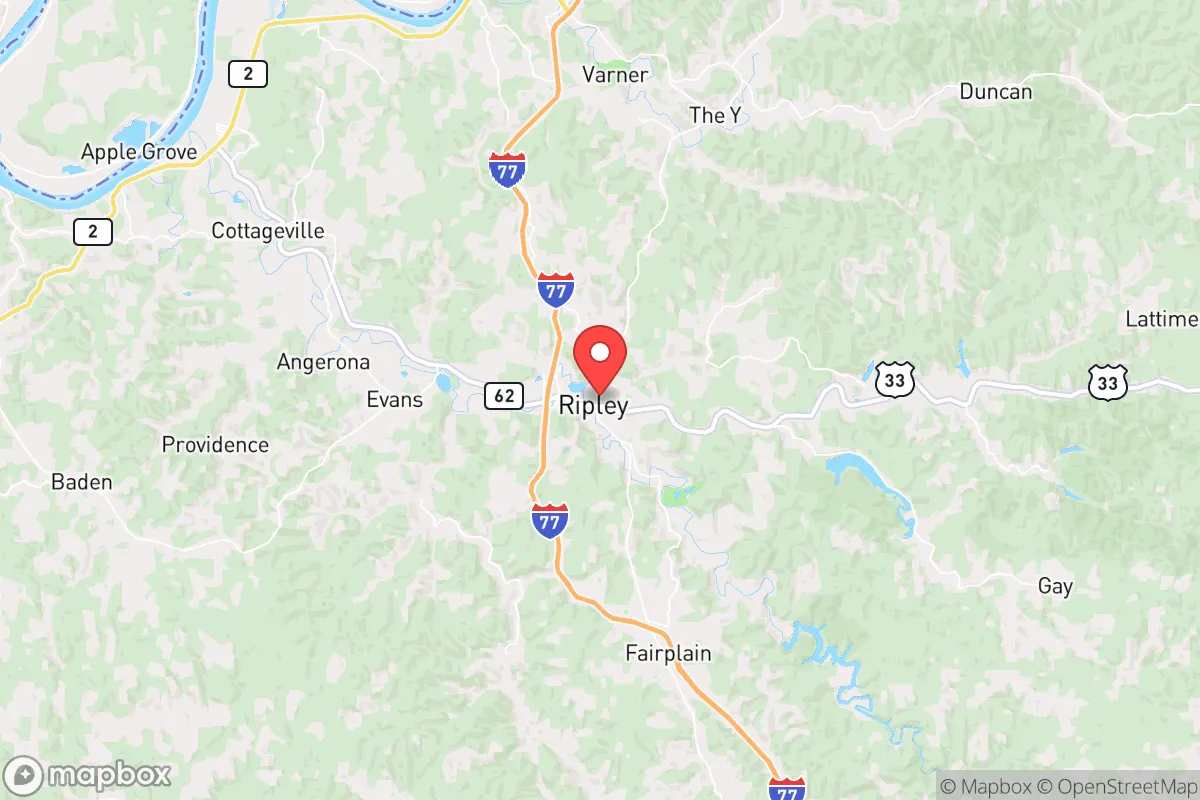
For the individual or family prioritizing personal sovereignty above all else, Ripley, West Virginia, offers a rare and increasingly valuable environment where the state government’s footprint is intentionally light and local culture reinforces self-reliance. Nestled in Jackson County, this small town of roughly 3,200 people operates under a legal and social framework that consistently favors individual decision-making over bureaucratic control. While no location is a perfect fortress against federal overreach, Ripley’s combination of low taxation, permissive self-defense laws, and a deeply ingrained homesteading ethos makes it a standout option for those who view government expansion as a direct threat to personal freedom. The key question for the strategic relocator is whether this autonomy is structural enough to withstand the national trends eroding liberty elsewhere.
Tax burden and regulatory posture: How West Virginia’s fiscal policies protect your earnings
West Virginia has been aggressively rolling back its tax footprint, and Ripley residents directly benefit from these structural shifts. The state’s personal income tax is now a flat 3.99% after a series of rate cuts signed into law in 2023, with a clear legislative trajectory toward full elimination. Property taxes remain among the lowest in the nation, with Jackson County levying roughly $0.55 per $100 of assessed value on residential real estate—meaning a $200,000 home carries an annual tax bill around $1,100. There is no state-level sales tax on groceries or prescription drugs, and the general sales tax is a modest 6%. More importantly for the sovereignty-minded, West Virginia is a right-to-work state with minimal business licensing hurdles. Zoning in unincorporated Jackson County is virtually nonexistent outside the town limits, and even within Ripley proper, the code is far less restrictive than in neighboring Ohio or Pennsylvania. The regulatory posture here is best described as “leave you alone unless you cause a problem,” which translates directly into more disposable income and fewer bureaucratic entanglements for those who want to build, invest, or simply keep what they earn.
Self-defense and gun law specifics: What the Second Sanctuary movement means for Ripley
West Virginia is one of the most firearm-permissive states in the Union, and Jackson County has formally declared itself a Second Amendment Sanctuary. This means local law enforcement is prohibited by county resolution from enforcing any future federal gun control measures deemed unconstitutional. For the prepper or survivalist, the practical implications are significant: no permit is required to carry a concealed firearm (constitutional carry became law in 2016), there is no state-level registry, no waiting period for purchases, and no red-flag law on the books. Stand-your-ground statutes are fully in effect, meaning there is no duty to retreat before using deadly force in self-defense. The state also preempts local governments from enacting their own gun ordinances, so Ripley’s city council cannot impose restrictions stricter than state law. For those stockpiling ammunition or building a defensive capability, there are no magazine capacity limits, no bans on specific weapon types, and the state has explicitly prohibited any enforcement of federal bans on so-called “assault weapons.” This legal environment is as close to a free hand in self-defense as you will find east of the Mississippi.
Self-reliance and homesteading viability: Lot sizes, zoning, and off-grid feasibility in Jackson County
Ripley’s surrounding countryside is where the sovereignty proposition truly shines. Agricultural and rural residential parcels in Jackson County commonly range from 1 to 10 acres, with prices averaging $3,000–$6,000 per acre—dirt cheap by national standards. Zoning outside the town limits is essentially absent; you can build a home, a barn, a workshop, or a root cellar without pulling permits for every nail. Off-grid living is legally straightforward: West Virginia has no statewide building code for single-family homes in unincorporated areas, and rainwater collection is unrestricted. Solar panels, composting toilets, and private wells are all standard practice here, not fringe experiments. The county health department does require a septic system permit, but the process is simple and inexpensive compared to coastal states. For those wanting to raise livestock, hunt for protein, or grow a substantial garden, the culture is supportive and the legal barriers minimal. The only real constraint is that you must own the mineral rights to your land if you want to prevent future drilling—a due-diligence step that any serious prepper should take before closing.
Personal liberties: Parental rights, medical autonomy, speech, and property protections
West Virginia has become a battleground for parental rights, and the current legislative trend strongly favors family authority. The state passed the Parental Bill of Rights in 2022, requiring schools to notify parents of any medical or mental health services offered to minors and to obtain consent before administering surveys on sensitive topics. Medical autonomy is similarly robust: there are no vaccine mandates for adults, and the state has resisted federal pressure to impose lockdowns or mask requirements since 2021. Religious exemptions for healthcare decisions are broadly recognized. On free speech, Ripley’s small-town dynamic means that open political dissent—whether at a county commission meeting or in a local Facebook group—is generally tolerated, though the social fabric is conservative enough that overtly left-wing activism would be socially isolating rather than legally punished. Property rights are protected by a strong eminent domain statute that requires full market-value compensation and a demonstrated public necessity. For the individual who values the ability to speak, pray, and live without government surveillance or coercion, Ripley’s legal climate is a deliberate counterweight to the encroachments seen in blue states.
When stacked against other relocation options in the Appalachian region, Ripley offers a sovereignty package that is difficult to beat for the price. The tax burden is lower than in Ohio, Pennsylvania, or Virginia; the gun laws are more permissive than in Michigan or North Carolina; and the homesteading viability exceeds most of the Midwest due to cheap land and minimal zoning. The trade-offs are real—limited healthcare infrastructure, a small job market dominated by manufacturing and healthcare, and a two-hour drive to a major airport—but for the strategic relocator whose primary metric is personal freedom, those are acceptable costs. Ripley is not a libertarian utopia; it is a practical, lived-in place where the government stays small and the people stay independent. In a country where that combination is becoming rarer by the year, that counts for a great deal.

* Values derived from national, state, county, city and local statistics and may differ in a specific area. Last updated: 2026-04-24T11:44:14.000Z
Narrative content on this page is AI-generated and may contain mistakes. Verify any details that matter before acting on them.
ReloMaps may earn a commission from affiliate links at no extra cost to you.

