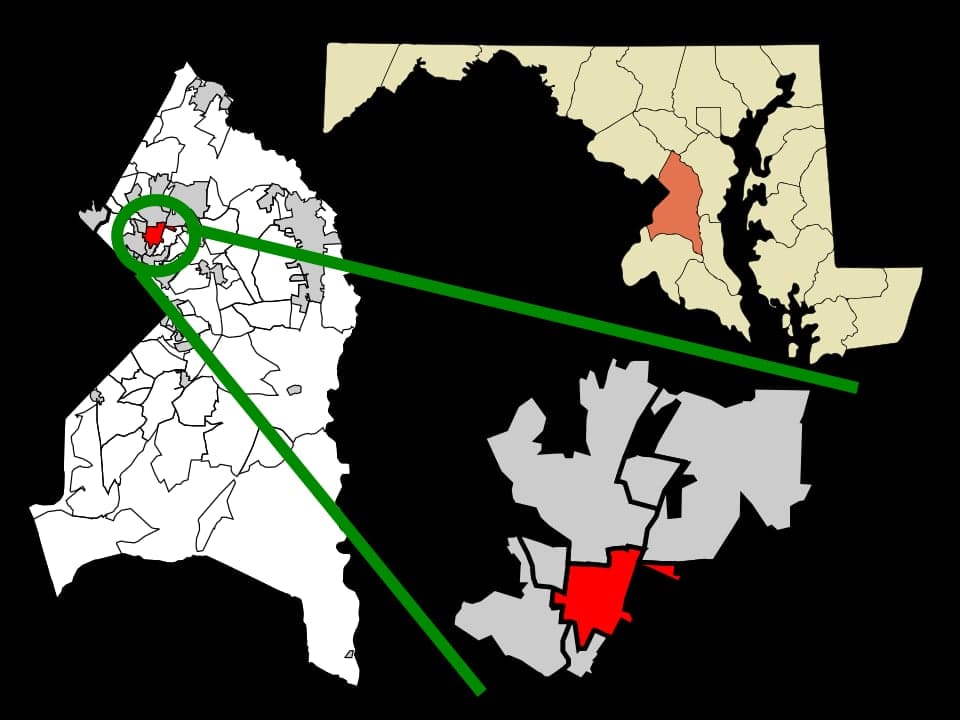
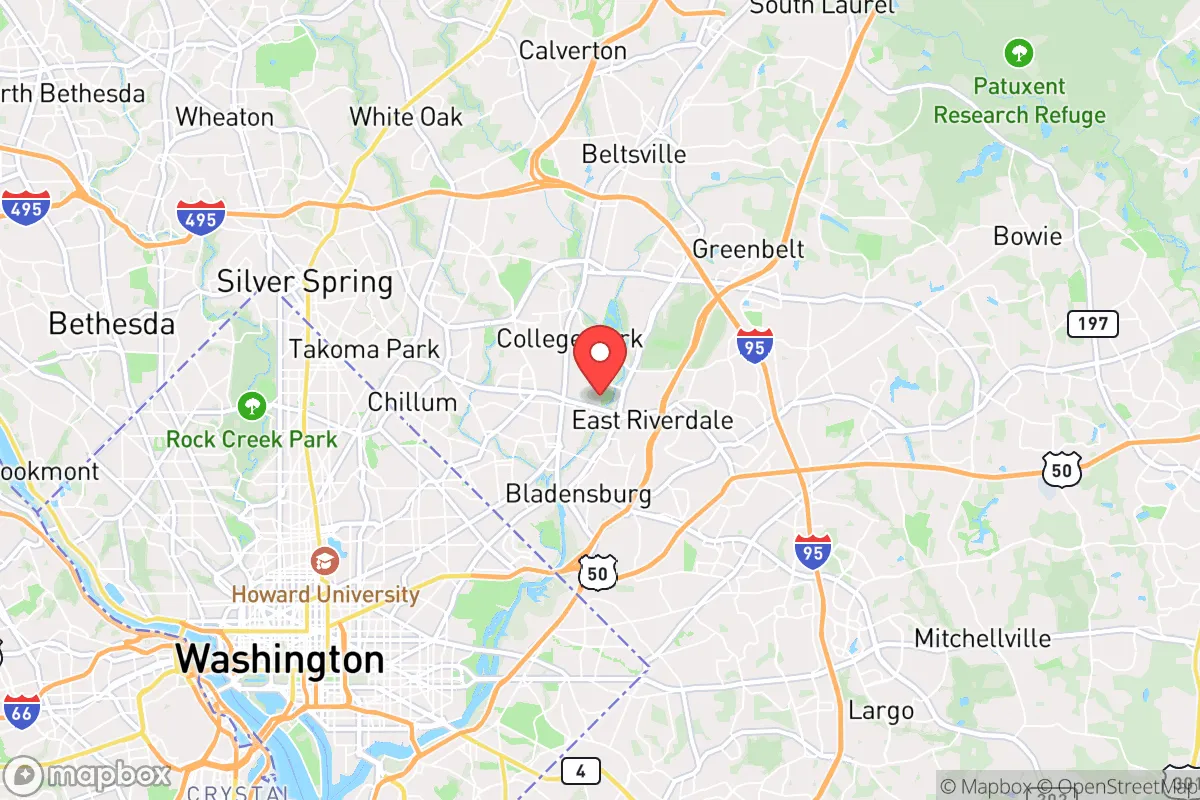
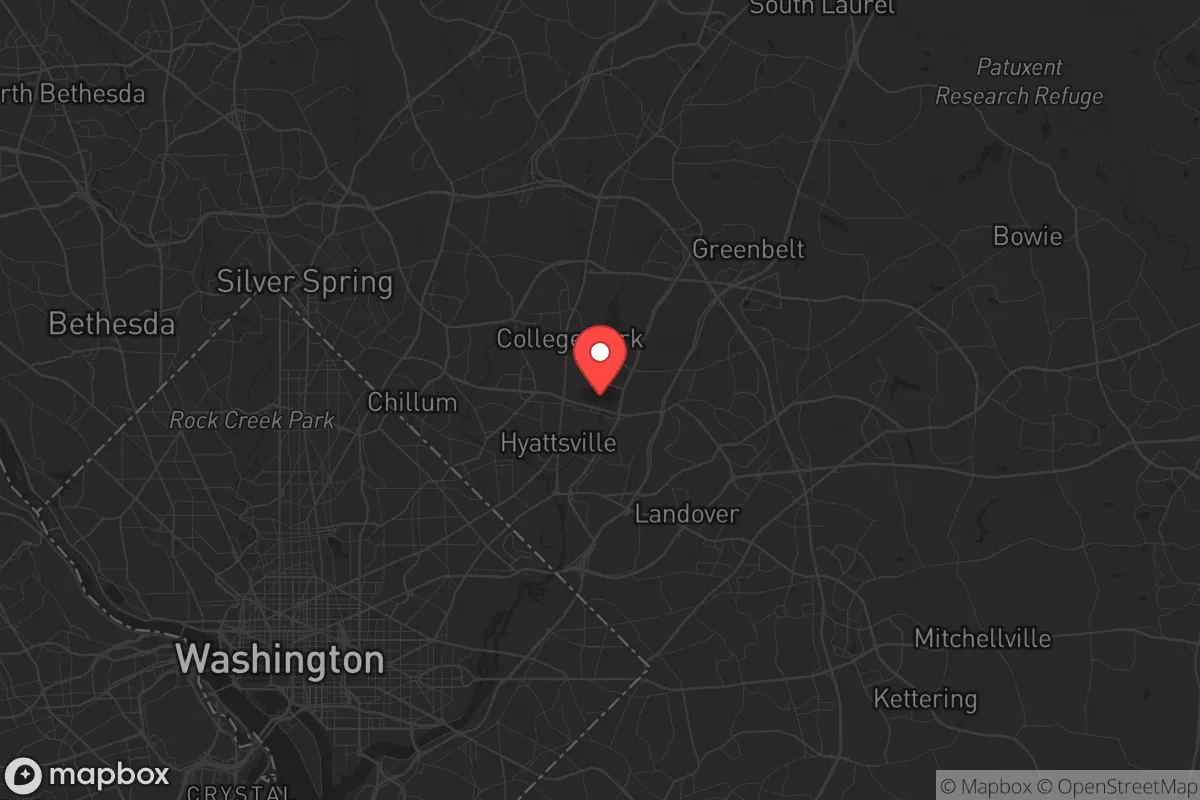
Photo: Wikipedia
Political ClimatePolitical Climate in Riverdale Park, MD
District shown is the primary district for this city’s centroid. Cities may span multiple districts.
Local Political AnalysisPolitical Analysis of Riverdale Park, MD
Look, I’ve lived in Riverdale Park long enough to remember when this town had a more balanced, live-and-let-live feel. Today, the political climate here is overwhelmingly progressive, and it’s not subtle. The Cook Partisan Voting Index (PVI) for this area is a staggering D+39, meaning it votes nearly 40 points more Democratic than the national average. That’s not just a blue dot; it’s a deep blue ocean. The trajectory has been steadily leftward for the past decade, driven by an influx of D.C. transplants and a local government that seems eager to adopt every new progressive policy out of Annapolis without much pushback. If you value personal freedoms and limited government, you need to understand what you’re walking into.
How it compares
To really grasp how unique Riverdale Park is, you have to look at the surrounding area. Drive ten minutes north to Beltsville or Laurel, and you’ll find a more mixed political landscape—still blue, but with a noticeable conservative minority and a stronger sense of fiscal caution. Head west into Hyattsville or College Park, and you’re in an even more aggressively progressive bubble, fueled by the University of Maryland’s activist culture. Riverdale Park sits right in that corridor. Compare it to a place like Bowie, which is also Democratic but tends to be more moderate and family-focused on issues like school choice and public safety. Here, the local council seems less interested in moderation and more in aligning with the state’s most ambitious social experiments. It’s a stark contrast to even nearby Greenbelt, which has its own cooperative history but still feels more grounded in practical governance.
What this means for residents
For a resident who values personal autonomy, the practical effects are real and growing. You’ll see it in the local zoning battles, where the push for high-density development often overrides neighborhood character and property rights. You’ll feel it in the tax burden, as the county and town embrace new spending programs with little debate about long-term cost. School board decisions here tend to lean heavily into progressive curriculum changes, often with minimal parent input. And on public safety, the local dialogue has shifted noticeably toward defunding or reimagining police roles, which can leave residents who want straightforward law enforcement feeling unheard. The political monoculture means that if you hold traditional views on fiscal responsibility, the Second Amendment, or parental rights in education, you’ll likely find yourself in the minority at town hall meetings. It’s not hostile, but it can feel isolating.
The cultural distinction that really sets Riverdale Park apart is its embrace of sanctuary city policies and a general willingness to push back against state or federal immigration enforcement. While some see this as compassionate, from a conservative perspective it’s a clear example of local government prioritizing ideology over rule of law. The town also aggressively pursues environmental mandates that go beyond county requirements, often adding costs to small businesses and homeowners. If you’re looking for a place where government stays out of your way, this isn’t it. The trend lines are clear: more regulation, higher taxes, and a political class that sees government as the primary solution to every problem. For a long-time resident like me, it’s a slow but steady erosion of the personal freedoms that made this area a decent place to raise a family.

State Political ClimatePolitical Climate in Maryland
State Political AnalysisPolitical Environment in the State
Maryland has long been a solidly blue state in federal elections, with Democrats holding every statewide office and a supermajority in the General Assembly, but the picture is far more complicated than a simple partisan label. Over the past 20 years, the state has shifted from a moderate, union-driven Democratic stronghold to a more progressive, culturally liberal environment, driven overwhelmingly by the suburban Washington, D.C. corridor. While the state hasn’t flipped red in a presidential race since 1988, the margins have tightened in some rural and exurban areas, and the internal political geography is starkly divided between the hyper-liberal D.C. suburbs and the rest of the state.
Urban vs. rural divide
The political map of Maryland is essentially two states. The western counties—Garrett, Allegany, and Washington—vote reliably Republican, often by 30-40 point margins, and feel culturally aligned with Appalachia. The Eastern Shore, including counties like Queen Anne’s, Talbot, and Wicomico, is also deeply red, with a strong agricultural and small-town identity. Central Maryland, however, is dominated by the Baltimore-Washington corridor, where Montgomery County and Prince George’s County alone deliver a quarter of the state’s vote, and they vote Democratic by 70-80 point margins. Baltimore City is the most reliably Democratic jurisdiction in the state, routinely giving Democrats 85-90% of the vote. The suburban counties of Howard, Anne Arundel, and Baltimore County have trended blue over the last decade, with Anne Arundel flipping from a swing county to a solidly Democratic one by 2020. The only real battleground is Frederick County, which was reliably red as recently as 2010 but has shifted purple due to an influx of D.C. commuters; it voted for Biden by a narrow 4 points in 2020.
Policy environment
Maryland’s policy environment is among the most progressive in the nation, and it shows no signs of moderating. The state has a progressive income tax structure with rates up to 5.75%, plus a county piggyback tax that can push effective rates over 8% in places like Montgomery County. Property taxes are high, and the state’s estate tax kicks in at $5 million, with no portability. Maryland has some of the strictest gun control laws in the country, including a ban on “assault weapons,” a handgun permit system that requires a “good and substantial reason” (effectively a may-issue system until a 2022 court ruling forced a shift to shall-issue), and a magazine capacity limit of 10 rounds. Education policy is dominated by the Blueprint for Maryland’s Future, a massive funding plan that pours billions into public schools but has drawn criticism for its top-down mandates and lack of parental accountability. The state has also enacted a sweeping paid family leave program, a $15 minimum wage, and a law requiring all electricity to come from renewable sources by 2030. Election laws are among the most permissive in the country, with no-excuse mail-in voting, same-day registration, and automatic voter registration at the DMV.
Trajectory & freedom
Over the last five years, Maryland has moved decisively in the direction of expanded government control and reduced personal freedom, particularly in areas of parental rights, gun ownership, and economic liberty. The 2023 passage of the Trans Health Equity Act removed parental consent requirements for minors seeking gender transition procedures through Medicaid, a move that alarmed many conservative families. The state also passed a law banning the “gay panic” defense and expanded hate crime protections to include sexual orientation and gender identity. On the gun front, the 2023 Gun Safety Act further restricted where firearms can be carried, including banning them from “sensitive places” like hospitals, parks, and any private property without explicit signage—a law that is currently being challenged in court. Property rights have been eroded by the state’s aggressive use of inclusionary zoning and rent control measures in Montgomery County and Baltimore City. On the positive side for conservatives, Maryland did pass a tax relief package in 2024 that slightly reduced the state’s estate tax and increased the standard deduction, but these were modest adjustments compared to the overall tax burden.
Civil unrest & political movements
Maryland has a history of visible political activism, particularly in the D.C. suburbs. The 2020 protests following George Floyd’s death were intense in Baltimore and Silver Spring, with property damage and clashes with police. The state’s sanctuary policies—Maryland is a “sanctuary state” by executive order, meaning state law enforcement does not cooperate with federal immigration detainers—have been a flashpoint, particularly in Frederick and on the Eastern Shore, where local sheriffs have publicly resisted. Election integrity has been a persistent concern for conservatives, especially after the 2020 election saw widespread use of mail-in ballots without a corresponding voter ID law; the state’s voter rolls have been criticized for containing tens of thousands of outdated or duplicate registrations. There is a small but vocal secession movement in western Maryland, with groups like the “Western Maryland Initiative” advocating for the creation of a new state, though it remains a fringe idea. The most visible political movement on the right is the Maryland Republican Party’s internal struggle between establishment moderates and Trump-aligned populists, which has hampered its ability to win statewide races.
Projection
Over the next 5-10 years, Maryland is likely to become even more progressive, driven by continued in-migration from the D.C. area and the naturalization of younger, more liberal voters. The state’s population is aging in the rural areas and growing in the suburbs, which will further entrench Democratic control. Republicans have not won a statewide race since 2014, and the party’s base is shrinking as rural counties depopulate. The Blueprint for Maryland’s Future will continue to drive up property taxes, and the state’s renewable energy mandates will increase energy costs. For a conservative moving in, the realistic expectation is that Maryland will remain a one-party state with a policy environment that is hostile to gun rights, parental choice in education, and fiscal conservatism. The only potential countertrend is if the state’s high cost of living and tax burden begin to drive out the very professionals who fuel the blue vote, but that is a slow-moving process.
For a new resident, the bottom line is this: Maryland offers a high quality of life in terms of natural beauty, proximity to D.C., and strong public services, but it comes at the cost of significant government overreach into personal freedoms, particularly around firearms, education, and taxation. If you value low taxes, gun rights, and local control, you will find yourself increasingly at odds with the state’s political direction. The best bets for a conservative-leaning family are the rural counties like Garrett, Allegany, or the Eastern Shore, where you can find like-minded neighbors but still have to contend with state-level policies that feel imposed from Annapolis. It’s a beautiful state, but you need to know what you’re signing up for.
* Values derived from national, state, county, city and local statistics and may differ in a specific area. Last updated: 2026-04-22T02:38:24.000Z
Narrative content on this page is AI-generated and may contain mistakes. Verify any details that matter before acting on them.
ReloMaps may earn a commission from affiliate links at no extra cost to you.

