Photo: Wikipedia
Demographics of Riverside, CA
Affluence Level in Riverside, CA
A middle-class area roughly in line with national averages across income, home values, education, and employment.
People of Riverside, CA
The people of Riverside, California today form a predominantly Hispanic (54.6%) and working-to-middle-class city of 316,241 residents, with a notable East/Southeast Asian minority (6.3%) and a smaller Indian-subcontinent community (1.7%). The city is less white (27.4%) and less college-educated (25.7%) than the national average, and its foreign-born share (9.9%) is below the California state average, reflecting a population that is increasingly native-born and multigenerational. Riverside’s identity is shaped by its historic role as an agricultural and citrus hub, its status as a regional inland anchor, and a growing suburban character that attracts families seeking more space and lower costs than coastal Los Angeles.
How the city was settled and grew
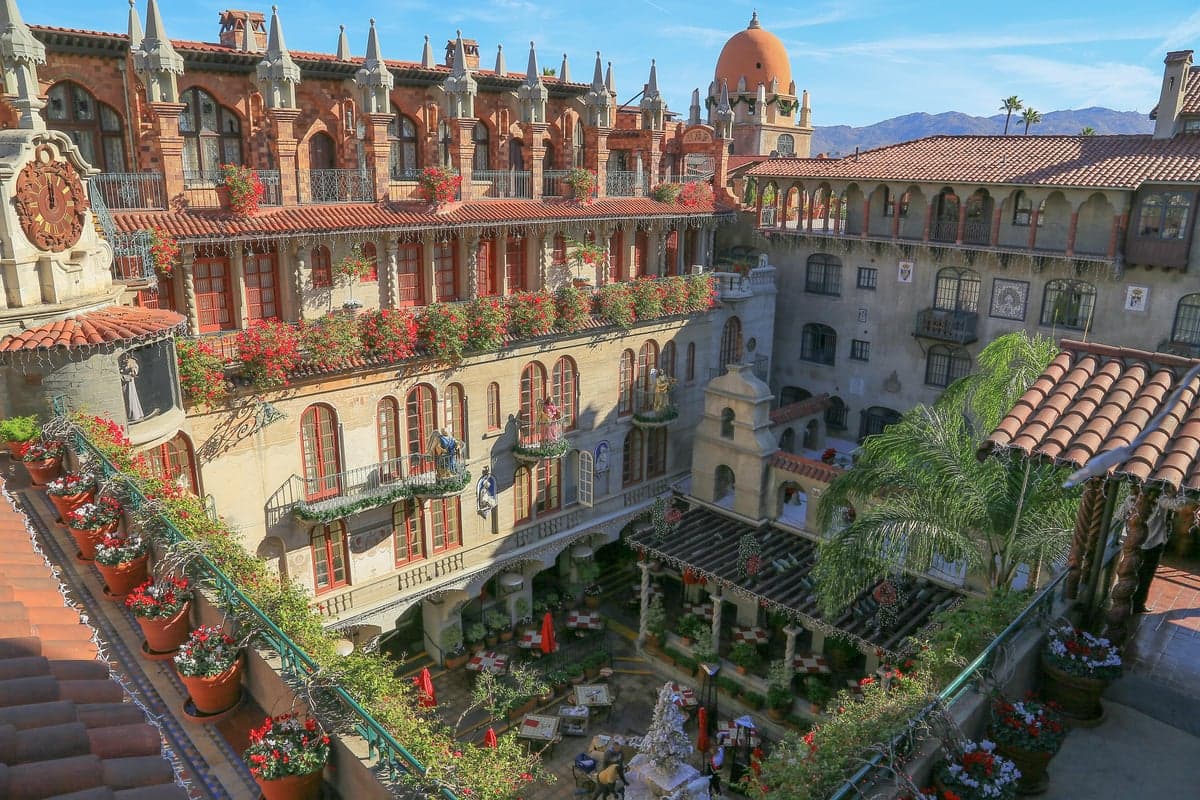
Riverside was founded in 1870 by John W. North, a temperance-minded abolitionist from New York, who envisioned a cooperative colony centered on agriculture and education. The city’s first major population wave came from Midwestern and Eastern white Protestants, drawn by the promise of irrigated citrus farming. By the 1880s, the navel orange had made Riverside one of the wealthiest cities per capita in the United States. The original settlers built their homes in the Downtown and Victoria Avenue corridors, areas still marked by historic Craftsman and Mission Revival architecture. A second wave arrived in the early 20th century: Mexican and Mexican-American laborers who worked the citrus groves and packing houses. They established neighborhoods such as Casa Blanca (west of downtown) and the Eastside, which remain predominantly Hispanic to this day. A smaller but significant Japanese-American farming community settled in the Arlington Heights area before World War II, though many were forcibly removed during internment. By 1950, Riverside was still a majority-white, agricultural city of roughly 46,000 people.
Modern era (post-1965)
The post-1965 era brought profound demographic change. The Immigration and Nationality Act of 1965 opened the door to new waves from Asia and Latin America, while the decline of the citrus industry after World War II shifted the economy toward services, healthcare, and education (anchored by UC Riverside, founded 1954). Hispanic growth accelerated dramatically: from roughly 15% of the population in 1970 to over half today. This growth was driven by both immigration from Mexico and Central America and high birth rates among established families. The Eastside and Casa Blanca neighborhoods became overwhelmingly Hispanic, while newer subdivisions in the Orangecrest and Woodcrest areas (annexed in the 1990s and 2000s) attracted a mix of white, Hispanic, and Asian families seeking newer housing stock. East/Southeast Asian communities—primarily Chinese, Filipino, and Vietnamese—grew steadily, settling in Arlington Heights and the Canyon Crest area near the university. The Indian-subcontinent population (1.7%) is smaller but concentrated among professionals and students near UC Riverside. The white share fell from over 70% in 1970 to 27.4% today, with many older white families moving to outlying suburbs like Corona or Menifee. The Black population (5.7%) has remained relatively stable, concentrated in the Eastside and parts of Downtown.
The future
Riverside’s population is trending toward a solid Hispanic majority, with the white share continuing to decline gradually as older white residents age out and are replaced by younger, more diverse cohorts. The East/Southeast Asian share is growing modestly, driven by UC Riverside’s academic draw and the affordability of inland housing compared to Orange County or the San Gabriel Valley. The Indian-subcontinent community is small but likely to grow as the university expands its STEM programs. The foreign-born share (9.9%) is low for California and is plateauing, suggesting that future growth will come primarily from native-born births rather than new immigration. The city is not homogenizing into a single identity; instead, it is tribalizing into distinct enclaves: the historic Hispanic core in the Eastside and Casa Blanca, the newer mixed-suburban tracts in Orangecrest and Woodcrest, and the university-adjacent, more diverse Canyon Crest area. The next 10-20 years will likely see continued Hispanic majority growth, a stable but aging white population, and a slow rise in Asian and Indian shares as the university and healthcare sectors expand.
For someone moving in now, Riverside is a predominantly Hispanic, family-oriented city with a strong sense of local history and a growing suburban footprint. It is less expensive than coastal Southern California but offers fewer high-wage jobs and a lower college-attainment rate than the state average. The city’s future is one of gradual diversification within a Hispanic-majority framework, with distinct neighborhoods offering different feels—from the historic, walkable Downtown to the newer, car-dependent subdivisions in the south and west.

* Values derived from national, state, county, city and local statistics and may differ in a specific area. Last updated: 2026-04-29T21:30:54.000Z
Narrative content on this page is AI-generated and may contain mistakes. Verify any details that matter before acting on them.
ReloMaps may earn a commission from affiliate links at no extra cost to you.

