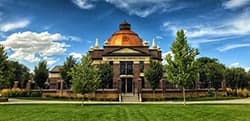
Photo: Wikipedia
Demographics of Riverton, UT
Affluence Level in Riverton, UT
An upper-middle-class area. Household wealth, education levels, and homeownership run ahead of national benchmarks.
People of Riverton, UT
Riverton, Utah, is a predominantly white, family-oriented suburb of Salt Lake City with a population of 44,944 that remains culturally and politically conservative. The city is characterized by its high rate of homeownership, low crime, and a strong Latter-day Saint (LDS) cultural influence, with 83.9% of residents identifying as white and only 2.8% foreign-born. Distinctive markers include a median age of 31.5, a high proportion of married couples with children, and a growing but still modest Hispanic population of 9.7%. The city feels more like an extended small town than a typical bedroom community, with deep generational roots among many families.
How the city was settled and grew
Riverton was settled in the 1860s by Mormon pioneers sent by Brigham Young to farm the fertile benches of the Jordan River. The original settlers were predominantly of English, Scandinavian, and Welsh descent, drawn by church-directed land assignments and irrigation projects. The historic Old Town Riverton district, centered around 12600 South and 1300 West, contains the oldest homes and the original LDS meetinghouse, built by these early families. A second wave of LDS settlers arrived in the early 1900s, establishing the Herriman Springs area (now part of Riverton’s western edge) as a farming hamlet. The city remained a small agricultural community of fewer than 2,000 people through the 1950s, with most residents working on family farms or at the nearby Kennecott Copper Mine in Bingham Canyon.
Modern era (post-1965)
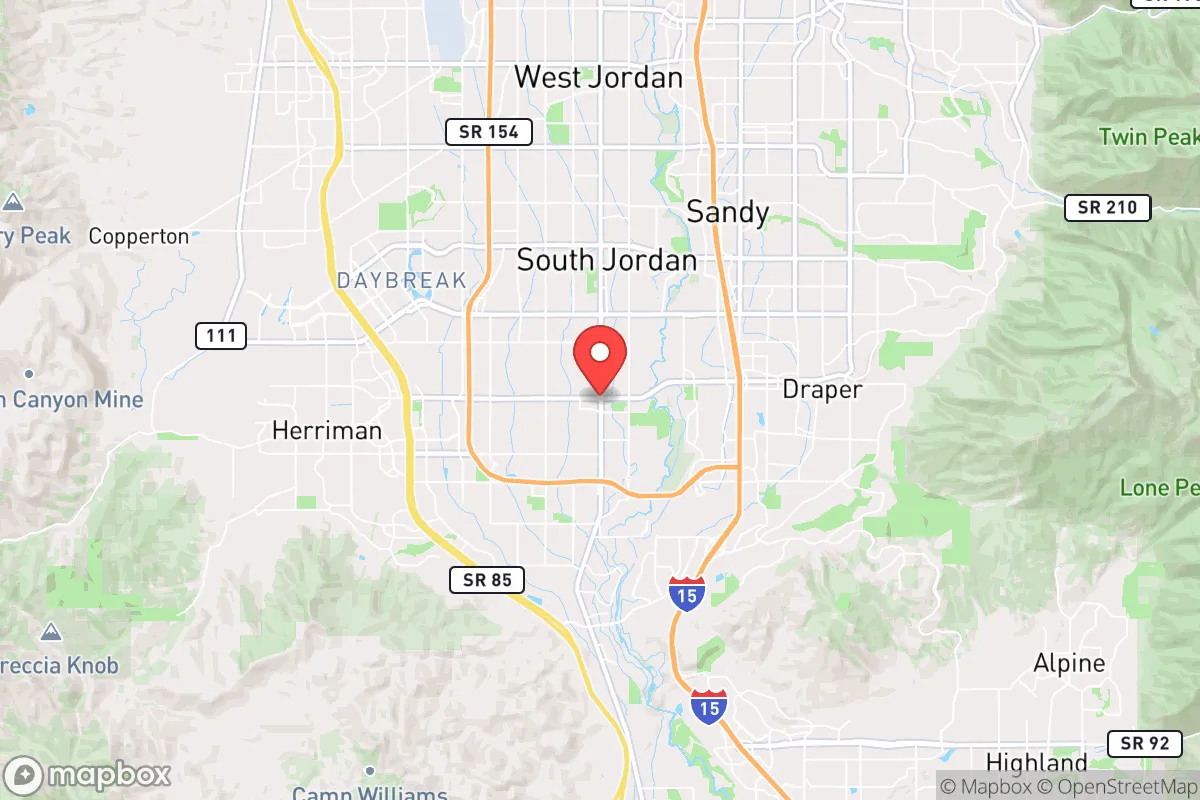
Riverton’s explosive growth began in the 1970s and accelerated through the 1990s as Salt Lake County’s suburban sprawl pushed south. The 1965 Hart-Cellar Act had minimal direct effect here—Riverton’s foreign-born population remains very low at 2.8%—but the city absorbed massive domestic in-migration from other parts of Utah and the Mountain West. The Southridge subdivision, developed in the 1980s, attracted young LDS families seeking affordable starter homes on large lots. The Fox Hollow and Suncrest neighborhoods, built in the 1990s and 2000s, drew more affluent professionals commuting to Salt Lake City and the tech corridor along I-15. The Hispanic population grew from negligible to 9.7% during this period, concentrated in the West Riverton area near 13400 South, where many families work in construction, landscaping, and service industries. East/Southeast Asian residents (1.5%) and Indian-subcontinent residents (0.6%) are scattered thinly across newer subdivisions like Daybreak (which straddles the Riverton-South Jordan border) and tend to be employed in healthcare and tech. The Black population remains tiny at 0.4%, with no distinct neighborhood concentration.
The future
Riverton’s population is projected to plateau near 50,000 as buildable land runs out, with growth shifting to higher-density townhomes and apartments near the Riverton FrontRunner station. The city is likely to remain overwhelmingly white and LDS, but the Hispanic share is expected to rise slowly to 12-14% by 2040, driven by natural increase and continued in-migration of service workers. The East/Southeast Asian and Indian populations will likely grow modestly as tech employment expands in nearby Lehi and Sandy, but they will remain small enclaves rather than forming distinct ethnic neighborhoods. The city is not tribalizing into segregated enclaves—most newer subdivisions are economically diverse but ethnically homogeneous. The biggest demographic shift may be generational: younger families are being priced out, with median home prices exceeding $600,000, pushing some first-time buyers to Herriman or Tooele County.
For someone moving in now, Riverton offers a stable, safe, and culturally cohesive environment where the dominant LDS culture shapes school calendars, social networks, and local politics. The trade-off is limited ethnic diversity and a social fabric that can feel insular to newcomers not connected to the LDS church. It is becoming a more expensive, slightly more diverse version of its 1990s self—still family-centric, still conservative, but with a growing awareness that its future depends on attracting young professionals who can afford its rising home prices.

* Values derived from national, state, county, city and local statistics and may differ in a specific area. Last updated: 2026-05-03T20:34:04.000Z
Narrative content on this page is AI-generated and may contain mistakes. Verify any details that matter before acting on them.
ReloMaps may earn a commission from affiliate links at no extra cost to you.

