Photo: Wikipedia
Political ClimatePolitical Climate in Riverton, UT
District shown is the primary district for this city’s centroid. Cities may span multiple districts.
Local Political AnalysisPolitical Analysis of Riverton, UT
Riverton, Utah, is about as reliably conservative as a place can get, with a Cook PVI of R+14 that puts it deep in the red column. This isn't just a voting pattern; it's a way of life that's been baked into the community for decades. The town leans solidly Republican, and that's not changing anytime soon, though you can feel a subtle shift in the air as more people move in from out of state. The long-term trajectory here is one of cautious vigilance—most folks are happy with the status quo, but there's a growing unease about outside influences creeping into local politics.
How it compares
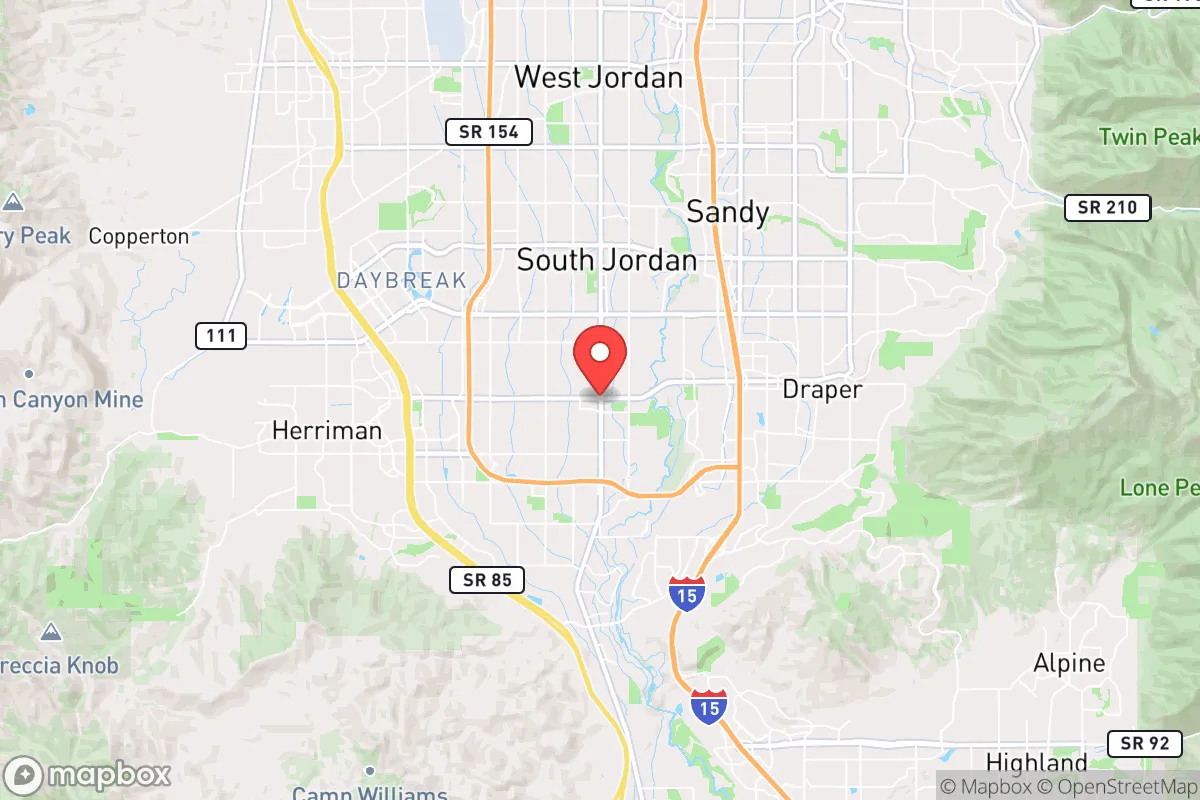
If you drive ten minutes north to South Jordan or Sandy, you'll start to see a slightly different picture. Those areas have a bit more purple in their voting history, especially in recent years, with some precincts trending toward more moderate or even progressive candidates. Riverton, by contrast, has held the line. The difference is stark when you look at school board races or city council elections—Riverton's candidates almost always run on a platform of limited government, lower taxes, and traditional values, while neighboring towns have seen more contested races with progressive challengers. It's a reminder that even within the same county, the political climate can vary a lot. The surrounding rural areas, like Herriman to the southwest, are even more conservative, but Riverton is the anchor of that conservative bloc in the Salt Lake Valley.
What this means for residents
For the people who live here, the political climate translates into a pretty straightforward daily life. You're not going to see a lot of government overreach in Riverton—the city council tends to keep its hands off personal freedoms, whether that's how you run your business, what you teach your kids, or how you choose to live your life. That's a big deal for a lot of families who moved here specifically to escape the kind of bureaucratic meddling you see in bigger cities. The downside is that if you're not on board with the conservative consensus, you might feel a bit isolated. There's not a lot of room for progressive ideas in local policy, and any attempt to push them is met with serious pushback. The recent debates over library materials and school curriculum are a good example—residents here are quick to organize and push back against anything that feels like an erosion of local control.
What daily life is like for families
Living in Riverton means your kids are growing up in a community where the Pledge of Allegiance is still recited in schools, where the local police are respected, and where the biggest political fights are about keeping property taxes low and maintaining the rural character of the town. The schools are strong, and the neighborhoods are safe, but there's a growing concern among long-time residents that the influx of new people from California and other blue states is starting to change the conversation. You'll hear folks at the grocery store grumbling about how the city council is getting more divided, or how a few new businesses are pushing for more "urban" policies. It's not a crisis yet, but it's something people are watching closely. The near-term future looks stable, but the long-term outlook depends on whether the community can hold onto its core values as the valley grows.
One of the biggest cultural distinctions in Riverton is the strong LDS influence, which shapes a lot of the political and social norms. That means a focus on family, community service, and self-reliance, which aligns well with the conservative mindset. But it also means that policy debates often have a moral undertone that can feel out of place to newcomers. For example, the city has been slow to allow alcohol sales in certain areas, and there's a general resistance to anything that feels like it's pushing a progressive agenda. If you're looking for a place where the government stays out of your business and the community shares your values, Riverton is a great fit. But if you're hoping for a more diverse or liberal environment, you'll probably want to look elsewhere. The bottom line is that Riverton is a conservative stronghold, and it's likely to stay that way for the foreseeable future, as long as the people here keep paying attention.

State Political ClimatePolitical Climate in Utah
State Political AnalysisPolitical Environment in the State
Utah is a deeply red state, with Republicans holding every statewide office and supermajorities in both legislative chambers, but don’t let that fool you into thinking it’s a monolith. The state’s political lean has been reliably Republican for decades, but the last 10-20 years have seen a slow, steady shift toward a more libertarian-leaning conservatism in the Wasatch Front, while rural areas have hardened into Trump-country strongholds. The dominant coalition is still the LDS Church-influenced, pro-business, low-tax bloc, but a growing wave of younger, tech-savvy conservatives and out-of-state transplants is reshaping what “conservative” actually means here.
Urban vs. rural divide
The political map of Utah is a tale of two landscapes. The Wasatch Front—Salt Lake City, Provo, Ogden, and the sprawling suburbs of Davis and Utah counties—is where the vast majority of the population lives and where the real political action happens. Salt Lake City itself is a blue island in a red sea, consistently voting Democratic by wide margins, but its influence is blunted by the surrounding suburbs. Utah County, anchored by Provo and Orem, is the conservative engine of the state, with some of the highest Republican turnout rates in the nation; it’s where you’ll find the most vocal support for school choice, gun rights, and traditional family values. Meanwhile, rural counties like Duchesne, Uintah, and San Juan are deep red, often voting 80%+ Republican, and they feel increasingly alienated from the urban corridor’s growth and cultural shifts. The divide isn’t just about party—it’s about lifestyle: urbanites want transit and density, while rural residents fight for water rights and against federal land overreach.
Policy environment
Utah’s policy environment is a mixed bag for a conservative. On the plus side, the state has a flat income tax rate of 4.65% (recently cut from 4.95%), no state-level property tax on vehicles, and a regulatory climate that generally favors business over bureaucracy. The state legislature has aggressively pursued school choice, with the Utah Fits All Scholarship program (2023) providing up to $8,000 per student for private school or homeschooling expenses—a major win for parental rights. On the concerning side, the state has a sales tax on groceries (though it’s being phased down), and the Inland Port Authority in Salt Lake City has raised eyebrows among limited-government advocates for its use of tax increment financing and special district powers. Election laws are solid: voter ID is required, no-excuse mail-in voting is standard (but with signature verification), and the state has resisted the push for ballot harvesting. However, the Utah Medical Cannabis Act (2018) is heavily regulated, with a limited number of dispensaries and strict qualifying conditions—a reminder that the state’s conservative leadership still leans toward caution on personal freedom.
Trajectory & freedom
Utah is becoming more free in some areas, less in others. On the positive side, the Constitutional Carry Act (2021) eliminated the permit requirement for concealed carry, a clear expansion of Second Amendment rights. The Parental Rights in Education Act (2023) requires schools to notify parents of any changes to a student’s emotional or physical well-being, and it restricts classroom instruction on sexual orientation and gender identity in K-3—a direct counter to the progressive agenda seen in other states. Property rights got a boost with the Private Property Protection Act (2022), which limits the use of eminent domain for private economic development. But there are red flags: the Utah Inland Port Authority and the Point of the Mountain Development Authority represent significant government intervention in land use and economic planning, with little direct voter oversight. Additionally, the state’s air quality regulations have led to some overreach, including mandatory vehicle emissions testing in urban counties, which feels like a nanny-state intrusion to many. The trend is toward a more assertive state government that picks winners and losers, even if the winners are often conservative-friendly industries.
Civil unrest & political movements
Utah is not a hotbed of civil unrest, but there are visible flashpoints. The “Sovereign Utah” movement has gained traction in rural counties like San Juan and Kane, where residents have passed resolutions demanding the return of federal lands to state control—a form of nullification rhetoric that resonates with the state’s independent streak. Immigration politics are relatively quiet, as Utah has a guest worker program (the Utah Compact, 2011) that takes a pragmatic, pro-business approach rather than a confrontational one. However, the “Parents’ Rights” protests at school board meetings in Davis and Utah counties have been intense, with hundreds of parents showing up to oppose critical race theory and LGBTQ-inclusive curricula. On the left, the “Utah Rising” coalition has organized around environmental justice and housing affordability, but it remains a fringe force. The most visible flashpoint for a new resident would be the annual Utah Legislature session, where controversial bills on transgender athletes, library books, and election integrity dominate headlines—it’s a reminder that the culture war is alive and well here.
Projection
Over the next 5-10 years, Utah will likely become more conservative on cultural issues but more interventionist on economic ones. The influx of out-of-state transplants—many from California, Washington, and Colorado—is accelerating the shift toward a tech-driven, libertarian-leaning conservatism that prioritizes individual freedom but also demands government action on housing and infrastructure. The Wasatch Front will continue to grow, with Lehi and Saratoga Springs becoming new conservative hubs, while rural counties will see their political influence wane as population concentrates. Expect more school choice expansion, further tax cuts, and a continued push for parental rights in education. However, the state’s housing crisis will force government intervention—likely through zoning reforms and development subsidies—that could alienate free-market purists. The LDS Church’s influence will remain strong but will be increasingly challenged by secular conservatives and non-Mormon transplants. If you’re moving here now, expect a state that is still fundamentally red, but with a growing tension between traditional Mormon conservatism and a more individualistic, tech-bro libertarianism.
Bottom line for a new resident: Utah offers a high degree of personal freedom on guns, education, and family life, but you’ll need to accept a government that is increasingly active in managing growth and land use. The culture is conservative and family-oriented, but the political landscape is not static—it’s evolving in ways that reward engagement. If you value low taxes, strong Second Amendment protections, and a community that prioritizes parental rights, you’ll feel at home. Just keep an eye on the state legislature’s growing appetite for economic intervention, and don’t expect the rural-urban divide to heal anytime soon.
* Values derived from national, state, county, city and local statistics and may differ in a specific area. Last updated: 2026-05-03T20:34:04.000Z
Narrative content on this page is AI-generated and may contain mistakes. Verify any details that matter before acting on them.
ReloMaps may earn a commission from affiliate links at no extra cost to you.

