 Popular
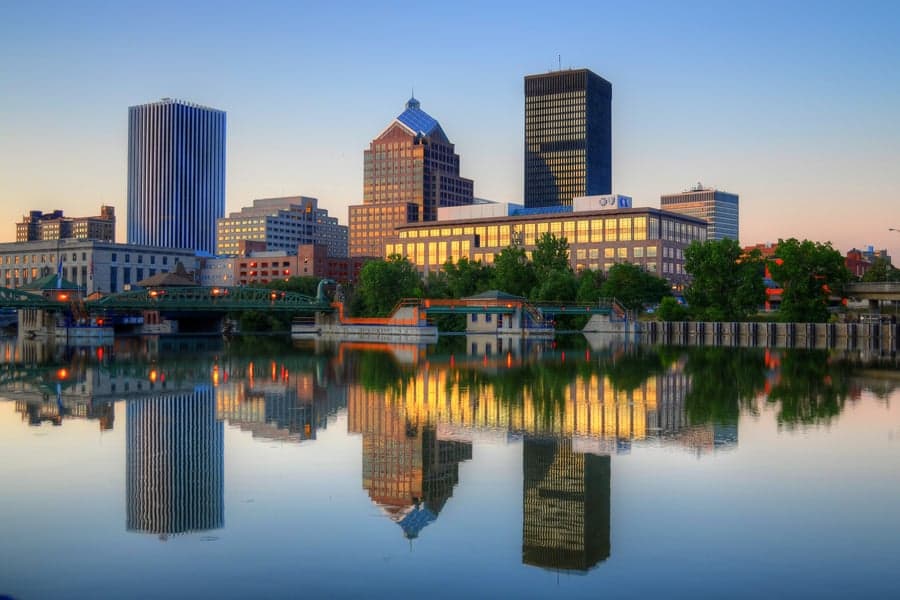
Photo: Wikipedia
Quality of Life in Rochester, NY
A high quality of life with strong walkability, manageable living costs, healthy neighborhood signals, and solid amenity access.
What does Quality of Life tell us?
Quality of Life blends cost of living, nearby amenities, socioeconomic signals, and neighborhood character. City-level scores represent the whole municipality; individual neighborhoods can differ.
What does this tell us?
Quality of Life blends cost of living, nearby amenities, socioeconomic signals, and neighborhood character. City-level scores represent the whole municipality; individual neighborhoods can differ.
Cost of Living
29% below national average
The Real Cost of Living in Rochester, NY for 2026
| Tier | Individual | Family (4) |
|---|---|---|
| Survival | $17k | $31k |
| Comfortable | $27k | $40k |
| Luxury | $84k+ | $131k+ |
| Elite (Top 5%) | $114k+ | $176k+ |
117%
The Area Signal
A metric tracking the socioeconomic signals of the area.
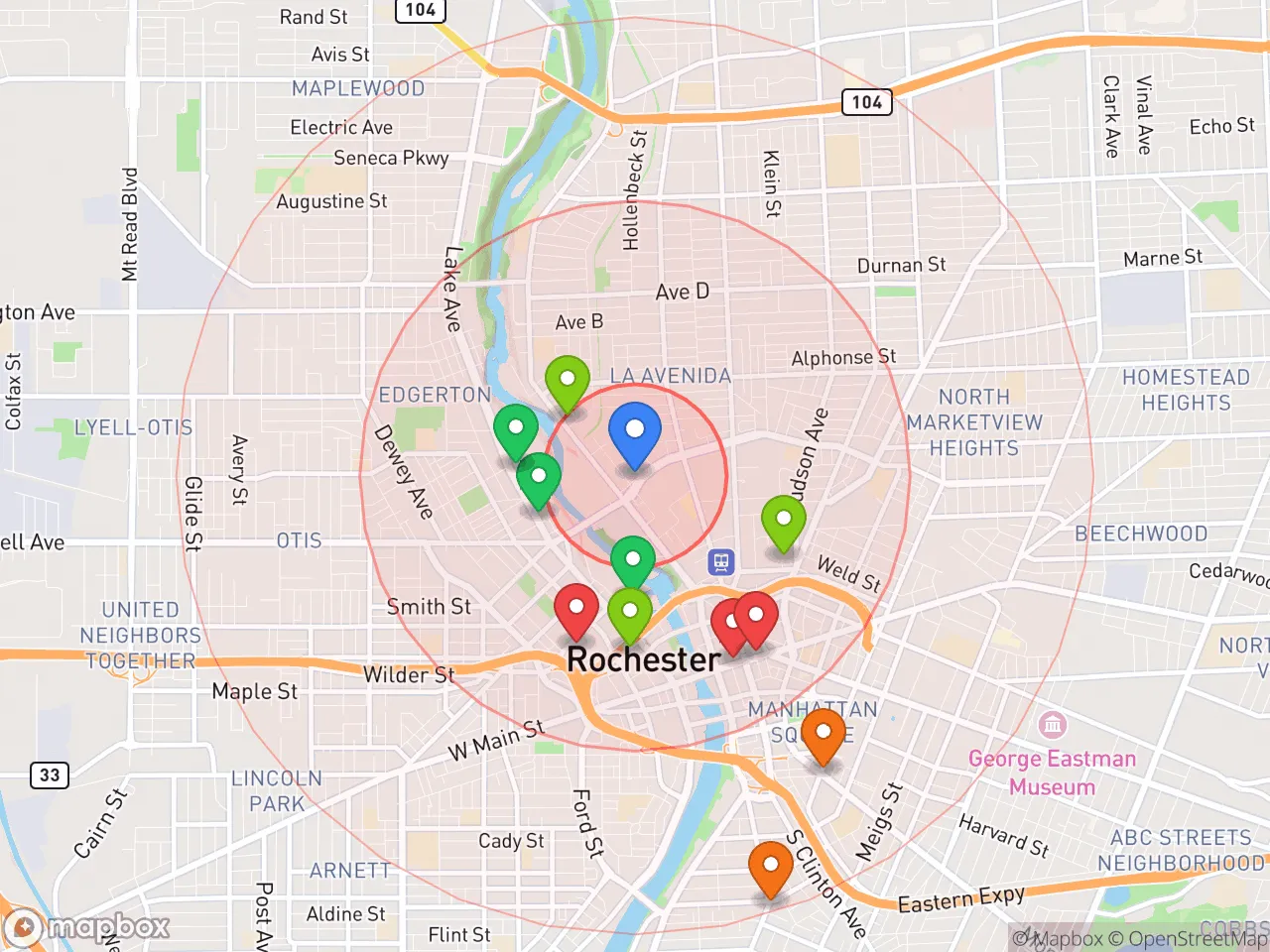
Hobbies
Explore the areaGroceries
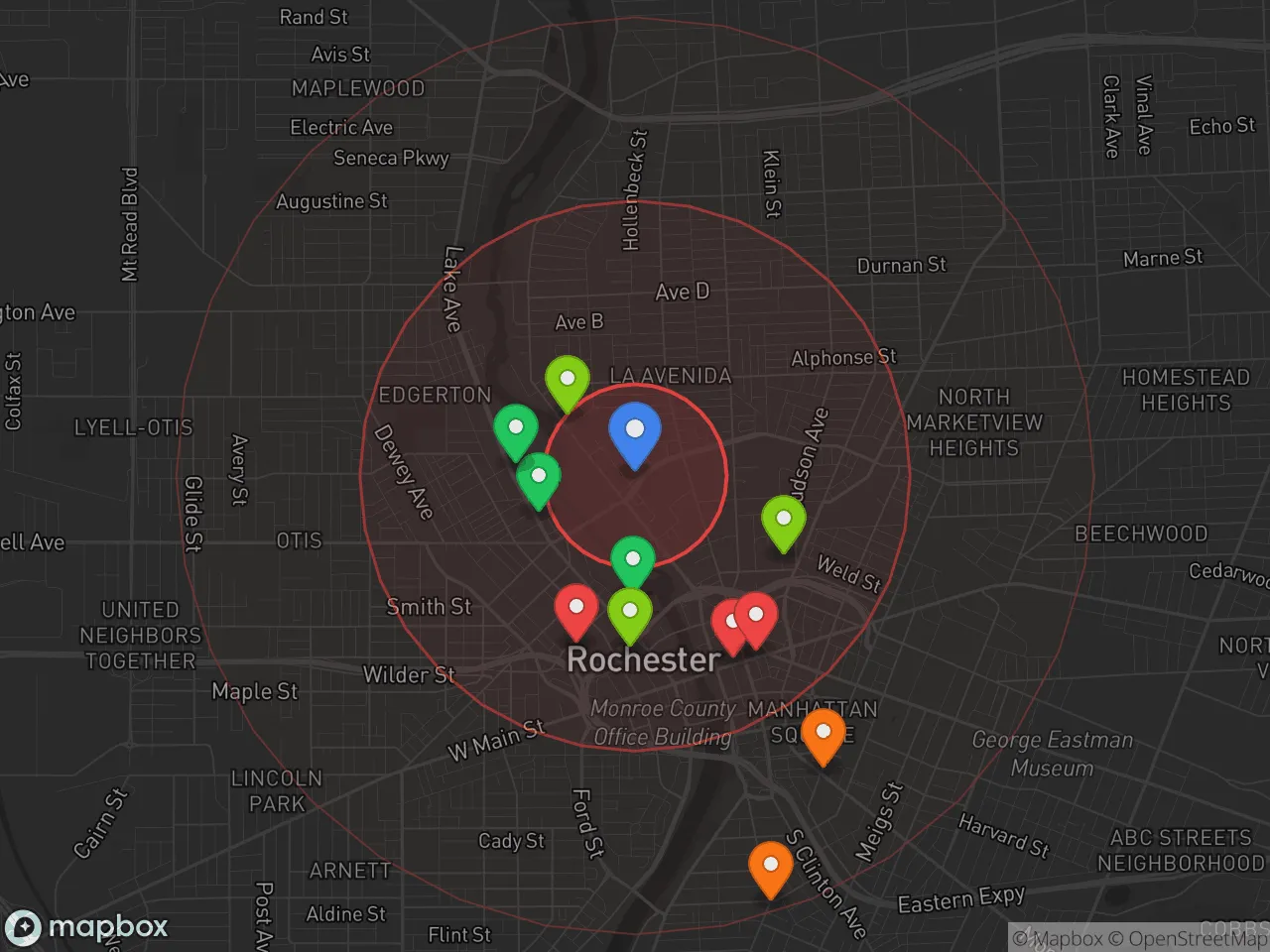
5 within 10 miles
Gas
20 within 10 miles
Hospital
8 within 20 miles
Airport
Pittsburgh International Airport
Post Office
USPS — Rochester, NY
Critical Amenities
Quality-of-Life Analysis
Rochester, New York, offers a quality of life defined by exceptional affordability, a strong sense of community, and a surprising density of cultural and natural amenities, attracting a mix of young professionals, families, and retirees seeking value over high-cost coastal living. With a cost of living index of 71 (29% below the U.S. average), the city provides a financial cushion that allows residents to prioritize homeownership, savings, and leisure. The population is notably diverse in age and background, including a significant contingent of University of Rochester and Rochester Institute of Technology students and faculty, as well as a growing number of remote workers drawn by the low housing costs and reliable infrastructure.
Cost of living, housing affordability, and how Rochester compares to nearby suburbs
Rochester’s housing market is one of the most accessible in the Northeast, with a median home value of $120,600 and a median rent of $1,039—figures that are roughly half those found in comparable upstate cities like Buffalo or Albany. This affordability extends to utilities, groceries, and transportation, making the city a practical choice for first-time buyers and those looking to downsize without financial strain. While the city proper offers the lowest entry point, suburbs like Pittsford, Brighton, and Fairport command higher prices (median homes often exceed $250,000) but also offer top-rated school districts and lower property tax rates relative to the city. The average commute of 18.9 minutes is a standout advantage, significantly shorter than the national average of 26 minutes, allowing residents to reclaim time for family, hobbies, or side projects. For renters, the city’s stock of historic apartments and renovated lofts in neighborhoods like Park Avenue and the South Wedge provides walkable urban living at a fraction of the cost of similar options in Boston or Washington, D.C.
What daily life is like: amenities, schools, and the local rhythm
Daily life in Rochester is shaped by a robust network of public libraries, community centers, and a nationally recognized parks system, including the Frederick Law Olmsted-designed Highland Park and the Genesee Riverway Trail. The city’s public schools, while facing challenges common to urban districts, are supplemented by strong magnet programs and the Rochester City School District’s International Baccalaureate offerings. For families, the nearby Monroe County suburbs provide some of the state’s highest-rated public schools, such as Pittsford Mendon High School and Brighton High School, which consistently rank in the top 5% nationally. Cultural amenities punch well above the city’s size: the Eastman School of Music, the George Eastman Museum, and the Strong National Museum of Play anchor a vibrant arts scene, while the annual Lilac Festival and Rochester International Jazz Festival draw regional crowds. The local rhythm is notably slower than in larger metros—restaurants and cafes fill on weekends but rarely require reservations, and the city’s strong cycling culture and lake-effect snow create distinct seasonal routines. Winter months bring robust snow removal and a thriving indoor scene of breweries, galleries, and live theater, while summers are defined by farmers’ markets, lake activities on Lake Ontario and the Finger Lakes, and neighborhood block parties.
Rochester is best suited for individuals and families who value financial breathing room, a manageable pace of life, and access to cultural and outdoor amenities without the premium price tag of larger cities. Remote workers, early-career professionals, and retirees will find the low cost of housing and short commute particularly appealing, while families should weigh the trade-offs between city living and suburban school districts. Those seeking a vibrant nightlife or a fast-paced urban environment may find Rochester underwhelming, but for anyone prioritizing affordability, community, and a four-season lifestyle, the city offers a compelling and sustainable quality of life.

Crime in Rochester, NY
WARNING: The crime statistics are unreliable for this jurisdiction. Local authorities have either not reported or under reported their data to the FBI. This could be due to bad intentions, incompetence or technical issues. Regardless, we suggest skepticism.
Significantly higher crime rates than 83% of comparable U.S. locations.
Violent CrimeViolent Crime Analysis
Property CrimeProperty Crime Analysis
Crime Analysis
Rochester, New York, presents a challenging safety landscape for potential residents, with crime rates significantly exceeding both state and national averages. The city recorded a violent crime rate of 529.1 incidents per 100,000 residents and a property crime rate of 2,582 per 100,000, figures that place it among the higher-risk urban areas in the Northeast. These statistics reflect a reality where personal and property safety require careful consideration, particularly given the local criminal justice system's progressive orientation, which has been linked to reduced accountability for offenders and increased risks for law-abiding citizens.
Crime in context
Rochester's violent crime rate of 529.1 per 100,000 is roughly 2.5 times the national average and substantially higher than New York State's overall rate, which benefits from low-crime upstate and suburban jurisdictions. Property crime, at 2,582 per 100,000, also runs well above national benchmarks. These numbers place Rochester in the same tier as other struggling post-industrial cities in the region, such as Buffalo and Syracuse. However, the city's challenges are compounded by a local justice system that has embraced progressive prosecution policies, including reduced bail requirements and diversion programs for repeat offenders. Critics argue these approaches, while intended to reduce incarceration, have directly contributed to higher recidivism and a perception that property and violent crimes carry minimal consequences.
What residents experience
For those living in Rochester, the statistical reality translates into tangible daily concerns. Property crime, particularly vehicle theft and burglary, is the most common threat, with many residents reporting stolen packages, broken car windows, and home break-ins even in relatively stable blocks. Violent crime, while less frequent, is concentrated in specific areas and often involves firearms; the city has struggled with a persistent homicide rate that disproportionately affects young men in lower-income neighborhoods. Residents frequently cite a lack of visible police presence and slow response times as frustrations, a dynamic many attribute to the district attorney's office deprioritizing low-level offenses. This environment creates a sense of impunity among offenders, as progressive policies like cashless bail and pre-trial release have made it common for individuals arrested for theft or assault to return to the same streets within hours.
Neighborhood-level variation is stark. Areas like the Park Avenue district, the Neighborhood of the Arts, and parts of the 19th Ward offer relatively lower crime rates, with active block clubs and private security patrols providing a buffer. In contrast, the northeast and northwest quadrants, including the Lyell-Otis and Marketview Heights neighborhoods, experience the highest concentrations of violent incidents and property crime. Even in safer enclaves, residents remain vigilant, as citywide trends mean that no area is entirely insulated from spillover effects. For newcomers, choosing a neighborhood with strong community organization and proximity to the University of Rochester or RIT campuses can mitigate risk, but the overarching reality is that Rochester's crime problem is systemic and unlikely to improve without a fundamental shift away from progressive criminal justice policies.
* Values derived from national, state, county, city and local statistics and may differ in a specific area. Last updated: 2026-05-01T23:58:20.000Z
Narrative content on this page is AI-generated and may contain mistakes. Verify any details that matter before acting on them.
ReloMaps may earn a commission from affiliate links at no extra cost to you.

