Photo: Wikipedia
Strategic Assessment of Rockport, TX
Meaningful friction. Expect exposure to either population pressure, blast zones, or natural disaster risk. Consider buying a retreat property.
What does the Strategic Assessment tell us?
Our Strategic Assessment grades tactical survivability of an area. Major population centers, military targets, fallout zones, natural disasters, and border exposure all drive risk — lower exposure means a more defensible position in a crisis.
This is heavily inspired by Joel Skousen's Strategic Relocation book. Highly recommended you checkout the book ($)What does this tell us?
Our Strategic Assessment grades tactical survivability of an area. Major population centers, military targets, fallout zones, natural disasters, and border exposure all drive risk — lower exposure means a more defensible position in a crisis.
This is heavily inspired by Joel Skousen's Strategic Relocation book. Highly recommended you checkout the book ($)Strategic Pillars

Key Distances
Regional Safe Places
Below is our recommended "safe zones" in Texas and the surrounding area based on our strategic heuristics. For most people, it's unrealistic to live in a “safe zone” full-time due to work, family or other personal reasons. They tend to be more rural. However, many of these areas are perfect for second homes and retreat properties that double as a vacation home or even a short-term rental.

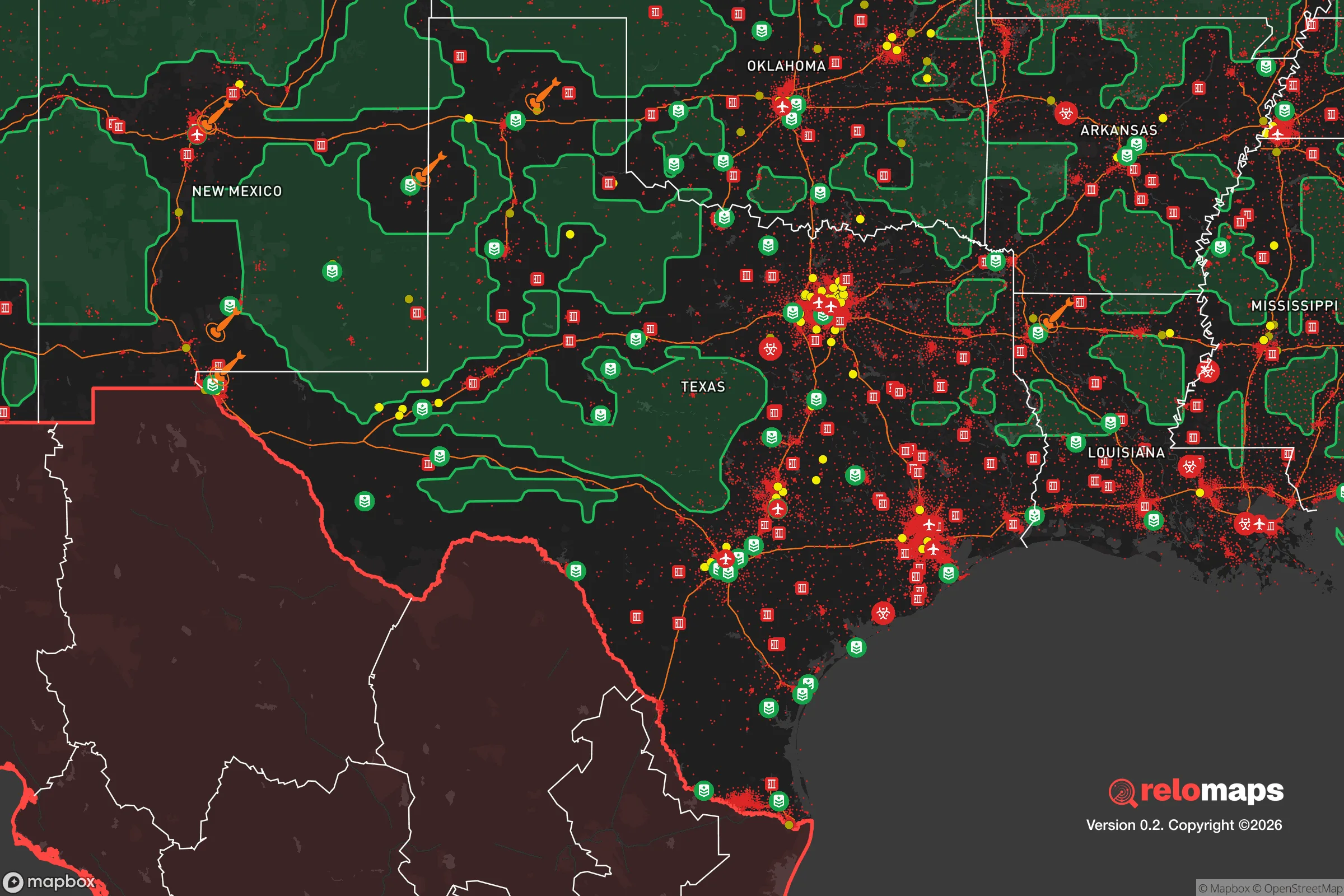


Important Note: For informational purposes only. This does not mean nothing bad ever happens in the green zones. Please use common sense. This is based on public data and modeled with AI. We tried to take a conservative approach but mistakes happen. We update this regularly as new information becomes available.
Solar Generator Recommendations
Backup power matters more here than in safer locations. We've picked three solar generators across budgets and capacity tiers — start with the budget unit if you only need a few essentials, or step up if you want to run a fridge and HVAC for days at a time.

Jackery Portable Power Station Explorer 300
Budget OptionPower on the Go: Weighing only 11 lbs, it's convenient to set up and store with book-sized foldable solar panels

BLUETTI Portable Power Station AC180
Designed for both indoor and outdoor scenarios, AC180 is highly capable as it has a robost capacity and continuous output power.

EF ECOFLOW DELTA Pro Ultra Power Station
Upgraded PickEcoFlow DELTA Pro Ultra is a whole-home energy system designed to grow with your family. Integrated with the Smart Home Panel 2, it scales to meet your evolving energy needs — keeping your home powered, intelligent, and secure through every stage of life.
We earn a commission, at no additional cost to you.
Strategic Assessment Analysis
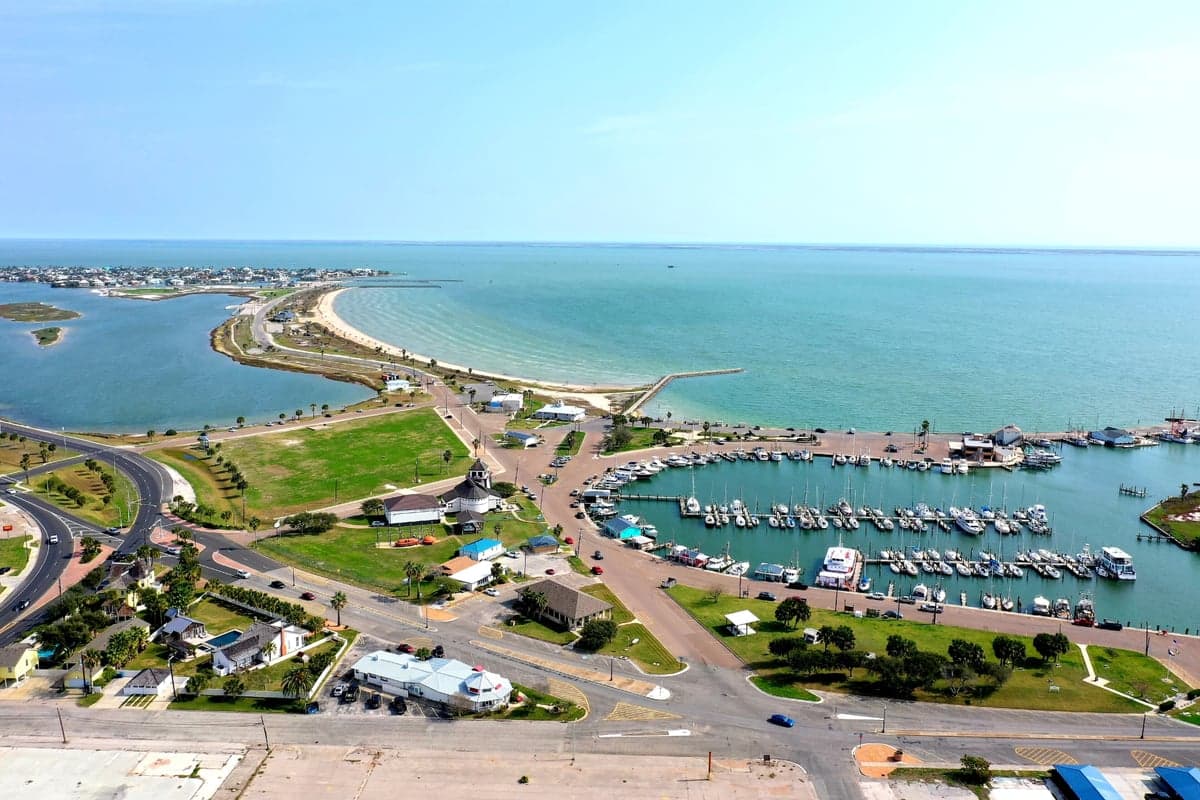
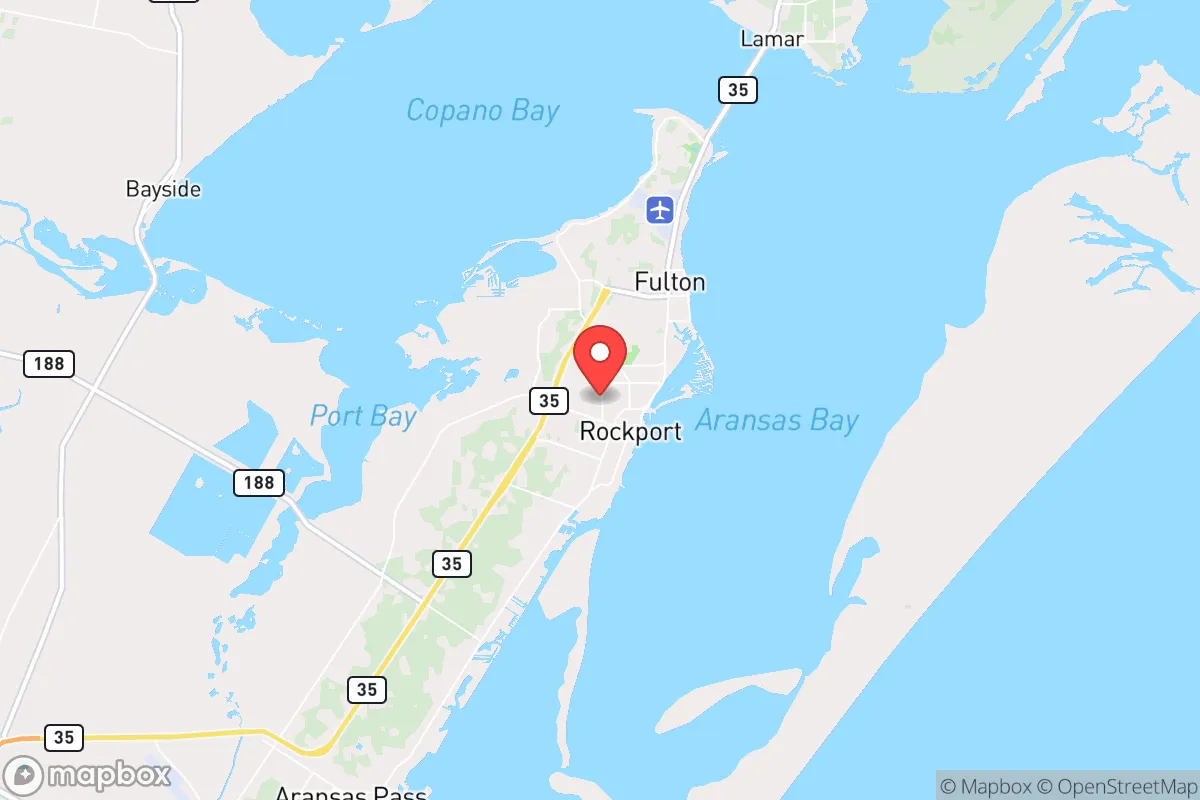
Rockport, Texas, offers a strategic coastal position that balances accessibility with meaningful separation from the major population centers that would become liabilities during widespread unrest or disaster. Located roughly 30 miles northeast of Corpus Christi and 170 miles southwest of Houston, this small Gulf Coast town of about 10,000 residents sits far enough from the immediate enough to the coast for marine resources but far enough from the major metro zones to avoid the worst of urban collapse scenarios. The area's resilience profile is shaped by its geography, its exposure to natural threats, and the practical realities of sustaining life when supply chains fail or civil order degrades.
Strategic geographic position and natural buffer advantages
Rockport's location on the Aransas Bay provides direct access to the Gulf Intracoastal Waterway and the open-water fishing and a potential evacuation route that avoids clogged highways. The surrounding Aransas County is sparsely populated relative to the Texas interior, with a population density of roughly 60-40 split between developed and undeveloped land, much of it coastal marsh and ranchland. This low population density works in a relocator's favor: fewer people means fewer competition for resources during a crisis. The area sits within the Central Flyway for migratory birds, which translates into year-round hunting opportunities for waterfowl and small game. The climate is humid subtropical with mild winters, meaning freeze events are rare and growing seasons run long enough for subsistence gardening nearly year-round. The proximity to the Gulf also means abundant rainfall averaging 35-40 inches annually, which supports rainwater catchment systems and reduces dependence on municipal water supplies. From a strategic standpoint, Rockport is far enough from the major interstate corridors that would become chokepoints during evacuations or civil unrest, yet close enough to Corpus Christi for medical facilities and resupply when conditions are stable.
Risk exposure, hurricane threats, and proximity to strategic targets
The primary vulnerability here is hurricane exposure. Rockport took a direct hit from Hurricane Harvey in 2017 as a Category 4 storm, causing catastrophic damage. Storm surge risk is real along the entire coastline, with the low-lying areas around Aransas Bay and Copano Bay being the most exposed. Any relocator needs to factor in the likelihood of evacuation orders every few years and have a plan for the possibility of extended power outages and supply disruptions that follow a major storm. Beyond weather, the proximity to Corpus Christi introduces strategic risk. Corpus Christi is home to the Port of Corpus Christi, one of the largest crude oil export hubs in the United States, as well as multiple refineries and chemical plants. These are high-value targets in the top tier of strategic targets for any adversary looking to disrupt American energy infrastructure. The city also hosts Naval Air Station Corpus Christi, a training base for naval aviators, and the nearby King Ranch area has military training airspace. A major event at any of these facilities could produce fallout zones, chemical plumes, or secondary disasters that would affect Rockport depending on wind direction. The border situation is another consideration: Rockport is about 150 miles from the US-Mexico border at Brownsville, and while cartel violence rarely reaches this far north, the secondary effects of border instability including smuggling routes and occasional law enforcement checkpoints can create friction on major highways like US-77 and I-37 that connect the area to the interior.
Practical resilience for relocators: food, water, energy, and defensibility
For a relocator serious about self-sufficiency, Rockport offers several concrete advantages. The bay and Gulf provide a reliable protein source: redfish, speckled trout, flounder, and shrimp are abundant year-round, and a basic kayak or small skiff can put food on the table without requiring fuel-intensive offshore trips. The area has a strong ranching and farming heritage, with local ranchers raising cattle, goats, and poultry, and farmers markets operating in Rockport and nearby Fulton. Establishing relationships with local producers before a crisis is straightforward in a small town where community ties matter. Water is the critical concern. Municipal water comes from groundwater wells and surface water sources, but a hurricane or grid failure can disrupt treatment and contaminate supply. A rainwater catchment system with first-flush diverters and a Berkey or two of storage is a wise investment here. The shallow water table also means hand-dug wells or driven-point wells are feasible in many areas, though saltwater intrusion is a risk near the coast. For energy, solar is viable given the region's 260+ sunny days per year, but battery storage is essential because grid outages are common during storms. Natural gas is available in town but not in rural areas, so propane for cooking and heating is the backup standard. Defensibility is mixed. Rockport itself is a small town with a grid street layout and limited natural chokepoints, but the surrounding ranchland offers properties with long sightlines and limited access points. The local law enforcement presence is small, and during a major event, state and federal resources would be stretched thin. Community cohesion is the real force multiplier here: the town has a strong volunteer fire department, active church networks, and a culture of mutual aid among longtime residents. A relocator who integrates rather than isolates will fare far better.
The overall strategic picture for Rockport is one of trade-offs. The coastal position provides unmatched access to marine resources and a mild climate for extended growing seasons, but it comes with the hard reality of hurricane risk and the proximity to high-value energy and military infrastructure in Corpus Christi. For a single individual or family with a prepper mindset, Rockport works best as part of a layered strategy: a primary residence or retreat property that is hardened for storms, with stored supplies for 90 days of self-sufficiency, and a plan to evacuate inland if a major hurricane threatens. The area is not a bug-out location for a total collapse scenario, but it is a viable long-term base for those who want to live in a low-density coastal environment with access to food from the water and the land, while staying close enough to a mid-sized city for medical care and supply runs when conditions are safe. The key is to treat Rockport as a location that requires active preparation rather than passive assumption of safety. For the conservative relocator who values community, self-reliance, and proximity to natural resources, and who is willing to accept the coastal risks in exchange for those benefits, Rockport deserves serious consideration.

* Values derived from national, state, county, city and local statistics and may differ in a specific area. Last updated: 2026-05-14T18:47:15.000Z
Narrative content on this page is AI-generated and may contain mistakes. Verify any details that matter before acting on them.
ReloMaps may earn a commission from affiliate links at no extra cost to you.

