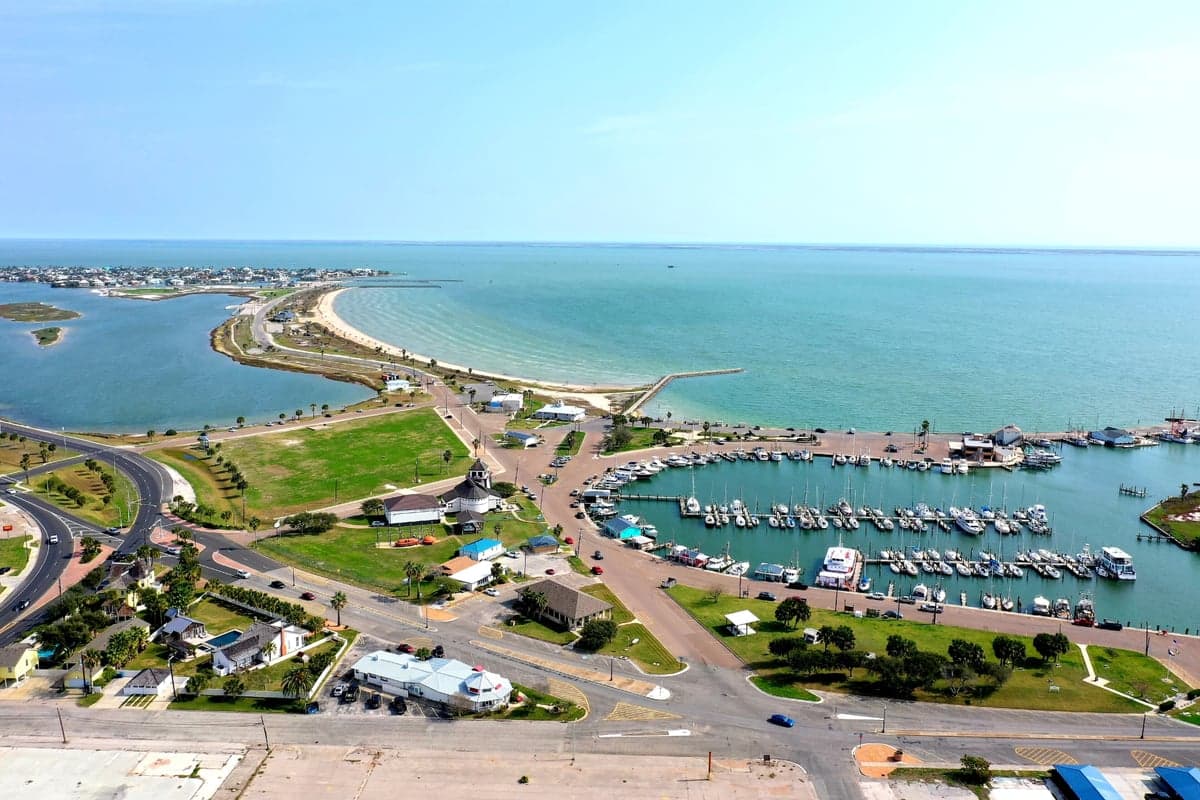

Photo: Wikipedia
Political ClimatePolitical Climate in Rockport, TX
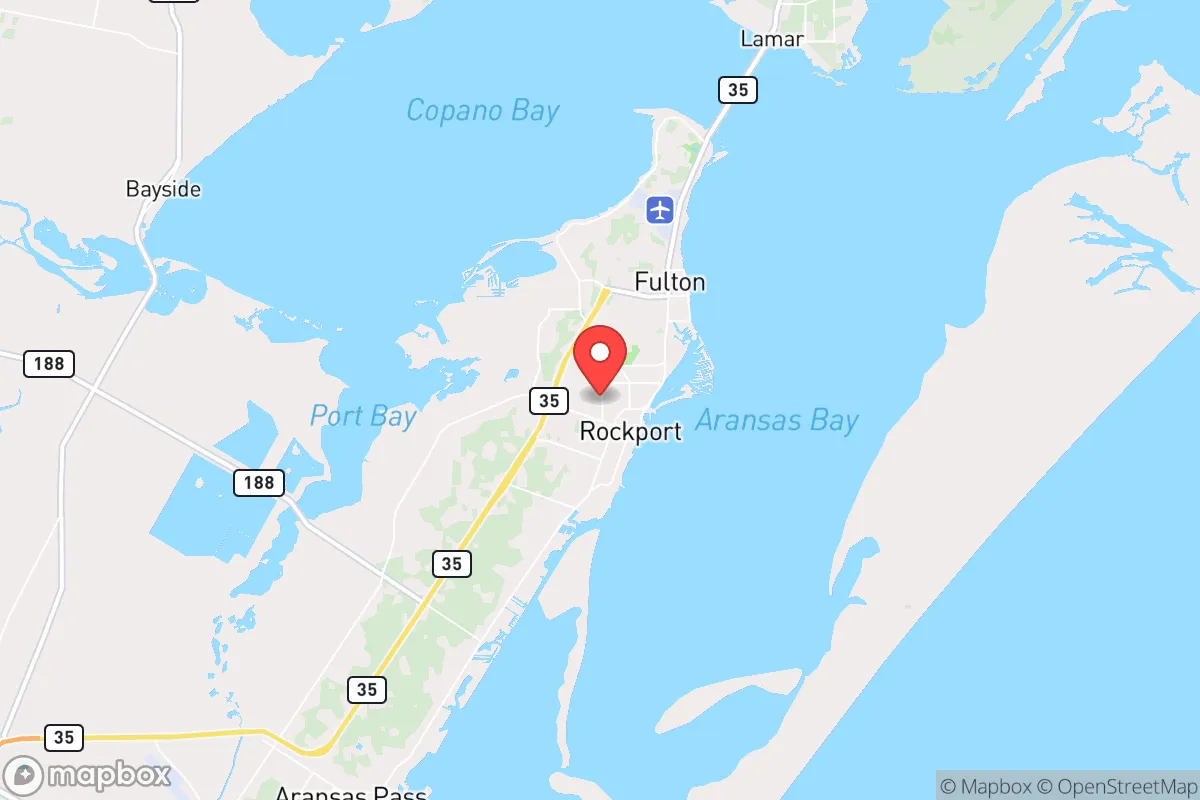
District shown is the primary district for this city’s centroid. Cities may span multiple districts.
Local Political AnalysisPolitical Analysis of Rockport, TX
Rockport, Texas, leans heavily conservative with a Cook PVI of R+14, far to the right of the state's R+4 rating, and that gap has only widened in recent years as coastal values hold firm against statewide trends. I've lived here for over two decades, and I can tell you this community has always been a place where folks take personal responsibility seriously and don't cotton to government telling them how to live. Back in the '90s, it was already a red pocket, but now with folks moving in from places like California and Colorado, you'd think it might shift might happen—but nope, Rockport's stayed true. If anything, the trajectory is even more conservative as longtime residents dig in their heels against any progressive creep.
How it compares
Compare that to Texas overall, which sits at R+4—still red, but a lot more purple than you'd think. Down here in Aransas County, we don't see the same kind of political drift you get in Corpus Christi, which has gotten noticeably more moderate over the years, especially in the city limits around the university and the port and the university. Drive north to Portland or Ingleside, and you'll find similar conservative values, but Rockport's isolation—surrounded by water and wildlife refuges—keeps us insulated from the progressive waves that hit bigger cities. You don't hear about "Keep Austin Weird" or the leftward tilt in Houston's suburbs, and it just doesn't resonate here. Our local elections are dominated by folks who believe in low taxes, Second Amendment rights, and minimal interference from Austin or Washington. The contrast is stark: while Texas as a whole flirted with competitive races in 2024, Rockport's precincts routinely vote 70-80% Republican.
What residents can expect
For residents, this political climate means a government that mostly stays out of your business. Property taxes are still a burden—that's a Texas-wide issue—but local officials fight hard to keep regulations loose, especially for fishing and tourism businesses. You won't see mask mandates or lockdowns here like you did in some coastal counties; the community pushed back hard on any overreach during the pandemic. That said, we're vigilant. Any hint of progressive ideology—like diversity initiatives in schools or zoning changes that favor developers over property rights—gets met with serious pushback at city council meetings. The long-term worry is that state-level trends could eventually trickle down, but for now, Rockport remains a stronghold where personal freedoms come first.
Culturally, Rockport is distinct from much of Texas because of its deep-rooted fishing and shrimping heritage. This isn't a place that chases trends; it's a place where church potlucks, volunteer fire departments, and neighborly self-reliance are the norm. Policy-wise, you'll find no sanctuary city nonsense, noices, no public camping ordinances, and a school board that sticks to basics. If you're looking ahead, I see Rockport staying the course—maybe even pulling further right as more people move here specifically to escape the chaos of bigger, more liberal cities. If you're looking for a community that still believes in the Constitution and common sense, this is it.

State Political ClimatePolitical Climate in Texas
State Political AnalysisPolitical Environment in the State
Texas has been a reliably Republican state for decades, with a Cook Partisan Voting Index of R+4, but the political landscape is shifting under your feet. The dominant coalition remains conservative, anchored by rural and suburban voters, but explosive growth in the major metros is slowly chipping away at the GOP’s supermajority. Over the last 10-20 years, the state has moved from solid red to lean red, with Democrats making gains in places like Dallas, Houston, Austin, and San Antonio, while the exurbs and small towns have only gotten redder. If you’re considering a move here, you need to understand that the political climate isn’t uniform—it’s a patchwork of fiercely independent regions, each with its own flavor of freedom.
Urban vs. rural divide
The political map of Texas is a study in contrasts. The big cities—Austin, Dallas, Houston, San Antonio, and El Paso—are Democratic strongholds. Austin, in particular, has become a progressive enclave, with county-level margins often exceeding +30 points for Democrats. Houston’s Harris County flipped blue in 2018 and has stayed there, driven by a diverse, growing population. Meanwhile, the rural expanse—places like the Panhandle around Lubbock, the Piney Woods near Tyler, and the Hill Country west of Austin—votes overwhelmingly Republican. The real battleground is the suburbs: Collin County (north of Dallas) and Denton County were once reliably red but have become competitive, with Democrats winning some local races. Fort Worth’s Tarrant County, a longtime bellwether, flipped to Biden in 2020 and then back to Trump in 2024, showing the volatility. If you want a deep-red environment, look to Midland or Amarillo; if you prefer a purple mix, the outer ring of DFW or Houston’s suburbs still lean conservative but are trending left.
Policy environment
Texas’s policy environment is a mixed bag for a conservative. On the plus side, there’s no state income tax, and the regulatory climate is business-friendly—permitting is fast, and occupational licensing is relatively light. Property taxes are high (among the highest in the nation), but the state has passed periodic relief measures, like the 2023 property tax cut that sent billions back to homeowners. Education policy is a flashpoint: the state has a school choice voucher program that was debated fiercely in 2023 and 2024, with Governor Abbott pushing for Education Savings Accounts. The legislature passed a law requiring public schools to display “In God We Trust” and to allow prayer, but also mandated that schools not teach critical race theory or certain gender identity concepts. Healthcare is largely free-market, with limited Medicaid expansion—Texas has the highest uninsured rate in the country, which some see as a feature (less government intrusion) and others as a bug. Election laws tightened after 2020: Senate Bill 1 (2021) banned drive-through voting, added ID requirements for mail ballots, and restricted early voting hours. It’s a state that values local control, but the legislature often preempts city ordinances on issues like fracking bans, plastic bag bans, and sanctuary city policies.
Trajectory & freedom
On the freedom front, Texas has been a mixed bag. The state expanded gun rights significantly: permitless carry (constitutional carry) became law in 2021, allowing any law-abiding adult to carry a handgun without a license. That’s a clear win for personal liberty. Parental rights were strengthened with the 2023 law banning gender transition procedures for minors and requiring schools to get parental consent before changing a child’s pronouns or name. Medical autonomy took a hit, though: the state’s near-total abortion ban (trigger law after Dobbs) has no exceptions for rape or incest, which some conservatives applaud but others see as overreach. Property rights are generally strong, but the state has used eminent domain aggressively for pipelines and transmission lines. Taxation remains a sore spot—no income tax is great, but property taxes can feel like a second mortgage. The trend is toward more government involvement in social issues (banning drag shows in public, restricting library content) while deregulating the economy. Overall, Texas is becoming more free in some areas (guns, school choice) but less free in others (abortion, speech on campuses).
Civil unrest & political movements
Texas has seen its share of political flashpoints. The 2020 protests in Austin and Dallas over George Floyd’s death led to property damage and a lasting tension between city leaders and state officials. The “Defund the Police” movement gained traction in Austin, but the state legislature responded by passing a law in 2021 that penalizes cities that cut police budgets. Immigration politics are front and center: Governor Abbott’s Operation Lone Star has deployed state troopers and National Guard to the border, bused migrants to northern cities, and installed razor wire along the Rio Grande. The state is in a legal battle with the Biden administration over border barriers. Sanctuary city policies are banned statewide, but some cities like El Paso and Austin have declared themselves welcoming. Secession rhetoric (“Texit”) flares up occasionally, but it’s more of a fringe movement. Election integrity remains a hot topic: the 2020 and 2022 cycles saw lawsuits over mail ballots and voter roll purges. A new resident will notice the political polarization in everyday life—yard signs, bumper stickers, and local news coverage that feels like a proxy war for national politics.
Projection
Over the next 5-10 years, Texas will likely continue its slow drift toward purple. The in-migration from California and other blue states is bringing more Democratic-leaning voters, especially to the suburbs of Austin, Dallas, and Houston. The Hispanic vote, once reliably Democratic, is shifting right—Trump made gains with Hispanic men in the Rio Grande Valley in 2024, flipping counties like Starr and Zapata. That could keep the state competitive for Republicans. The legislature will probably remain under GOP control due to gerrymandering, but statewide races (governor, Senate) could become toss-ups by 2030. Expect more fights over school vouchers, property tax reform, and water rights as the population grows. The freedom trajectory is uncertain: if the GOP holds, expect more parental rights and gun rights expansions; if Democrats gain ground, look for marijuana legalization, Medicaid expansion, and tighter gun laws. A new resident moving in now should expect a state that is still conservative but increasingly contested, with a government that is active in both protecting and restricting personal liberties depending on the issue.
For a conservative relocating to Texas, the bottom line is this: you’ll find plenty of like-minded communities, especially in the suburbs and rural areas, but you can’t assume the whole state is a freedom utopia. The big cities are becoming more progressive, and the state government is willing to override local control when it suits them. Do your homework on the specific county and city you’re considering—Collin County is a safer bet than Travis County. Texas still offers a lower tax burden and a business-friendly environment, but the political climate is evolving fast. Keep an eye on the legislature and the courts, because the next few sessions will determine whether Texas stays the conservative beacon it’s been or becomes another battleground state.
* Values derived from national, state, county, city and local statistics and may differ in a specific area. Last updated: 2026-05-14T18:47:15.000Z
Narrative content on this page is AI-generated and may contain mistakes. Verify any details that matter before acting on them.
ReloMaps may earn a commission from affiliate links at no extra cost to you.

