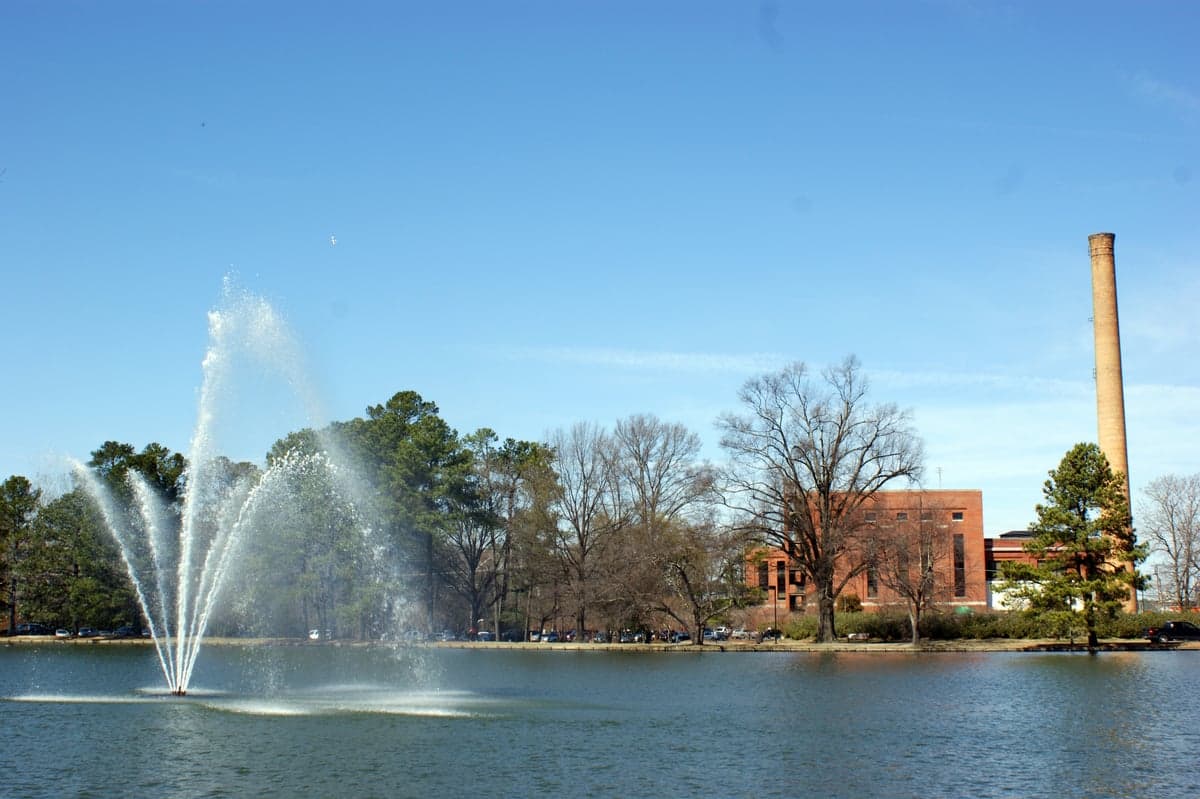
Photo: Wikipedia
Find The Best Places To Live
in Rocky Mount
PRO TIP! You can paste a Zillow or Redfin link to get info on that property.
What It's Like Living in Rocky Mount, NC
Living in Rocky Mount feels a bit like being in on a secret that hasn’t quite made it to the big leagues yet. It’s a city of about 54,000 people straddling the Nash and Edgecombe county line, with a pace that’s slower than the Research Triangle but busier than the deep country. You get a genuine small-city feel—neighbors know each other, Friday night lights are a big deal, and you can still buy a home for a median price of $148,300, which is almost unheard of in much of North Carolina. But it’s also a place wrestling with its post-industrial identity, where the old textile and tobacco mills have closed, and the community is figuring out what comes next.
The Daily Rhythm: What People Actually Do
Most mornings, you’ll see folks grabbing coffee at City Café on Church Street or hitting the Rocky Mount Mills campus for a co-work session. The average commute is just over 21 minutes, so you’re not burning an hour of your day in traffic—that’s a real quality-of-life win. People here tend to work in healthcare (UNC Health Nash and Vidant Health are major employers), education (Nash-Rocky Mount Public Schools), or manufacturing (like the nearby Cummins plant). The median household income sits at $52,927, which is below the national average, but the cost of living index is 68—meaning your dollar goes about a third further than it would in a typical U.S. city. That trade-off is the whole story of Rocky Mount: you earn less, but you keep more of what you earn.
Weekends often revolve around the Rocky Mount Farmers Market (seasonal, on Sunset Avenue) or a trip to the Tar River for kayaking or fishing. The Rocky Mount Event Center downtown hosts everything from youth volleyball tournaments to concerts, and it’s become a real hub. For groceries, you’ve got a mix of Food Lion, Walmart, and a few local markets—nothing fancy, but it works. The median age here is 41.8, so it’s not a college town; it’s a place where people are settled, raising kids, or looking for a quieter chapter.
Sports, Community, and the Friday Night Lights Vibe
If you want to understand Rocky Mount, go to a high school football game. Rocky Mount High School and Northern Nash High School pack bleachers on Friday nights in the fall, and the rivalries are genuine. There’s no major pro team in town, but the Carolina Mudcats (a Milwaukee Brewers Class A affiliate) play just up the road in Zebulon, and many locals make the 30-minute drive. Baseball is still a thing here—little league is big, and the Rocky Mount Sports Complex hosts tournaments that bring in families from across the region. For college sports, it’s mostly NC State or UNC fans, with a sprinkling of ECU loyalists. The sports scene is less about watching pros and more about being part of something local—your neighbor’s kid on the field, the booster club bake sale, that kind of thing.
The community identity is rooted in resilience. Rocky Mount was hit hard by Hurricane Matthew in 2016 and again by Florence in 2018, and the flooding along the Tar River reshaped parts of the city. That shared experience created a “we get through it together” mentality. You’ll hear people talk about the Imperial Centre for the Arts & Sciences as a point of pride—it’s a solid museum and theater housed in a former tobacco warehouse. There’s also the Rocky Mount Fire Department’s annual BBQ fundraiser, which is a genuine community event, not a tourist attraction.
What’s There to Do—and What’s Missing
Honestly, the entertainment scene is limited but improving. The Rocky Mount Mills development has been a game-changer: it’s a revitalized cotton mill campus with a brewery (Koi Pond Brewing Company), a taproom, event spaces, and a riverwalk. On a warm Saturday, you’ll see families with strollers, couples on dates, and groups of friends playing cornhole. The Douglas Block downtown has a few restaurants—Dickey’s Barbeque Pit is a local institution for Eastern NC chopped pork—and Brixx Wood Fired Pizza is a reliable spot. For music, the Rocky Mount Symphony Orchestra performs at the Imperial Centre, and the Downtown Alive! concert series brings free live music in the summer. But if you want a big concert or a nightclub scene, you’re driving 45 minutes to Raleigh or an hour to Greenville.
Outdoorsy types have Battle Park (a 100-acre wooded preserve with trails) and the Tar River Greenway, a paved path that runs along the river. Fishing is popular, and the Lake Wilson area is about 20 minutes away for boating. The weather is classic North Carolina: hot, humid summers (90°F+ with sticky air), mild falls, and winters that are cold enough for a coat but rarely see snow. Spring is gorgeous, but pollen season is brutal.
Pros and Cons of Living Here
- What residents love: The low cost of living is the top reason people stay. A median home value of $148,300 means a family can actually afford a three-bedroom house on a single income. The commute is short, the traffic is negligible, and you get a real sense of community—people wave, neighbors check in, and there’s less of the “keep to yourself” vibe you find in bigger cities. The schools (Nash-Rocky Mount Public Schools) are a mixed bag, but there are solid options like Rocky Mount Academy (private) and Nash Central High School (public, with a strong STEM program).
- What frustrates them: The violent crime rate is 299.4 per 100,000, which is above the national average—it’s concentrated in certain areas, but it’s a real concern for families. The job market is thin; many residents commute to Wilson or Raleigh for better-paying work. Only about 21.5% of adults have a college degree, so if you’re a young professional looking for a vibrant social scene or a tech job, you’ll feel the lack. The downtown revitalization is still a work in progress—there are empty storefronts, and the city has struggled to attract retail beyond the basics. And the summers? They’re long and sticky. Air conditioning is non-negotiable.
Rocky Mount is a good fit if you value affordability, community, and a slower pace over career opportunities and nightlife. It’s a place where you can buy a house, know your neighbors, and watch your kids play sports without feeling like you’re drowning in debt. But it’s also a place that asks you to be patient—with the economy, with the weather, and with the fact that the next big thing is usually a short drive away.

Similar small cities to Rocky Mount
* Values derived from national, state, county, city and local statistics and may differ in a specific area. Last updated: 2026-05-03T20:28:24.000Z
Narrative content on this page is AI-generated and may contain mistakes. Verify any details that matter before acting on them.
ReloMaps may earn a commission from affiliate links at no extra cost to you.

