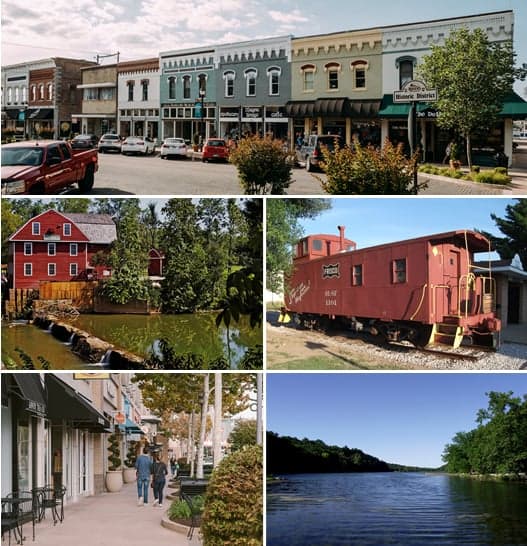
Photo: Wikipedia
Political ClimatePolitical Climate in Rogers, AR
District shown is the primary district for this city’s centroid. Cities may span multiple districts.
Local Political AnalysisPolitical Analysis of Rogers, AR
Rogers, Arkansas, has long been a solidly conservative community, and that hasn't changed much, even as the area has exploded in population. The Cook PVI of R+13 tells you the basics, but the real story is in the culture. This is a place where folks still believe in minding their own business and keeping the government out of your backyard, your wallet, and your family's life. You'll find a deep, ingrained skepticism of any politician who talks about "progress" if it means more rules, more taxes, or telling you how to live. The trajectory here is still firmly right, but there's a quiet worry among long-time residents that the rapid growth from places like Bentonville and Fayetteville could start to dilute that independent spirit if we're not careful.
How it compares
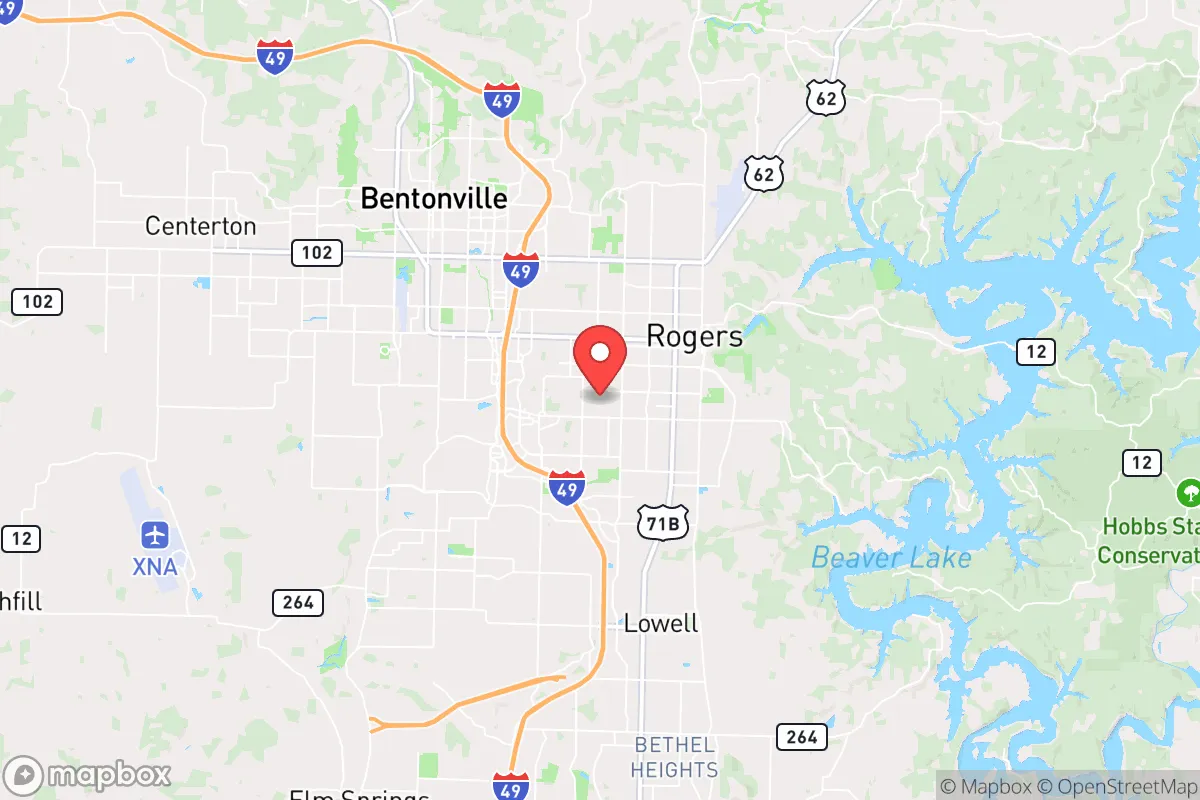
To really get Rogers, you have to look at the whole Northwest Arkansas corridor. Drive ten minutes south to Fayetteville, and you're in a different world—a classic college town with a much more progressive vibe, home to the University of Arkansas. That's where you see the activist energy and the push for things like bike lanes and diversity initiatives that feel like government overreach to a lot of us in Rogers. Head north to Bentonville, and it's a bit more of a mixed bag; the corporate influence from Walmart brings a polished, sometimes more moderate conservatism. But Rogers? It's the heart of the old-school, blue-collar, "leave me alone" conservatism. We don't have the same pressure from the university crowd or the global corporate headquarters. Our politics are more about local control, low taxes, and making sure the government isn't sticking its nose into our schools or our churches. The contrast with Fayetteville is stark, and it's a big reason why people who feel squeezed by progressive policies elsewhere find a home here.
What this means for residents
For someone living in Rogers, the political climate translates directly into daily life. You're not going to see the same kind of aggressive zoning or social engineering experiments you might in a place like Austin or even Fayetteville. The city council and county commission are generally focused on practical stuff: keeping roads paved, making sure the police have what they need, and not overcomplicating things. There's a strong resistance to any hint of a "one-size-fits-all" mandate from the state or federal level. For example, you won't find much support for strict mask mandates or business shutdowns here—the prevailing attitude is that it's your choice, not the government's. The school board elections are where you really see the fight, as parents are fiercely protective of local control over curriculum and what their kids are taught. It's a place where you can still feel like your voice matters on a local level, and where the default answer to "should the government do this?" is usually a firm "no."
That said, the biggest cultural distinction in Rogers is the tension between the old guard and the newcomers. The folks who've been here for decades remember when it was a much smaller, quieter town, and they're wary of the changes that come with being a booming suburb. You see it in the debates over new apartment complexes and the push for more "urban" amenities. The concern is that with more people from blue states moving in, you'll start to see the same kind of government overreach that they claim to have left behind. For now, the conservative, freedom-minded core holds strong, but the long-term outlook depends on whether the new arrivals adopt the local values or try to change them. It's a place worth keeping an eye on, because the fight to keep Rogers from turning into just another progressive suburb is very real, and it's happening right now.

State Political ClimatePolitical Climate in Arkansas
State Political AnalysisPolitical Environment in the State
Arkansas has been a reliably red state for decades, with a strong Republican lean that has only deepened since the early 2000s. The state’s partisan shift is dramatic: in 2000, Democrats still held most statewide offices and the legislature; by 2024, Republicans control every statewide constitutional office, both U.S. Senate seats, all four U.S. House seats, and supermajorities in both chambers of the General Assembly. The 2024 presidential election saw Donald Trump carry Arkansas by roughly 60% to 37%, a margin of about 23 points. This isn’t a purple state trending blue—it’s a deep-red state that has become more conservative as its rural and suburban voters have aligned with the national GOP, while its few urban pockets remain Democratic outliers.
Urban vs. rural divide
The political map of Arkansas is a textbook study in urban-rural polarization. The state’s two major metros—Little Rock (Pulaski County) and Fayetteville-Springdale-Rogers (Washington and Benton counties)—are the only real Democratic strongholds, and even they are not uniformly blue. Pulaski County, home to the capital, voted for Joe Biden in 2020 by about 12 points, but the surrounding suburbs like Maumelle and Bryant lean Republican. The Northwest Arkansas corridor, driven by Walmart’s headquarters in Bentonville and the University of Arkansas in Fayetteville, is more competitive: Washington County went for Trump by only 3 points in 2024, while Benton County gave Trump a 15-point win. Outside these two metros, the state is overwhelmingly red. Counties like Boone (Harrison), Faulkner (Conway), and Craighead (Jonesboro) routinely deliver 70%+ margins for Republicans. The Arkansas Delta, once a Democratic stronghold due to old-school Southern Democrats, has flipped hard—Mississippi County (Blytheville) went from voting for Bill Clinton in 1992 to giving Trump 65% in 2024. The rural-urban split is stark: the more rural and agricultural a county, the more reliably Republican it votes.
Policy environment
Arkansas’s policy environment is among the most conservative in the country, with a strong emphasis on low taxes, limited regulation, and cultural conservatism. The state has a flat income tax rate of 4.4% (down from 7% in 2015), and the legislature has passed multiple tax cuts under Governor Sarah Huckabee Sanders, including a 2023 law that accelerated the reduction to a flat 4.4% and eliminated the state’s grocery tax. Property taxes are low, with a median effective rate of about 0.6%. The state is a right-to-work state with no state-level minimum wage above the federal floor (though voters approved a $15/hour minimum wage in 2024, which the legislature is challenging). Education policy is a flashpoint: in 2023, Governor Sanders signed the LEARNS Act, which created a universal school voucher program, banned “critical race theory” in classrooms, and restricted transgender student participation in sports. Healthcare is mixed—Arkansas expanded Medicaid under the private option, but the state has some of the strictest abortion laws in the nation, with a near-total ban (no exceptions for rape or incest) that took effect after the Dobbs decision. Election laws are restrictive: voter ID is required, early voting is limited to 15 days, and absentee voting requires an excuse. The state has no ballot initiative process for constitutional amendments (only legislative referrals), which limits direct democracy.
Trajectory & freedom
On the freedom front, Arkansas is moving in a decidedly conservative direction, with recent legislation expanding gun rights, parental rights, and religious liberty while restricting medical autonomy and local control. The 2021 “Constitutional Carry” law (Act 777) allows permitless carry of firearms for anyone 21 or older, and the 2023 “Second Amendment Protection Act” prohibits state enforcement of any federal gun laws deemed unconstitutional. Parental rights have been strengthened: the 2023 “Parental Bill of Rights” (Act 372) gives parents the right to review curriculum and opt their children out of any instruction they object to. Medical autonomy has been sharply curtailed: the 2023 abortion ban (Act 180) has no exceptions for rape or incest, and the 2021 “Save Adolescents from Experimentation” (SAFE) Act bans gender-affirming care for minors. Property rights are generally strong, with no state-level rent control and limited eminent domain abuse. Taxation is trending downward, but the state’s sales tax burden (9.3% average combined rate) remains high. The biggest concern for liberty-minded residents is the state’s heavy-handed approach to local control: the legislature has repeatedly preempted local ordinances on everything from plastic bag bans to minimum wage increases to LGBTQ+ nondiscrimination protections. This centralization of power in Little Rock is a double-edged sword—it prevents progressive cities from enacting leftist policies, but it also limits local autonomy.
Civil unrest & political movements
Arkansas has seen relatively little civil unrest compared to larger states, but there have been notable flashpoints. The 2020 Black Lives Matter protests in Little Rock and Fayetteville were largely peaceful, though there were isolated incidents of property damage and arrests. The state’s political activism is dominated by conservative grassroots groups like the Arkansas Family Council (anti-abortion, pro-school choice) and the Arkansas Citizens for Liberty (gun rights, tax cuts). On the left, the Arkansas Democratic Party is weak and fractured, with most energy going to local races in Little Rock and Fayetteville. Immigration politics are muted—Arkansas has a small foreign-born population (about 5%), and there are no sanctuary cities. The state did see a controversy in 2023 when Governor Sanders deployed the Arkansas National Guard to the Texas border as part of Operation Lone Star, a move popular with conservatives. Election integrity has been a hot topic: the 2021 “Election Integrity Act” (Act 249) tightened voter ID requirements and banned ballot drop boxes, but there have been no major fraud scandals. The most visible political movement is the “Parents’ Rights” movement, which has been energized by school board battles over library books and curriculum in districts like Bentonville and Conway. Secession or nullification rhetoric is rare, though some rural county officials have passed symbolic resolutions opposing federal gun control or environmental regulations.
Projection
Over the next 5-10 years, Arkansas is likely to become even more conservative, driven by two trends: continued in-migration of conservative-leaning families from California, Illinois, and other blue states, and the out-migration of younger, more liberal residents to places like Texas and Tennessee. The Northwest Arkansas corridor (Bentonville, Fayetteville, Rogers) is growing fast—Benton County’s population increased by 18% between 2020 and 2024—and these new arrivals tend to be fiscally conservative but socially moderate. This could create a tension between the libertarian-leaning newcomers and the traditional social conservatives who dominate the state legislature. Expect more tax cuts, further expansion of school choice, and continued preemption of local progressive ordinances. The biggest wild card is the state’s reliance on federal funding (about 40% of the state budget comes from Washington), which could become a flashpoint if the federal government shifts left. For a new resident, the bottom line is this: Arkansas is a safe bet for someone seeking a low-tax, culturally conservative environment with strong gun rights and parental control over education. The trade-off is limited urban amenities, a weak economy outside of Northwest Arkansas, and a political climate that can feel insular and resistant to change. If you’re looking for a place where your values are the norm and the government stays out of your business, Arkansas delivers—just don’t expect much diversity of thought or lifestyle.
For a new resident, the practical takeaway is straightforward: Arkansas offers a stable, conservative environment where your rights to keep and bear arms, direct your children’s education, and keep more of your paycheck are protected by law. The state is not a battleground—it’s a red fortress. If you’re moving here, you’ll find a government that largely shares your values, but you should also be prepared for a slower pace of life, limited cultural options, and a political class that sometimes prioritizes ideological purity over practical governance. It’s a good place to raise a family, start a business, or retire in peace, as long as you’re comfortable with the trade-offs.
* Values derived from national, state, county, city and local statistics and may differ in a specific area. Last updated: 2026-04-30T02:20:07.000Z
Narrative content on this page is AI-generated and may contain mistakes. Verify any details that matter before acting on them.
ReloMaps may earn a commission from affiliate links at no extra cost to you.

