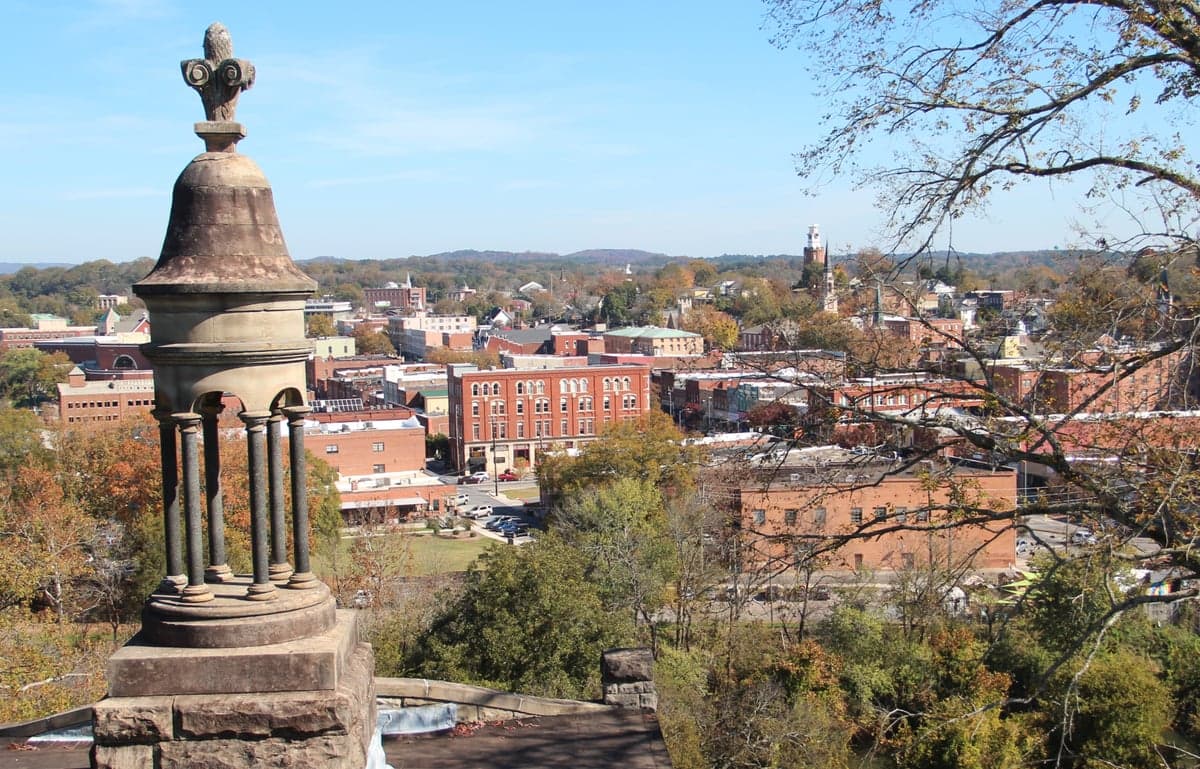
Photo: Wikipedia
Quality of Life in Rome, GA
A high quality of life with strong walkability, manageable living costs, healthy neighborhood signals, and solid amenity access.
What does Quality of Life tell us?
Quality of Life blends cost of living, nearby amenities, socioeconomic signals, and neighborhood character. City-level scores represent the whole municipality; individual neighborhoods can differ.
What does this tell us?
Quality of Life blends cost of living, nearby amenities, socioeconomic signals, and neighborhood character. City-level scores represent the whole municipality; individual neighborhoods can differ.
Cost of Living
19% below national average
The Real Cost of Living in Rome, GA for 2026
| Tier | Individual | Family (4) |
|---|---|---|
| Survival | $16k | $29k |
| Comfortable | $42k | $61k |
| Luxury | $92k+ | $143k+ |
| Elite (Top 5%) | $139k+ | $215k+ |
83%
The Area Signal
A metric tracking the socioeconomic signals of the area.
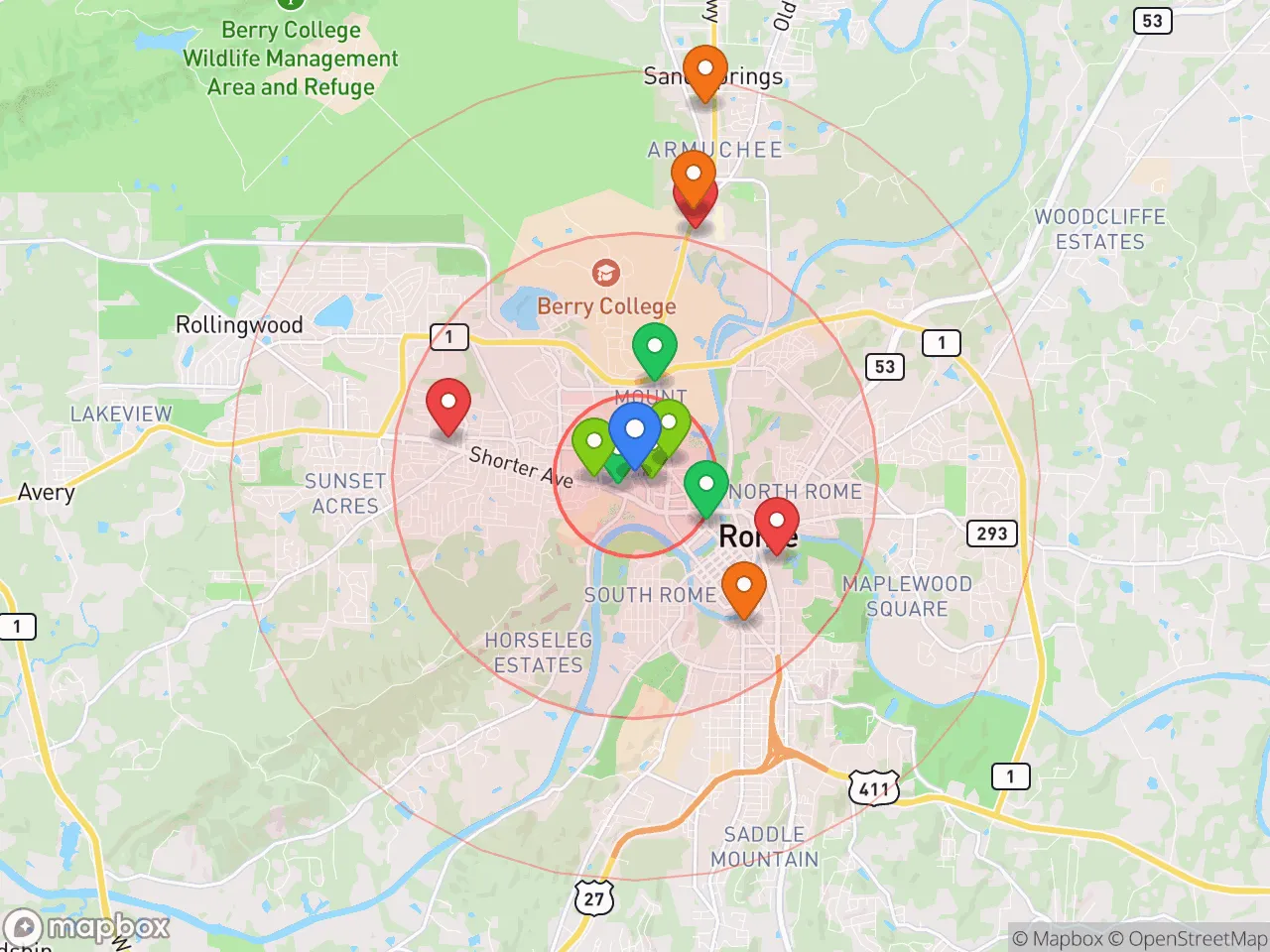
Hobbies
Explore the areaGroceries
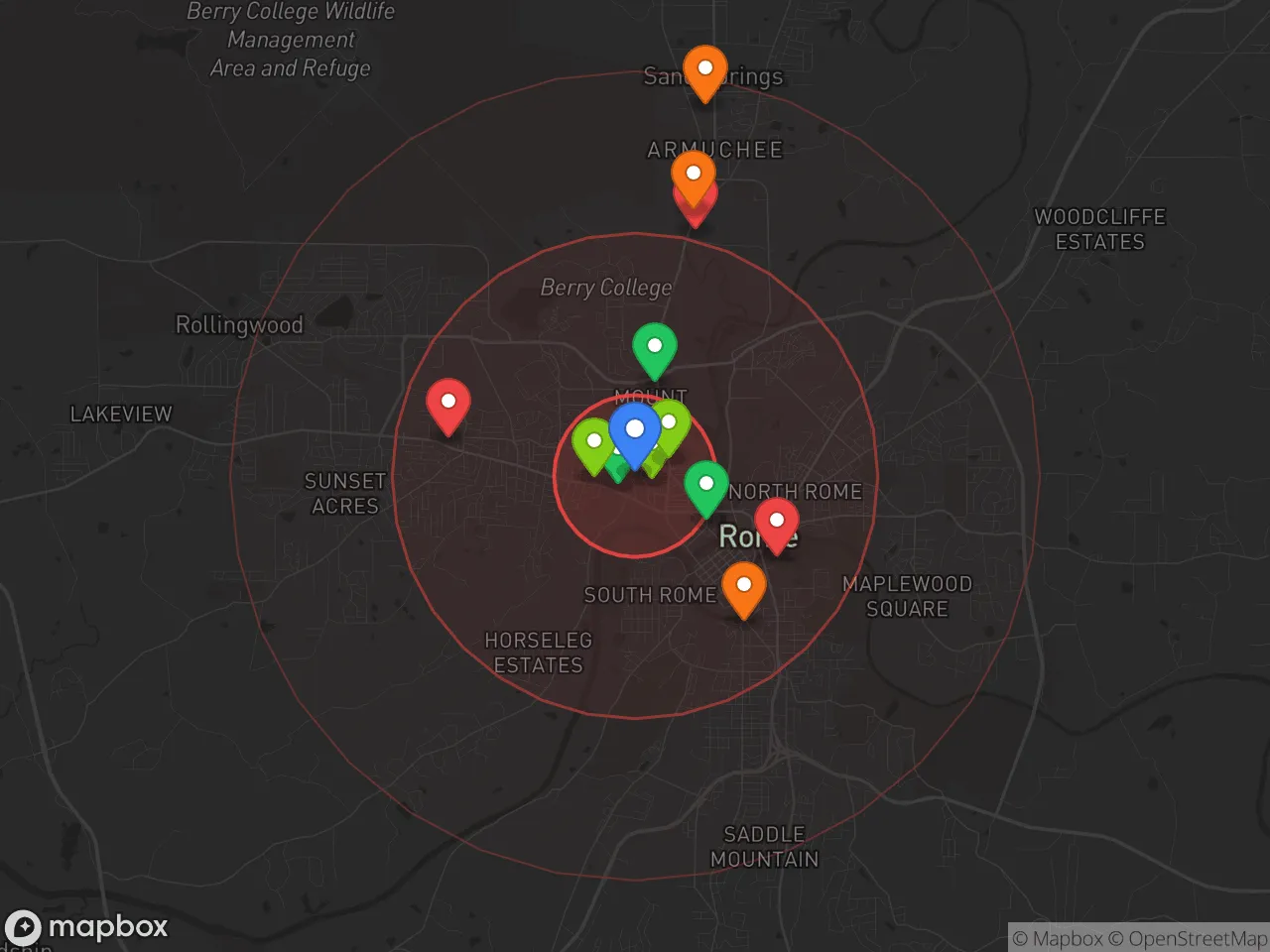
7 within 10 miles
Gas
20 within 10 miles
Hospital
4 within 20 miles
Airport
ATL — Hartsfield–Jackson Atlanta International
Post Office
USPS — Rome, GA
Critical Amenities
Quality-of-Life Analysis
Rome, Georgia, offers a quality of life defined by a cost of living well below the national average, attracting a mix of young professionals, families, and retirees seeking a slower pace without sacrificing urban amenities. With a cost of living index of 81 (where 100 equals the U.S. average), the city provides significant financial breathing room compared to metro Atlanta, yet retains a growing cultural and recreational scene. The population skews toward those who value historic architecture, outdoor access along the Etowah and Oostanaula rivers, and a community-oriented lifestyle that balances small-town charm with a modest but expanding employment base in healthcare, education, and manufacturing.
How housing costs and everyday expenses compare to nearby cities
Rome’s affordability is a primary draw, with the median home value at $214,700—roughly half the median of Atlanta ($425,000) and significantly lower than Chattanooga ($280,000). Median rent sits at $976, making it one of the more budget-friendly rental markets in northwest Georgia. The average commute of 22.5 minutes is notably shorter than the national average of 26 minutes, a practical advantage for workers employed locally at major employers like Floyd Medical Center, Georgia Highlands College, or the sprawling Mohawk Industries headquarters. While grocery and utility costs align closely with state averages, property taxes remain low (Floyd County’s millage rate is about 10.5 mills), further stretching household budgets. For those commuting to Atlanta for work, the 70-mile drive via I-75 can push commute times over an hour, but most residents find local employment sufficient to avoid that trade-off.
What daily life is like for families, professionals, and retirees
Daily life in Rome revolves around a compact downtown core anchored by the historic Broad Street district, which hosts a weekly farmers market, live music at the Forum River Center, and independent restaurants like Harvest Moon Cafe. The city’s school system, Rome City Schools, operates seven elementary schools, two middle schools, and Rome High School, with a graduation rate of 87% (slightly above the state average). For outdoor recreation, the Rome River Walk offers 3.5 miles of paved trails along the confluence of the Etowah and Oostanaula rivers, while the nearby Berry College campus—the world’s largest contiguous college campus at 27,000 acres—provides hiking, biking, and birding opportunities. Healthcare access is robust, with Floyd Medical Center and Atrium Health Floyd serving as regional referral centers. The city lacks a major airport or professional sports venue, but Chattanooga’s airport (45 minutes north) and Atlanta’s Hartsfield-Jackson (90 minutes south) fill those gaps for occasional travel. Cultural amenities include the Rome Symphony Orchestra and the Rome Area History Museum, though nightlife options are limited compared to larger metros.
Rome is best suited for those who prioritize affordability, a manageable pace, and outdoor access over high-energy urban nightlife or elite career opportunities. Families benefit from low housing costs and short commutes, while retirees appreciate the mild climate, walkable downtown, and proximity to medical centers. Professionals in healthcare, education, or manufacturing will find the strongest job markets, though remote workers can leverage the low cost of living to maximize savings. The city’s political leanings are moderately conservative (Floyd County voted +18 R in 2024), which aligns with the region’s cultural values but may feel restrictive for those seeking a more progressive environment. Ultimately, Rome offers a stable, cost-effective foundation for a grounded lifestyle—ideal for anyone willing to trade the buzz of a major city for financial freedom and a strong sense of community.

Crime in Rome, GA
Higher crime rates than 63% of comparable U.S. locations.
Violent CrimeViolent Crime Analysis
Property CrimeProperty Crime Analysis
Crime Analysis
Rome, Georgia, reports a violent crime rate of 562 incidents per 100,000 residents and a property crime rate of 2,322.4 per 100,000, placing it above both state and national averages. These figures indicate that while Rome is not among the most dangerous cities in the Southeast, it presents elevated risks compared to smaller, more rural communities in Floyd County. The city’s proximity to the Atlanta metropolitan area, combined with local prosecutorial policies, contributes to a safety environment that warrants careful consideration for potential residents.
Crime in context
Rome’s violent crime rate is roughly 1.5 times the national average of approximately 380 per 100,000, and its property crime rate exceeds the U.S. median of about 1,950 per 100,000. Compared to Georgia as a whole, where the statewide violent crime rate hovers around 400 per 100,000, Rome’s numbers are notably higher. The city’s location within a larger metro orbit means it experiences spillover crime from regional hubs, a pattern seen in many small cities near major urban centers. Property crimes—particularly theft and burglary—drive the bulk of reported incidents, while aggravated assault accounts for the majority of violent offenses.
What residents experience
Daily life in Rome involves a heightened awareness of property security. Residents commonly report vehicle break-ins and package thefts, especially in neighborhoods near commercial corridors like Turner McCall Boulevard and Broad Street. Violent crime, while less frequent, tends to cluster in specific areas, including parts of the downtown district and lower-income neighborhoods east of the Oostanaula River. Progressive prosecutorial policies in Floyd County, including diversion programs and reduced sentencing for non-violent offenders, have drawn criticism from public safety advocates. Critics argue that such approaches, while intended to reduce incarceration, can lead to repeat offenders cycling back onto the streets, undermining deterrence and victim confidence. This ideological stance in the justice system is a key factor for those evaluating long-term safety trends in the area.
Neighborhood-level variation
Safety in Rome is not uniform. The more affluent, suburban-style neighborhoods west of the city center—such as those near Coosa Country Club and the Mount Berry area—report significantly lower crime rates, often aligning with state averages. In contrast, areas east of the Etowah River and around the Rome-Floyd County Industrial Park see higher concentrations of property and drug-related offenses. Gated communities and newer subdivisions near the Berry College campus tend to have the lowest incident rates, while older rental-heavy districts near downtown face more frequent police calls. Prospective residents are advised to examine block-level crime maps and consult local law enforcement data, as the difference between adjacent streets can be substantial. Overall, Rome offers a mixed safety profile where neighborhood choice and awareness of local justice policies are critical to personal security.
* Values derived from national, state, county, city and local statistics and may differ in a specific area. Last updated: 2026-04-30T01:13:12.000Z
Narrative content on this page is AI-generated and may contain mistakes. Verify any details that matter before acting on them.
ReloMaps may earn a commission from affiliate links at no extra cost to you.

