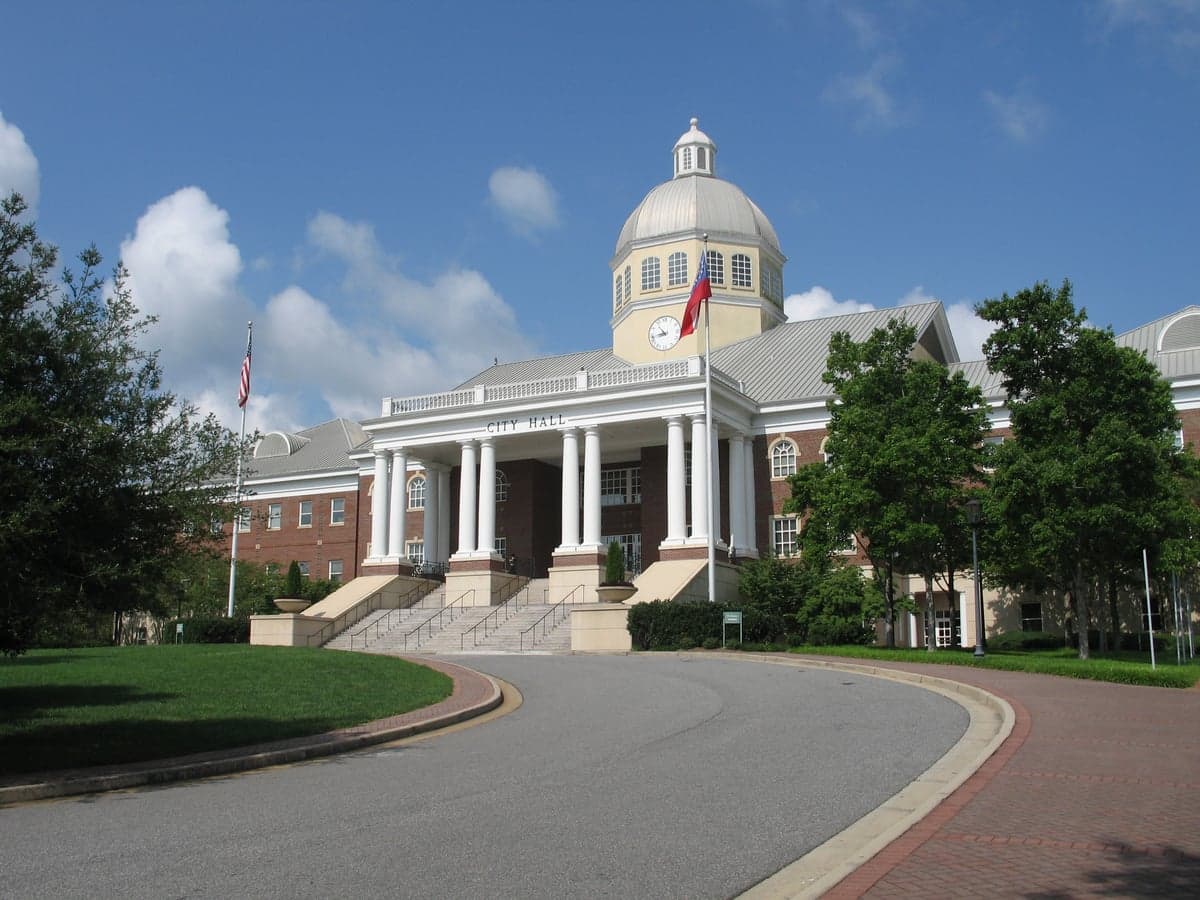
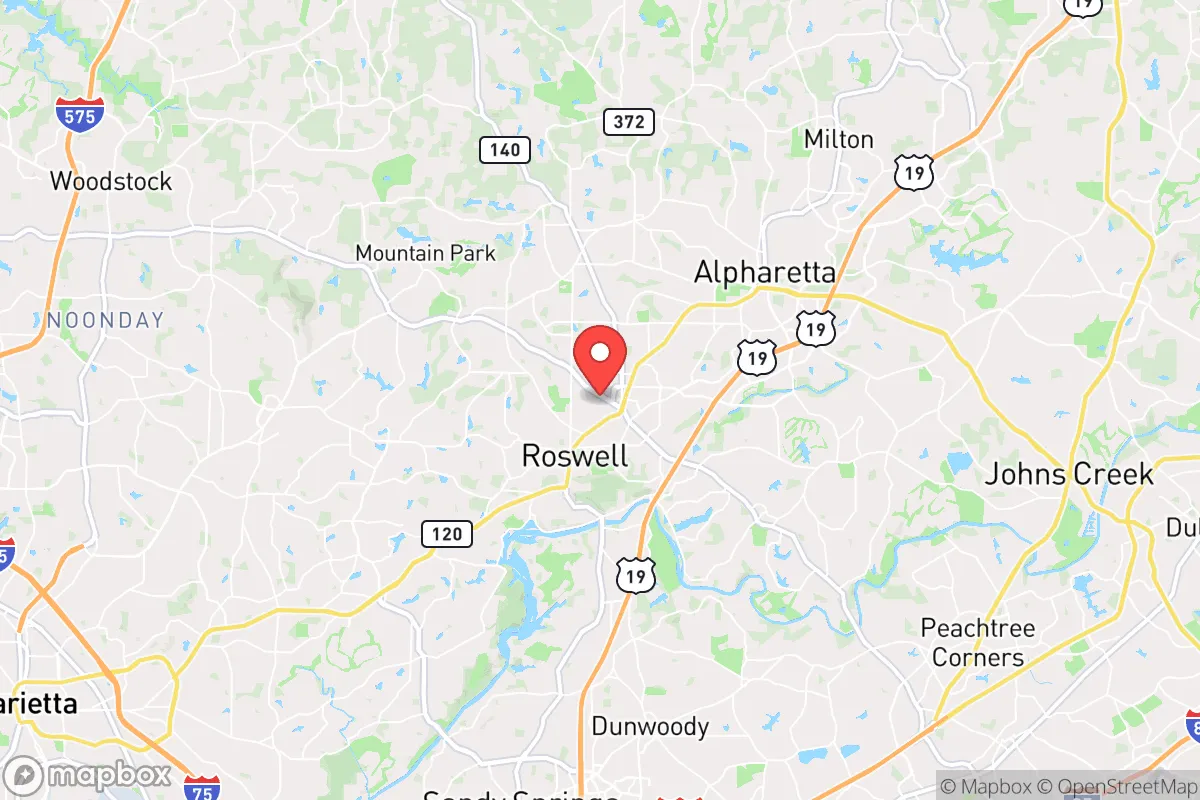
Photo: Wikipedia
Quality of Life in Roswell, GA
A high quality of life with strong walkability, manageable living costs, healthy neighborhood signals, and solid amenity access.
What does Quality of Life tell us?
Quality of Life blends cost of living, nearby amenities, socioeconomic signals, and neighborhood character. City-level scores represent the whole municipality; individual neighborhoods can differ.
What does this tell us?
Quality of Life blends cost of living, nearby amenities, socioeconomic signals, and neighborhood character. City-level scores represent the whole municipality; individual neighborhoods can differ.
Cost of Living
62% above national average
The Real Cost of Living in Roswell, GA for 2026
| Tier | Individual | Family (4) |
|---|---|---|
| Survival | $27k | $51k |
| Comfortable | $101k | $149k |
| Luxury | $225k+ | $348k+ |
| Elite (Top 5%) | $272k+ | $422k+ |
84%
The Area Signal
A metric tracking the socioeconomic signals of the area.
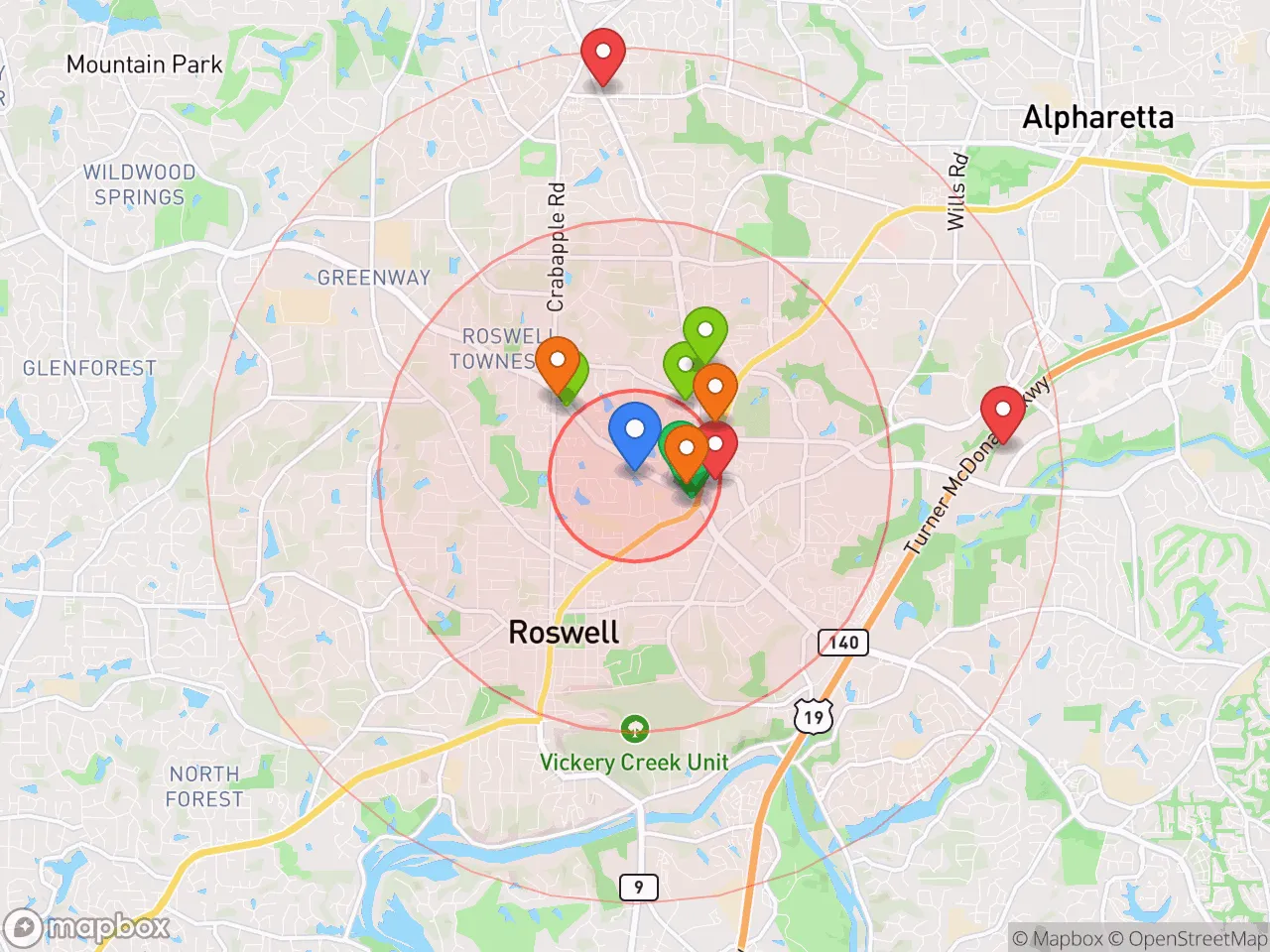
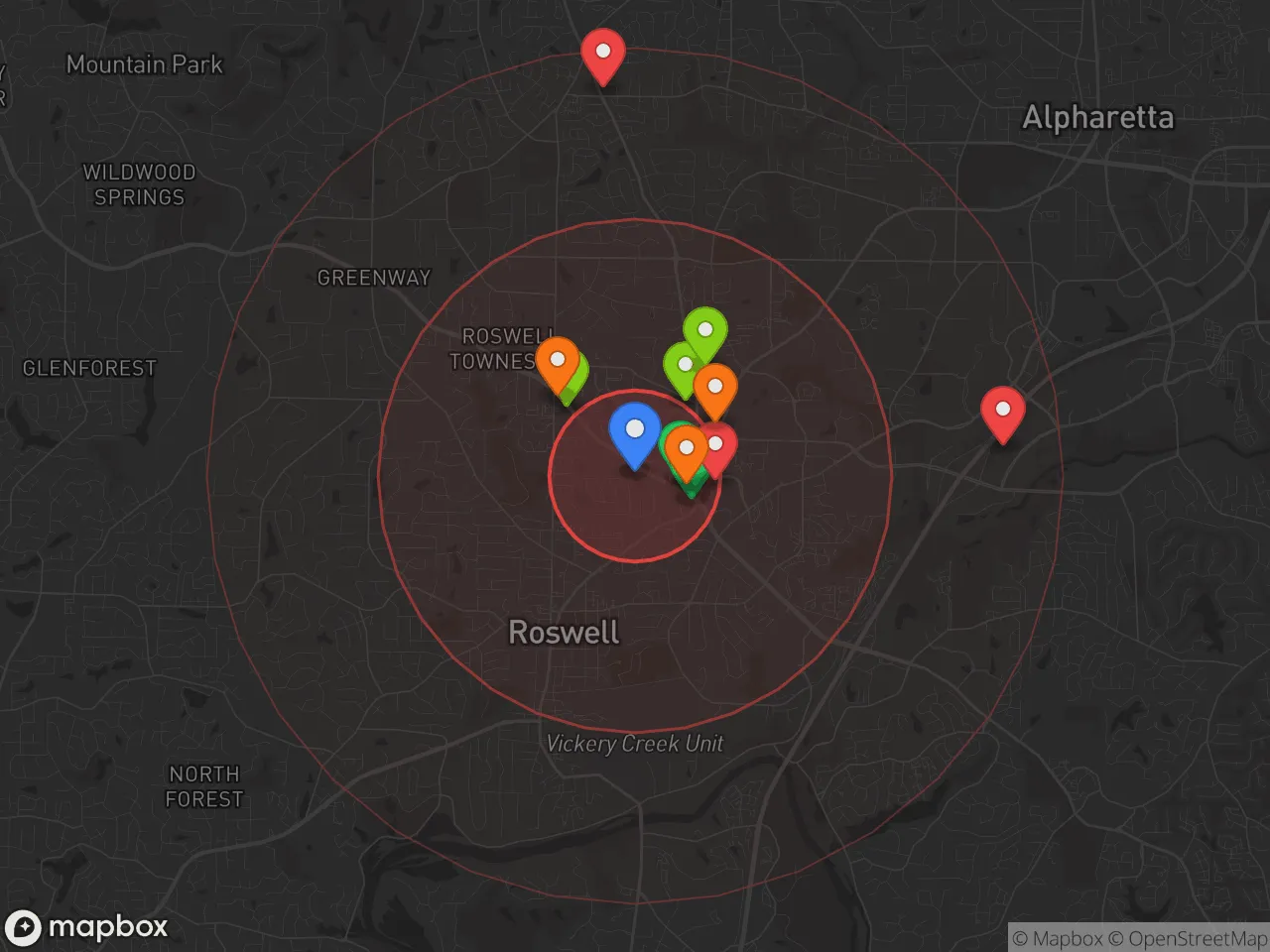
Hobbies
Explore the areaGroceries
8 within 10 miles
Gas
20 within 10 miles
Hospital
20 within 20 miles
Airport
ATL — Hartsfield–Jackson Atlanta International
Post Office
USPS — Roswell, GA
Critical Amenities
Quality-of-Life Analysis
Roswell, Georgia, is an affluent northern Atlanta suburb where the cost of living index sits at 162 (62% above the U.S. average), reflecting a community of established professionals, executives, and families who prioritize top-tier schools and a high-amenity lifestyle. The city attracts a mix of long-time residents and relocating corporate transferees drawn to Fortune 500 employers like UPS, Home Depot, and McKesson in the broader metro area. With a median household income well above the national figure, Roswell’s population skews toward college-educated homeowners who value walkable historic districts and extensive green space.
Cost of living, housing prices, and how Roswell compares to Alpharetta and Sandy Springs
Roswell’s housing market is expensive but slightly more attainable than its immediate neighbors. The median home value of $520,500 is roughly 10% lower than Alpharetta’s median and comparable to Sandy Springs, though Roswell offers larger lot sizes and older, established neighborhoods. Median rent sits at $1,707, which is below the $1,900+ averages in Buckhead and Midtown Atlanta, making Roswell a relative value for renters seeking suburban space. The average commute of 27.4 minutes aligns with metro Atlanta norms, with most residents driving to jobs along the GA-400 corridor or into Perimeter Center. Property taxes in Fulton County are higher than in neighboring Cherokee or Cobb counties, but Roswell’s homestead exemption and lack of a city property tax help offset the burden. For buyers, the trade-off is clear: pay a premium for Roswell’s school system and historic charm, or save 15-20% by moving to Woodstock or Canton farther north.
What daily life is like for families: parks, schools, and local amenities
Daily life in Roswell revolves around its Fulton County School System, which includes nationally ranked Roswell High School and the magnet program at Centennial High School. The city operates over 60 parks, anchored by the 1,200-acre Chattahoochee River National Recreation Area, where residents kayak, hike, and fish year-round. The historic Canton Street district functions as a de facto town square, lined with farm-to-table restaurants, independent boutiques, and a weekly farmers market from April through November. For families, the rhythm includes weekend soccer leagues at East Roswell Park, summer camps at the Chattahoochee Nature Center, and evening concerts at the Roswell Cultural Arts Center. The city’s low violent crime rate (roughly 60% below the national average) and active neighborhood watch programs contribute to a sense of safety that is a primary draw for relocating parents.
Roswell is best suited for professionals and families who can absorb the high cost of living in exchange for exceptional public schools, abundant outdoor recreation, and a walkable historic core. Empty-nesters downsizing from larger homes in Buckhead or Dunwoody also find the city appealing, as do remote workers who value the short commute to Hartsfield-Jackson Atlanta International Airport (about 45 minutes) for travel. Those on tighter budgets or seeking a more urban, nightlife-driven environment will likely prefer Midtown Atlanta or Decatur. For the target demographic—upper-middle-class households prioritizing education, nature, and community—Roswell delivers a quality of life that justifies its premium price tag.

Crime in Roswell, GA
Lower crime rates than 81% of comparable U.S. locations.
Violent CrimeViolent Crime Analysis
Property CrimeProperty Crime Analysis
Crime Analysis
Roswell, Georgia, reports a violent crime rate of 109.6 incidents per 100,000 residents, a figure that sits well below both the national average and the Georgia state average. However, the city’s property crime rate of 1,189.7 per 100,000 is notably elevated, reflecting a pattern common in affluent suburbs near major metropolitan hubs like Atlanta. While overall violent crime is low, the property crime numbers and the broader context of the metro area’s justice system warrant careful consideration for potential residents.
Crime in context
Roswell’s violent crime rate is roughly 70% lower than the national average, making it one of the safer large suburbs in the Atlanta region for personal safety. By contrast, its property crime rate is approximately 20% higher than the national average, driven largely by thefts from vehicles, package thefts, and residential burglaries. When compared to the state of Georgia, which has a violent crime rate near 380 per 100,000 and a property crime rate around 2,200 per 100,000, Roswell performs significantly better on both fronts. However, these statistics do not exist in a vacuum. As part of the broader Atlanta metropolitan area, Roswell is subject to the policies of Fulton County’s justice system. The county has seen a trend toward progressive prosecution and judicial leniency, with district attorneys and judges prioritizing diversion programs and reduced sentencing for property and drug offenses. While intended to reduce incarceration, these policies can result in repeat offenders cycling back into suburban communities like Roswell, undermining the low violent crime numbers and contributing to persistent property crime issues.
What residents experience
For daily life, the most tangible crime concern in Roswell is property-related. Residents frequently report incidents of car break-ins, mail theft, and porch piracy, particularly in neighborhoods near major corridors like Holcomb Bridge Road and Highway 9. Violent crime is rare and typically confined to isolated domestic incidents or disputes, not random street violence. The Roswell Police Department maintains a proactive community policing model, with a dedicated crime prevention unit and a robust neighborhood watch network. However, the effectiveness of local enforcement is partially blunted by the broader judicial environment. When property criminals are arrested, they often face minimal consequences in Fulton County courts, with many released on low or no bond and given plea deals that avoid jail time. This creates a perception among long-term residents that the justice system prioritizes offender rehabilitation over public safety, leading to frustration and a sense that property crime is under-policed in practice.
Neighborhood-level variation is significant. Areas east of GA-400, such as the historic district and gated communities near the Chattahoochee River, experience virtually no violent crime and lower property crime due to private security and higher home values. Conversely, apartment complexes and neighborhoods west of GA-400, particularly around Mansell Road and Old Alabama Road, see higher rates of vehicle theft and burglary. Prospective residents should research specific zip codes—30075 and 30076 generally report lower crime than 30009—and consider that even in low-crime pockets, the metro area’s progressive justice policies mean that property crime risks are unlikely to decline in the near term.
* Values derived from national, state, county, city and local statistics and may differ in a specific area. Last updated: 2026-04-23T05:11:54.000Z
Narrative content on this page is AI-generated and may contain mistakes. Verify any details that matter before acting on them.
ReloMaps may earn a commission from affiliate links at no extra cost to you.

