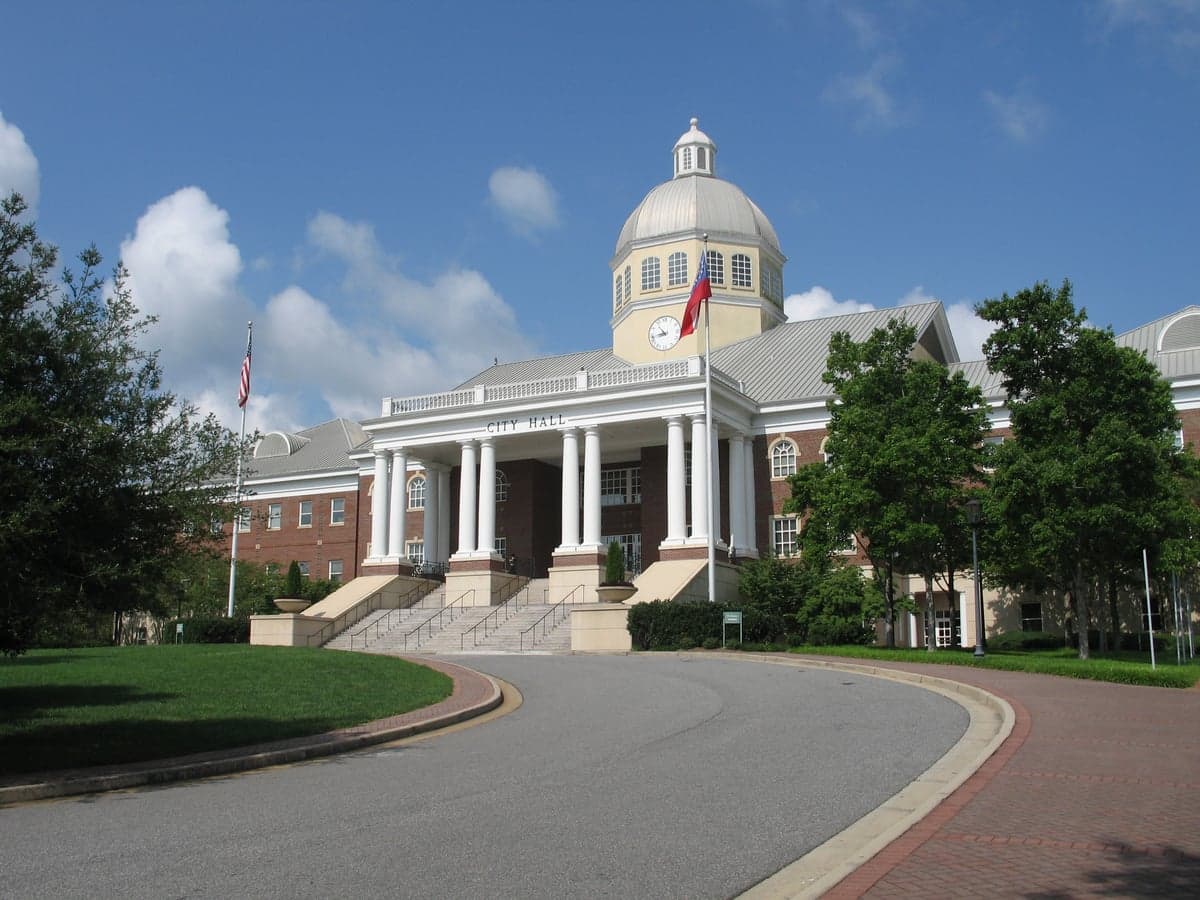
Photo: Wikipedia
Political ClimatePolitical Climate in Roswell, GA
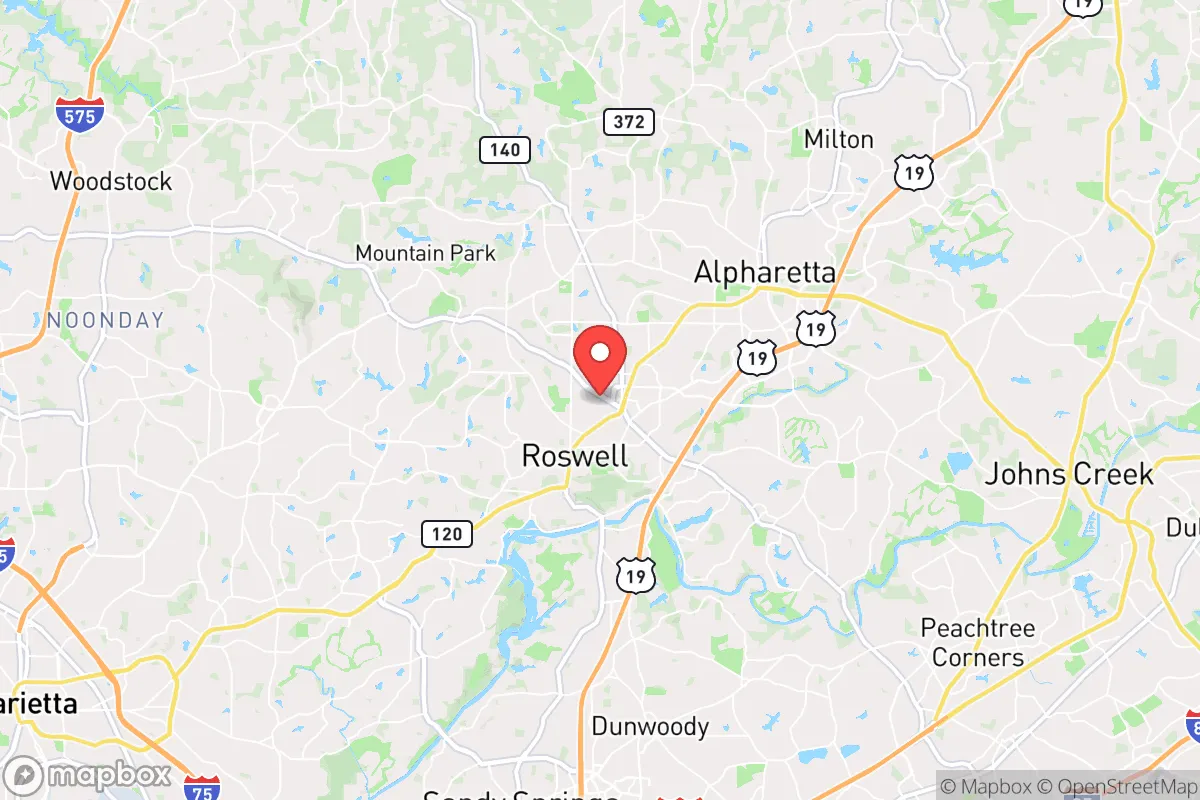
District shown is the primary district for this city’s centroid. Cities may span multiple districts.
Local Political AnalysisPolitical Analysis of Roswell, GA
Roswell, Georgia, has long been a solidly conservative community, and the numbers back that up with a Cook PVI of R+11. But if you’ve lived here as long as I have, you’ve watched the political ground shift under your feet. The old guard of fiscal responsibility and limited government is still here, but there’s a growing progressive push, especially from newer transplants fleeing Atlanta’s chaos. The trajectory isn’t a hard left turn—not yet—but it’s a slow drift that has folks like me watching the city council meetings a little closer every year.
How it compares
Drive ten minutes south into Sandy Springs or Dunwoody, and you’ll feel the difference immediately—those areas are trending bluer, with more density and a younger, more transient population. Head north to Alpharetta or Milton, and you’re back in familiar territory: strong Republican strongholds where property rights and low taxes are still sacred. Roswell sits right in the middle, but it’s the swing county seat of Fulton, which means we get dragged into county-level policies that feel like they were written for downtown Atlanta. Compare us to Cobb County’s conservative suburbs like Marietta or East Cobb, and Roswell looks like a moderate compromise—but that’s exactly the problem. When you start compromising on core principles like school choice, zoning freedom, and Second Amendment protections, you end up with a city that talks conservative but votes like a purple district.
What this means for residents
For the average Roswell family, the political climate means you can’t take your freedoms for granted anymore. The city council has flirted with overlay districts that micromanage what you can build on your own property, and there’s been chatter about “equity” initiatives in the school system that sound a lot like government overreach dressed up in nice language. Property taxes have crept up as the county pushes for more public spending, and you’ll see more “slow down” traffic calming measures that feel less about safety and more about control. The good news? The conservative base here is organized and vocal. We’ve beaten back a few attempts at rent control and density mandates, and the local GOP precincts are some of the most active in the state. But if you’re moving here expecting a free-market haven where the government stays out of your backyard, you’ll need to stay engaged—because the progressive wave is lapping at our doorsteps, and it’s not going away.
Culturally, Roswell still holds onto its Southern conservative roots—you’ll see more American flags than pride flags on Canton Street, and the churches are full on Sunday. But there’s a growing tension between the old-timers who remember when this was a small mill town and the newcomers who want to turn it into a mini-Brookhaven. The biggest policy distinction is our strong police presence and relatively low crime compared to the rest of Fulton County, which is a direct result of a city government that still prioritizes public safety over social experiments. Long-term, I’d say Roswell will stay red-leaning, but it’ll take constant vigilance to keep it from sliding into the kind of overregulated, high-tax suburb that Atlanta’s sprawl has already swallowed. If you value your personal freedoms and want a place where your vote actually means something, Roswell is still worth a look—just keep your eyes open and your voter registration current.

State Political ClimatePolitical Climate in Georgia
State Political AnalysisPolitical Environment in the State
Georgia has shifted from a reliably Republican stronghold to a true battleground state over the past two decades, with the 2020 presidential election marking a historic flip to Joe Biden by just under 12,000 votes. The state’s political landscape is now defined by a rapidly growing, diversifying Atlanta metro area pulling left, while the rest of the state—particularly the rural south and northern exurbs—holds firm as deeply conservative. For a conservative considering relocation, Georgia still offers a low-tax, business-friendly environment and a strong gun rights culture, but the trajectory is unmistakably toward a more competitive, and in some ways more progressive, state government.
Urban vs. rural divide
The political map of Georgia is a tale of two Georgias. The Atlanta metro—including Fulton, DeKalb, Cobb, and Gwinnett counties—now drives Democratic victories statewide. Fulton County alone gave Biden over 400,000 votes in 2020, more than the entire vote total of many rural counties combined. Meanwhile, the rural “Black Belt” counties in southwest Georgia, like Dougherty and Randolph, are reliably Democratic but shrinking in population. The real conservative strongholds are the northern exurbs and the rest of the state: Cherokee, Forsyth, and Hall counties routinely deliver 70-80% Republican margins. Cities like Macon and Augusta are purple-leaning, while Savannah and Athens are increasingly progressive. The key battlegrounds are the fast-growing suburbs of Gwinnett, Cobb, and Henry counties, which have flipped from red to blue over the past decade due to an influx of diverse, college-educated professionals.
Policy environment
Georgia’s state-level policy remains broadly conservative, but with notable exceptions. The state has a flat income tax rate of 5.49%, with a scheduled reduction to 4.99% by 2029. There is no state inheritance tax, and property taxes are relatively low, though local rates vary. Georgia is a “shall issue” state for concealed carry and passed permitless carry in 2022, allowing law-abiding citizens to carry a handgun without a license. Education policy includes a robust school choice program—the Georgia Promise Scholarship Act—which provides $6,500 per student for private school or homeschooling expenses. However, the state has also expanded Medicaid under the Affordable Care Act, a move many conservatives opposed, and has not passed a heartbeat bill, leaving abortion legal up to 22 weeks. Election laws were tightened in 2021 with SB 202, which added voter ID requirements for absentee ballots and limited drop boxes, but critics argue it didn’t go far enough to secure elections. Governor Brian Kemp has been a reliable conservative on most issues, but the legislature has occasionally bucked him on spending and education.
Trajectory & freedom
Georgia is becoming less free in some areas while holding the line in others. The 2022 permitless carry law was a major win for gun rights, but the state has also seen a rise in local government overreach. Atlanta and several metro counties have imposed mask mandates, vaccine requirements for city employees, and other public health measures that conservatives view as infringements on personal liberty. On parental rights, Georgia passed a law in 2022 requiring schools to notify parents of any changes to a student’s health or well-being, including gender identity, which has been a flashpoint. However, the state has not passed a full “Don’t Say Gay” law or a ban on gender-affirming care for minors, leaving that fight to local school boards. Property rights are generally strong, with no statewide rent control and limited zoning restrictions outside of Atlanta. The biggest concern for conservatives is the trend toward Atlanta-centric policy, where the state’s largest city increasingly dictates the political conversation, even as rural areas push back.
Civil unrest & political movements
Georgia has seen its share of political turbulence. The 2020 election aftermath included massive protests in Atlanta over police brutality and racial justice, with some turning violent. The “Stop the Steal” movement was particularly active in Georgia, with Raffensperger’s phone call with Trump becoming a national story. More recently, the state has been a battleground over election integrity, with the 2021 voting law sparking boycotts from Major League Baseball and other corporations. Immigration politics are less heated than in border states, but the “sanctuary city” debate has flared in Atlanta, where the city council has resisted cooperating with ICE. There is no serious secessionist or nullification movement in Georgia, but the state’s Republican base is increasingly vocal about federal overreach, particularly on environmental regulations and gun control. A new resident would notice the strong presence of both conservative and progressive activist groups, especially on college campuses in Athens and Atlanta.
Projection
Over the next 5-10 years, Georgia will likely continue its slow drift toward purple, driven by in-migration from blue states and the growth of the Atlanta metro. The state’s population is projected to grow by another 1.5 million by 2030, with most of that growth in the metro area. This will make statewide elections increasingly competitive, with Republicans needing to hold the line in the exurbs while losing ground in the suburbs. The state legislature will likely remain Republican-controlled through redistricting, but the governor’s mansion and Senate seats will be toss-ups. For a conservative moving in now, expect to see more progressive policies in Atlanta and its immediate suburbs, but the rest of the state will remain reliably red. The biggest wildcard is whether the state can maintain its business-friendly reputation while navigating cultural battles over education, healthcare, and voting rights.
For a new resident, the bottom line is this: Georgia offers a low-tax, gun-friendly environment with strong property rights and a growing economy, but the political winds are shifting. If you’re moving to a rural or exurban county like Forsyth, Cherokee, or Hall, you’ll find a deeply conservative community that aligns with your values. If you’re moving to Gwinnett, Cobb, or Henry, expect a more diverse and politically mixed environment. The state is not Texas or Florida in terms of conservative dominance, but it’s also not California or New York. Georgia is a place where your vote matters, and where the outcome of the next few elections will determine whether it stays on a conservative path or continues its leftward drift.
* Values derived from national, state, county, city and local statistics and may differ in a specific area. Last updated: 2026-04-23T05:11:54.000Z
Narrative content on this page is AI-generated and may contain mistakes. Verify any details that matter before acting on them.
ReloMaps may earn a commission from affiliate links at no extra cost to you.

