Photo: Wikipedia
Demographics of Round Rock, TX
Affluence Level in Round Rock, TX
An upper-middle-class area. Household wealth, education levels, and homeownership run ahead of national benchmarks.
People of Round Rock, TX
Round Rock, Texas, is a fast-growing city of 124,288 residents that blends a historic Anglo-Texan foundation with a substantial and growing Hispanic population, a notable Black community, and a significant Indian-subcontinent professional class. The city’s identity is shaped by its role as a major employment hub anchored by Dell Technologies, producing a population that is 43.6% college-educated, politically moderate to conservative, and family-oriented. Distinct neighborhoods reflect distinct settlement waves, from the original downtown core to newer master-planned communities that attract tech workers and immigrants alike.
How the city was settled and grew
Round Rock’s population history begins with its founding in the 1850s as a farming and railroad town along the International-Great Northern Railroad. The original settlers were primarily Anglo-American families from the U.S. South, drawn by cheap land grants and the promise of cotton and cattle. The historic Downtown Round Rock district, centered around Main Street and the Chisholm Trail, was the heart of this early community, with German and Czech immigrants also arriving in smaller numbers to work as merchants and craftsmen. By 1900, the population remained small—under 1,000—and overwhelmingly white, with a tiny Black community concentrated near the railroad tracks in what is now the Old Settlers neighborhood east of I-35. The city remained a rural crossroads until the mid-20th century, with no major industrial draw beyond local agriculture and a cement plant.
Modern era (post-1965)
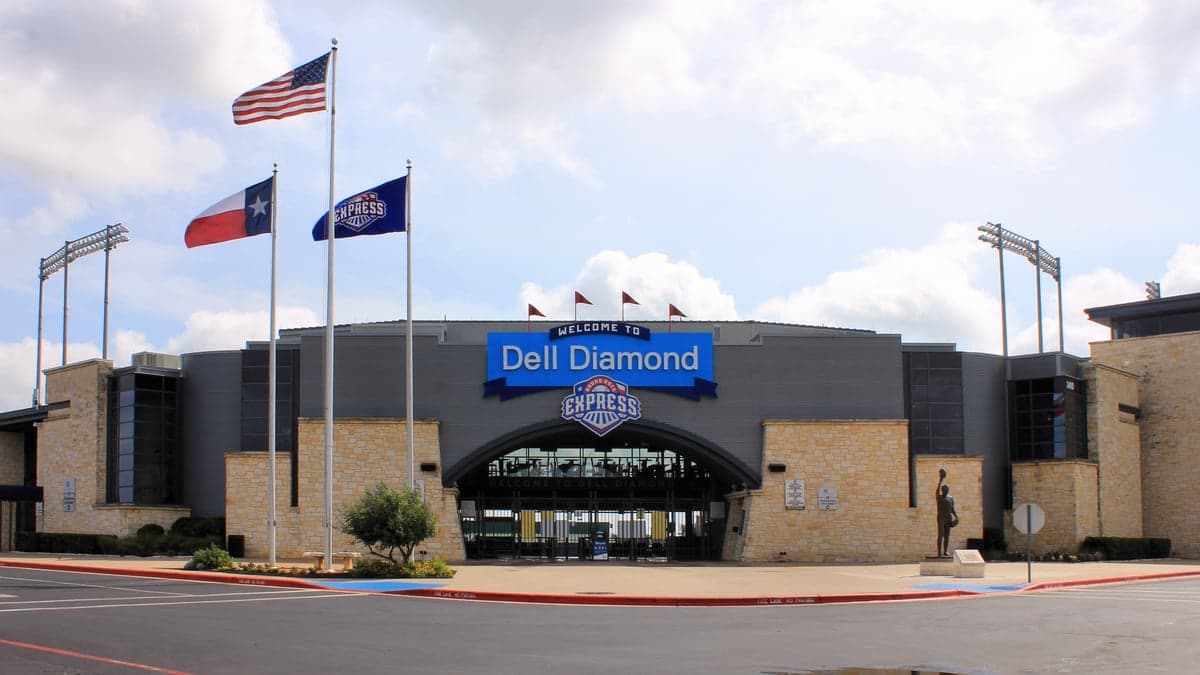
The modern transformation of Round Rock began in the 1960s and accelerated after the 1965 Hart-Cellar Act, which opened immigration from Asia and Latin America. The biggest catalyst was Dell Technologies’ founding in 1984 and its decision to build its headquarters in Round Rock in the 1990s. This triggered a massive domestic in-migration of white-collar workers from across the U.S., as well as a wave of Indian-subcontinent professionals recruited for tech and engineering roles. Today, Indian residents make up 4.8% of the population—a share that is heavily concentrated in newer subdivisions like Teravista and Forest Creek, where many Dell and semiconductor employees settled. Meanwhile, Hispanic growth accelerated from the 1980s onward, driven by construction, service, and retail jobs tied to the city’s expansion. The Chisholm Valley neighborhood and areas south of U.S. 79 became hubs for Hispanic families, many of whom are Mexican-American or first-generation immigrants. The Black population, now 10.9%, grew more slowly, with many families moving from Austin and Houston for affordable housing and good schools, clustering in the Hesters Crossing corridor and parts of eastern Round Rock. East/Southeast Asian communities (2.4%)—primarily Vietnamese and Chinese—are smaller but visible in the La Frontera area, often drawn by tech-adjacent jobs and the city’s strong school system.
The future
Round Rock’s population is heading toward greater diversity, but not toward homogenization. The white share (47.8%) is declining slowly as Hispanic and Indian populations grow faster through both immigration and higher birth rates. The city is not tribalizing into rigid enclaves—most neighborhoods are mixed—but distinct concentrations persist: Indian families cluster in newer, higher-priced subdivisions; Hispanic families are more dispersed but have a strong presence in older, more affordable areas; Black families are spread across the city but remain underrepresented in the most expensive master-planned communities. The foreign-born share (7.8%) is lower than in Austin (about 16%), suggesting Round Rock is more a destination for second-generation and domestic migrants than for direct immigrants. Over the next 10–20 years, expect the Hispanic share to approach 35–40% and the Indian share to rise toward 7–8%, while the white share falls below 45%. The city will likely remain politically center-right, as its growth is driven by homeowners, families, and professionals who prioritize schools and low crime over urban amenities.
For someone moving to Round Rock now, the city offers a stable, family-oriented environment where tech-driven growth is reshaping the population but not erasing its conservative, suburban character. New arrivals will find a place where neighborhoods are defined more by housing price points and school zones than by ethnic boundaries, and where the dominant culture is one of work, church, and youth sports—with a growing Indian and Hispanic influence that is gradually diversifying the city’s restaurants, festivals, and civic life.

* Values derived from national, state, county, city and local statistics and may differ in a specific area. Last updated: 2026-04-19T07:25:10.000Z
Narrative content on this page is AI-generated and may contain mistakes. Verify any details that matter before acting on them.
ReloMaps may earn a commission from affiliate links at no extra cost to you.

