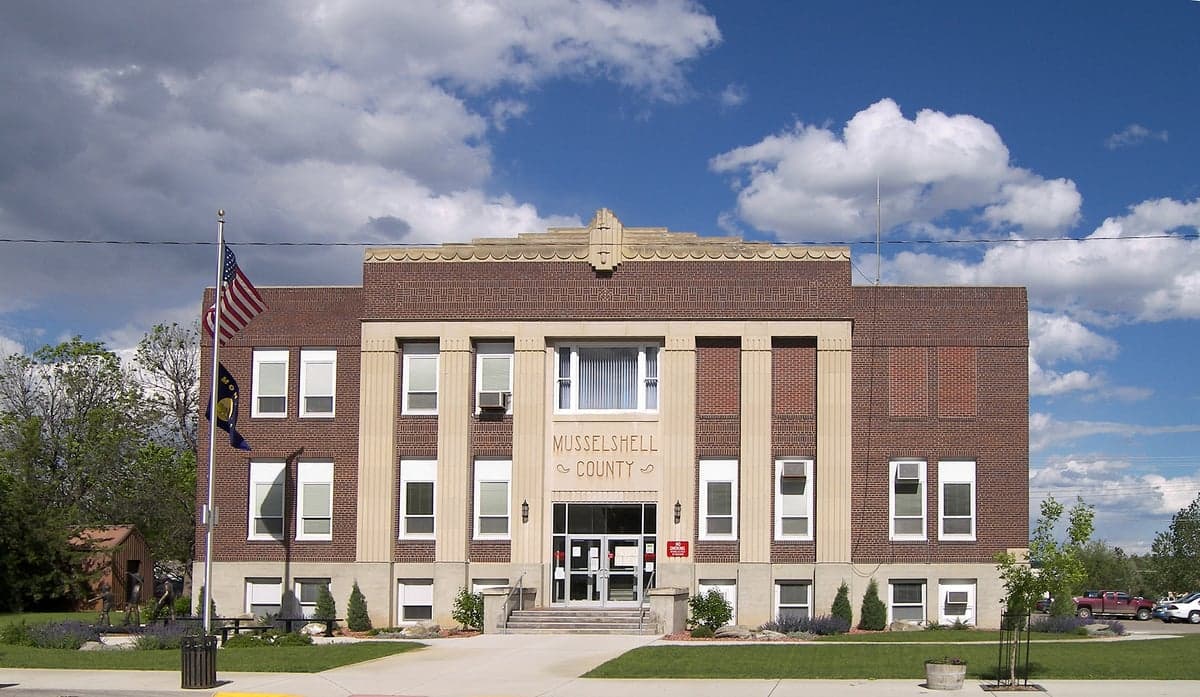
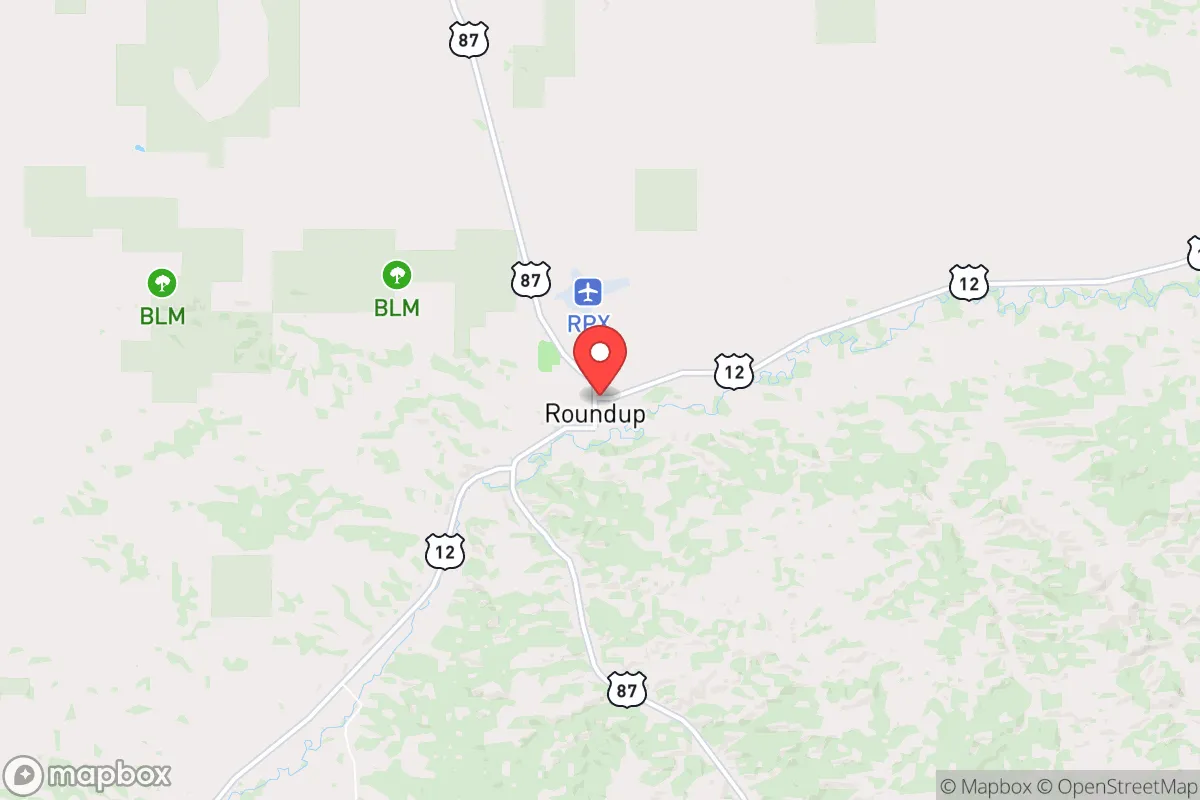
Photo: Wikipedia
Demographics of Roundup, MT
Affluence Level in Roundup, MT
A middle-class area roughly in line with national averages across income, home values, education, and employment.
People of Roundup, MT
The people of Roundup, Montana, today number roughly 1,964, forming a tight-knit, predominantly white community with a distinctively rural, working-class character. The city’s population is 88.0% white, with a Hispanic share of 6.3% and a foreign-born population of just 2.4%, reflecting limited recent immigration. With only 13.4% holding a college degree, Roundup’s identity is rooted in blue-collar industries like coal mining, agriculture, and railroad work, and its residents are known for a self-reliant, conservative ethos that prizes local independence over outside influence.
How the city was settled and grew
Roundup’s human history begins with the arrival of the Milwaukee Road railroad in the early 1900s, which transformed a sparse ranching outpost into a coal-mining boomtown. The first major wave of settlers were Northern European immigrants—primarily Germans, Scandinavians, and Irish—drawn by jobs in the coal mines that fueled the railroad. These early families built the Original Townsite neighborhood, a grid of modest homes near the rail depot that still forms the historic core. A second wave of homesteaders, many of them second-generation farmers from the Midwest, arrived during the 1910s and 1920s, settling the South Side district along the Musselshell River, where they established small farms and ranches. By the 1930s, the population had stabilized around 1,500, with the North Hill area developing as a working-class enclave for miners and railroad laborers. The city’s growth plateaued after World War II, as coal mining declined and younger residents began leaving for larger Montana cities like Billings.
Modern era (post-1965)
Since the 1965 Hart-Cellar Act, Roundup has seen virtually no international immigration. The foreign-born share remains at 2.4%, and the city’s racial composition has stayed overwhelmingly white, with no recorded Black, East/Southeast Asian, or Indian subcontinent populations. The modest Hispanic population of 6.3% is largely composed of families who arrived from the Southwest during the 1980s and 1990s to work in agriculture and the remaining coal operations; they are concentrated in the West End neighborhood, near the grain elevators and feedlots. Domestic in-migration has been minimal, mostly retirees and remote workers from Billings seeking lower housing costs, settling in the newer East Ridge subdivision built in the 2000s. The city has not suburbanized in the conventional sense—there are no sprawling subdivisions or commuter corridors—but the River Bend area along the Musselshell has seen a small influx of out-of-state buyers purchasing recreational properties, a trend that has slightly raised home prices but not altered the demographic balance.
The future
Roundup’s population is aging and slowly declining, with the median age rising above 45 as younger adults leave for college and jobs in Billings (80 miles east). The city is not tribalizing into distinct ethnic enclaves; rather, it is homogenizing further, as the small Hispanic community is assimilating into the broader white population through intermarriage and generational shifts. The foreign-born share is likely to remain below 3% for the foreseeable future, as there are no major employers or refugee resettlement programs to attract newcomers. The next 10–20 years will likely see continued population contraction, with the city becoming older, whiter, and more dependent on retirees and a shrinking agricultural workforce. The Original Townsite and South Side neighborhoods are already seeing vacant homes, while East Ridge may absorb any new arrivals, but growth will be measured in dozens, not hundreds.
For someone moving in now, Roundup offers a stable, culturally homogeneous environment where community ties are strong but economic opportunity is limited. The city is becoming a quieter, more insular place—ideal for those seeking low-cost, low-crime rural living, but unlikely to offer the diversity or dynamism of a growing Montana town like Bozeman or Missoula. New residents should expect a population that values continuity over change, and a social fabric that remains largely unchanged from its 20th-century roots.

* Values derived from national, state, county, city and local statistics and may differ in a specific area. Last updated: 2026-04-29T19:20:44.000Z
Narrative content on this page is AI-generated and may contain mistakes. Verify any details that matter before acting on them.
ReloMaps may earn a commission from affiliate links at no extra cost to you.

