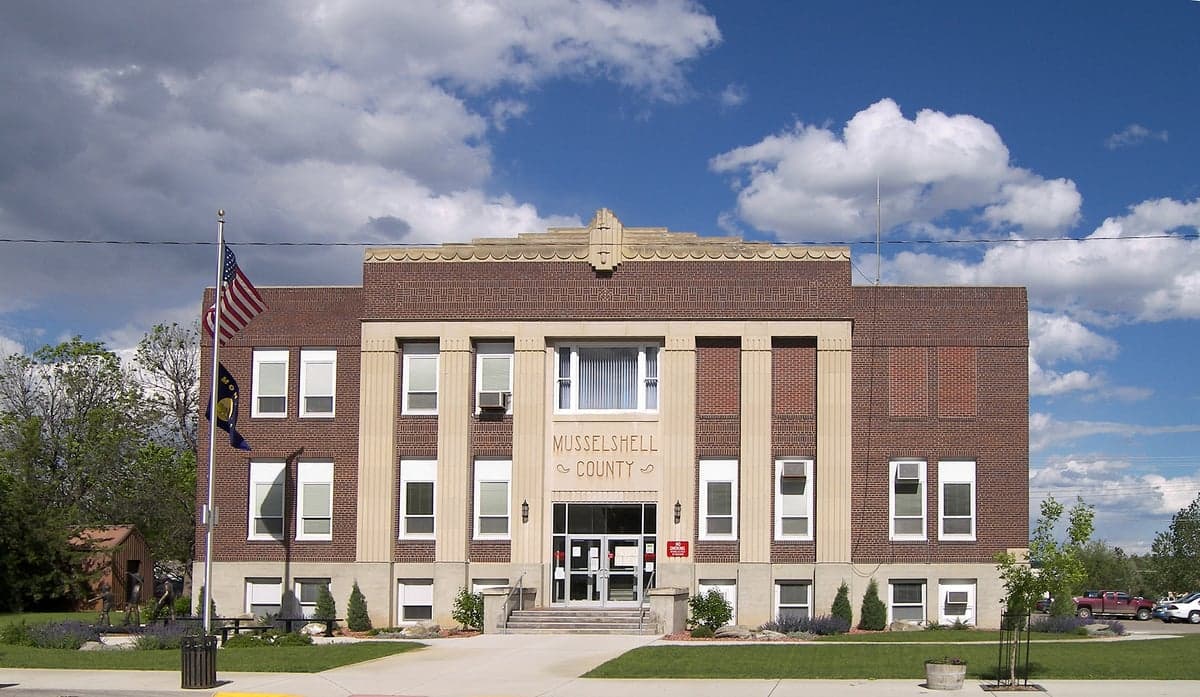
Photo: Wikipedia
Strategic Assessment of Roundup, MT
Strong survivability profile. Good buffer from population centers, with manageable environmental and tactical risks.
What does the Strategic Assessment tell us?
Our Strategic Assessment grades tactical survivability of an area. Major population centers, military targets, fallout zones, natural disasters, and border exposure all drive risk — lower exposure means a more defensible position in a crisis.
This is heavily inspired by Joel Skousen's Strategic Relocation book. Highly recommended you checkout the book ($)What does this tell us?
Our Strategic Assessment grades tactical survivability of an area. Major population centers, military targets, fallout zones, natural disasters, and border exposure all drive risk — lower exposure means a more defensible position in a crisis.
This is heavily inspired by Joel Skousen's Strategic Relocation book. Highly recommended you checkout the book ($)Strategic Pillars

Key Distances
Regional Safe Places
Below is our recommended "safe zones" in Montana and the surrounding area based on our strategic heuristics. For most people, it's unrealistic to live in a “safe zone” full-time due to work, family or other personal reasons. They tend to be more rural. However, many of these areas are perfect for second homes and retreat properties that double as a vacation home or even a short-term rental.
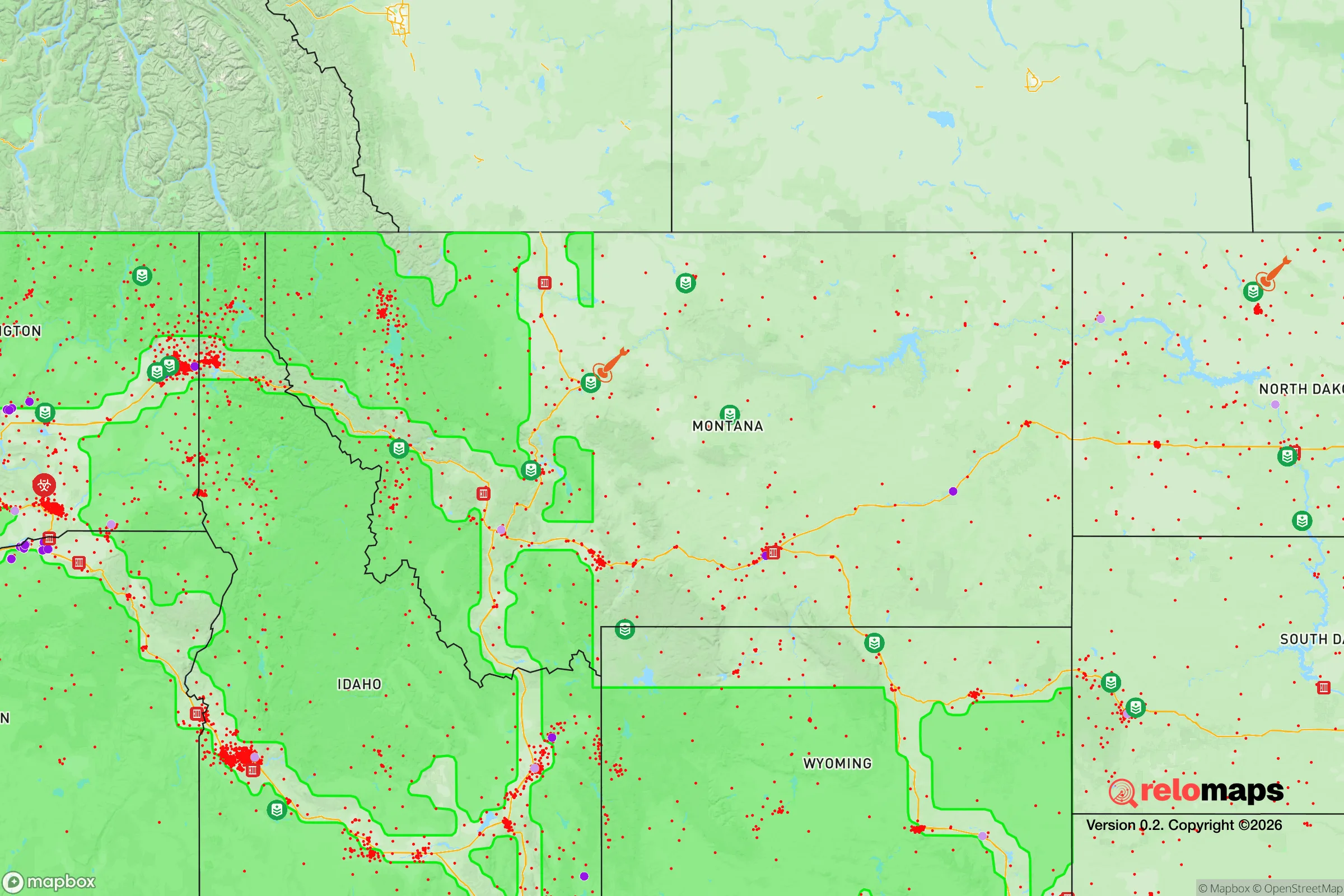


Important Note: For informational purposes only. This does not mean nothing bad ever happens in the green zones. Please use common sense. This is based on public data and modeled with AI. We tried to take a conservative approach but mistakes happen. We update this regularly as new information becomes available.
Solar Generator Recommendations
Backup power matters more here than in safer locations. We've picked three solar generators across budgets and capacity tiers — start with the budget unit if you only need a few essentials, or step up if you want to run a fridge and HVAC for days at a time.

Jackery Portable Power Station Explorer 300
Budget OptionPower on the Go: Weighing only 11 lbs, it's convenient to set up and store with book-sized foldable solar panels

BLUETTI Portable Power Station AC180
Designed for both indoor and outdoor scenarios, AC180 is highly capable as it has a robost capacity and continuous output power.

EF ECOFLOW DELTA Pro Ultra Power Station
Upgraded PickEcoFlow DELTA Pro Ultra is a whole-home energy system designed to grow with your family. Integrated with the Smart Home Panel 2, it scales to meet your evolving energy needs — keeping your home powered, intelligent, and secure through every stage of life.
We earn a commission, at no additional cost to you.
Strategic Assessment Analysis
Roundup, Montana, sits in a strategic sweet spot that resilience-minded relocators should take seriously: far enough from major population centers to avoid the worst of cascading collapse scenarios, yet close enough to essential logistics and supply routes to remain viable. With a population hovering around 1,800 and Musselshell County’s total under 5,000, this is a place where you can realistically know your neighbors, control your immediate environment, and operate below the radar of federal or state-level chaos. The town’s history as a coal and agricultural hub means the local infrastructure—rail, highway, and basic utilities—was built for hard use, not suburban convenience. For someone looking to plant roots in a low-density, high-resilience zone with access to the Yellowstone River corridor and the Bull Mountains, Roundup offers a genuine alternative to the overpriced, overexposed enclaves further west.
Geographic position and natural advantages for long-term security
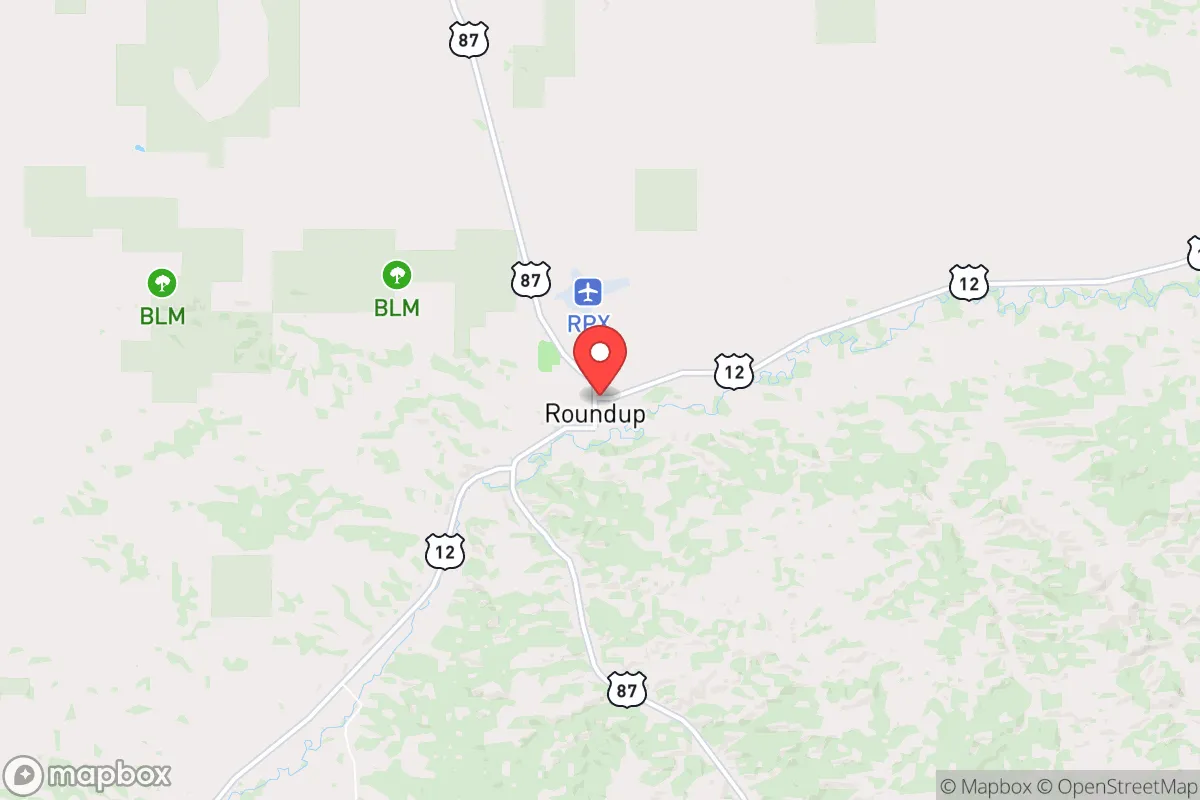
Roundup’s location at the junction of US Highway 87 and Montana Highway 12 gives it a defensible but not isolated position. It’s roughly 45 miles north of Billings—close enough for a supply run or medical evacuation, but far enough that a riot, grid failure, or disease outbreak in Billings won’t wash over you in the first wave. The Musselshell River runs through town, providing a perennial water source that many Montana towns lack. The surrounding Bull Mountains offer elevation, timber, and natural cover, which translates into tactical advantages if you need to secure a perimeter or retreat to a secondary position. The area’s geology also includes coal seams and natural gas deposits, which have historically supported local energy independence. For a prepper, that means you’re not wholly dependent on the grid or distant fuel supplies—there’s a legacy of self-contained energy production here that could be revived or adapted. The climate is semi-arid, with cold winters and hot summers, but the growing season is long enough for cold-hardy crops and livestock grazing, especially if you’re set up with a greenhouse or high-tunnel system.
Risks, exposures, and proximity to fallout-relevant landmarks
No location is immune to risk, and Roundup has its share. The biggest exposure is the Burlington Northern Santa Fe rail line that runs through town, carrying coal, grain, and hazardous materials. A derailment or sabotage event could release toxic chemicals or disrupt supply chains for weeks. The town also sits near the Bull Mountain coal mine, which, while currently idled, represents a potential target for activists or state-level disruption. On the nuclear front, Roundup is roughly 250 miles from the Minot Air Force Base in North Dakota—a primary strategic asset that would be a first-strike target in any major conflict. Fallout patterns depend on wind, but prevailing westerlies mean you’re more likely to face fallout from a strike on Minot than from the ICBM fields in eastern Montana or the Malmstrom complex near Great Falls. That said, the distance and the intervening terrain (the Bull Mountains and the Missouri River breaks) provide significant attenuation. More immediate risks include wildfire—the 2020 Bull Mountain Fire burned over 10,000 acres and threatened the town—and periodic flooding along the Musselshell River. Both are manageable with proper site selection and preparation, but they’re not hypotheticals. The nearest major medical facility is in Billings, which is a 45-minute drive under normal conditions; in a crisis, that could be a fatal gap if you’re not self-sufficient in trauma care.
Practical resilience for a relocator: food, water, energy, and defensibility
For someone serious about self-reliance, Roundup checks most of the boxes. Water is the non-negotiable, and the Musselshell River provides a surface source that can be tapped with a pump and filtration system. Groundwater in the area is generally good, though wells can be deep (200-400 feet) and expensive to drill. The town’s municipal water system is fed by the river and treated, but in a grid-down scenario, you’ll want your own well or a river-access point with a sand filter and UV sterilization. Food production is viable: the growing season runs roughly May through September, with enough heat units for corn, beans, squash, and potatoes. Local ranchers run cattle and sheep, and there’s a small but active community of market gardeners. You can buy a 20-acre parcel with water rights for under $100,000—far cheaper than Bozeman or Missoula. Energy-wise, the area has good solar exposure (over 200 sunny days per year), and wind is consistent enough for small turbines. Natural gas from the Bull Mountain field has historically been used for heating, and some properties still have access to legacy gas wells. Defensibility is strong: the town is laid out on a grid with clear sightlines, and the surrounding hills provide natural chokepoints on the two main highways. A determined group could secure the approaches with minimal manpower. The local sheriff’s office is small but responsive, and the community has a strong hunting and firearms culture—you won’t be the only one armed. The biggest practical gap is the lack of a robust local manufacturing base; if you need specialized parts or ammunition, you’re dependent on Billings or online supply chains. Stockpiling is not optional here; it’s the baseline.
The overall strategic picture for Roundup is one of moderate risk and high reward for the disciplined relocator. It’s not a bug-out location for the weekend warrior—it’s a place to build a life that can withstand the shocks we all see coming. The isolation is real, but so is the community’s capacity for mutual aid and self-governance. If you’re looking for a Montana town that hasn’t been discovered by the tech refugees and isn’t priced out by second-home buyers, Roundup deserves a hard look. The key is to arrive with a plan, not just a dream: secure your water, harden your energy supply, and build relationships with the locals before you need them. In a world where the margins are getting thinner, this is a place where you can still make a stand on your own terms.

* Values derived from national, state, county, city and local statistics and may differ in a specific area. Last updated: 2026-04-29T19:20:44.000Z
Narrative content on this page is AI-generated and may contain mistakes. Verify any details that matter before acting on them.
ReloMaps may earn a commission from affiliate links at no extra cost to you.

