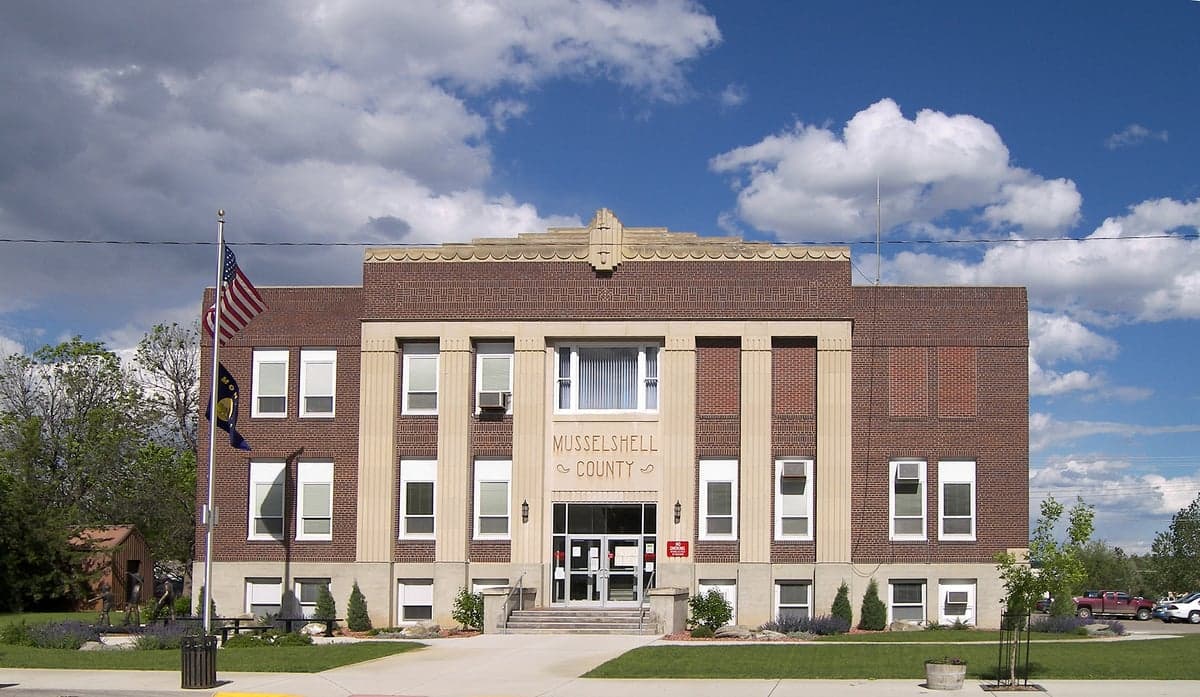
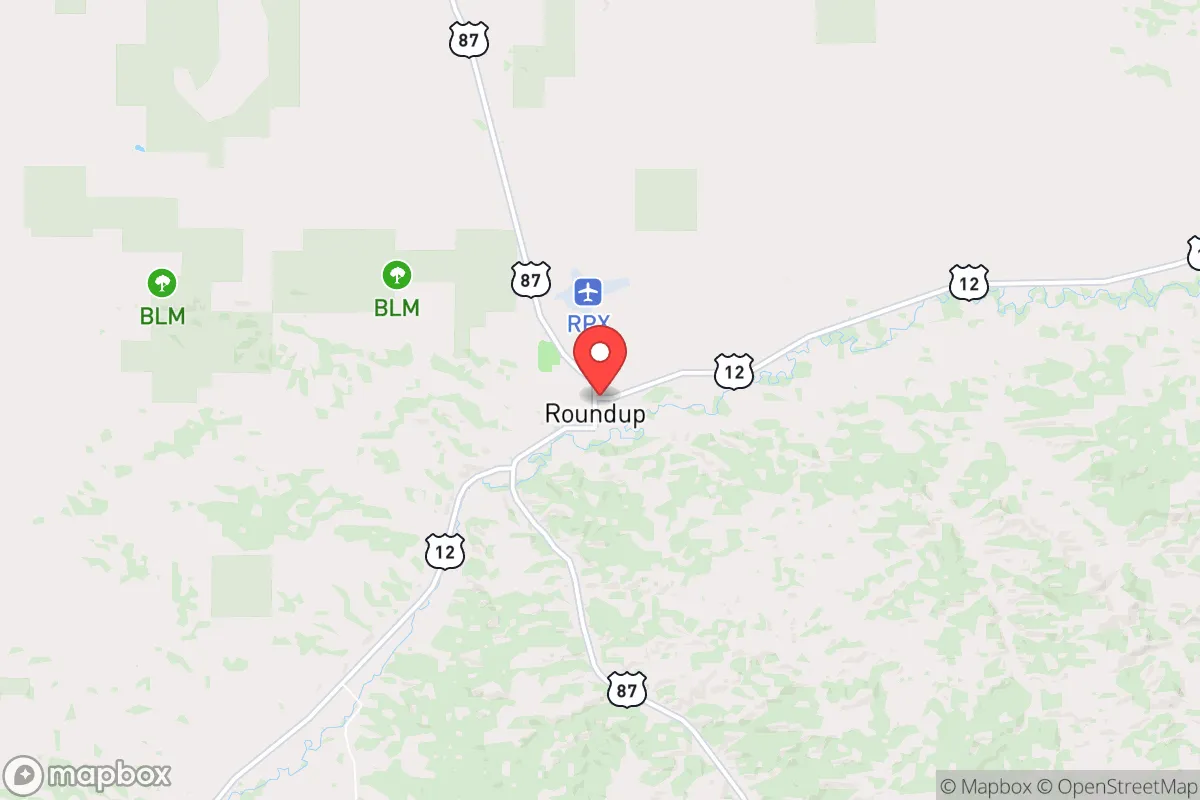
Photo: Wikipedia
Political ClimatePolitical Climate in Roundup, MT
District shown is the primary district for this city’s centroid. Cities may span multiple districts.
Local Political AnalysisPolitical Analysis of Roundup, MT
Roundup, Montana, is about as solidly conservative as small-town America gets, with a Cook PVI of R+15 that tells you exactly where the political winds blow. This isn't a place that flip-flops with national trends; it's a community where folks have voted reliably Republican for generations, and the local culture reflects that deep-rooted independence. You'll find a strong skepticism of federal overreach and a genuine belief that the best government is the one closest to the people—preferably the one you can buttonhole at the hardware store.
How it compares
Drive an hour west to Billings, and you'll feel the difference immediately. Billings is a regional hub with a more mixed political scene—still conservative overall, but with a noticeable progressive presence in the university and medical sectors. Roundup, by contrast, is a place where the local county commission meetings rarely see a debate over "woke" policies. The surrounding Musselshell County is even more conservative than the town itself, while places like Bozeman or Missoula might as well be on another planet politically. If you're looking for a place where the Second Amendment isn't just tolerated but celebrated, and where property rights are taken seriously, Roundup is your kind of town. The nearest real contrast is Lewistown, about 90 minutes west, which has a similar rural conservative vibe but with a slightly more independent streak in its local politics.
What this means for residents
For the people who live here, the political climate means a lot of things you don't have to think about. You won't see mask mandates or vaccine passports being enforced at the local diner. The school board isn't pushing critical race theory or gender ideology on your kids—they're focused on reading, writing, and arithmetic. Property taxes are low, and the county sheriff isn't going to be your enemy if you're a law-abiding gun owner. The downside? If you're hoping for big government programs or rapid infrastructure spending, you'll be disappointed. The local economy runs on agriculture, energy, and small business, not on federal grants. There's a sense that if you want something done, you do it yourself—that's the Montana way, and Roundup embodies it.
What the future looks like
Honestly, I'm a little worried about the long-term trends. You see more people moving in from California and Colorado, and while most of them come here because they want the same freedoms we do, some bring big-city ideas with them. There's been talk about "affordable housing" initiatives that sound an awful lot like government zoning overreach. And the state-level push for more renewable energy projects has some folks nervous about land use and property rights. But for now, Roundup remains a place where a man's word is his bond, and the local government stays out of your business. If you're looking for a community that values personal liberty, low taxes, and common sense, you'll find it here. Just don't expect it to stay that way forever if we don't keep an eye on the ballot box.

State Political ClimatePolitical Climate in Montana
State Political AnalysisPolitical Environment in the State
Montana has long been a reliably Republican state at the presidential level, voting for the GOP candidate in every election since 1968 except for Bill Clinton’s 1992 win. However, the state’s political character is far more complex than a simple red-state label suggests. Over the past 10-20 years, a massive influx of out-of-state transplants—particularly from California, Washington, and Oregon—has begun to reshape the political landscape, creating a growing urban-rural divide that threatens the state’s traditional libertarian-conservative ethos. While the state legislature remains firmly in Republican hands (with a supermajority in both chambers as of 2025), the governor’s office and key local governments in growing counties are increasingly contested, signaling a slow but steady shift that conservatives should watch closely.
Urban vs. rural divide
The political map of Montana is a textbook case of the urban-rural split. The state’s two largest population centers—Billings (Yellowstone County) and Missoula (Missoula County)—are the primary battlegrounds. Missoula, home to the University of Montana, has become a reliably blue stronghold, with the county voting Democratic in every presidential election since 1992. It’s a hub for progressive activism, environmental groups, and a growing tech-adjacent workforce. Billings, the state’s largest city, is more of a mixed bag: it leans Republican overall, but its downtown and newer suburbs are seeing an influx of younger, more moderate voters who are less aligned with the state’s traditional ranching and mining culture. The real conservative strongholds are the rural counties east of the Rockies—places like Glendive (Dawson County), Miles City (Custer County), and Havre (Hill County)—where agriculture, energy extraction, and a deep distrust of federal overreach dominate. The Flathead Valley (Kalispell, Whitefish) is a fascinating microcosm: historically conservative, but now seeing a surge of wealthy out-of-state retirees and remote workers who often bring left-leaning cultural values, even as they vote for lower taxes. The 2020 census showed that the state’s fastest-growing counties—Gallatin (Bozeman), Missoula, and Flathead—are precisely the ones where the GOP’s margins are shrinking. If this trend continues, the state’s congressional map could flip within a decade.
Policy environment
Montana’s policy environment is a mixed bag for conservatives. On the positive side, the state has no sales tax, a flat income tax (recently lowered to 5.9% under Governor Greg Gianforte), and some of the most permissive gun laws in the nation—no permit required for concealed carry, no magazine bans, and strong preemption laws that prevent local governments from enacting their own restrictions. The state also passed a landmark school choice bill in 2023, creating education savings accounts for families. However, there are growing concerns. The state’s property taxes have risen sharply as home values have skyrocketed, and the legislature has been slow to provide meaningful relief. On healthcare, Montana expanded Medicaid under the Affordable Care Act in 2015, and despite repeated conservative efforts to repeal it, the program remains popular and has been reauthorized. Election integrity is a bright spot: the state has voter ID laws, no same-day registration, and a clean voter roll maintenance process. But the growing influence of out-of-state money in local races—particularly from national Democratic groups targeting the state’s open seat in the U.S. Senate—is a red flag for those who value local control.
Trajectory & freedom
The trajectory of freedom in Montana is a tale of two trends. On one hand, the state has expanded personal liberty in several key areas. The 2021 passage of HB 102 (the “Montana Firearms Freedom Act”) explicitly exempted firearms and ammunition made in Montana from federal regulation, a direct challenge to federal overreach. The state also passed SB 319 in 2023, which prohibits any government entity from enforcing federal gun laws that violate the state constitution. Parental rights were strengthened with HB 361 (the “Parental Rights in Education Act”), which requires schools to notify parents of any curriculum involving sexual orientation or gender identity. On the other hand, the state has seen a troubling expansion of government power in the name of public health. During the COVID-19 pandemic, Governor Gianforte initially resisted mandates but later imposed a statewide mask mandate in 2021, drawing sharp criticism from libertarians. More recently, the state has begun to crack down on unlicensed “alternative health” practitioners, a move that some see as a precursor to broader medical freedom restrictions. The biggest threat to freedom, however, is the demographic shift: as more people move in from high-tax, high-regulation states, they bring expectations for more government services, which inevitably leads to higher taxes and more bureaucracy.
Civil unrest & political movements
Montana has historically been a low-drama state when it comes to civil unrest, but that’s changing. The most visible flashpoint in recent years has been the Standing Rock protests (2016-2017), which drew thousands of activists from across the country to oppose the Dakota Access Pipeline. While the pipeline itself was built, the movement energized progressive and environmental activists in the state, particularly in Missoula and Bozeman. On the right, the Montana Freedom Caucus has become a powerful force in the state legislature, pushing for more aggressive action on election integrity, gun rights, and school choice. The Yellowstone County Republican Party has been a hotbed of internal conflict between establishment conservatives and more populist, anti-establishment members. Immigration politics are relatively quiet, but the state’s proximity to the Canadian border has led to occasional controversies over border security and human trafficking. There have been no major sanctuary city movements, but some local governments—like Missoula County—have passed resolutions opposing federal immigration enforcement cooperation. Election integrity remains a live issue: the 2020 election saw a surge in mail-in voting, and while no widespread fraud was found, the legislature has since tightened rules on ballot harvesting and absentee ballot requests.
Projection
Looking ahead 5-10 years, Montana is at a crossroads. The state is growing faster than almost any other in the nation, and the new arrivals are overwhelmingly from blue states. If current trends hold, Gallatin County (Bozeman) and Missoula County will continue to shift left, while the rural eastern counties will remain deeply red but lose population. The key battleground will be the Flathead Valley and the Bitterroot Valley (Ravalli County), where growth is high but the political identity is still up for grabs. The state’s lone U.S. House seat is currently held by Republican Ryan Zinke, but the district is becoming more competitive. The state Senate is likely to remain Republican for the next decade, but the governor’s race in 2028 could be a toss-up if the Democratic Party can field a moderate candidate who appeals to the growing suburban vote. The biggest wildcard is the state’s economy: if the tech and remote work boom continues, Montana could see a wave of left-leaning professionals who will push for higher taxes, more regulation, and expanded government services. Conservatives moving to the state should focus on areas like Billings, Kalispell, or Helena (the state capital, which is a purple island) where the political culture is still more aligned with traditional Montana values.
Bottom line for a new resident: Montana is still a great place for conservatives who value low taxes, gun rights, and personal freedom—but it’s not the same state it was 20 years ago. The urban centers are becoming more progressive, the property taxes are rising, and the culture is shifting. If you’re moving here, get involved in local politics early, join your county Republican Party, and be prepared to fight to keep Montana from becoming the next Colorado. The state’s future depends on whether the new arrivals adopt Montana’s values or try to remake it in the image of the places they left.
* Values derived from national, state, county, city and local statistics and may differ in a specific area. Last updated: 2026-04-29T19:20:44.000Z
Narrative content on this page is AI-generated and may contain mistakes. Verify any details that matter before acting on them.
ReloMaps may earn a commission from affiliate links at no extra cost to you.

