Photo: Wikipedia
Personal Sovereignty in Royal Oak, MI
Strong independent fundamentals that actively favor personal liberty and low regulation.
What does Personal Sovereignty tell us?
Personal Sovereignty measures your capacity for self-reliance and independence with minimal government friction. Higher scores mean fewer barriers between you and the way you want to live... but it assumes you have the space you need and good neighbors.
What does this tell us?
Personal Sovereignty measures your capacity for self-reliance and independence with minimal government friction. Higher scores mean fewer barriers between you and the way you want to live... but it assumes you have the space you need and good neighbors.
State Policy
Energy independence: Importer (20% of energy produced in-state)
Personal Liberty
Homesteading

Personal Liberty Analysis
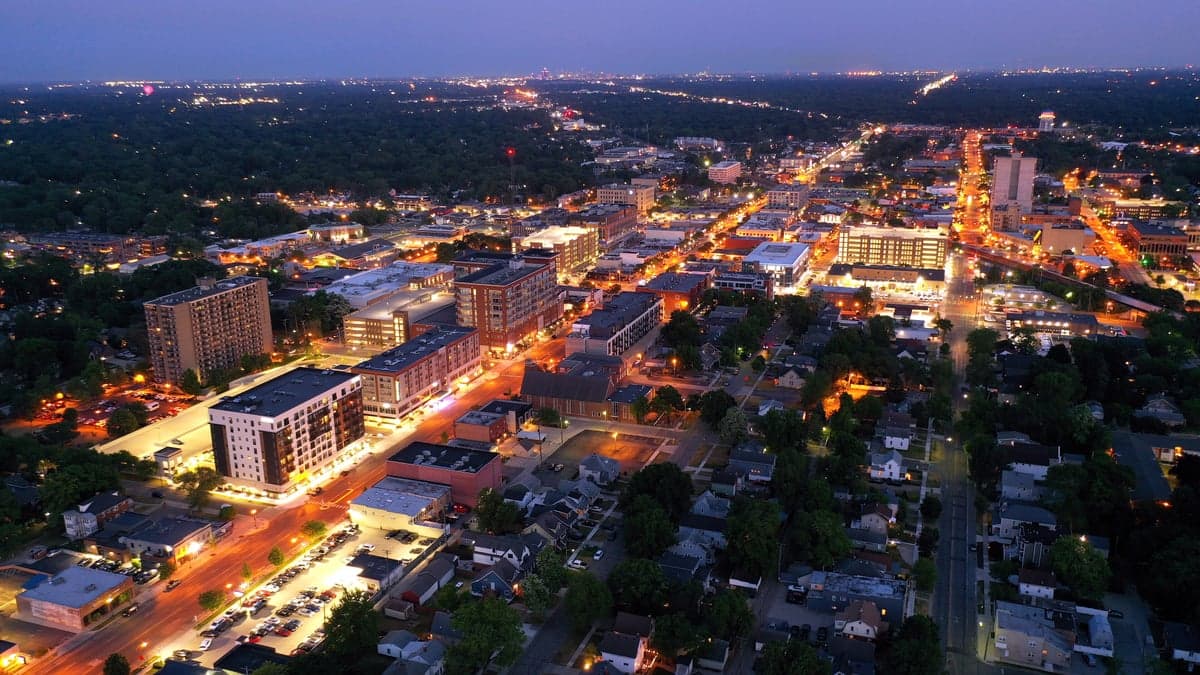
Royal Oak, Michigan, presents a complex and often contradictory environment for personal sovereignty, where a vibrant local community and walkable urban core coexist with a state-level political and regulatory apparatus that leans heavily toward collective governance over individual autonomy. For the survivalist or prepper evaluating this suburb of Detroit, the immediate takeaway is that while day-to-day life offers a high degree of personal freedom in social and lifestyle choices, the legal and tax framework in Michigan—and Oakland County specifically—imposes significant constraints on the kind of deep self-reliance and off-grid independence that many in your audience prioritize. The city’s dense, older housing stock and progressive local politics create a landscape where personal liberties are often defined by what the state and municipality permit, rather than what an individual can claim by right. This analysis will walk through the key pillars of sovereignty—tax burden, self-defense, homesteading, and personal liberties—to give you a clear-eyed picture of what Royal Oak offers and, more importantly, what it restricts.
Tax burden and regulatory posture: How Michigan’s fiscal and rule-making environment affects your autonomy
Michigan’s overall tax burden is moderate compared to high-tax states like New York or California, but it is far from a low-sovereignty haven. The state income tax is a flat 4.25%, and while there is no state-level sales tax on groceries or prescription drugs, the general sales tax is 6%. Property taxes in Royal Oak are a major concern for anyone seeking to minimize recurring government claims on their income. The city’s millage rate, combined with Oakland County and school district levies, typically results in an effective property tax rate of around 2.5% to 3.0% of a home’s assessed value—well above the national average. For a median-priced home in Royal Oak (around $350,000–$400,000 in 2026), that translates to roughly $8,750 to $12,000 annually in property taxes alone. This is a significant, non-negotiable outflow that directly reduces your ability to allocate capital toward preparedness, land, or equipment. The regulatory posture at the state level is mixed: Michigan has no statewide rent control, and occupational licensing is less burdensome than in many coastal states, but the state’s environmental and building codes are stringent. In Royal Oak specifically, the city enforces a robust zoning code that heavily regulates land use, home-based businesses, and even the appearance of your property. For the prepper, this means that any attempt to run a small-scale manufacturing or repair operation from your garage, or to modify your home for enhanced security or self-sufficiency, will likely require permits and inspections that can be denied or delayed. The overall message is clear: you will pay a substantial premium in taxes and compliance costs for the privilege of living in this community.
Self-defense and gun law specifics: What you can and cannot do to protect yourself in Royal Oak
Michigan is a “shall-issue” state for concealed pistol licenses (CPL), and as of 2023, the state also allows permitless concealed carry for individuals 21 and older who are not prohibited from possessing a firearm. This is a positive for personal sovereignty, as it removes a bureaucratic barrier to carrying a defensive weapon. However, the landscape is not without significant restrictions. Michigan has a red flag law (Extreme Risk Protection Order) that allows law enforcement or family members to petition a court to temporarily seize firearms from an individual deemed a risk to themselves or others. This law, which can be triggered with a relatively low evidentiary standard, is a direct threat to the prepper mindset, as it bypasses due process and can disarm a law-abiding citizen based on a subjective assessment. Additionally, Royal Oak itself is a home-rule city with its own ordinances. While the city does not have a blanket ban on firearms in public parks (as some Michigan cities do), it does restrict the discharge of firearms within city limits, meaning you cannot legally fire a weapon for self-defense training or pest control on your own property unless you have a very large, rural lot—which Royal Oak does not offer. The city also has a noise ordinance that could be used to harass someone conducting tactical training on their property. For the survivalist, the key takeaway is that while you can legally own and carry firearms in Royal Oak, the legal environment is fragile and subject to change with the political winds. The red flag law, in particular, represents a tool of government overreach that could be weaponized against those who express non-mainstream views about preparedness or self-reliance.
Self-reliance and homesteading viability: Lot sizes, zoning, and off-grid feasibility in a dense suburb
Royal Oak is a dense, older suburb with a median lot size of roughly 0.1 to 0.2 acres—typical of pre-war streetcar suburbs. This is a fundamental constraint for anyone seeking to achieve meaningful self-reliance. The city’s zoning code is explicitly designed to maintain a traditional suburban character, which means raising livestock (chickens, goats, rabbits) is heavily restricted. Chickens are allowed only with a permit and strict limits on the number of hens (no roosters), and larger animals are outright prohibited. Gardening is permitted, but the small lot size limits the scale of food production to a few raised beds or a small greenhouse. Off-grid feasibility is essentially zero. The city requires connection to municipal water and sewer systems, and any attempt to install solar panels, a wind turbine, or a rainwater catchment system must comply with building codes and homeowner association (HOA) restrictions if applicable. Many neighborhoods in Royal Oak have HOAs that can impose additional rules on exterior modifications, including the placement of solar panels or the installation of backup generators. For the prepper, this means that Royal Oak is a location where you must rely on the grid and the supply chain for your basic needs. You can stockpile supplies and have a bug-out bag, but you cannot create a self-sustaining homestead. The best you can do is maximize efficiency within the constraints: a well-stocked pantry, a small vegetable garden, and a portable generator for short-term outages. The city’s dense layout also means that any major societal disruption—a prolonged power outage, civil unrest, or supply chain collapse—would quickly become a shared crisis, with neighbors competing for the same limited resources.
Personal liberties: Parental rights, medical autonomy, speech, and property in the current legal climate
Michigan’s legal framework for personal liberties is a mixed bag, with some protections and several areas of significant concern for the conservative-leaning prepper. On parental rights, Michigan law generally recognizes parents as the primary decision-makers for their children, but the state has a strong child protective services system that can intervene aggressively. In recent years, there has been a national trend toward expanding state authority over educational and medical decisions for minors, and Michigan has not been immune. For example, the state does not have a robust “parental bill of rights” statute that would explicitly shield parents from overreach in areas like school curriculum or medical consent. On medical autonomy, Michigan’s emergency powers during the COVID-19 pandemic were used to impose broad mandates, including vaccine requirements for healthcare workers and school employees. While those specific mandates have expired, the precedent remains that the state can assert significant control over individual medical choices during declared emergencies. For the prepper, this is a red flag: the government has demonstrated a willingness to override personal medical decisions in the name of public health. On speech, Michigan generally protects free expression under the First Amendment, but local ordinances in Royal Oak can regulate “nuisance” speech or behavior, and the city has a history of enforcing noise and public order laws that could be used to suppress unpopular opinions. Property rights are the most concerning area. Michigan’s eminent domain laws are broad, and the state has used them for economic development projects. While Royal Oak is not currently a hotbed of eminent domain abuse, the legal framework allows the government to take private property for “public use” with just compensation, and the definition of “public use” has been stretched to include private development that generates tax revenue. For the survivalist, this means that your property—your primary asset for preparedness—is never truly secure from government seizure if a politically connected developer or municipality decides it is needed.
In the final analysis, Royal Oak offers a lifestyle that is comfortable, convenient, and socially vibrant, but it is not a stronghold of personal sovereignty. The high property taxes, restrictive zoning, and state-level legal tools like the red flag law create an environment where the individual is constantly negotiating with the government for permission to live as they see fit. Compared to rural areas in the Upper Peninsula or northern Michigan, where land is cheap, regulations are minimal, and off-grid living is feasible, Royal Oak is a location for those who prioritize community and convenience over deep self-reliance. For the prepper or survivalist, it is a place to live and work, but not a place to dig in for the long haul. The best strategy here is to treat Royal Oak as a base of operations—a place to earn income and access resources—while maintaining a secondary, more sovereign property in a less regulated area. If you are unwilling or unable to maintain that second location, you must accept that your personal sovereignty in Royal Oak will always be conditional, subject to the whims of a state and local government that does not share your values of radical self-reliance and minimal government interference.

* Values derived from national, state, county, city and local statistics and may differ in a specific area. Last updated: 2026-04-24T03:37:19.000Z
Narrative content on this page is AI-generated and may contain mistakes. Verify any details that matter before acting on them.
ReloMaps may earn a commission from affiliate links at no extra cost to you.

