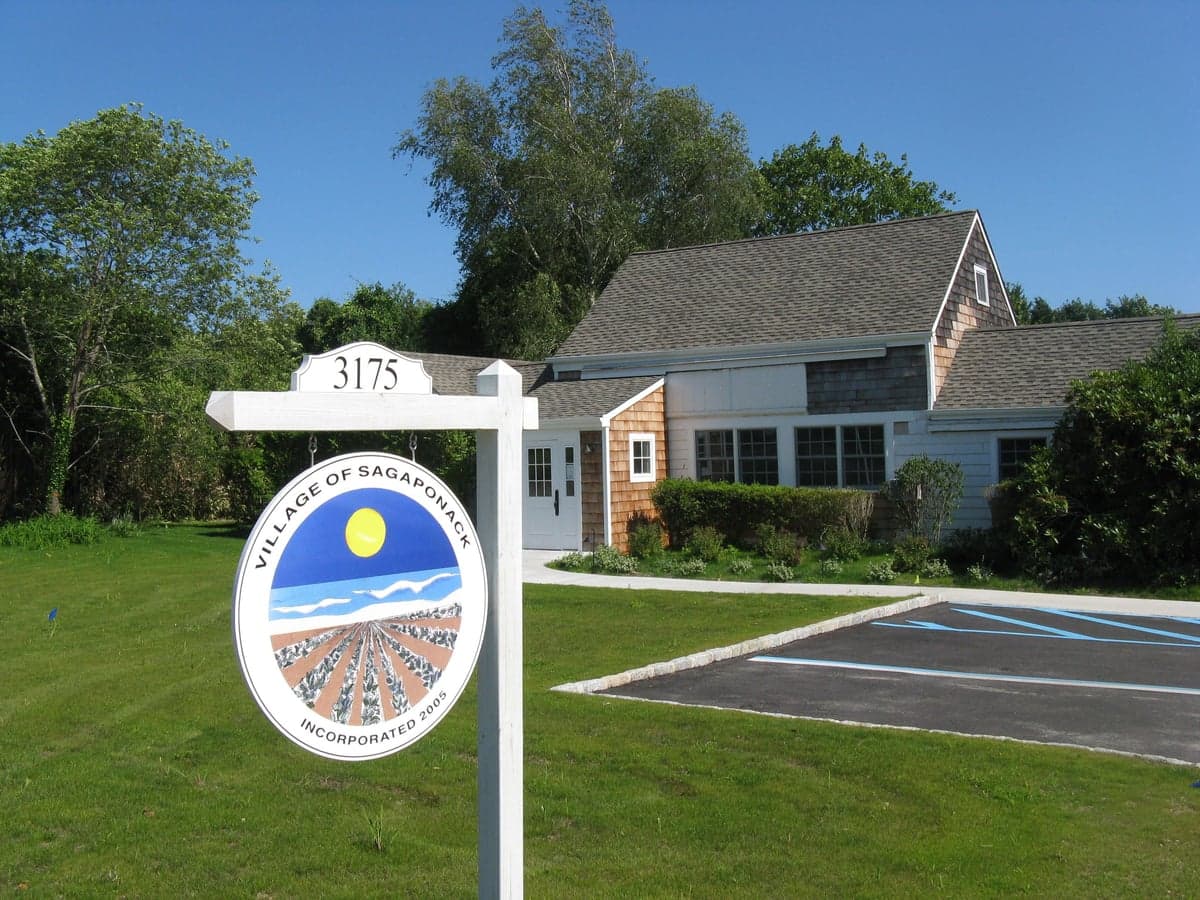
Photo: Wikipedia
Personal Sovereignty in Sagaponack, NY
Moderate friction. Expect trade-offs in some aspect of personal liberty and independence.
What does Personal Sovereignty tell us?
Personal Sovereignty measures your capacity for self-reliance and independence with minimal government friction. Higher scores mean fewer barriers between you and the way you want to live... but it assumes you have the space you need and good neighbors.
What does this tell us?
Personal Sovereignty measures your capacity for self-reliance and independence with minimal government friction. Higher scores mean fewer barriers between you and the way you want to live... but it assumes you have the space you need and good neighbors.
State Policy
Energy independence: Importer (12% of energy produced in-state)
Personal Liberty
Homesteading

Personal Liberty Analysis
Sagaponack, New York, presents a complex and often contradictory environment for personal sovereignty, one that demands a clear-eyed, strategic assessment from anyone prioritizing autonomy and self-reliance. While its rural character and large estate lots offer a superficial sense of space and privacy, the underlying legal and regulatory framework is overwhelmingly shaped by New York State’s aggressively progressive agenda, which systematically erodes individual freedoms in favor of centralized government control. For the conservative-leaning individual or family—particularly those with a survivalist or prepper mindset—Sagaponack is less a bastion of liberty and more a high-wealth enclave operating under a deeply intrusive state apparatus. The trade-off is stark: you gain physical seclusion and a prestigious address, but you surrender significant control over your finances, your home, your healthcare decisions, and your means of self-defense.
Tax burden and regulatory posture in a high-wealth enclave
The financial sovereignty of any Sagaponack resident is immediately and severely compromised by New York State’s tax regime. Property taxes in the Sagaponack School District are among the highest in the nation, routinely exceeding $20,000 annually on modest homes and climbing well into six figures for oceanfront estates. This is not a fee for services; it is a permanent, non-negotiable lien on your property that funds a school system and local government you may not fully align with. Beyond property taxes, residents face New York’s progressive income tax, which tops out at 10.9% for high earners, and a state estate tax that kicks in at just under $7 million, effectively punishing multi-generational wealth preservation. The regulatory posture is equally hostile to autonomy. New York’s strict rent stabilization laws, while less directly applicable in Sagaponack, signal a state government comfortable with overriding private property contracts. More immediately, the Sagaponack Village Zoning Code is a dense thicket of rules governing everything from fence heights to the color of your house, enforced by a vigilant Architectural Review Board. Any attempt to build a workshop, a root cellar, or a private energy system will require permits, variances, and public hearings—a process designed to ensure compliance, not encourage self-sufficiency. For the prepper, this means your land is never truly yours to use as you see fit.
Self-defense and gun law specifics under the NY SAFE Act
On the issue of personal security, Sagaponack is a jurisdiction where the state has made its distrust of the armed citizen explicit. New York’s SAFE Act, passed in 2013 and strengthened since, remains one of the most restrictive gun control regimes in the nation. It bans so-called "assault weapons" by cosmetic feature, limits magazine capacity to ten rounds, and mandates universal background checks even for private sales. The 2022 Supreme Court decision in NYSRPA v. Bruen struck down the state’s "proper cause" requirement for concealed carry, but New York’s legislature immediately retaliated with the Concealed Carry Improvement Act (CCIA), which created "sensitive locations" so broad they effectively ban firearms from most public spaces, including parks, places of worship, and even private businesses unless the owner posts a specific sign. Obtaining a permit in Suffolk County is a months-long, expensive, and invasive process requiring character references and a background check that probes your social media history. For the survivalist, the practical reality is stark: you may keep a shotgun or a bolt-action rifle in your home, but carrying a defensive sidearm off your property is a legal minefield. The state’s attitude is clear—your safety is the government’s responsibility, and your individual right to self-defense is subordinate to its regulatory preferences.
Self-reliance and homesteading viability in a coastal village
The dream of self-reliance in Sagaponack collides hard with the realities of its zoning, climate, and local politics. While the minimum lot size of one acre in the Agricultural Overlay District sounds promising, the village’s primary identity is as a luxury summer colony, not a homesteading community. Raising chickens or keeping bees is permitted with a permit, but slaughtering livestock or maintaining a visible vegetable garden that might "detract from the rural character" can draw complaints and code enforcement visits. Off-grid living is effectively illegal: the village requires connection to the municipal water supply and the grid, and while solar panels are allowed, they must be "minimally visible" from the road, often requiring ground-mounted arrays that eat into your usable space. The coastal location presents a unique vulnerability: a major hurricane or storm surge could cut off the area for days, and the village’s emergency management plan is designed for evacuation, not shelter-in-place. For the prepper, the soil is sandy and requires significant amendment for serious food production, and the growing season is short. True self-reliance—growing your own food, generating your own power, and storing water—is not just difficult; it is actively discouraged by a regulatory system that prioritizes aesthetic conformity over individual resilience.
Personal liberties in a state with expansive government reach
New York State’s expansive view of government authority directly impacts personal liberties that many conservatives consider fundamental. Parental rights have been under sustained assault, with the state’s Education Department mandating "gender-inclusive" curricula and policies that allow students to change their names and pronouns without parental notification. While Sagaponack’s small school district might be more responsive to local concerns, it operates under state law, and parents who object have limited recourse beyond costly legal action. Medical autonomy was severely curtailed during the COVID-19 pandemic, with New York imposing one of the nation’s strictest vaccine mandates, including for private-sector workers, and maintaining a state-level health emergency database that tracks immunization records. The state’s public health law gives the governor broad powers to isolate and quarantine individuals, powers that were used aggressively. On free speech, while the First Amendment technically applies, New York’s hate speech laws and social media regulations create a chilling effect, and local village boards have been known to restrict political signage on private property. Property rights are the most compromised: the state’s eminent domain powers are broad, and the Community Preservation Fund, funded by a 2% real estate transfer tax, uses public money to buy development rights, effectively dictating what you can and cannot do with your land in perpetuity. In every domain, the default assumption is that the state knows better than the individual.
In the final analysis, Sagaponack offers a peculiar and largely unfavorable sovereignty equation for the conservative survivalist. The physical space and low population density provide a veneer of autonomy, but the legal and regulatory reality is that you are living under one of the most interventionist state governments in the country. Your tax dollars fund a system that actively undermines your parental authority, restricts your right to self-defense, and dictates how you may use your own property. Compared to a free state like New Hampshire, Texas, or Idaho, where property taxes are lower, gun laws are permissive, and local zoning is minimal, Sagaponack represents a strategic compromise that few preppers would willingly accept. It is a place for those who value proximity to the ocean and social prestige above all else, and who are willing to trade their personal sovereignty for the privilege. For anyone serious about liberty, self-reliance, and minimizing government overreach, the Hamptons are a beautiful cage, not a sanctuary.

* Values derived from national, state, county, city and local statistics and may differ in a specific area. Last updated: 2026-04-24T01:50:22.000Z
Narrative content on this page is AI-generated and may contain mistakes. Verify any details that matter before acting on them.
ReloMaps may earn a commission from affiliate links at no extra cost to you.

