 Popular
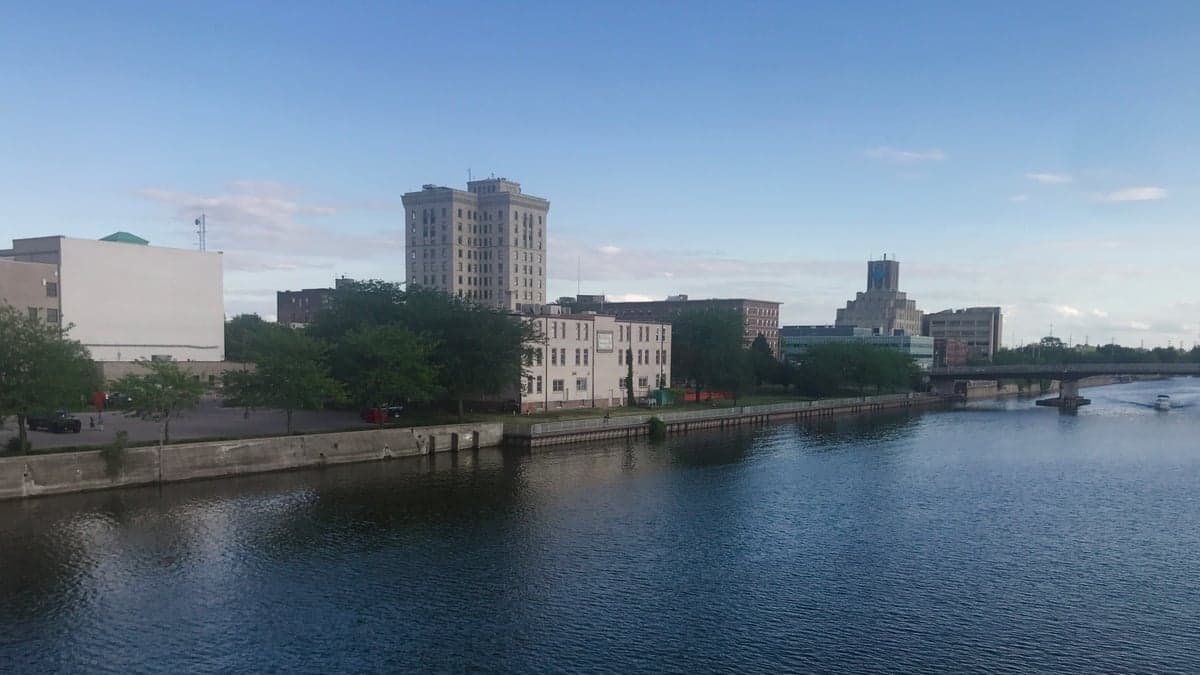
Photo: Wikipedia
Personal Sovereignty in Saginaw, MI
Strong independent fundamentals that actively favor personal liberty and low regulation.
What does Personal Sovereignty tell us?
Personal Sovereignty measures your capacity for self-reliance and independence with minimal government friction. Higher scores mean fewer barriers between you and the way you want to live... but it assumes you have the space you need and good neighbors.
What does this tell us?
Personal Sovereignty measures your capacity for self-reliance and independence with minimal government friction. Higher scores mean fewer barriers between you and the way you want to live... but it assumes you have the space you need and good neighbors.
State Policy
Energy independence: Importer (20% of energy produced in-state)
Personal Liberty
Homesteading

Personal Liberty Analysis
Saginaw, Michigan, presents a deeply conflicted environment for personal sovereignty. While the city itself struggles with high crime and economic decline, offering a certain grim autonomy born of neglect, the state-level legal and regulatory framework imposes significant constraints on individual freedom. For the survivalist or prepper, Saginaw is less a sanctuary and more a test of resilience—a place where you must be constantly aware of both the threats from the street and the overreach from Lansing. The net result is a location where personal sovereignty is something you must fight to carve out, rather than one that is granted or protected.
Tax burden and regulatory posture in Michigan’s political climate
Michigan’s overall tax posture is a mixed bag that leans toward the burdensome. The state imposes a flat income tax of 4.25%, which, while not progressive, is a direct cut from every paycheck. Property taxes are notoriously high, with effective rates often exceeding 1.5% of a home’s true cash value, and Saginaw County’s millage rates add to that weight. For a prepper focused on self-reliance, this means a significant portion of your resources is siphoned off before you can invest them in land, supplies, or infrastructure. The regulatory climate is equally challenging. Michigan’s Department of Environment, Great Lakes, and Energy (EGLE) has a heavy hand in land use, particularly concerning water rights and wetland designations. Building a pond, drilling a well, or even clearing brush near a drainage ditch can trigger state-level permits and delays. The state’s building codes are also stringent, making off-grid construction—like a timber-frame cabin or a shipping container home—a bureaucratic ordeal. For those seeking to minimize government footprint in their daily lives, Michigan’s regulatory apparatus is a constant, unwelcome presence.
Self-defense and gun law specifics in Saginaw and Michigan
On the surface, Michigan’s gun laws appear favorable, but the reality is more restrictive than many conservatives would like. The state is a “shall issue” jurisdiction for concealed pistol licenses (CPL), meaning if you meet the requirements, the county sheriff must issue the permit. However, the requirements include an 8-hour training course, fingerprinting, and a background check. More critically, Michigan does not permit constitutional carry; you must have a CPL to carry a concealed firearm. Open carry is legal without a permit, but in Saginaw, this is a tactical liability, as it makes you a target. The city itself has a violent crime rate roughly three times the national average, making a firearm for self-defense a non-negotiable necessity. However, the legal landscape is shifting. In 2023, the state passed a “red flag” law (extreme risk protection order), allowing courts to temporarily seize firearms from individuals deemed a threat by family or law enforcement—a clear erosion of due process. Additionally, Michigan now requires universal background checks for all firearm sales, including private transactions, which complicates the private transfer of weapons among trusted individuals. For the prepper, this means you must navigate a system that is increasingly hostile to the idea of an armed citizenry, even as the need for self-defense in Saginaw grows.
Self-reliance and homesteading viability in Saginaw’s landscape
The potential for self-reliance in Saginaw is heavily constrained by urban zoning and lot sizes. Within the city limits, standard residential lots are typically 40 to 60 feet wide, leaving little room for substantial gardening, livestock, or water storage. Zoning ordinances generally prohibit chickens, goats, or other food-producing animals within city boundaries. The soil in many parts of Saginaw is also compromised by industrial legacy—heavy metals and other contaminants from the area’s manufacturing past can make urban gardening a health risk without expensive soil testing and remediation. True homesteading viability lies in the surrounding townships of Saginaw County, such as Thomas Township or James Township, where lot sizes of one to five acres are common and agricultural zoning is more permissive. Even there, however, off-grid feasibility is limited. Michigan’s building codes require connection to municipal sewer or a state-approved septic system, and wells must be drilled by licensed contractors. Solar panels are allowed, but net metering policies with Consumers Energy or DTE can be complex, and battery storage is often the only way to truly disconnect. For the serious prepper, the Saginaw area offers land at relatively low prices—often under $5,000 per acre—but the path to genuine self-sufficiency is paved with regulatory hurdles that demand patience and legal diligence.
Personal liberties in Saginaw: parental rights, medical autonomy, and property
Parental rights in Michigan have been under consistent assault from state-level mandates. During the COVID-19 era, the state imposed some of the longest-lasting school closures and mask mandates in the Midwest, overriding local school board decisions. Currently, Michigan’s Department of Health and Human Services retains broad emergency powers that could be used to reimpose such measures. The state’s curriculum standards also include comprehensive sex education and social-emotional learning frameworks that many conservative parents find intrusive. Medical autonomy is similarly constrained. Michigan expanded Medicaid under the Affordable Care Act and maintains a state-run health insurance exchange, tying many residents to government-managed healthcare. Vaccine mandates for healthcare workers and schoolchildren remain a point of contention, with the state showing little tolerance for religious or philosophical exemptions. Property rights are perhaps the most concerning area. Michigan’s use of eminent domain is aggressive, particularly for “blight elimination” in cities like Saginaw. The Saginaw County Land Bank has the authority to seize tax-foreclosed properties and sell them to developers, often at the expense of long-term residents. Additionally, the state’s “dark store” tax loophole has shifted property tax burdens onto homeowners, making it harder to hold onto your land. For the individualist, these policies create an environment where your home, your children, and your body are all subject to state intervention.
In the broader landscape of American personal sovereignty, Saginaw, Michigan, ranks as a location of significant compromise. The low cost of land and the necessity of self-defense due to high crime are genuine draws for the survivalist. However, the state’s heavy tax burden, restrictive gun laws, intrusive building codes, and erosion of parental and property rights create a net negative for those seeking maximum autonomy. Compared to states like Texas or Idaho, where constitutional carry and lower taxes are the norm, Michigan feels like a place where the government is always watching and always taking. For the prepper willing to fight the bureaucratic battles, Saginaw offers a cheap entry point into a challenging environment. But for those seeking a true sanctuary from government overreach, the Great Lakes State is not the promised land—it is a proving ground where your sovereignty must be constantly defended.

* Values derived from national, state, county, city and local statistics and may differ in a specific area. Last updated: 2026-04-29T22:58:32.000Z
Narrative content on this page is AI-generated and may contain mistakes. Verify any details that matter before acting on them.
ReloMaps may earn a commission from affiliate links at no extra cost to you.

