 Popular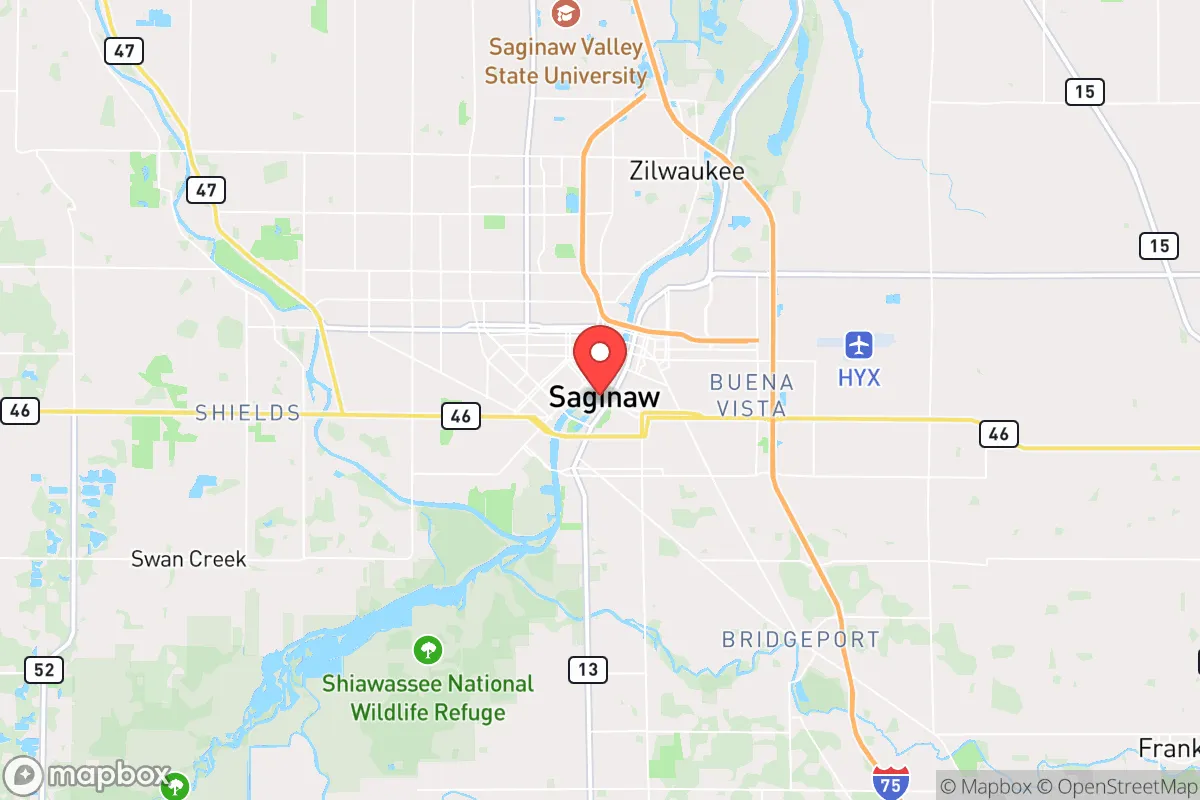
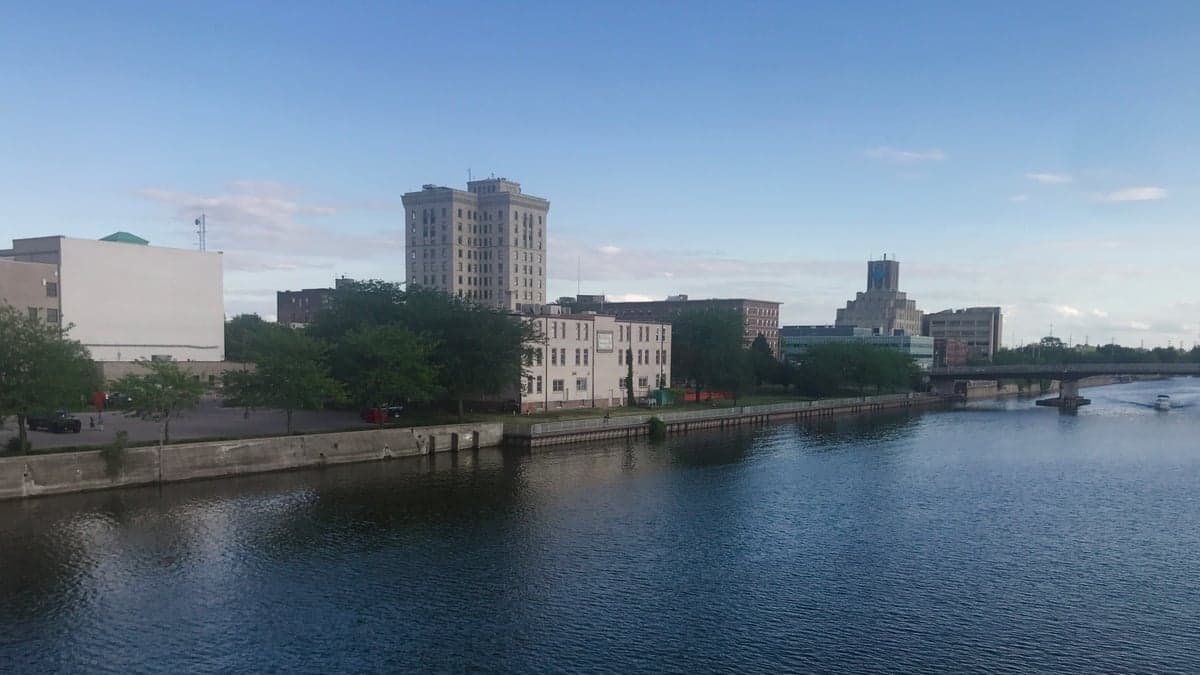
Photo: Wikipedia
Political ClimatePolitical Climate in Saginaw, MI
District shown is the primary district for this city’s centroid. Cities may span multiple districts.
Local Political AnalysisPolitical Analysis of Saginaw, MI
Look, I’ve lived in Saginaw my whole life, and I’ll tell you straight: this area leans conservative, but it’s not the deep red you’d find down in Midland or out in the thumb. The Cook PVI is R+1, which means it’s a true toss-up county—one of those places where a few thousand votes decide everything. In 2024, Saginaw County went for Trump by about 1,500 votes, but just four years earlier, Biden won it by a similar margin. The trajectory is concerning if you value personal freedoms: the city itself has been drifting left, while the surrounding townships—like Thomas, Buena Vista, and Frankenmuth—have held the line. You can feel the tension at local meetings, where talk of property rights and school curriculum gets heated fast.
How it compares
If you drive 20 minutes south to Frankenmuth, you’ll find a town that hasn’t budged—solidly conservative, low taxes, and a “keep the government out of my garage” attitude. Head west to Midland, and it’s even redder, thanks to Dow and the chemical industry folks who don’t want anyone telling them how to run their business. But Saginaw itself? It’s a different animal. The city council has been pushing progressive pet projects—like “equity” task forces and zoning changes that sound good on paper but end up trampling on your right to use your own property. Compare that to the county commission, which is still majority Republican and fights to keep taxes low and regulations loose. The contrast is stark: you can live in the township and feel like you’re in a free state, but cross into city limits and suddenly there’s a new ordinance about what you can plant in your front yard or how many cars you can park in your driveway.
What this means for residents
For folks who value personal freedom, the biggest red flag is the slow creep of government overreach. The city has floated ideas like rent control and mandatory paid leave for small businesses—stuff that sounds compassionate but actually kills the mom-and-pop shops that make Saginaw feel like home. Property taxes are already higher than in the surrounding townships, and there’s talk of a new millage for “community safety” that would give the city more money but less accountability. If you’re a homeowner or a small business owner, you need to watch the city council meetings like a hawk. The good news? The county is still pushing back. The sheriff’s office, for example, has refused to enforce certain state-level gun restrictions, and the county board has passed resolutions against vaccine mandates. That’s the kind of backbone you want to see—but it’s a constant fight.
Culturally, Saginaw has a blue-collar, union-heavy history that used to mean “live and let live.” That’s fading. The old-timers who remember when the auto plants were booming are being replaced by younger transplants from downstate who bring big-city ideas about “equity” and “inclusion” that often translate to more rules and less freedom. The local school board has been a battleground over critical race theory and library books, and the city has started flying the Pride flag over city hall—a small thing, but it signals a shift in priorities. If you’re looking for a place where the government stays out of your life and your wallet, Saginaw’s still okay, but you’ll want to live in the township, not the city. Keep your eyes on the next election cycle—if the progressives take the county commission, this whole area could flip fast.

State Political ClimatePolitical Climate in Michigan
State Political AnalysisPolitical Environment in the State
Michigan has shifted from a reliably purple battleground to a state where Democrats now hold unified control of the governorship, legislature, and Supreme Court, driven largely by the Detroit metro area and a handful of college towns. Over the past decade, the state has moved from a 2016 Trump win by 0.2 points to a 2020 Biden win by 2.8 points, and in 2024, Democrats swept all statewide offices and expanded their legislative majorities. The key driver has been the collapse of Republican performance in the populous southeastern counties of Oakland, Washtenaw, and Wayne, while the rest of the state — particularly western and northern Michigan — has grown more Republican.
Urban vs. rural divide
The political map of Michigan is a stark story of two states. The Detroit tri-county area — Wayne, Oakland, and Macomb — casts roughly 40% of the state’s vote. Wayne County (Detroit) is a Democratic stronghold, delivering 68% for Biden in 2020. Oakland County, once a classic swing suburb, has become reliably Democratic, with Biden winning it by 14 points. Macomb County, the iconic "Reagan Democrat" bastion, flipped back to Trump in 2020 but by a much narrower margin than in 2016, and in 2024 it went for the Democratic gubernatorial candidate. Meanwhile, the Grand Rapids metro area (Kent County) has been trending leftward — Biden won it in 2020, a first for a Democrat since 2008 — but the surrounding rural counties like Ottawa, Allegan, and Barry remain deeply red. The Upper Peninsula, once a Democratic stronghold, has swung hard right, with Trump winning every county there in 2020. The college towns of Ann Arbor (Washtenaw County) and East Lansing (Ingham County) are Democratic islands, while the rest of the state — from the Thumb region to the western lakeshore — is solidly Republican. The divide is so sharp that a resident of Traverse City lives in a political universe entirely different from someone in Detroit.
Policy environment
Michigan’s policy environment has shifted dramatically leftward since Democrats took full control in 2023. The state income tax is a flat 4.25%, but the new Democratic majority repealed the retirement tax exemption and is pushing for higher corporate taxes. The regulatory posture has become more aggressive, with the state enacting a sweeping clean energy mandate requiring 100% carbon-free electricity by 2040, effectively banning new natural gas plants. On education, the state repealed the 2011 right-to-work law for private-sector workers, a major blow to business freedom, and expanded collective bargaining power for public-sector unions. The healthcare landscape is dominated by the expansion of Medicaid under the Affordable Care Act, which Michigan embraced early. Election laws have been loosened significantly: in 2022, voters approved Proposal 2, which established nine days of early voting, no-excuse absentee voting, and ballot drop boxes statewide. This has made Michigan one of the most accessible voting states in the country, but critics argue it has also reduced election integrity. The state also legalized recreational marijuana in 2018, creating a regulated market that has generated significant tax revenue but also raised concerns about impaired driving and youth access.
Trajectory & freedom
Michigan is becoming less free by any measure of personal liberty, particularly for conservatives. The most concerning trend is the erosion of gun rights: in 2023, the Democratic legislature passed universal background checks, safe storage requirements, and a red flag law, all signed by Governor Gretchen Whitmer. These laws were passed without any Republican support and represent the most significant gun control expansion in state history. Parental rights have taken a hit as well: the state expanded the Elliott-Larsen Civil Rights Act to include sexual orientation and gender identity, which critics argue can be used to override parental authority in schools regarding transgender policies. Medical autonomy has been curtailed by the state’s aggressive COVID-19 mandates, which included some of the longest-lasting business closures in the Midwest. Property rights are under pressure from the new environmental regulations, particularly the clean energy mandate that restricts where solar and wind farms can be built and effectively bans new natural gas hookups in many areas. On the positive side, Michigan has no state-level property tax on personal vehicles, and the homestead property tax exemption is generous. But the overall trajectory is clear: the state is moving toward a more European-style social democracy, with higher taxes, more regulation, and less individual freedom.
Civil unrest & political movements
Michigan has been a flashpoint for political conflict in recent years. The 2020 COVID lockdowns sparked the "Operation Gridlock" protests at the state capitol in Lansing, where armed protesters demanded the state reopen. This led to the infamous "Whitmer kidnapping plot" in 2020, where a group of anti-government extremists was charged with plotting to kidnap the governor — a case that has deeply polarized the state. The 2020 election integrity controversy was particularly intense in Michigan, with the "Stop the Steal" movement focusing on Detroit’s absentee ballot counting process. In 2022, the state saw the rise of the "Michigan Conservative Coalition" and other grassroots groups pushing for election audits and voter ID laws. On the left, the "Michigan Democratic Party" has been energized by the success of the "Uncommitted" movement in the 2024 Democratic primary, which protested Biden’s Israel policy. Immigration politics are less visible than in border states, but the city of Detroit has a "sanctuary city" policy that limits cooperation with federal immigration enforcement. The most visible flashpoint for a new resident would be the constant political advertising and the intensity of local activism — Michigan is a perennial swing state, and the political temperature is always high.
Projection
Over the next 5-10 years, Michigan is likely to become more Democratic and more progressive. The demographic trends are clear: the Detroit suburbs are becoming more diverse and more liberal, while the rural areas are aging and shrinking. In-migration patterns are not helping conservatives — the state is losing population overall, but the people moving in tend to be younger and more liberal, drawn to Ann Arbor, Grand Rapids, and Traverse City. The Republican Party in Michigan is in disarray, having lost the governorship, both chambers of the legislature, and the Supreme Court. The party is torn between a moderate wing centered on business interests and a populist wing that wants to focus on cultural issues. The most likely scenario is that Democrats will hold power for at least another decade, continuing to pass progressive legislation on climate, labor, and social issues. A new resident moving in now should expect to find a state where the political culture is increasingly dominated by the values of the Detroit suburbs and college towns, with rural conservatives becoming a permanent minority. The only wild card is a potential economic downturn that could shift voters back toward fiscal conservatism, but that seems unlikely given the current trajectory.
For a conservative considering a move to Michigan, the bottom line is this: you will be moving into a state where your political views are increasingly out of step with the government. The tax burden is moderate but rising, the regulatory environment is becoming more hostile to business, and your gun rights have been significantly curtailed. The best places to live for a conservative are the western lakeshore communities like Holland and Grand Haven, the northern Lower Peninsula around Traverse City, or the Upper Peninsula — but even these areas are seeing an influx of liberal retirees and remote workers. If you value low taxes, gun rights, and limited government, Michigan is no longer the place it was 20 years ago. If you can tolerate a blue state with red pockets, the natural beauty and low cost of living may still be worth it — but go in with your eyes open.
* Values derived from national, state, county, city and local statistics and may differ in a specific area. Last updated: 2026-04-29T22:58:32.000Z
Narrative content on this page is AI-generated and may contain mistakes. Verify any details that matter before acting on them.
ReloMaps may earn a commission from affiliate links at no extra cost to you.

