 Popular
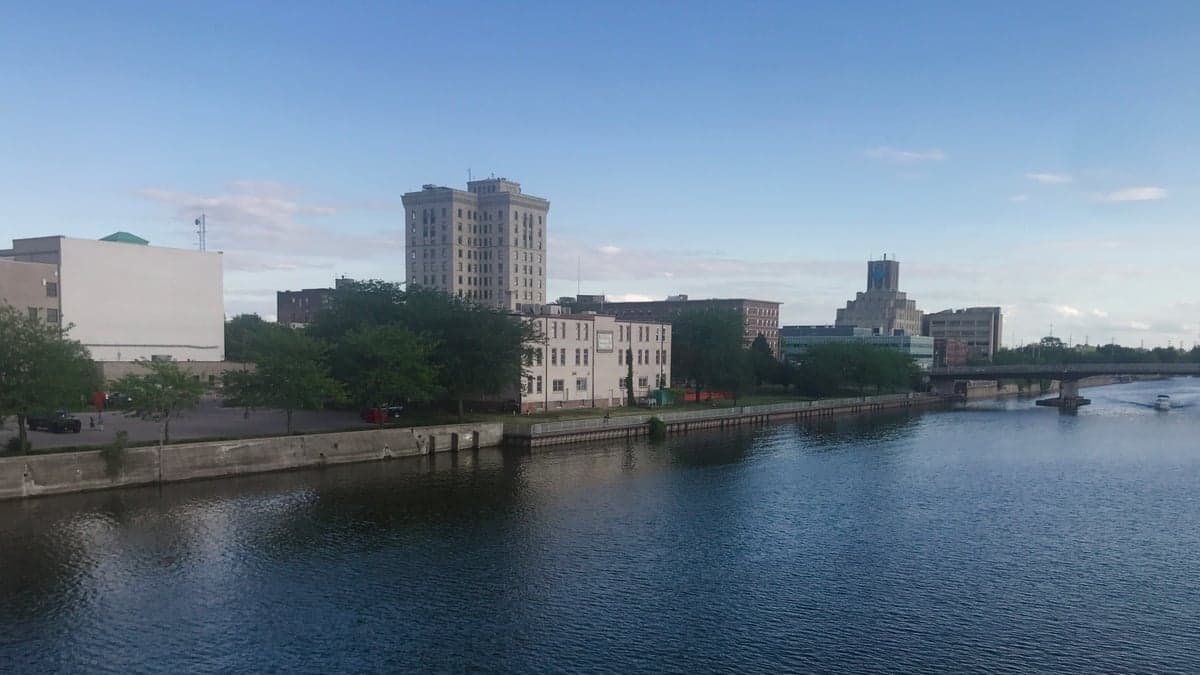
Photo: Wikipedia
Demographics of Saginaw, MI
Affluence Level in Saginaw, MI
A low-income area with significant economic hardship. Household wealth and educational attainment are well below national averages.
People of Saginaw, MI
The people of Saginaw, Michigan today number roughly 43,879, making it a mid-sized Great Lakes city with a distinctive demographic profile: a Black-majority population at 45.7%, a significant White minority at 34.7%, and a growing Hispanic community at 15.3%. The city is notably less diverse in other dimensions—foreign-born residents account for just 0.5% of the population, and only 11.7% of adults hold a college degree, reflecting a blue-collar heritage that has struggled to transition to a knowledge economy. Saginaw’s identity is shaped by its industrial boom-and-bust cycle, its role as a regional hub for Michigan’s automotive supply chain, and a population that has become more racially and economically concentrated within distinct neighborhoods over the past half-century.
How the city was settled and grew
Saginaw’s original inhabitants were the Ojibwe (Chippewa) people, who used the Saginaw River as a transportation and fishing corridor. European-American settlement began in earnest after the 1819 Treaty of Saginaw ceded six million acres of tribal land to the U.S. government. The city was formally incorporated in 1857, and its early growth was driven by the lumber industry—Saginaw became one of the world’s largest lumber milling centers in the 1870s, drawing waves of German, Polish, and Irish immigrants who settled in working-class neighborhoods near the river. The Old Town district, along the east bank of the Saginaw River, was the original commercial and residential core for these early European settlers, with its brick storefronts and worker cottages still visible today. By the early 20th century, the lumber era faded, but the rise of the automotive industry—General Motors opened a major plant in Saginaw in 1919—sparked a second wave of migration. Southern Black families began arriving during the Great Migration (1910–1970), seeking factory jobs in the booming GM plants. They concentrated in the South Side neighborhood, particularly around the GM Saginaw Steering Gear complex, and in the East Side near the Saginaw Malleable Iron plant. White ethnic groups, meanwhile, expanded into the West Side and North Side neighborhoods, building single-family homes and Catholic parishes that anchored their communities through the mid-20th century.
Modern era (post-1965)
The post-1965 period brought dramatic demographic change to Saginaw. The 1965 Hart-Cellar Act had little direct effect on a city with negligible foreign-born population, but domestic migration reshaped the city profoundly. White flight accelerated after the 1967 Detroit riot and the 1970s oil crisis, as GM began downsizing its Saginaw workforce. Between 1970 and 2020, Saginaw’s population fell from roughly 91,000 to 44,000, and the White share dropped from over 70% to 34.7%. Black residents, who had been concentrated in the South Side and East Side, became the majority by the 1990s, expanding into formerly White neighborhoods like the West Side and North Side as those areas experienced disinvestment and population loss. The Hispanic population, primarily of Mexican origin, grew from a small presence to 15.3% by 2020, clustering in the South Side near the GM plants and in the East Side around the former Saginaw Malleable Iron site. This growth was driven by recruitment for agricultural and light industrial work in the surrounding Saginaw Valley, as well as chain migration from Texas and Mexico. The Asian population remains tiny at 0.1% (East/Southeast Asian), and the Indian-subcontinent population is effectively zero, reflecting Saginaw’s lack of the professional-class immigration that has reshaped larger Michigan cities like Ann Arbor or Grand Rapids. The city’s college-educated share of 11.7% is roughly half the national average, a legacy of the factory economy’s decline and the limited growth of white-collar sectors.
The future
Saginaw’s population is likely to continue shrinking slowly, with the 2020 census showing a 3.5% decline from 2010. The city is not homogenizing into a single demographic bloc; instead, it is becoming more tribally distinct. The Black majority is aging and concentrated in the South Side and East Side, while the White population, now a minority, is increasingly clustered in the West Side and North Side neighborhoods that retained more housing stock and tree cover. The Hispanic community is the youngest and fastest-growing segment, with a median age of roughly 28 compared to 38 for Black residents and 45 for White residents. This growth is likely to continue, driven by higher birth rates and ongoing migration from Texas and Mexico, but it will not offset overall population loss. The foreign-born share (0.5%) is unlikely to rise significantly, as Saginaw lacks the refugee resettlement programs or professional job base that attract immigrants to other Michigan cities. For a newcomer, Saginaw is becoming a smaller, more racially defined city where neighborhood choice strongly correlates with ethnic identity, and where economic opportunity remains tied to the struggling manufacturing sector rather than a diversified knowledge economy.
For someone moving to Saginaw now, the city offers low housing costs and a strong sense of community within its distinct neighborhoods, but it also presents limited economic mobility and a population that is both shrinking and aging. The Hispanic growth provides a demographic bright spot, but the overall trajectory is one of slow decline and increasing racial concentration. A relocation decision should weigh the affordability and community ties against the limited job diversity and educational attainment levels.

* Values derived from national, state, county, city and local statistics and may differ in a specific area. Last updated: 2026-04-29T22:58:32.000Z
Narrative content on this page is AI-generated and may contain mistakes. Verify any details that matter before acting on them.
ReloMaps may earn a commission from affiliate links at no extra cost to you.

