 Popular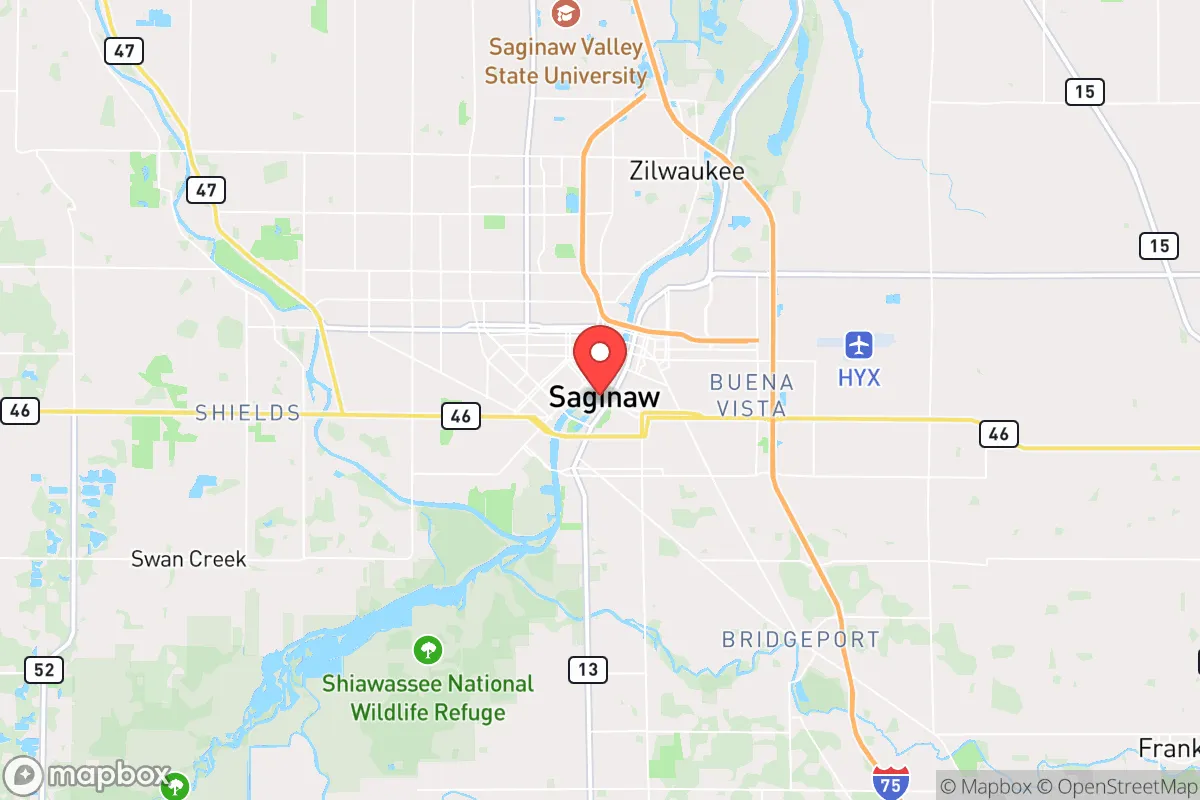
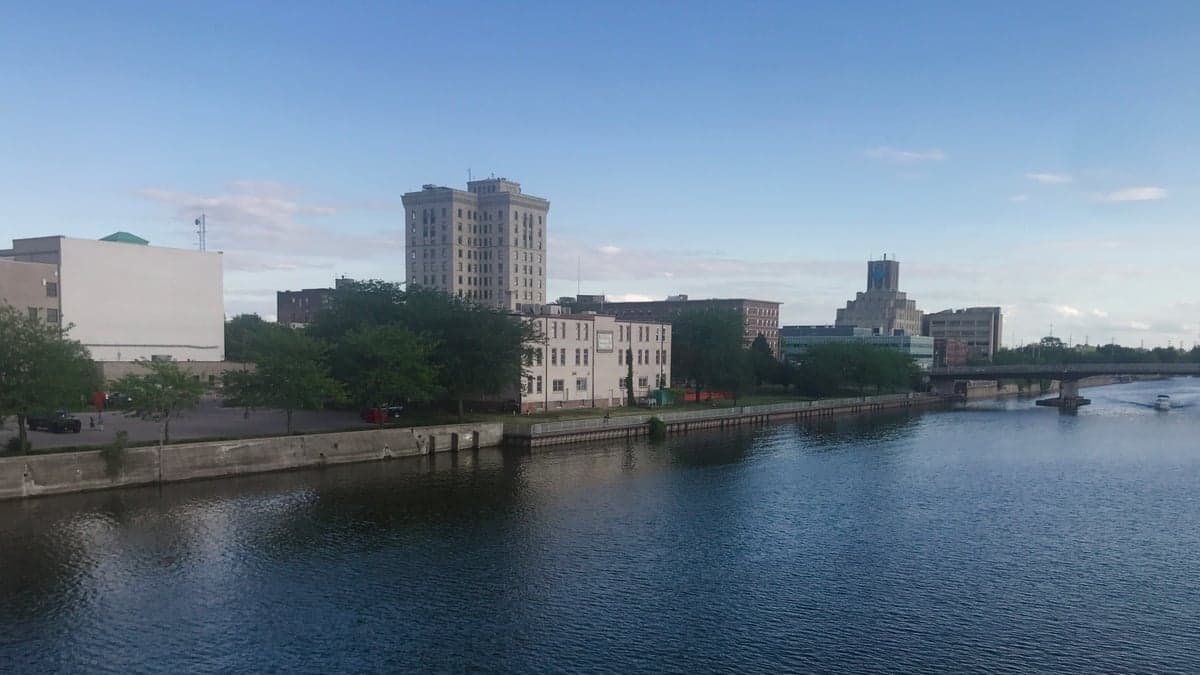
Photo: Wikipedia
Strategic Assessment of Saginaw, MI
Meaningful friction. Expect exposure to either population pressure, blast zones, or natural disaster risk. Consider buying a retreat property.
What does the Strategic Assessment tell us?
Our Strategic Assessment grades tactical survivability of an area. Major population centers, military targets, fallout zones, natural disasters, and border exposure all drive risk — lower exposure means a more defensible position in a crisis.
This is heavily inspired by Joel Skousen's Strategic Relocation book. Highly recommended you checkout the book ($)What does this tell us?
Our Strategic Assessment grades tactical survivability of an area. Major population centers, military targets, fallout zones, natural disasters, and border exposure all drive risk — lower exposure means a more defensible position in a crisis.
This is heavily inspired by Joel Skousen's Strategic Relocation book. Highly recommended you checkout the book ($)Strategic Pillars

Key Distances
Regional Safe Places
Below is our recommended "safe zones" in Michigan and the surrounding area based on our strategic heuristics. For most people, it's unrealistic to live in a “safe zone” full-time due to work, family or other personal reasons. They tend to be more rural. However, many of these areas are perfect for second homes and retreat properties that double as a vacation home or even a short-term rental.


Important Note: For informational purposes only. This does not mean nothing bad ever happens in the green zones. Please use common sense. This is based on public data and modeled with AI. We tried to take a conservative approach but mistakes happen. We update this regularly as new information becomes available.
Solar Generator Recommendations
Backup power matters more here than in safer locations. We've picked three solar generators across budgets and capacity tiers — start with the budget unit if you only need a few essentials, or step up if you want to run a fridge and HVAC for days at a time.

Jackery Portable Power Station Explorer 300
Budget OptionPower on the Go: Weighing only 11 lbs, it's convenient to set up and store with book-sized foldable solar panels

BLUETTI Portable Power Station AC180
Designed for both indoor and outdoor scenarios, AC180 is highly capable as it has a robost capacity and continuous output power.

EF ECOFLOW DELTA Pro Ultra Power Station
Upgraded PickEcoFlow DELTA Pro Ultra is a whole-home energy system designed to grow with your family. Integrated with the Smart Home Panel 2, it scales to meet your evolving energy needs — keeping your home powered, intelligent, and secure through every stage of life.
We earn a commission, at no additional cost to you.
Strategic Assessment Analysis
Saginaw, Michigan, occupies a complex position in any strategic relocation assessment, offering genuine resilience advantages through its location and resources while carrying significant liabilities tied to its industrial past and proximity to major population centers. The city sits at the head of the Saginaw River, roughly 20 miles inland from Saginaw Bay on Lake Huron, placing it within a region that has historically been a manufacturing and agricultural hub. For a prepper or survivalist mindset, the area’s access to freshwater, arable land, and a relatively low population density compared to Detroit or Grand Rapids provides a foundation for long-term sustainability. However, the same industrial infrastructure that built the region also creates exposure to environmental hazards, economic fragility, and potential fallout risks that demand careful consideration before committing to relocation.
Geographic position and natural advantages for long-term survival
Saginaw’s location offers several strategic benefits that align with self-sufficiency goals. The city is situated within the Saginaw Bay watershed, giving residents direct access to one of the largest freshwater systems in the world—Lake Huron is roughly a 30-minute drive northeast, and the Saginaw River itself provides a navigable waterway for transport and fishing. The surrounding region, including Saginaw County and neighboring counties like Bay and Midland, features fertile soil that supports extensive agriculture, including corn, soybeans, and wheat. This agricultural base means that even in a disruption scenario, local food production capacity is substantial. The area also sits within Michigan’s Lower Peninsula, which benefits from a temperate climate with four distinct seasons, reducing the risk of extreme weather events like hurricanes or wildfires that plague other parts of the country. For a relocator focused on resilience, the combination of abundant freshwater, productive farmland, and a moderate climate creates a solid baseline for independent living. The region’s relatively low population density—Saginaw County has roughly 190,000 residents spread across 810 square miles—means that even in a crisis, competition for resources would be less intense than in urban centers like Detroit, which is about 100 miles southeast.
Risks, exposures, and proximity to fallout-relevant landmarks
The same industrial history that gave Saginaw its economic backbone also introduces significant risks that a survivalist must weigh. The city is home to several former and active industrial sites, including chemical plants and refineries, that could become contamination sources during a disaster. The Saginaw River itself has a legacy of industrial pollution, including PCB contamination from past manufacturing, which could complicate water sourcing in a prolonged grid-down scenario. More critically, Saginaw sits within a 50-mile radius of several high-value targets: the Dow Chemical complex in Midland (roughly 20 miles north), the General Motors plants in Flint (30 miles southeast), and the Saginaw Valley Naval Shipyard in Bay City (15 miles northeast). In a major conflict or terrorist event, these facilities could be primary or secondary targets, creating fallout risks that extend into Saginaw proper. The city’s proximity to I-75 and I-675, major north-south corridors, also means that any mass evacuation from Detroit or Flint would funnel through the area, potentially overwhelming local infrastructure and creating security concerns. For a prepper, these factors suggest that while Saginaw offers some buffer from direct urban chaos, it is not remote enough to avoid spillover effects from regional destabilization. The presence of the Saginaw County Airport and the nearby MBS International Airport adds another layer of risk, as these could become focal points for military or relief operations that attract unwanted attention.
Practical resilience for a relocator: food, water, energy, and defensibility
On the practical side, Saginaw provides several advantages for a relocator building a self-sufficient setup. Water access is excellent: the Saginaw River and numerous inland lakes and streams offer multiple sources for collection and filtration, and the region’s high water table means wells are viable for most properties outside the urban core. The agricultural abundance means that with a few acres, a family can produce a significant portion of their own food, and local farmers’ markets and co-ops provide backup supply chains even in normal times. Energy resilience is more mixed: the area is served by Consumers Energy and DTE, with a grid that has seen reliability issues during winter storms, but the prevalence of rural properties makes solar and wind installations feasible. The region’s flat terrain and open spaces also support small-scale livestock operations, which can provide protein and fertilizer independence. Defensibility is a weaker point—Saginaw’s urban layout, with dense residential neighborhoods and limited natural chokepoints, makes it harder to secure a property against determined intruders. However, moving to the outskirts or into rural Saginaw County, where properties are more spread out and offer better sightlines, improves this significantly. The local gun culture is strong, with multiple shooting ranges and gun shops in the area, and Michigan’s relatively permissive firearm laws (including constitutional carry as of 2024) mean that self-defense options are legally accessible. For a single individual or family, the key is to prioritize a property with well water, acreage for gardening, and a defensible perimeter—something that is achievable within a 30-minute drive of downtown Saginaw at a fraction of the cost of similar setups in the western states.
The overall strategic picture for Saginaw is one of calculated trade-offs. It offers genuine resilience advantages—freshwater, farmland, low population density, and affordable land—that make it a viable option for a prepper or survivalist seeking a base of operations in the Midwest. The risks are real but manageable with proper planning: avoiding properties near industrial sites, maintaining a bug-out route away from major highways, and building a network of local contacts who share similar values. The conservative-leaning audience should note that Saginaw County leans politically mixed, with a Democratic-leaning city surrounded by more conservative rural areas, so finding like-minded neighbors is possible but requires intentional effort. For those willing to invest in hardening a property and establishing local relationships, Saginaw provides a solid foundation for weathering the uncertainties of the coming years—without the extreme isolation or cost of more remote locations. It is not a perfect sanctuary, but for a strategic relocator with realistic expectations, it is a defensible choice that balances access to resources with manageable exposure to risk.

* Values derived from national, state, county, city and local statistics and may differ in a specific area. Last updated: 2026-04-29T22:58:32.000Z
Narrative content on this page is AI-generated and may contain mistakes. Verify any details that matter before acting on them.
ReloMaps may earn a commission from affiliate links at no extra cost to you.

