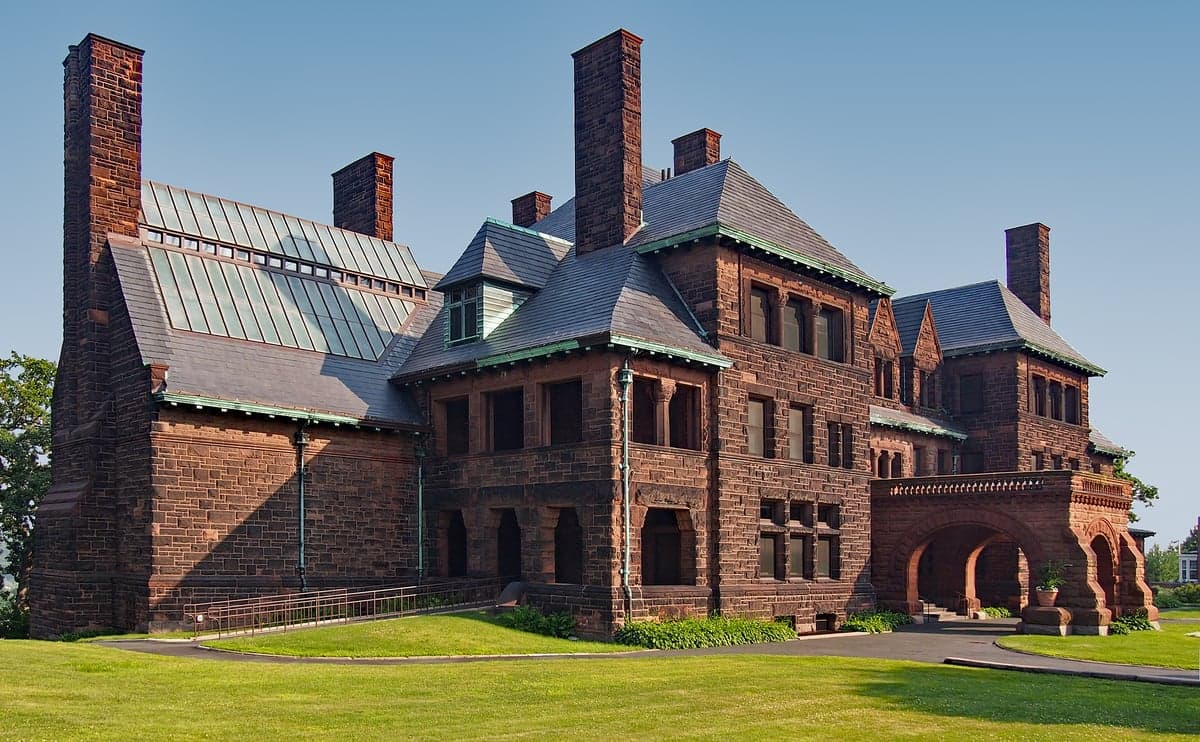
Photo: Wikipedia
Personal Sovereignty in Saint Paul, MN
Viable for self-reliance. Generally workable, though some barriers may limit total independence.
What does Personal Sovereignty tell us?
Personal Sovereignty measures your capacity for self-reliance and independence with minimal government friction. Higher scores mean fewer barriers between you and the way you want to live... but it assumes you have the space you need and good neighbors.
What does this tell us?
Personal Sovereignty measures your capacity for self-reliance and independence with minimal government friction. Higher scores mean fewer barriers between you and the way you want to live... but it assumes you have the space you need and good neighbors.
State Policy
Energy independence: Importer (20% of energy produced in-state)
Personal Liberty
Homesteading

Personal Liberty Analysis
Saint Paul, Minnesota, presents a challenging environment for personal sovereignty, where a dense web of state-level mandates and local ordinances significantly constrains individual autonomy. For the strategic relocator—especially those with a survivalist or prepper mindset—the city’s regulatory posture is one of active government involvement in daily life, from taxation to self-defense. While the state’s natural resources and community resilience offer some counterbalance, the overall trajectory in Saint Paul leans toward diminished personal freedom, making it a location that requires careful, defensive planning rather than one that naturally fosters self-reliance.
Tax burden and regulatory posture: How much of your income and time does the state control?
Minnesota’s tax burden is among the highest in the nation, and Saint Paul residents feel this acutely. The state imposes a progressive income tax with a top marginal rate of 9.85% on income over $190,000 (for single filers in 2025), and Saint Paul adds a city sales tax of 1%, bringing the combined rate in Ramsey County to roughly 8.375%. Property taxes in Saint Paul are also above the national average, with effective rates around 1.2% of home value, driven by a complex system of levies for schools, transit, and local services. This fiscal environment means a significant portion of your earnings is redirected to government programs before you can allocate it to your own preparedness, storage, or land purchases. Beyond taxes, the regulatory posture is dense: Minnesota has a robust state building code, strict environmental regulations on land use (including wetland protections that can limit development), and a state-level Department of Labor and Industry that enforces detailed occupational licensing. For anyone looking to operate a small business, homestead, or alternative energy system, expect layers of permitting and compliance that can slow or block projects. The state’s approach is fundamentally collectivist, prioritizing government-managed solutions over individual initiative.
Self-defense and gun law specifics: What are the legal limits on your right to keep and bear arms?
Saint Paul’s gun laws are restrictive, reflecting Minnesota’s broader shift toward firearm regulation. The state requires a permit to purchase a handgun (a process that includes a background check and a 30-day waiting period for first-time buyers), and a permit to carry a concealed firearm is shall-issue but requires a training course and a fee. However, the city of Saint Paul has its own ordinances that go further: it bans the discharge of firearms within city limits (except at licensed ranges), and it has a history of enforcing strict storage requirements. In 2023, Minnesota passed a “red flag” law (Extreme Risk Protection Order), allowing courts to temporarily seize firearms from individuals deemed a risk to themselves or others, based on a petition from family or law enforcement. This law is actively used in Ramsey County. For the prepper, this means that stockpiling firearms for self-defense or societal collapse scenarios is legally precarious—you could lose access to your tools based on a subjective assessment. Additionally, Minnesota bans “assault weapons” and large-capacity magazines (over 10 rounds for rifles, over 15 for handguns) under state law, which directly impacts your ability to equip yourself for worst-case scenarios. Open carry is legal with a permit, but in practice, it draws police attention in Saint Paul. The environment is one of increasing legal friction for gun owners, not one of robust Second Amendment protection.
Self-reliance and homesteading viability: Lot sizes, zoning, and off-grid feasibility
Within Saint Paul proper, homesteading and off-grid living are nearly impossible due to dense urban zoning. The typical residential lot is a quarter-acre or less, with strict setbacks and building codes that limit accessory structures, chicken coops, or rainwater collection systems. The city’s zoning code requires connection to municipal water and sewer—off-grid septic or well systems are not permitted. Solar panels are allowed but must comply with historic district regulations in many neighborhoods, and net metering policies are state-controlled but subject to utility approval. For serious self-reliance, you must look to the exurbs or rural Ramsey County, where lot sizes increase to 1-5 acres. Even there, however, county regulations on livestock, composting toilets, and alternative energy can be restrictive. The Mississippi River corridor and surrounding bluffs have conservation easements that limit development. The practical reality: Saint Paul is not a place where you can easily become self-sufficient. It is a city designed for interdependence on municipal systems. For the prepper, this means your focus should be on urban survival skills—community networking, food storage in limited space, and defensive planning—rather than land-based homesteading. The state’s strong agricultural extension services and community gardens offer some support, but they operate within a regulatory framework that discourages true independence.
Personal liberties: Parental rights, medical autonomy, speech, and property
Personal liberties in Saint Paul are constrained by state-level policies that prioritize government authority over individual choice. On parental rights, Minnesota has a strong public school system with mandatory vaccination requirements for school attendance (with limited medical and philosophical exemptions that are increasingly contested). The state’s Department of Education mandates curriculum standards in health and social studies that may conflict with conservative values, and there is no robust school choice voucher program—though charter schools exist, they are subject to state oversight. Medical autonomy is significantly limited: Minnesota has a state-run health insurance exchange (MNsure) and mandates coverage for a wide range of services. The state has also enacted laws protecting gender-affirming care for minors, which may be a concern for parents who believe medical decisions should remain within the family. On speech, Minnesota has broad campaign finance laws and a “bias crime” statute that can be used to prosecute speech deemed threatening or harassing, which some view as chilling to political expression. Property rights are constrained by strong eminent domain powers and a state environmental review process (the Minnesota Environmental Policy Act) that can delay or block development projects. The cumulative effect is a legal environment where the state’s interests often override individual or family decisions, particularly in areas of health, education, and land use. For the sovereignty-minded, this feels like a slow erosion of the autonomy that once defined American life.
Compared to other regions, Saint Paul sits firmly in the “high regulation, high tax” quadrant of personal sovereignty. It is less free than states like Texas, Florida, or South Dakota, where gun laws are more permissive, taxes are lower, and zoning is less restrictive. However, it is not as extreme as California or New York—Minnesota still has a functional outdoor culture, a strong network of private gun clubs, and a tradition of community self-reliance in rural areas. For the strategic relocator, Saint Paul offers a trade-off: access to natural resources and a relatively stable infrastructure, but at the cost of constant government oversight and a tax burden that funds programs you may not support. If your priority is maximum personal sovereignty—the ability to defend yourself, keep your earnings, raise your family without interference, and live off the grid—Saint Paul is a poor fit. If you are willing to work within a system of managed freedoms and focus on urban preparedness, it can be a viable, if frustrating, base of operations. The key is to enter with eyes open: this is not a place where the state will get out of your way. It is a place where you must navigate its rules carefully to carve out your own space.

* Values derived from national, state, county, city and local statistics and may differ in a specific area. Last updated: 2026-05-01T21:48:53.000Z
Narrative content on this page is AI-generated and may contain mistakes. Verify any details that matter before acting on them.
ReloMaps may earn a commission from affiliate links at no extra cost to you.

