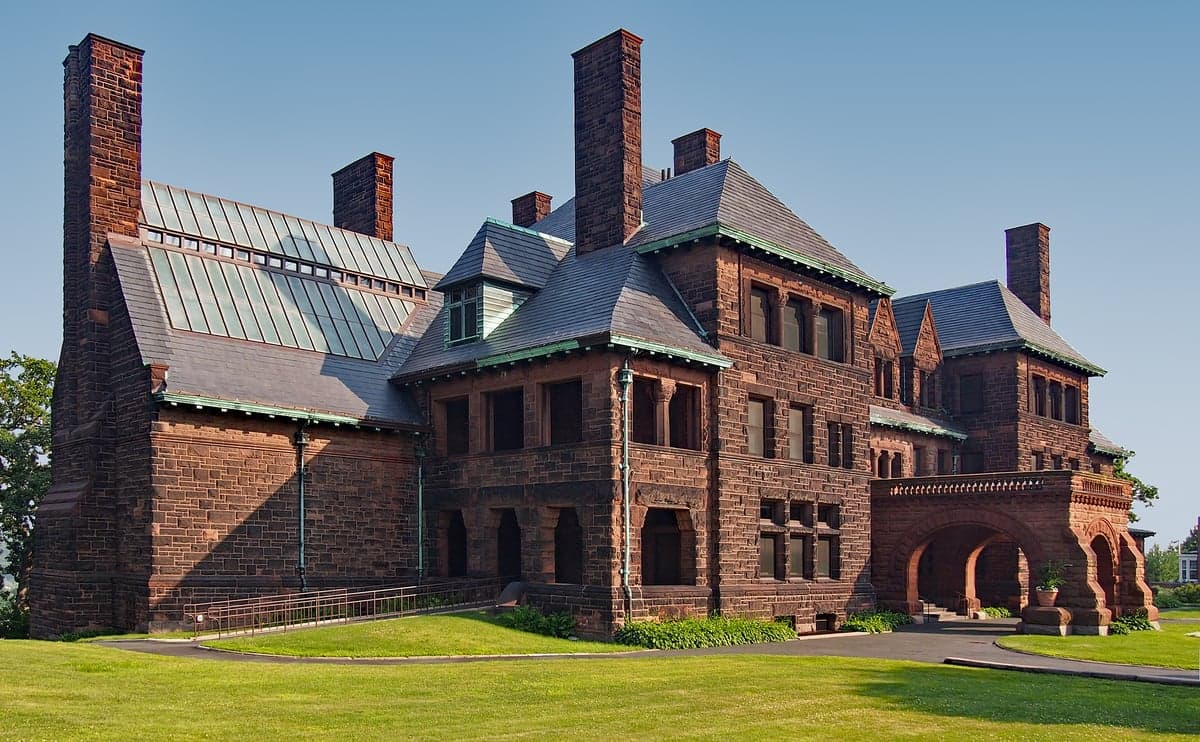
Photo: Wikipedia
Strategic Assessment of Saint Paul, MN
Multiple tactical vulnerabilities. Population density, target proximity, or disaster risk are likely compounding. A retreat property and exit planning is required.
What does the Strategic Assessment tell us?
Our Strategic Assessment grades tactical survivability of an area. Major population centers, military targets, fallout zones, natural disasters, and border exposure all drive risk — lower exposure means a more defensible position in a crisis.
This is heavily inspired by Joel Skousen's Strategic Relocation book. Highly recommended you checkout the book ($)What does this tell us?
Our Strategic Assessment grades tactical survivability of an area. Major population centers, military targets, fallout zones, natural disasters, and border exposure all drive risk — lower exposure means a more defensible position in a crisis.
This is heavily inspired by Joel Skousen's Strategic Relocation book. Highly recommended you checkout the book ($)Strategic Pillars

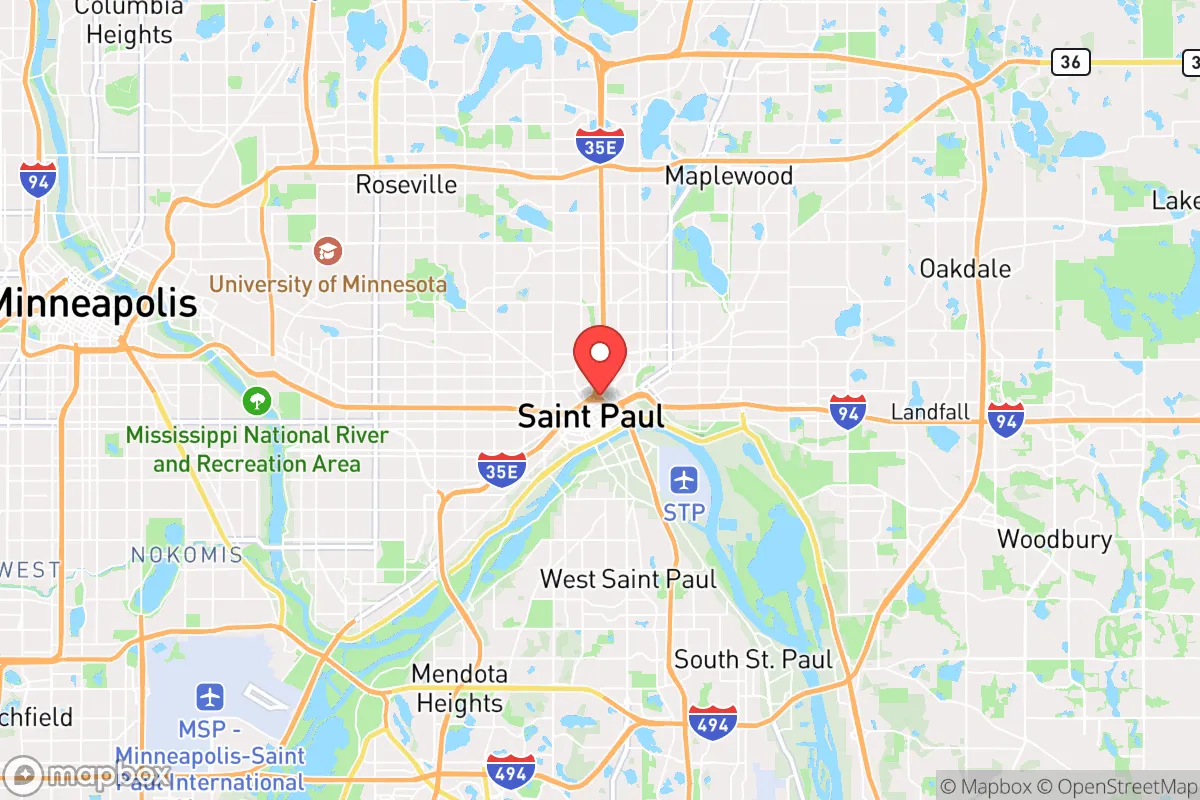
Key Distances
Regional Safe Places
Below is our recommended "safe zones" in Minnesota and the surrounding area based on our strategic heuristics. For most people, it's unrealistic to live in a “safe zone” full-time due to work, family or other personal reasons. They tend to be more rural. However, many of these areas are perfect for second homes and retreat properties that double as a vacation home or even a short-term rental.
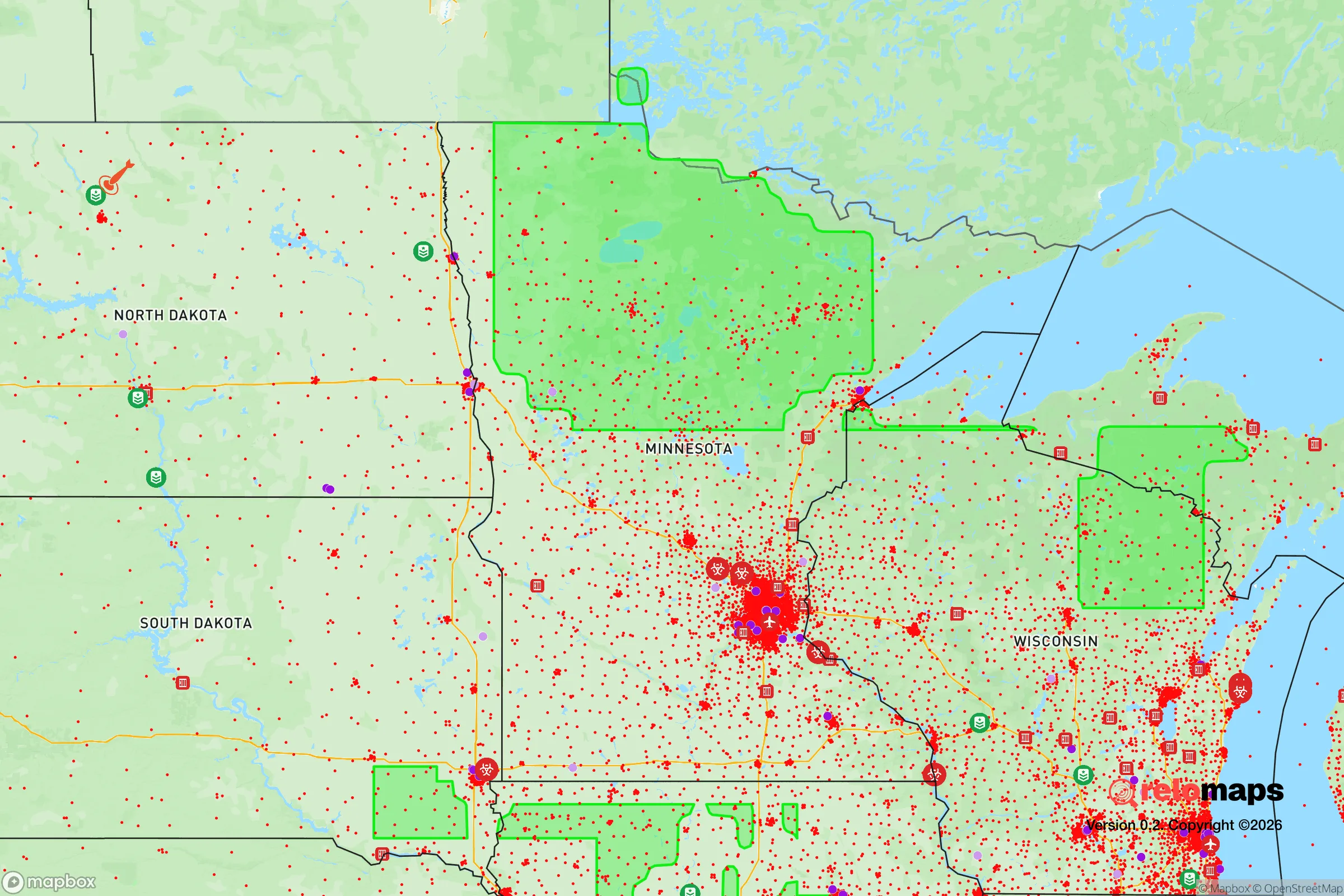
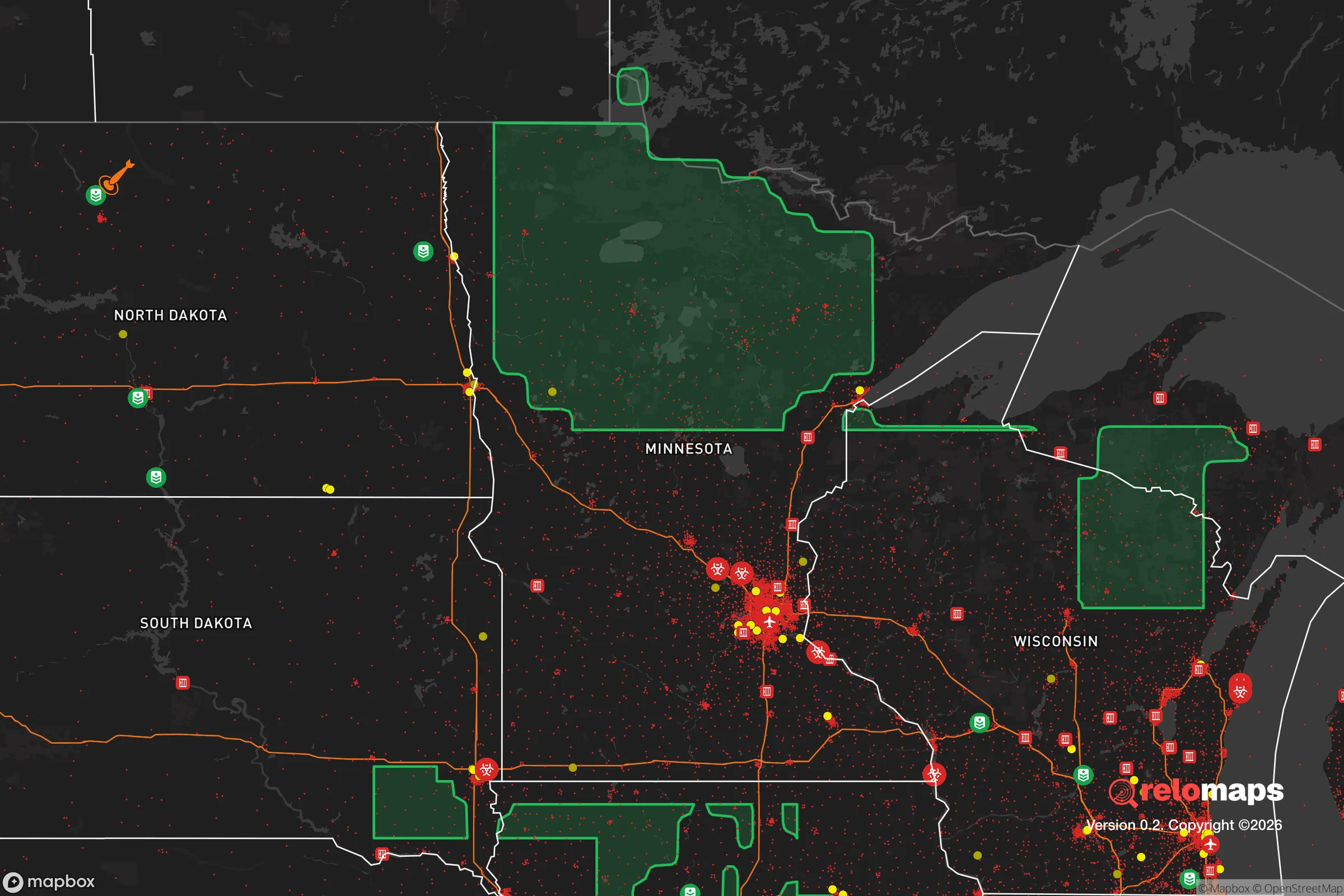


Important Note: For informational purposes only. This does not mean nothing bad ever happens in the green zones. Please use common sense. This is based on public data and modeled with AI. We tried to take a conservative approach but mistakes happen. We update this regularly as new information becomes available.
Solar Generator Recommendations
Backup power matters more here than in safer locations. We've picked three solar generators across budgets and capacity tiers — start with the budget unit if you only need a few essentials, or step up if you want to run a fridge and HVAC for days at a time.

Jackery Portable Power Station Explorer 300
Budget OptionPower on the Go: Weighing only 11 lbs, it's convenient to set up and store with book-sized foldable solar panels

BLUETTI Portable Power Station AC180
Designed for both indoor and outdoor scenarios, AC180 is highly capable as it has a robost capacity and continuous output power.

EF ECOFLOW DELTA Pro Ultra Power Station
Upgraded PickEcoFlow DELTA Pro Ultra is a whole-home energy system designed to grow with your family. Integrated with the Smart Home Panel 2, it scales to meet your evolving energy needs — keeping your home powered, intelligent, and secure through every stage of life.
We earn a commission, at no additional cost to you.
Strategic Assessment Analysis
Saint Paul, Minnesota, presents a complex strategic picture for the conservative prepper or survivalist. Its location along the Mississippi River and proximity to Minneapolis create a dual-edged sword: significant natural advantages for long-term resilience, but also acute exposure to the risks of a major metropolitan area. For a relocator weighing civic unrest, infrastructure collapse, or mass casualty events, the city itself is a high-risk zone, but its surrounding region offers some of the most defensible and resource-rich terrain in the upper Midwest. The key is understanding that Saint Paul is not a survivalist destination in itself, but rather the hub of a broader strategic region that demands careful, perimeter-based thinking.
Geographic position and natural advantages for long-term survival
Saint Paul sits at the confluence of the Mississippi, Minnesota, and St. Croix rivers, which is a double-edged asset. On the plus side, this provides abundant freshwater access, a critical resource for any extended grid-down scenario. The Mississippi River corridor also offers a natural transportation and trade route that could be leveraged for barter or movement if roads become impassable. The region's topography—bluffs, river valleys, and wooded hills—provides natural cover and defensible positions, especially as you move east toward the St. Croix River valley or north toward the hardwood forests. The climate, while harsh in winter, is a natural barrier to mass migration from warmer regions; deep snow and subzero temperatures in January effectively create a seasonal security perimeter. The area's agricultural hinterland is world-class: within a 50-mile radius, you have some of the most productive farmland in the country, meaning local food production is viable even without a national supply chain. For a prepper, the key takeaway is that the natural resource base—water, timber, arable land—is among the best in the Midwest, but you must be outside the immediate urban footprint to access it.
Risks, exposures, and proximity to fallout-relevant landmarks
The downsides are substantial and cannot be ignored. Saint Paul is part of the Minneapolis-Saint Paul metropolitan area, home to over 3.6 million people. This density is a primary risk factor for any survivalist: in a crisis—whether a pandemic, economic collapse, or civil unrest—the city becomes a liability. The 2020 riots following George Floyd's death demonstrated how quickly unrest can spread from Minneapolis into Saint Paul, with looting, arson, and property destruction hitting commercial corridors like University Avenue and West Seventh Street. For a relocator, being inside the I-494/I-694 beltway means you are within the blast radius of any mass casualty event targeting infrastructure or population centers. The city also hosts several high-value targets: the Xcel Energy Center (a major event venue), the State Capitol complex, and multiple bridges over the Mississippi that could be chokepoints in an evacuation. Proximity to the Prairie Island Indian Community's nuclear power plant, about 30 miles southeast, is a specific concern—any incident there could render large swaths of the river valley uninhabitable. Additionally, the Mississippi River itself is a vector for contamination; upstream industrial sites in Minneapolis and St. Cloud mean that water quality could degrade rapidly in a disaster. For a conservative prepper, the calculus is clear: Saint Paul proper is a high-risk zone for civil unrest and infrastructure failure, and the surrounding suburbs offer only marginal improvement due to their density and dependence on the same grid.
Practical resilience for a relocator: food, water, energy, and defensibility
If you are considering relocating to the Saint Paul area from a prepper perspective, the smart play is to target the exurbs or rural fringe, not the city itself. Communities like Stillwater (east), Hastings (southeast), or North Branch (north) offer better defensibility while still providing access to the metro's medical and supply resources. Water is abundant—the Mississippi and its tributaries are reliable, but you must plan for filtration and treatment, as surface water in this region carries agricultural runoff and industrial residue. Groundwater is generally good, with many rural properties having access to private wells, which is a major plus. Food resilience is strong: the growing season runs from May to September, and the soil in the river valleys is rich loam. You can realistically produce a significant portion of your own calories with a modest garden and some livestock, especially if you secure land with southern exposure. Energy is a concern: the region's grid is aging and vulnerable to ice storms and high winds, as the 2021 Texas-style freeze that hit Minnesota in 2022 demonstrated (though less severe). Solar is viable but less effective in winter, so a backup generator or wood heat is essential. Defensibility is mixed: the terrain offers natural chokepoints (river crossings, bluffs), but the region's population density means you cannot disappear entirely. The best strategy is to be part of a like-minded community—there are active prepper and homesteading networks in the St. Croix Valley and the Driftless Area to the southeast. For a single individual or family, the key is to secure a property with a well, a woodlot, and at least 5-10 acres outside the 100-year floodplain, and to build relationships with neighbors before a crisis hits.
The overall strategic picture for Saint Paul is one of cautious opportunity for the prepared relocator. The city itself is a liability—too dense, too politically volatile, and too close to high-value targets to be a safe haven. But the broader region, particularly the river valleys and agricultural lands within a 60-mile radius, offers a rare combination of water abundance, arable land, and natural defensibility that is hard to find elsewhere in the upper Midwest. The conservative prepper should view Saint Paul not as a destination, but as a regional hub for supply runs and medical access, while establishing a primary residence in the exurbs or rural fringe. The winters are a built-in security feature, the water is plentiful, and the soil is productive. The risks are real—civil unrest, nuclear proximity, and grid fragility—but they are manageable with proper planning and a perimeter mindset. If you can tolerate the cold and the political climate of the state (which leans left, but the rural areas are more libertarian-leaning), this area can be a solid base for long-term resilience. Just don't mistake the city for the sanctuary.

* Values derived from national, state, county, city and local statistics and may differ in a specific area. Last updated: 2026-05-01T21:48:53.000Z
Narrative content on this page is AI-generated and may contain mistakes. Verify any details that matter before acting on them.
ReloMaps may earn a commission from affiliate links at no extra cost to you.

