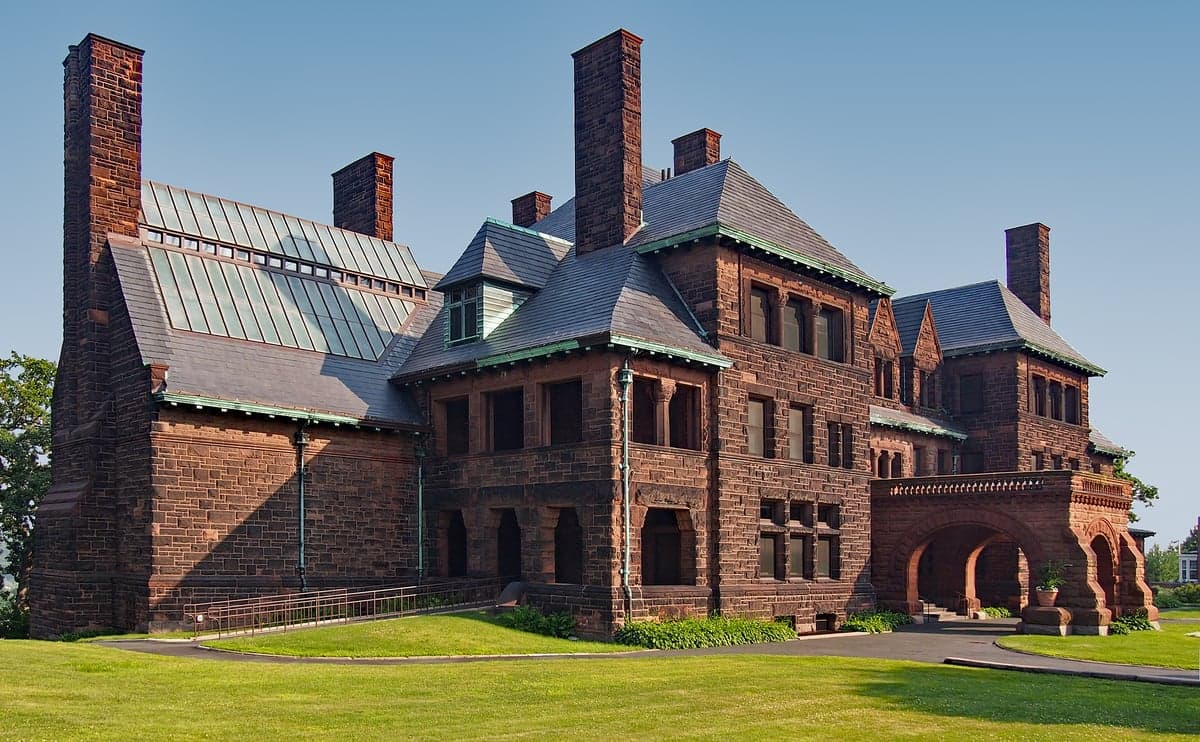
Photo: Wikipedia
Quality of Life in Saint Paul, MN
A high quality of life with strong walkability, manageable living costs, healthy neighborhood signals, and solid amenity access.
What does Quality of Life tell us?
Quality of Life blends cost of living, nearby amenities, socioeconomic signals, and neighborhood character. City-level scores represent the whole municipality; individual neighborhoods can differ.
What does this tell us?
Quality of Life blends cost of living, nearby amenities, socioeconomic signals, and neighborhood character. City-level scores represent the whole municipality; individual neighborhoods can differ.
Cost of Living
4% above national average
The Real Cost of Living in Saint Paul, MN for 2026
| Tier | Individual | Family (4) |
|---|---|---|
| Survival | $20k | $37k |
| Comfortable | $54k | $80k |
| Luxury | $132k+ | $205k+ |
| Elite (Top 5%) | $168k+ | $260k+ |
91%
The Area Signal
A metric tracking the socioeconomic signals of the area.
Hobbies
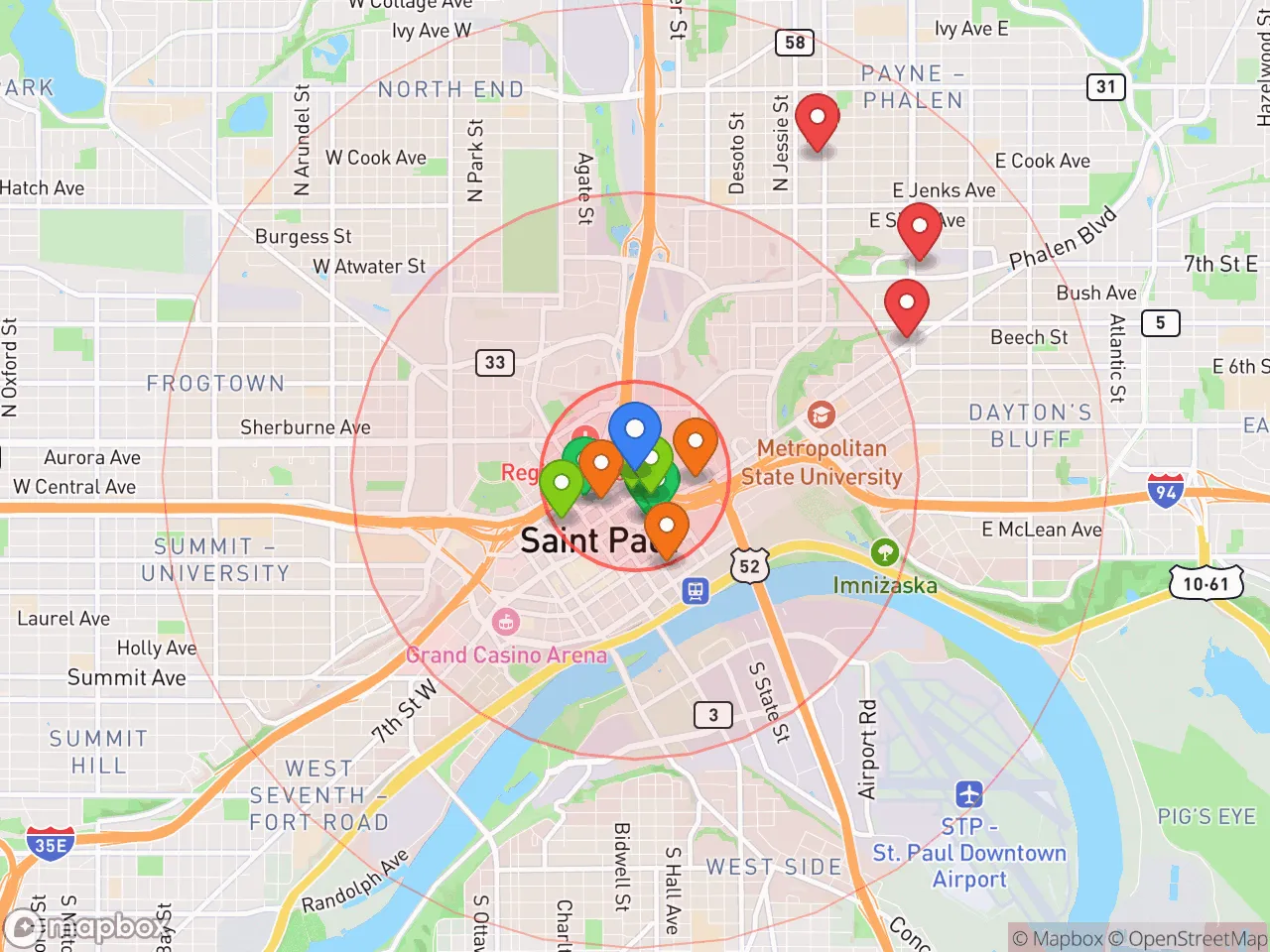
Explore the areaGroceries
6 within 10 miles
Gas
20 within 10 miles
Hospital
20 within 20 miles
Airport
JFK — John F. Kennedy Memorial
Post Office
USPS — Saint Paul, MN
Critical Amenities
Quality-of-Life Analysis
Saint Paul, Minnesota, offers a quality of life defined by solid middle-class stability, with a cost of living index of 104 (just 4% above the national average) that provides more breathing room than its pricier twin city, Minneapolis. The city attracts a diverse mix of families, state government employees, and professionals who value historic neighborhoods, strong public schools, and a slower, more community-oriented pace than the bustling downtown core across the river. With a median home value of $280,300 and a median rent of $1,248, Saint Paul remains one of the more attainable urban options in the Upper Midwest for those seeking a balanced, family-friendly environment.
Cost of living, housing, and affordability compared to Minneapolis and the suburbs
Saint Paul’s cost of living index of 104 is notably lower than Minneapolis’s index of 110, and significantly undercuts nearby western suburbs like Edina or Wayzata, where home values routinely exceed $500,000. The median home value of $280,300 is roughly $40,000 less than Minneapolis’s median, making entry-level homeownership more feasible for first-time buyers and young families. Renters also benefit: the median rent of $1,248 is about $150–$200 per month cheaper than comparable units in Minneapolis, though it has risen steadily since 2020. Property taxes in Ramsey County average around 1.1% of assessed value, slightly higher than some outer-ring suburbs but lower than in Hennepin County’s most desirable enclaves. The average commute of 22.3 minutes is shorter than the Twin Cities metro average of 26 minutes, thanks to Saint Paul’s compact layout and good access to I-94, I-35E, and the Green Line light rail. However, residents should note that while housing is affordable relative to the metro, wages in Saint Paul’s dominant sectors—government, healthcare, and education—have not kept pace with inflation, stretching budgets for lower-income households.
Amenities, schools, and what daily life is like for families and professionals
Daily life in Saint Paul revolves around its walkable, tree-lined neighborhoods—such as Summit Avenue, Macalester-Groveland, and Highland Park—where residents frequent local coffee shops, farmers’ markets, and independent bookstores like Red Balloon. The city’s public school system, Saint Paul Public Schools (SPPS), serves roughly 33,000 students and includes several highly rated magnet and immersion programs, though overall proficiency scores lag behind suburban districts like Roseville or Woodbury. For families, the city offers over 170 parks, the Como Park Zoo and Conservatory (free admission), and the Minnesota Children’s Museum, while professionals benefit from a stable job market anchored by the Minnesota State Capitol complex, HealthPartners, and 3M’s headquarters just east in Maplewood. The cultural calendar is robust: the Minnesota State Fair (in adjacent Falcon Heights), the Saint Paul Winter Carnival, and a thriving theater scene at the Ordway Center and Park Square Theatre. The average commute of 22.3 minutes means most residents can reach downtown Minneapolis in under 30 minutes by car or light rail, though traffic on I-94 can add 10–15 minutes during peak hours. Winters are long and cold (average January high of 23°F), but the city’s extensive skyway system and heated bus shelters make daily errands manageable.
Saint Paul is best suited for families seeking affordable urban living with strong community ties, state or nonprofit employees who value a short commute, and empty-nesters drawn to historic architecture and cultural amenities. It is less ideal for young professionals chasing nightlife or high-income earners accustomed to suburban school rankings, as the city’s social scene is quieter than Minneapolis’s and its top-tier schools are concentrated in a few neighborhoods. For those who prioritize walkability, green space, and a slower urban rhythm without sacrificing access to a major metro, Saint Paul delivers a quality of life that balances cost, convenience, and character.

Crime in Saint Paul, MN
Generally safer than 62% of comparable U.S. locations.
Violent CrimeViolent Crime Analysis
Property CrimeProperty Crime Analysis
Crime Analysis
Saint Paul, Minnesota, reports a violent crime rate of 222.8 per 100,000 residents and a property crime rate of 1,417.9 per 100,000, figures that place it above the national average for property offenses but below many peer Midwestern cities for violent incidents. However, the city operates within a broader Twin Cities metro area where progressive prosecutorial policies and judicial leniency have become a significant concern for residents. The combination of a high property crime volume and a justice system often perceived as prioritizing offender rehabilitation over public safety creates a challenging environment for those considering relocation.
Crime in context
Saint Paul’s violent crime rate of 222.8 per 100,000 is roughly 40% below the national average, a statistic that can be misleading when viewed in isolation. Property crime, at 1,417.9 per 100,000, exceeds the U.S. average by approximately 10%, driven largely by theft and motor vehicle theft. Compared to the state of Minnesota, Saint Paul’s property crime rate is nearly double the statewide figure. The broader context includes Ramsey County’s elected prosecutor, who has implemented policies such as declining to prosecute certain low-level thefts and drug possession cases, a trend common in progressive jurisdictions. Critics argue these policies directly contribute to the elevated property crime numbers by reducing consequences for repeat offenders.
What residents experience
Daily life for Saint Paul residents involves a heightened vigilance against property crime. Car break-ins, package thefts, and bicycle thefts are routine occurrences, particularly in neighborhoods near downtown, the University of Minnesota’s St. Paul campus, and commercial corridors like Grand Avenue. Violent crime, while less frequent, is concentrated in specific areas: the Frogtown, Thomas-Dale, and Payne-Phalen neighborhoods report higher rates of aggravated assault and robbery. Residents often note that police response times have lengthened in recent years, a consequence of both staffing shortages and a department culture shaped by state-level police reform laws passed after 2020. The practical effect is that many property crimes go unsolved, with clearance rates for theft well below 20%.
Neighborhood-level variation
Safety in Saint Paul varies dramatically by neighborhood. Highland Park, Macalester-Groveland, and Summit Hill consistently report the lowest crime rates, with violent incidents rare and property crime below the city average. These areas benefit from higher property values, active neighborhood watches, and proximity to private security patrols funded by business associations. In contrast, the East Side neighborhoods of Dayton’s Bluff and the North End experience property crime rates two to three times higher than the city median. The disparity is linked to socioeconomic factors, but also to the uneven application of progressive justice policies: areas with higher concentrations of rental properties and lower-income households see more repeat property crime offenders cycling through a system that emphasizes diversion over detention. For prospective residents, choosing a neighborhood with strong community organization and private security measures is a practical necessity.
* Values derived from national, state, county, city and local statistics and may differ in a specific area. Last updated: 2026-05-01T21:48:53.000Z
Narrative content on this page is AI-generated and may contain mistakes. Verify any details that matter before acting on them.
ReloMaps may earn a commission from affiliate links at no extra cost to you.

