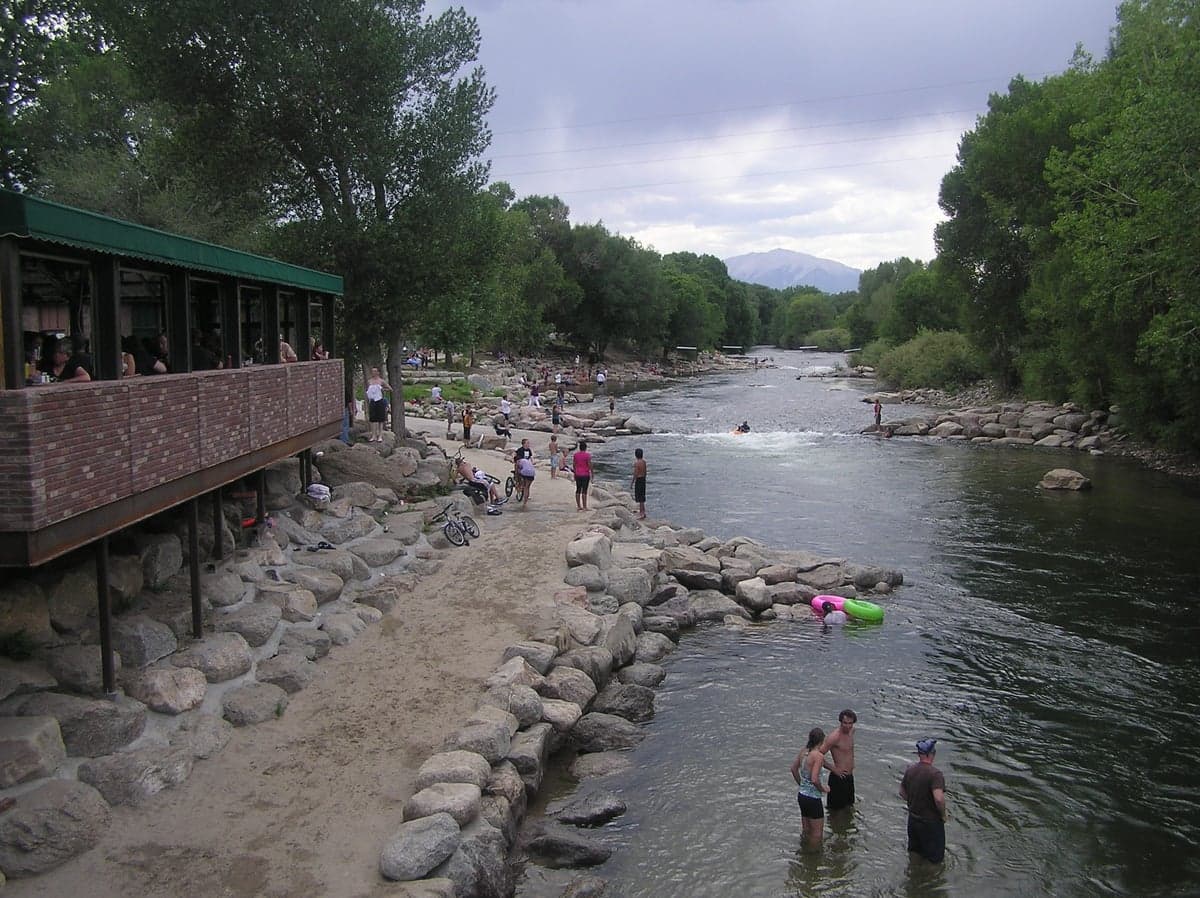
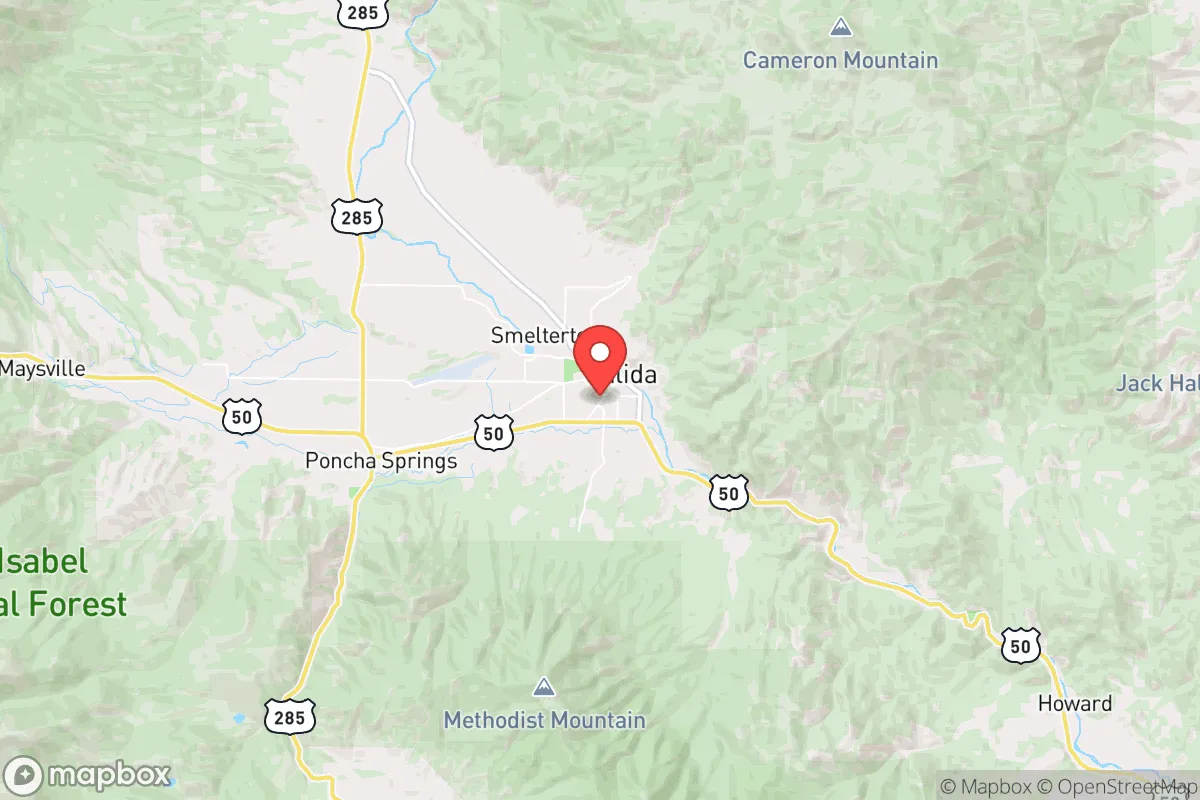
Photo: Wikipedia
Personal Sovereignty in Salida, CO
Viable for self-reliance. Generally workable, though some barriers may limit total independence.
What does Personal Sovereignty tell us?
Personal Sovereignty measures your capacity for self-reliance and independence with minimal government friction. Higher scores mean fewer barriers between you and the way you want to live... but it assumes you have the space you need and good neighbors.
What does this tell us?
Personal Sovereignty measures your capacity for self-reliance and independence with minimal government friction. Higher scores mean fewer barriers between you and the way you want to live... but it assumes you have the space you need and good neighbors.
State Policy
Energy independence: Net exporter (110% of energy produced in-state)
Personal Liberty
Homesteading

Personal Liberty Analysis
Salida, Colorado, offers a nuanced environment for personal sovereignty that appeals to those seeking a balance between rugged self-reliance and the practical realities of living in a politically mixed state. While Colorado’s state-level governance has trended leftward in recent years, Salida’s location in Chaffee County—a politically competitive area that voted +2 for Trump in 2020—provides a buffer against some of the more aggressive state mandates. For the survivalist or prepper mindset, the key question isn’t whether Salida is a libertarian utopia, but whether the local culture, zoning, and enforcement climate allow you to live largely unbothered by government overreach. The answer is cautiously optimistic: Salida’s small-town ethos and geographic isolation create meaningful pockets of autonomy, but you must navigate state-level taxes, gun laws, and land-use regulations with eyes wide open.
Tax burden and regulatory posture: what keeps more money in your pocket
Colorado’s state income tax is a flat 4.4% as of 2026, which is moderate compared to high-tax states like California or New York, but not as favorable as Texas or Florida. Salida itself has no city income tax, and Chaffee County’s property tax rate is roughly 0.49% of assessed value—well below the national average. A median home value of around $550,000 in Salida translates to annual property taxes of about $2,700, which is manageable for a prepper household looking to minimize fixed costs. Sales tax in Salida is 8.0% (state + county + city), which is higher than rural Colorado averages but typical for a tourist-oriented mountain town. The regulatory posture at the county level is relatively light: Chaffee County has no county-wide building code for unincorporated areas, meaning you can build a cabin, shed, or workshop without excessive permitting—provided you’re outside city limits. However, the city of Salida enforces zoning and building codes more strictly, especially in historic districts. For those seeking maximum autonomy, buying land in the unincorporated county (e.g., near Poncha Springs or along the Arkansas River) is the smarter move, as you avoid city oversight on structures, fences, and land use. State-level business regulations are moderate; Colorado requires sales tax licenses and workers’ compensation for any employees, but sole proprietors and LLCs face minimal red tape. Overall, the tax burden is tolerable, and the regulatory posture is permissive enough for a self-reliant lifestyle—if you choose your parcel wisely.
Self-defense and gun law specifics: what you can and cannot do
Colorado is a shall-issue state for concealed carry permits, meaning if you pass a background check and complete a training course, the county sheriff must issue the permit. Chaffee County’s sheriff, John Spezze, is known for a pro-Second Amendment stance and efficient processing of permits—typically within 30 days. Open carry is legal in Colorado without a permit, including in Salida, though local ordinances prohibit firearms in city-owned buildings and parks. Magazine capacity is capped at 15 rounds for handguns and 10 for long guns under state law, a restriction that preppers should factor into their loadout planning. Private sales of firearms do not require a background check in Colorado, but all sales from licensed dealers do. Stand-your-ground laws are in effect: you have no duty to retreat in any place you have a legal right to be. Castle doctrine applies to your home and vehicle. For the survivalist, the key limitation is the magazine ban, which is enforced by state police but rarely prosecuted in rural counties like Chaffee. The sheriff’s office has publicly stated they prioritize violent crime over magazine capacity enforcement, giving locals some de facto leeway. However, transporting firearms across state lines to neighboring Utah or Wyoming (both more permissive) is straightforward. In short, Salida offers solid self-defense rights at the local level, but you must comply with state-level restrictions on capacity and purchase procedures.
Self-reliance and homesteading viability: lot sizes, zoning, and off-grid feasibility
For the prepper or homesteader, Salida’s surrounding area is a mixed bag of opportunity and constraint. In unincorporated Chaffee County, minimum lot sizes for residential development are typically 1 acre in rural zones, but you can find parcels as small as 0.25 acres in subdivisions near Salida. For serious homesteading—gardens, chickens, small livestock—a 5-acre parcel is the sweet spot, and such properties are available within 15 minutes of town for $100,000–$200,000. Zoning in the county allows for accessory dwelling units, workshops, and even small-scale agricultural operations without special permits. Off-grid living is feasible but not unrestricted: Colorado state law requires that any habitable dwelling have a septic system approved by the county health department, and water rights must be secured through a well permit (which can take 6–12 months and cost $2,000–$5,000). Solar panels are legal and common, with no county restrictions on their installation. Rainwater collection is legal in Colorado since 2016, but limited to 110 gallons per property—enough for garden irrigation but not full household supply. Composting toilets are allowed in unincorporated areas, reducing reliance on septic. The biggest regulatory hurdle is the Colorado State Electrical Board, which requires licensed electricians for grid-tied solar installations; off-grid systems can be owner-installed. For the self-reliant individual, the key is to buy land with existing water rights or a well permit already in place, as new well permits are subject to prior appropriation doctrine and can be denied in water-short areas. Overall, homesteading is viable with planning, but you must work within state health and water regulations.
Personal liberties: parental rights, medical autonomy, speech, and property
Parental rights in Colorado are under pressure from state-level mandates. Colorado passed a universal school meal program and expanded sex education requirements in recent years, and the state health department has broad authority over vaccine mandates for school attendance. However, Chaffee County’s school board has resisted some state directives, and homeschooling is legal with minimal reporting requirements—just a notice of intent and annual standardized testing. Medical autonomy is a mixed picture: Colorado has legalized recreational marijuana and psilocybin therapy, but it also mandates insurance coverage for gender-affirming care and has strict vaccine requirements for healthcare workers. For the prepper concerned about medical freedom, Salida’s local healthcare providers are independent-minded, and the county has a strong alternative medicine community. Speech is protected under the First Amendment, and Salida’s public forums (like the Salida City Council meetings) are generally open and civil, though local social pressure can be intense in a small town. Property rights are robust in unincorporated areas: you can fence your land, post no-trespassing signs, and enforce them under Colorado’s criminal trespass laws. The county assessor’s office is transparent, and property tax appeals are straightforward. The biggest threat to property rights is the state’s growing regulatory appetite for environmental controls, such as stream management plans that could restrict water use. For now, Chaffee County’s commissioners are pro-property rights, but state-level legislation (e.g., Senate Bill 24-212 on land use) could preempt local control in the future. The bottom line: personal liberties are strong at the local level, but you must stay engaged with state politics to protect them.
In the broader landscape of personal sovereignty, Salida ranks as a solid mid-tier option for the survivalist or conservative-leaning individual. It offers lower taxes and lighter regulation than Colorado’s Front Range cities, with a sheriff and county government that respect gun rights and property autonomy. However, it falls short of true sovereignty havens like rural Idaho or Montana, where state-level mandates are fewer and local control is stronger. For the prepper who values community resilience, access to water, and a climate that supports year-round self-sufficiency, Salida is a strategic choice—provided you buy land outside city limits, secure your water rights early, and stay vigilant about state-level encroachments on your freedoms. It’s not a fortress of liberty, but it’s a defensible position in a state that’s otherwise drifting left.

* Values derived from national, state, county, city and local statistics and may differ in a specific area. Last updated: 2026-05-16T10:00:57.000Z
Narrative content on this page is AI-generated and may contain mistakes. Verify any details that matter before acting on them.
ReloMaps may earn a commission from affiliate links at no extra cost to you.

