Photo: Wikipedia
Political ClimatePolitical Climate in Salida, CO
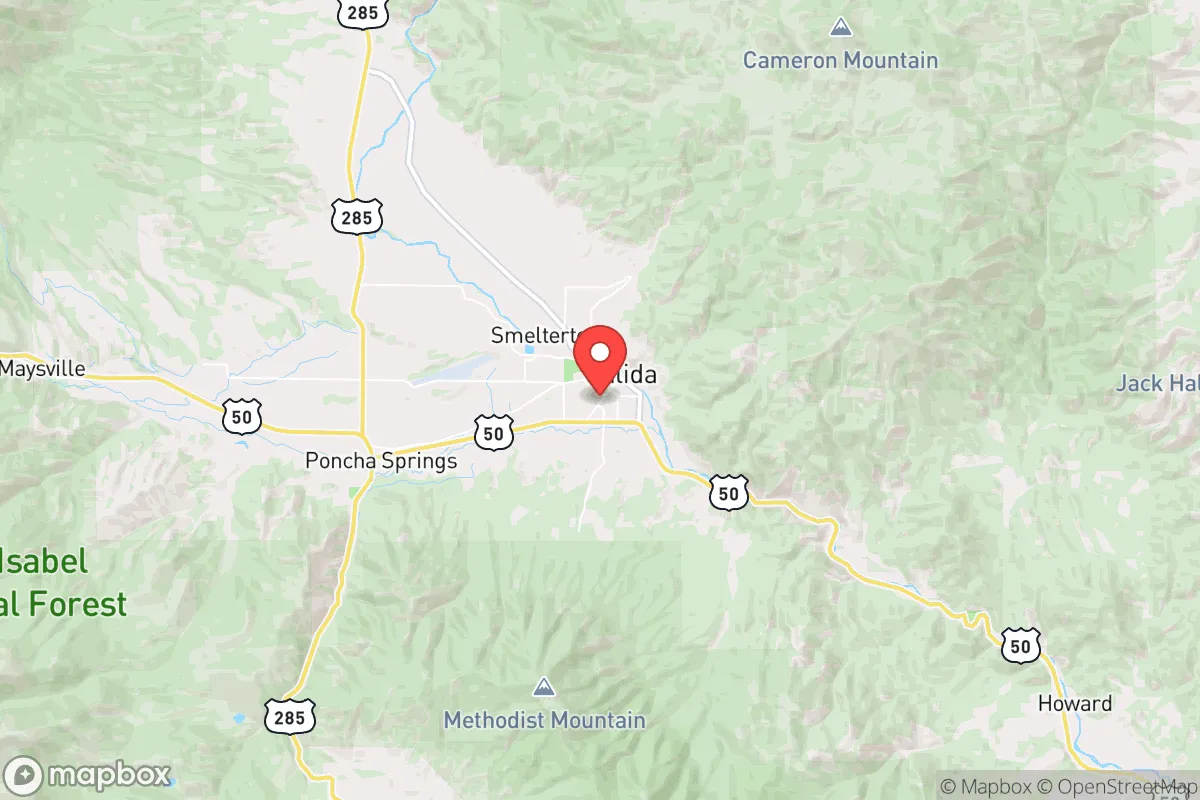
District shown is the primary district for this city’s centroid. Cities may span multiple districts.
Local Political AnalysisPolitical Analysis of Salida, CO
Salida, Colorado, leans solidly Democratic, with a Cook PVI of D+8, making it significantly more progressive than the state of Colorado as a whole, which sits at D+6. This isn't just a number on a map; it's a real shift you can feel in the air compared to just a decade ago. The town has moved from a quiet, independent-minded mountain community to a place where the local government and many newcomers seem to embrace a more activist, top-down approach to everything from land use to public health. For those of us who remember when Salida was more about personal liberty and less about the latest progressive mandate, the trajectory is frankly concerning.
How it compares
When you compare Salida to the rest of Colorado, the difference is stark. The state as a whole is already a blue-leaning place, but Salida is a deeper shade of that blue. Drive just a few miles out of town, and you'll hit places like Poncha Springs or the rural stretches of Chaffee County, where the political vibe flips hard toward conservative, with many folks voting straight-ticket Republican. Even nearby Buena Vista, while also trending left, hasn't gone as far down the progressive path as Salida has. The city council and county commissioners here have been pushing policies that feel like they're imported from Boulder or Denver—more regulations on short-term rentals, higher taxes, and a general attitude that the government knows best. It's a far cry from the "live and let live" ethos that used to define this valley.
What this means for residents
For a long-time resident, the biggest red flag is the erosion of personal freedoms. We're seeing more government overreach into things that used to be common sense: how you can use your property, what you can build, even how you run your small business. The push for "sustainability" and "equity" often translates into new fees, permits, and bureaucratic hurdles that hit small business owners and independent contractors the hardest. If you value the right to make your own choices without a city planner or a county board giving you the thumbs up, Salida is becoming a tougher place to live. The local school board and library district have also seen battles over curriculum and materials, with a clear push toward progressive ideology that doesn't always sit well with families who want a more traditional, neutral education for their kids.
Looking ahead, the trend doesn't seem to be reversing. The influx of remote workers and retirees from more liberal states is accelerating the political shift. While Salida still has a strong core of independent, freedom-minded folks, the voting bloc is getting smaller every election. The cultural distinction here is that you can still find pockets of the old Salida—the ranchers, the miners, the folks who just want to be left alone—but they're increasingly outnumbered by those who see government as a tool for social change. If you're considering a move here, just know that the political climate is not the neutral, hands-off mountain town it once was. It's a place where your personal freedoms are increasingly subject to the whims of a progressive majority, and that's something to think hard about before you unpack your bags.

State Political ClimatePolitical Climate in Colorado
State Political AnalysisPolitical Environment in the State
Colorado has shifted from a classic purple swing state to a solidly blue-leaning one, carrying a Cook PVI of D+6 after voting Democratic in every presidential election since 2008. The state’s political transformation over the past 20 years is dramatic: it went from a reliably Republican stronghold in the 1990s and early 2000s to a state where Democrats now control the governorship, both chambers of the legislature, and all statewide offices. This shift is driven largely by explosive growth in the Denver metro area and along the Front Range, while rural and eastern plains counties remain deeply conservative but have lost relative population share.
Urban vs. rural divide
The political map of Colorado is a tale of two landscapes. The Denver-Aurora-Lakewood metro area, home to roughly 60% of the state’s population, is the engine of Democratic dominance. Denver County itself votes about 80% Democratic, while surrounding suburban counties like Jefferson, Arapahoe, and Boulder are reliably blue. Boulder County is one of the most liberal jurisdictions in the nation. The I-25 corridor from Fort Collins down through Denver to Colorado Springs is where the vast majority of votes are cast. Colorado Springs, home to the Air Force Academy and a large military and evangelical population, remains a conservative stronghold—El Paso County voted +14 for Trump in 2024—but its influence is diluted by the sheer size of the Denver metro. The Western Slope, including towns like Grand Junction and Montrose, leans Republican, as do the eastern plains counties like Yuma and Kit Carson, which often vote 70-80% Republican. The mountain resort counties, such as Pitkin (Aspen) and Summit, have become increasingly liberal as wealthy out-of-state transplants and second-home owners drive local politics leftward.
Policy environment
Colorado’s policy environment reflects its Democratic control. The state income tax rate is a flat 4.4%, relatively moderate, but property taxes have been rising sharply due to the Gallagher Amendment’s repeal in 2020 and subsequent legislative changes. The state has a robust regulatory posture, particularly on environmental issues: Colorado has adopted California-style vehicle emissions standards and aggressive renewable energy mandates. Education policy is dominated by the state’s 1992 Taxpayer’s Bill of Rights (TABOR), which limits revenue growth and requires voter approval for tax increases—a rare fiscal restraint in an otherwise blue state. However, Democrats have found ways around TABOR through fee increases and ballot measures. Healthcare policy includes a state-based insurance exchange and Medicaid expansion under the Affordable Care Act. Election laws are among the most liberal in the country: Colorado has universal mail-in voting, same-day voter registration, and automatic voter registration. The state has no voter ID requirement for mail ballots, though in-person voters must show ID. This system has been praised by progressives but criticized by conservatives for potential vulnerabilities.
Trajectory & freedom
Colorado’s trajectory over the past decade has been toward less personal freedom in several key areas. On gun rights, the state has passed some of the nation’s strictest laws: a 2013 magazine capacity ban (15 rounds), universal background checks, and a 2023 “red flag” law allowing courts to temporarily seize firearms from individuals deemed a risk. In 2024, the legislature passed a bill raising the minimum purchase age for all firearms to 21. Parental rights have been eroded by a 2019 law that removed the requirement for schools to notify parents of a student’s gender identity changes, and a 2023 law that expanded access to abortion and gender-affirming care for minors without parental consent. Medical autonomy took a hit with the 2023 passage of a law protecting providers who perform abortions or gender transition procedures on out-of-state minors, effectively making Colorado a sanctuary state for these procedures. Property rights have been constrained by strict land-use regulations and a 2021 law that eliminated local zoning authority for accessory dwelling units. On the positive side for conservatives, Colorado has no state-level rent control and maintains a right-to-work law, though labor unions are pushing to repeal it. The state’s tax burden remains moderate, but the trend is toward higher spending and more regulation.
Civil unrest & political movements
Colorado has seen significant political activism from both sides. The 2020 protests in Denver over George Floyd’s death were among the largest in the country, with some turning violent and leading to property damage. The state has a strong progressive activist infrastructure, particularly around environmental and social justice issues. On the right, the Colorado Republican Party has fractured between establishment and populist factions, with the latter gaining influence through county-level takeovers. The “Colorado Project” and similar efforts have tried to flip state legislative seats, but with limited success. Immigration politics are a flashpoint: Denver has declared itself a sanctuary city, and the state has a 2019 law limiting cooperation with federal immigration enforcement. The influx of migrants from the southern border in 2023-2024 overwhelmed Denver’s shelter system and sparked local backlash. Election integrity remains a hot topic: the 2020 election saw allegations of irregularities in some counties, though no widespread fraud was proven. The state’s universal mail-in system continues to be a source of distrust among conservatives. Secession movements exist in rural areas—Weld County and parts of the Eastern Plains have floated the idea of forming a separate state—but these are largely symbolic.
Projection
Over the next 5-10 years, Colorado is likely to become more Democratic and more progressive. In-migration from blue states like California, New York, and Illinois continues to fuel growth in the Front Range, while rural counties continue to lose population. The state’s Hispanic population, which tends to vote Democratic, is growing rapidly. The Republican Party’s internal divisions and inability to win statewide races suggest it will remain a minority party for the foreseeable future. Expect further gun control measures, expanded government healthcare, and more aggressive climate regulations. The state’s housing crisis, driven by restrictive zoning and high demand, will likely lead to more state preemption of local land-use authority. Parental rights battles will intensify, particularly around school curriculum and gender identity policies. A new resident moving in now should expect to live in a state where Democratic control is entrenched, where personal freedoms—especially gun rights and parental authority—continue to be restricted, and where the cost of living rises alongside government expansion.
Bottom line for a new resident: Colorado offers stunning natural beauty, a strong economy, and a relatively moderate tax burden, but it comes with a political environment that is increasingly hostile to conservative values. If you value gun rights, parental authority, and limited government, you will find yourself fighting an uphill battle in state politics. The best bet for conservatives is to settle in El Paso County (Colorado Springs) or one of the rural counties like Weld or Mesa, where local governance is more aligned with your views, but be prepared for state-level policies that will continue to push leftward. If you’re moving here for the mountains and the lifestyle, you’ll have to accept that the political climate is part of the package—and it’s not getting redder anytime soon.
* Values derived from national, state, county, city and local statistics and may differ in a specific area. Last updated: 2026-05-16T10:00:57.000Z
Narrative content on this page is AI-generated and may contain mistakes. Verify any details that matter before acting on them.
ReloMaps may earn a commission from affiliate links at no extra cost to you.

