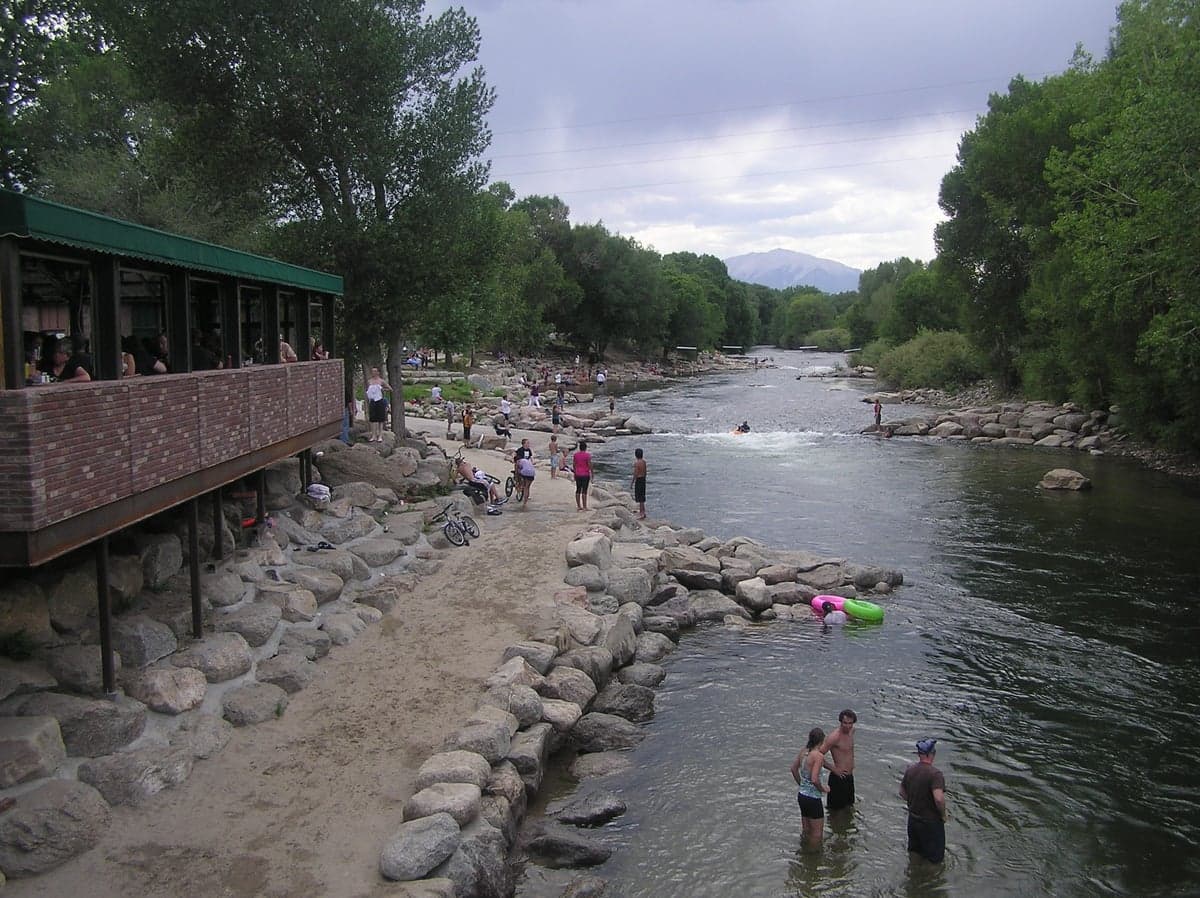
Photo: Wikipedia
Strategic Assessment of Salida, CO
Workable tactical position. Some exposure to population density or targets, but generally defensible in a crisis.
What does the Strategic Assessment tell us?
Our Strategic Assessment grades tactical survivability of an area. Major population centers, military targets, fallout zones, natural disasters, and border exposure all drive risk — lower exposure means a more defensible position in a crisis.
This is heavily inspired by Joel Skousen's Strategic Relocation book. Highly recommended you checkout the book ($)What does this tell us?
Our Strategic Assessment grades tactical survivability of an area. Major population centers, military targets, fallout zones, natural disasters, and border exposure all drive risk — lower exposure means a more defensible position in a crisis.
This is heavily inspired by Joel Skousen's Strategic Relocation book. Highly recommended you checkout the book ($)Strategic Pillars

Key Distances
Regional Safe Places
Below is our recommended "safe zones" in Colorado and the surrounding area based on our strategic heuristics. For most people, it's unrealistic to live in a “safe zone” full-time due to work, family or other personal reasons. They tend to be more rural. However, many of these areas are perfect for second homes and retreat properties that double as a vacation home or even a short-term rental.
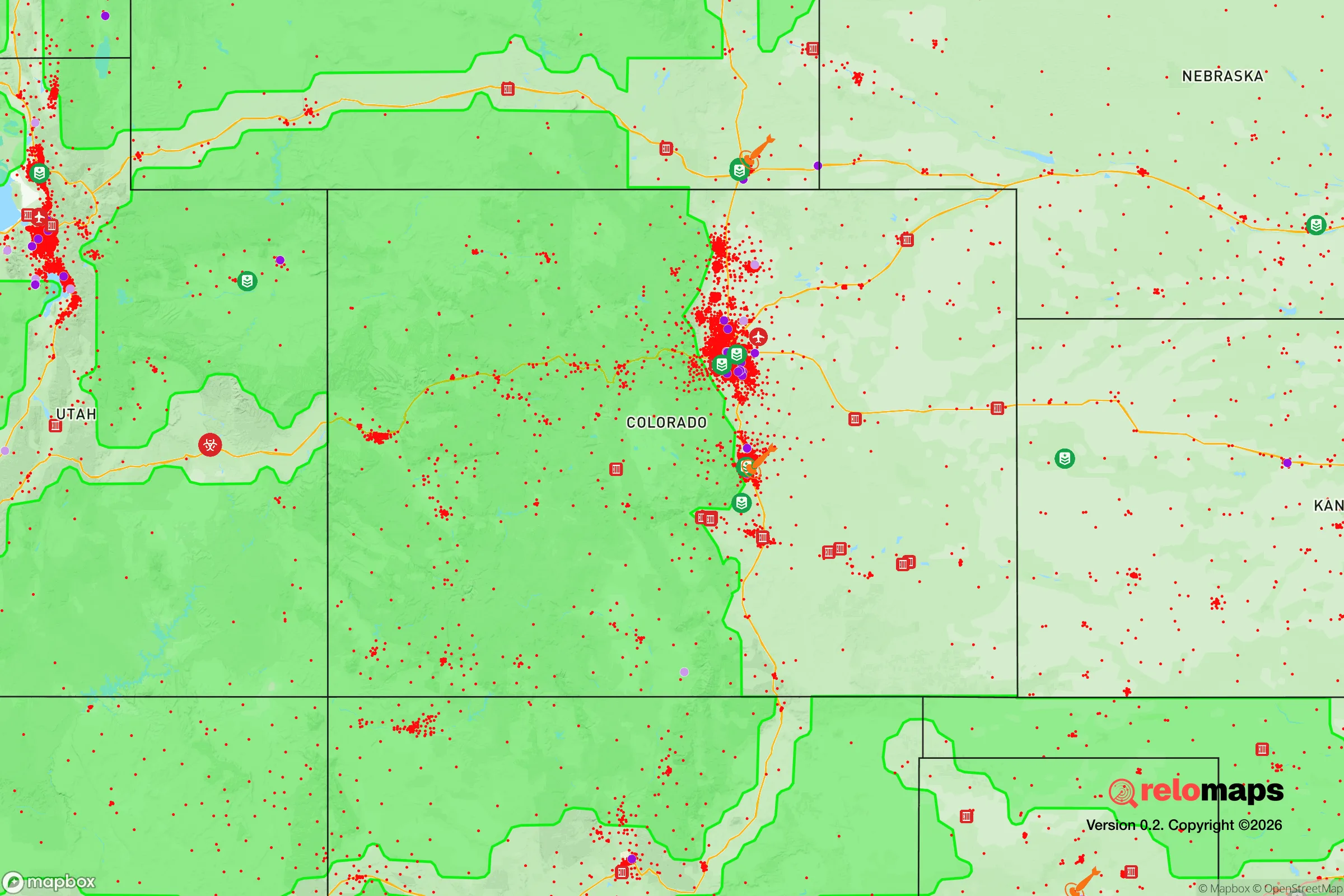
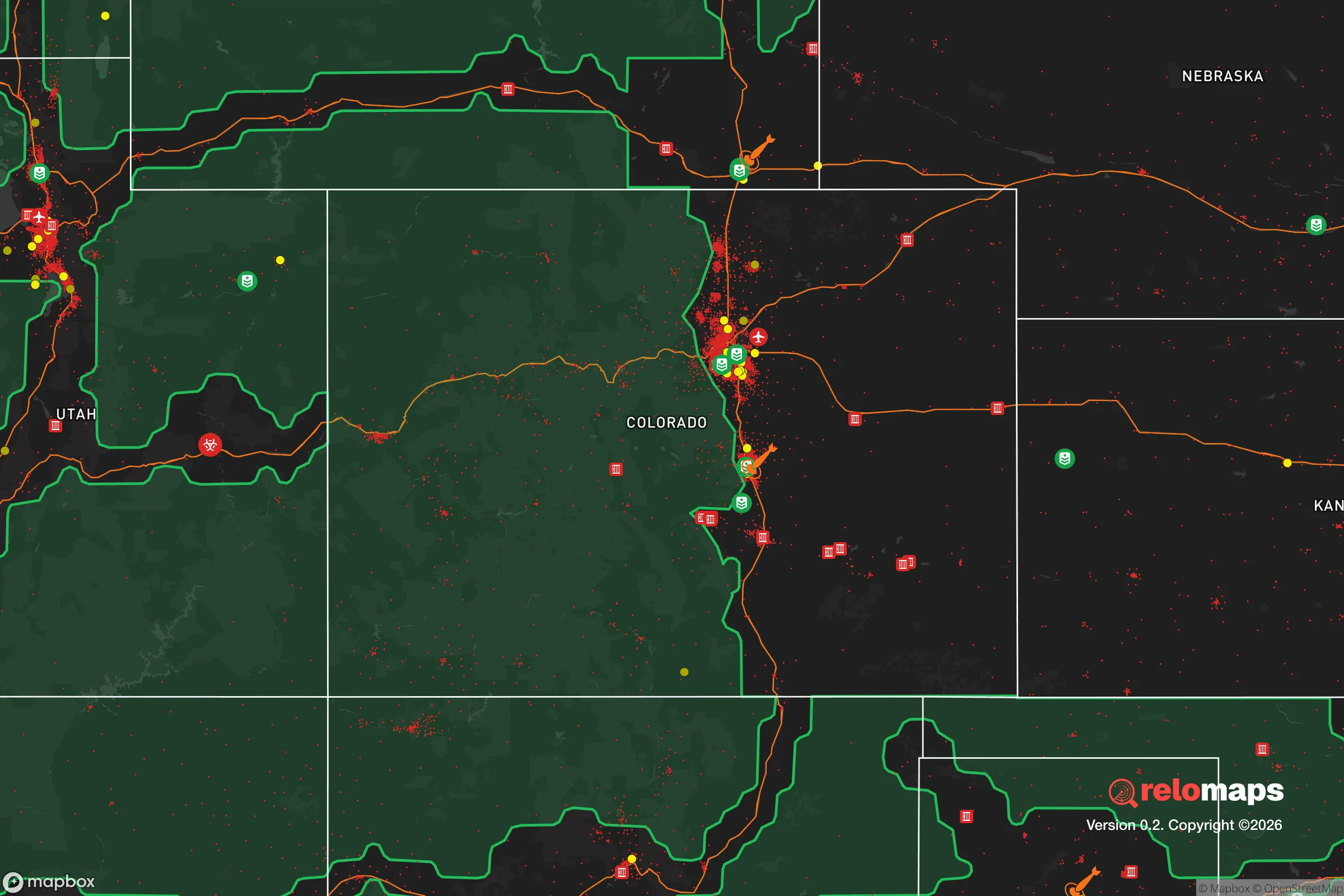


Important Note: For informational purposes only. This does not mean nothing bad ever happens in the green zones. Please use common sense. This is based on public data and modeled with AI. We tried to take a conservative approach but mistakes happen. We update this regularly as new information becomes available.
Solar Generator Recommendations
Backup power matters more here than in safer locations. We've picked three solar generators across budgets and capacity tiers — start with the budget unit if you only need a few essentials, or step up if you want to run a fridge and HVAC for days at a time.

Jackery Portable Power Station Explorer 300
Budget OptionPower on the Go: Weighing only 11 lbs, it's convenient to set up and store with book-sized foldable solar panels

BLUETTI Portable Power Station AC180
Designed for both indoor and outdoor scenarios, AC180 is highly capable as it has a robost capacity and continuous output power.

EF ECOFLOW DELTA Pro Ultra Power Station
Upgraded PickEcoFlow DELTA Pro Ultra is a whole-home energy system designed to grow with your family. Integrated with the Smart Home Panel 2, it scales to meet your evolving energy needs — keeping your home powered, intelligent, and secure through every stage of life.
We earn a commission, at no additional cost to you.
Strategic Assessment Analysis
Salida, Colorado, sits in a strategic sweet spot that few relocation analysts fully appreciate: it offers genuine geographic isolation from major population centers while maintaining practical access to essential infrastructure. Nestled in the Arkansas River Valley at 7,083 feet, this town of roughly 6,000 residents is shielded by the Sawatch Range to the west and the Sangre de Cristo Mountains to the south, creating a natural buffer against the chaos that would likely engulf Front Range cities during a major crisis. For a relocator thinking in terms of decades, not just seasons, Salida’s combination of water access, defensible terrain, and distance from likely fallout zones makes it one of the more viable long-term holds in the lower 48.
Geographic position and natural advantages for long-term security
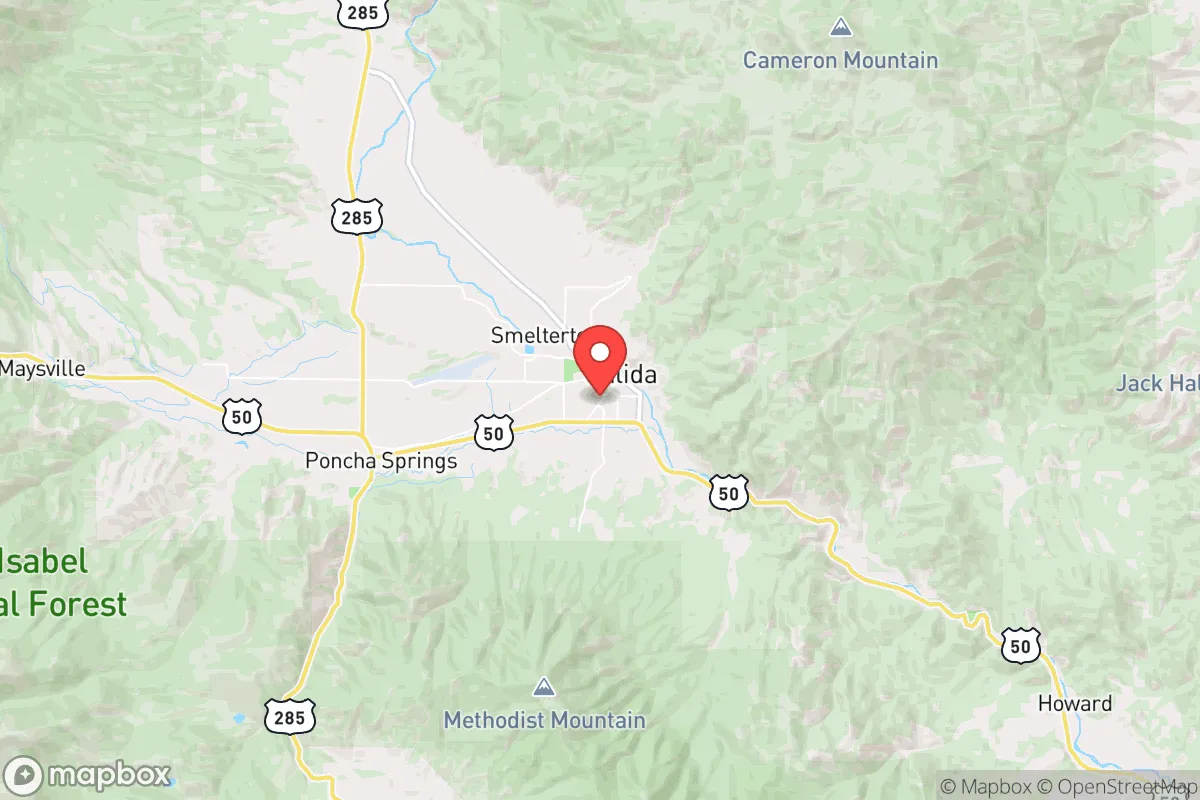
Salida’s location is its primary asset. It sits roughly 140 miles southwest of Denver and 100 miles west of Colorado Springs, placing it well outside the immediate blast and fallout radii of any major metropolitan target. The town is cradled by the Arkansas River, which provides a reliable, gravity-fed water source that doesn’t depend on electric pumps or municipal treatment plants. The surrounding San Isabel National Forest offers thousands of square miles of rugged, low-population terrain for hunting, foraging, and fallback positions. The valley floor itself is relatively flat and arable, with a growing season long enough for cold-hardy crops like potatoes, kale, and root vegetables. The area’s elevation also means lower ambient radiation from any distant nuclear event—thinner atmosphere aside, the mountains themselves would block line-of-sight fallout from the Front Range. For a prepper, Salida’s geography is a natural fortress: steep canyon approaches to the east and west, limited road access (primarily US-50 and US-285), and a population density of just 12 people per square mile in Chaffee County.
Risks, exposures, and proximity to fallout-relevant landmarks
No location is risk-free, and Salida has specific vulnerabilities that a strategic relocator must weigh. The most immediate concern is the Arkansas River itself: while it’s a water asset, it also funnels any upstream contamination—chemical spills, biological agents, or radioactive runoff from the Colorado Springs or Denver areas—directly through the valley. The town is also within 50 miles of the Buena Vista–Leadville corridor, which hosts significant mineral deposits and historical mining operations; any large-scale industrial accident or targeted attack on those sites could introduce heavy metals or tailings into the water table. On the human threat side, Salida’s relative isolation cuts both ways. During a mass evacuation event from the Front Range, US-50 and US-285 would become chokepoints, potentially funneling desperate populations through the valley. The town’s single hospital, Heart of the Rockies Regional Medical Center, is a 25-bed critical access facility—adequate for routine care but overwhelmed by any mass casualty event. There are no major military installations within 100 miles, which reduces the risk of being a secondary target, but also means no nearby federal response assets if things go sideways. For the conservative prepper, the calculus is clear: Salida is far enough from the big targets to survive the initial shock, but close enough to feel the ripple effects of a national collapse.
Practical resilience for a relocator: food, water, energy, and defensibility
Water is Salida’s strongest card. The Arkansas River flows year-round, and the town’s municipal water system draws from a wellfield along the river, supplemented by surface water from the Arkansas Headwaters Recreation Area. For a relocator with a well or direct river access, water security is achievable without complex filtration—though a good ceramic or UV filter is still non-negotiable for any surface source. Food resilience is more mixed. The valley has a handful of small farms and ranches, but the local growing season is short (roughly 100 frost-free days) and the soil is sandy and alkaline. A serious prepper would need to invest in hoop houses, cold frames, and heirloom seed stock suited to high-altitude growing. The Salida Farmers’ Market operates from May to October, but it’s a supplement, not a survival line. Energy is a bright spot: the area has strong solar potential (over 300 sunny days per year) and the Arkansas River offers micro-hydro possibilities for those with creek access. The local electric co-op, Sangre de Cristo Electric Association, has a decent reliability record, but any grid-down scenario would require off-grid backup. Defensibility is excellent for a small group. The town’s layout—a compact core with residential spread along the valley floor—means a determined group could secure the main approaches with minimal manpower. The surrounding mountains provide natural observation points and fallback positions. For a single individual or a family, Salida offers a realistic balance: you can live a normal life now while quietly building the capacity to ride out a crisis.
The overall strategic picture for Salida is one of calculated trade-offs. It lacks the deep agricultural self-sufficiency of the Midwest or the complete isolation of the Alaska bush, but it compensates with water abundance, defensible terrain, and a community that still values self-reliance and neighborly competence. The town’s political leanings are mixed—Chaffee County voted roughly 50-50 in the last presidential election—but the local culture is more libertarian than progressive, with a strong streak of independence and a low tolerance for overreach. For the conservative relocator who wants to be prepared without living in a bunker, Salida offers a viable middle path: close enough to civilization to earn a living, far enough to survive its collapse. The key is to move now, while the window is still open, and to build relationships with the local ranchers, outfitters, and off-gridders who already know the land. In a world where the Front Range is a powder keg and the coasts are a target list, Salida is one of the few places where a prepared individual can still make a stand without being overrun on day one.

* Values derived from national, state, county, city and local statistics and may differ in a specific area. Last updated: 2026-05-16T10:00:57.000Z
Narrative content on this page is AI-generated and may contain mistakes. Verify any details that matter before acting on them.
ReloMaps may earn a commission from affiliate links at no extra cost to you.

